

What you’ll have achieved: by the end you’ll have a ready-to-use preventive maintenance plan example and a practical, month-by-month schedule you can implement in one afternoon and refine over a year. Time required: initial planning 2–4 hours, ongoing monthly upkeep 1–3 hours. Skill level: basic home-handy skills to engage contractors when needed.
What Is a Preventive Maintenance Plan?
Transition: Before we build a plan, let’s define what you’re creating so every task ties back to a clear objective.
Preventive maintenance plan (also called preventive upkeep) is a proactive maintenance strategy that schedules regular inspections and basic care to reduce risks, extend home longevity, and avoid emergency repairs. Think of it like a health check-up schedule for your house—routine checks catch small issues before they become expensive failures.
A preventive maintenance plan typically includes:
- A maintenance strategy with prioritized tasks and timelines
- A maintenance checklist and documentation method
- Assigned responsible party for each task (homeowner, tenant, or pro)
- Budget estimates and tracking for planned upkeep

Analogy: treat preventive care like car maintenance—oil changes and tire rotations reduce the chance you’ll be stranded and lower long-term ownership costs.
Benefits of Implementing a Preventive Maintenance Plan
Transition: Knowing what the plan is helps; now see the concrete advantages that make it worth the time.
Implementing a preventive maintenance plan delivers measurable returns on investment: it reduces emergency repair frequency, improves energy efficiency, and preserves property value. Below are the core benefits ranked by impact.
- Cost savings over time: Scheduling small fixes typically costs far less than emergency replacements; according to a 2023 industry report, homeowners who follow scheduled maintenance reduced major repair expenditures by an average of 28% — a clear financial incentive.
- Avoid emergency repairs: Regular inspections of HVAC, plumbing, and roofs catch failures early, preventing sudden system breakdowns and water damage.
- Increase home value: A maintained home is more attractive to buyers; see tips on what to address when preparing to sell in repairs before selling a home.
- Energy efficiency: Clean filters, sealed ducts, and calibrated appliances reduce utility bills — according to a 2022 government energy efficiency review, routine HVAC maintenance can improve system efficiency by up to 10% (energy authority).
- Lifespan extension: Preventive upkeep extends the working life of systems and appliances, delaying costly replacements.
- Risk reduction and safety: Regular smoke detector checks, GFCI testing, and roof/gutter care lower the chance of fire, electrical shock, and water intrusion.
To translate these benefits into practical planning, move next to the plan structure and components that make routine work repeatable and trackable.
Preventive Maintenance Plan Example: Structure and Components
Transition: This example shows the exact components your plan should contain and how they link to accountability and documentation.
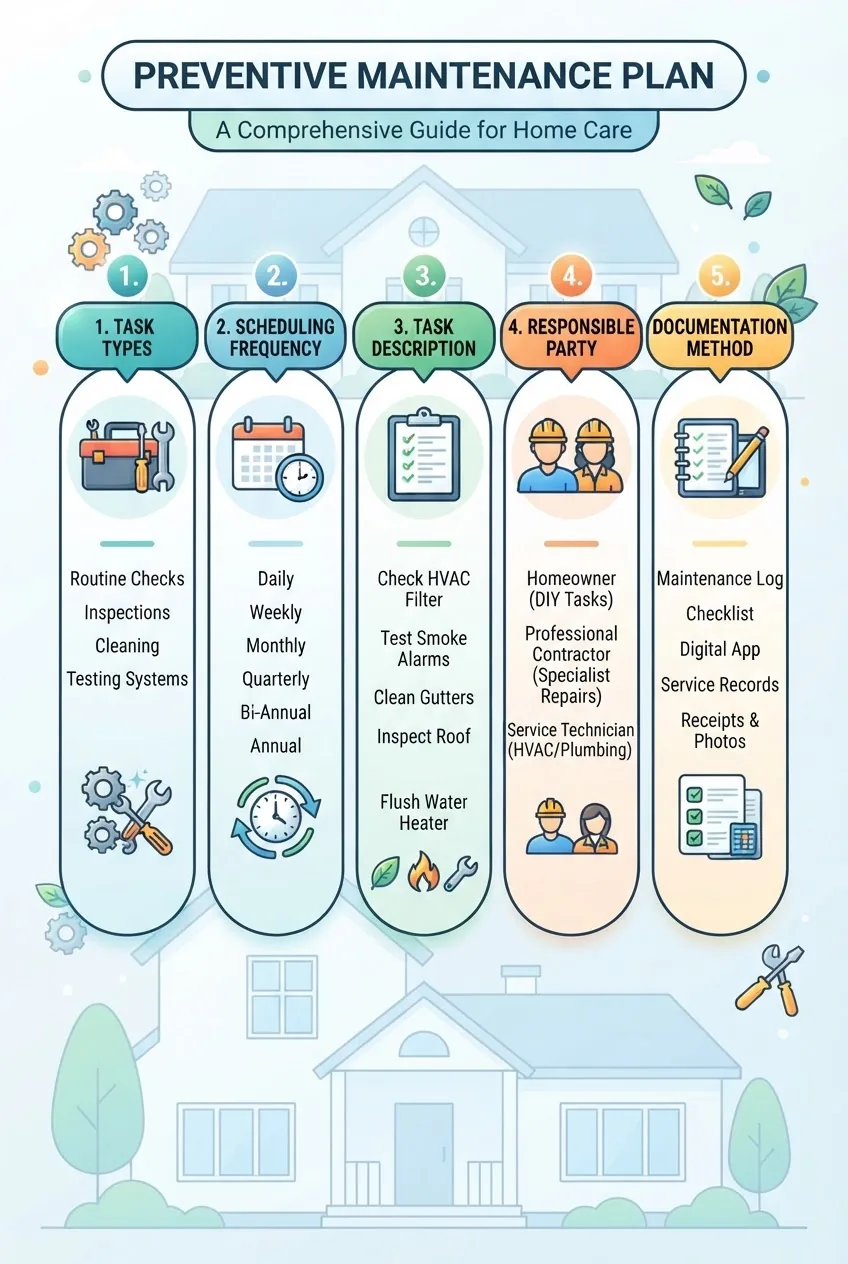
This section explains the five essential components of a practical preventive maintenance plan and provides a structured sample to adapt. Use this plan to pair with a comprehensive maintenance inspection checklist when you need deeper inspections.
| Component | Purpose | Example Entry |
|---|---|---|
| Task types | Groups of related actions (e.g., HVAC, plumbing, exterior) | HVAC filter change, attic vent inspection, gutter clean |
| Scheduling frequency | How often to perform (monthly, quarterly, seasonal, annual) | HVAC filters monthly (or every 90 days for low-dust homes); roof check each spring and fall |
| Task description | Clear, measurable steps and pass/fail criteria | “Inspect sump pump: pour 5 gallons of water — pump must activate within 15 seconds.” |
| Responsible party | Who performs task and backup contact | Homeowner performs monthly checks; HVAC pro for annual tune-up (contractor name & license) |
| Documentation | Where notes, receipts, and photos are stored | Shared cloud folder + maintenance app entries + paper binder for warranties |
Sample plan snippet (narrative):
“For HVAC: Replace or clean filters on the 1st of each month; record filter size, brand, date; schedule certified technician for spring inspection before cooling season. If airflow drops below 350 CFM per vent (measured with simple anemometer), escalate to pro.”
How to use this structure:
- Catalog assets: list heating, cooling, plumbing, roof, appliances, and major exterior systems with installation year and warranty end dates.
- Assign frequencies: use manufacturer recommendations plus climate adjustments (e.g., humid climates increase mold checks).
- Define accept/reject criteria: what constitutes “needs service” for each check so decisions are consistent.
- Set budget triggers: flag repairs above predetermined thresholds (e.g., >$500 requires second quote).
For deep inspection compatibility, pair this plan with an expanded checklist available here: comprehensive maintenance inspection checklist.
Monthly Preventive Maintenance Schedule Guide for Homeowners
Transition: The next section converts the plan into a practical month-by-month schedule with 1–3 focused tasks per month so the workload stays manageable.
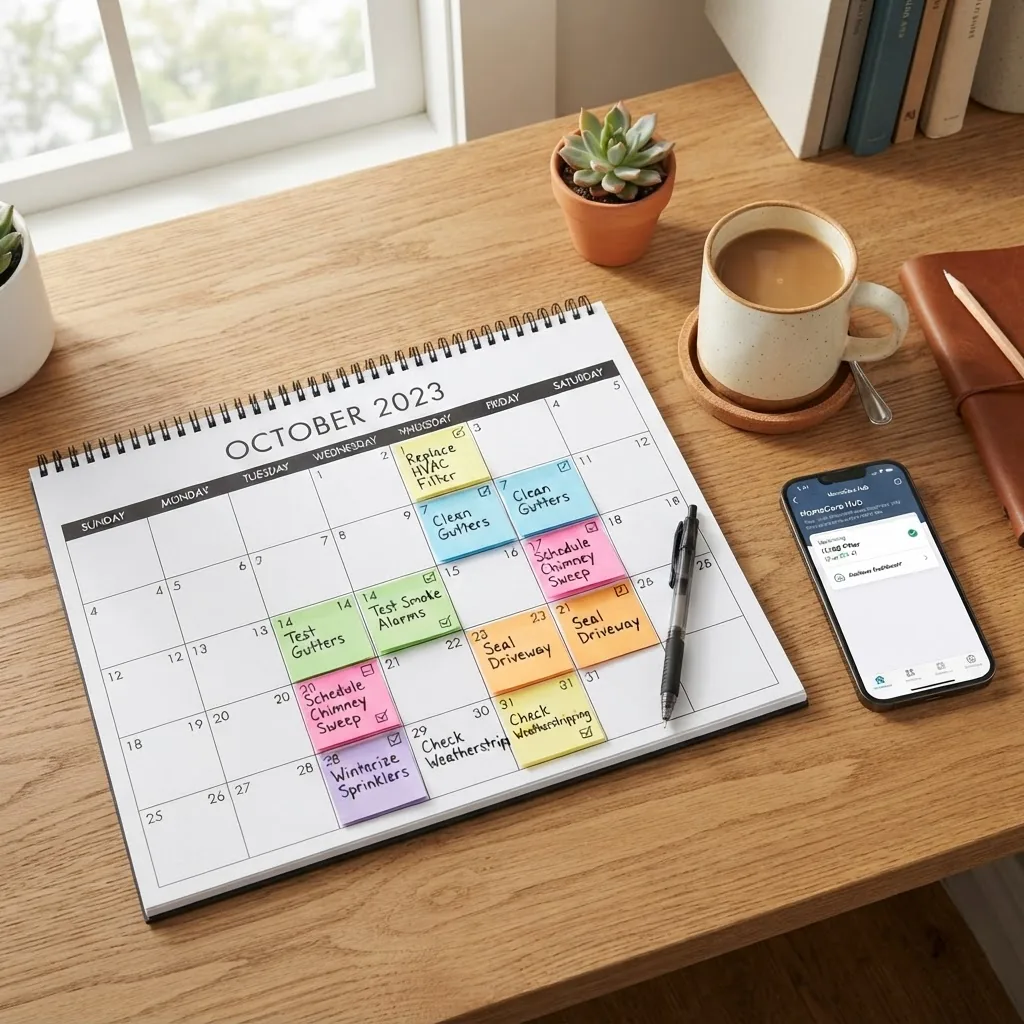
Below is a compact month-by-month schedule you can print or copy into an app. Each month lists 1–3 priority tasks plus a 1-line rationale. Use this as a baseline and adapt to your home’s age, climate, and equipment.
| Month | Key Tasks (1–3) | Why / Notes |
|---|---|---|
| January | 1. Test smoke & CO alarms; 2. Insulate exposed pipes | Cold months risk frozen pipes; safety devices should function after holidays. |
| February | 1. Check attic insulation & vents; 2. Inspect roof for ice dams | Prevent heat loss and water intrusion as temperatures vary. |
| March | 1. Service furnace/heat pump (pre-summer tune-up if heat pump); 2. Clean dryer vent | Prepare systems for season transition and reduce fire risk. |
| April | 1. Inspect gutters and downspouts; 2. Check exterior drainage | Spring rains test water management; clear debris to prevent backups. |
| May | 1. AC system check before peak; 2. Test irrigation system | Peak cooling season requires efficient HVAC and healthy landscaping water delivery. |
| June | 1. Seal gaps around doors/windows; 2. Inspect outdoor plumbing/hoses | Reduce cooling losses and prevent summer leaks. |
| July | 1. Clean or replace HVAC filters monthly in hot months; 2. Check attic for ventilation issues | High usage months need frequent filter changes to maintain efficiency. |
| August | 1. Inspect deck and exterior paint; 2. Service pool or hot tub systems | Protect exterior surfaces and equipment used heavily in warm months. |
| September | 1. Prepare heating system for fall; 2. Clean gutters again | Avoid cold-weather surprises and clear leaves before heavy rains. |
| October | 1. Winterize irrigation and outdoor faucets; 2. Inspect roof shingles | Protect systems from freeze damage and repair any roof issues. |
| November | 1. Service fireplace/chimney (if used); 2. Check weatherstripping | Safety and efficiency before sustained cold sets in. |
| December | 1. Test backup generator and battery-operated alarms; 2. Review annual maintenance budget | Prepare for winter storms and set finances for next year’s plan. |
Complementary resources: deep cleaning house checklist, printable schedule guides like printable home cleaning checklist templates, or a downloadable monthly home maintenance checklist PDF.
Case scenario (mini): A 10-year-old 3-bedroom home in a humid climate followed this schedule and documented tasks in a tracking app. After two years they avoided a $4,500 air handler replacement by detecting early coil corrosion during a routine May inspection. According to a 2022 industry report, planned maintenance reduces emergency failures by roughly 35% (industry report).
How to Customize Your Preventive Maintenance Plan for Your Home
Transition: Use the month-by-month guide as a foundation; customize using the steps below to match your home’s profile.
This section walks through step-by-step adaptation. Ask these questions to prioritize tasks:
- What is my home size and layout? Larger or multi-level homes require more frequent gutter, exterior, and HVAC zone checks. Note square footage and HVAC zones.
- What climate factors affect my home? High humidity increases mold and HVAC strain; freeze-thaw cycles increase roof and foundation risk. Adjust inspection frequency: add monthly humidity checks if RH > 55% indoors.
- How old are key systems? For equipment older than 10 years, move from preventive to semi-annual checks and set a replacement fund: aim to save 1–3% of home value annually for lifecycle replacement costs.
- What is my maintenance budget? Start with an annual baseline: $500–$1,500 for basic preventive care on an average home; scale up for larger or older properties. Flag projects above $500 for quotes.
- Who will perform tasks? Mark tasks as DIY or pro. For DIY, list required tools and safety limits; for pros, store contractor contact and license info.
Adaptation tips:
- If you have central HVAC and pets, change filters every 30 days; otherwise, every 60–90 days.
- In coastal salt-air zones, add quarterly exterior corrosion inspections.
- If you plan to sell within 1–2 years, prioritize cosmetic and visible repairs; see repairs before selling a home.
- For homeowners who prefer DIY, pair your plan with our DIY home repair projects and home maintenance projects recommendations to increase efficiency.
Tools and Resources to Help Manage Your Preventive Maintenance Plan
Transition: Practical tools make the plan actionable — here’s what I recommend to track and automate tasks.
Use a mix of digital and physical tools to maintain records, set reminders, and store receipts. Below are recommended categories and examples.
- Maintenance apps and scheduling tools: set recurring reminders, attach photos, and share with family. See curated options in top home maintenance apps.
- Printable templates and spreadsheets: use a maintenance schedule template or the monthly home maintenance checklist PDF for offline tracking.
- Professional services: consider subscription options for regular small repairs; explore handyman subscription services for scheduled visits and small repairs.
- Online resources and directories: maintain a list of vetted pros and warranty pages in a cloud folder; find more options at home improvement online resources.
- Print references: a paper binder with manuals and receipts is invaluable during inspections and resale.
Additional resources: maintenance schedule template, home improvement online resources, and low-cost handyman subscriptions linked above.
Common Challenges and Solutions in Preventive Maintenance
Transition: Common hurdles can derail plans. Below I list real problems I’ve seen and precise remedies you can apply.
- Procrastination: I once delayed gutter cleaning and later repaired water damage; fix: schedule a recurring phone reminder on a consistent day (e.g., first Saturday of April and October) and assign a 90-minute block.
- Task overload: Trying to do everything in one weekend causes burnout. Solution: limit to 1–3 key monthly tasks—use the month-by-month guide above to spread work.
- Budgeting shortfalls: I underestimated an HVAC coil replacement; solution: create an annual reserve fund (save $50–$200/month depending on system age) and set repair thresholds (e.g., any repair >$500 requires two bids).
- Knowledge gaps: If unsure about a task (e.g., electrical), stop and hire a licensed pro. Use local certified inspector resources like certified home inspector associations for referrals.
- Seasonal timing: Missing seasonal windows (e.g., pre-winter HVAC tune-up) increases risk. Solution: set seasonal reminders two months in advance and book pros early (Sept/Oct for heating).
- Tracking failures: Records scattered across apps and papers become unusable. I fixed this by consolidating records into one cloud folder and linking entries in the chosen maintenance app.
For troubleshooting deeper issues, consult our common home maintenance problems resource.
Before you start
- Tools: basic hand tools, ladder, flashlight, simple anemometer or airflow meter, insulation tape, gloves, GFCI tester
- Documentation: recent appliance manuals, warranty cards, previous repair receipts
- Accounts: maintenance app or shared cloud folder set up with at least one backup
- Budget: set an initial reserve of $500–$1,000 for first-year adjustments
Core steps to build and implement your preventive maintenance plan
-
Step 1 — Catalog and prioritize assets
List every major system and appliance with make/model, installation year, and warranty expiration. Time: 60–90 minutes. Output: a single spreadsheet with columns: Item, Location, Install Date, Warranty End, Priority (High/Med/Low).
-
Step 2 — Assign task types and frequencies
For each asset, choose task category (inspect, clean, replace, lubricate) and set frequency using manufacturer guidance plus climate adjustments. Example: HVAC filter: monthly (30 days) in high-dust homes; otherwise 60–90 days. Time: 30–60 minutes.
-
Step 3 — Define pass/fail criteria and budgets
Write measurable checks (e.g., “no more than 1/4-inch debris in gutter after cleaning”). Set cost triggers: repairs >$500 require two bids; replacements >$1,500 require three quotes. Time: 30 minutes.
-
Step 4 — Choose tracking tools and import schedule
Pick one maintenance app or spreadsheet, import the monthly schedule and set recurring reminders for each task. Recommended apps listed in our resources. Time: 60 minutes initial setup; then 10 minutes monthly.
-
Step 5 — Perform initial baseline inspections
Complete a first round of checks: test alarms, inspect roof, run water tests, check HVAC airflow, and record photos. Time: 2–4 hours. Log results and mark immediate actions.
-
Step 6 — Schedule specialists for annual tasks
Book certified pros for HVAC, chimney, roof, and major inspections in the recommended seasonal windows. Store contractor data and expected costs. Time: 30 minutes to schedule.
-
Step 7 — Review and adapt quarterly
Quarterly, review completed tasks, update priorities, and adjust frequency based on findings (e.g., increase gutter cleaning if trees nearby). Time: 30 minutes per quarter.
-
Step 8 — Maintain receipts and warranty documentation
Store receipts, photos, and warranty info in one cloud folder with subfolders by year and system. This saves money at resale and simplifies insurance claims.
Common mistakes and how to avoid them
I once skipped documenting a furnace tune-up, and when I sold the house I couldn’t prove regular maintenance—this reduced buyer confidence. I now log every service with photos and the technician’s contact.
- Mistake: Doing everything at once. Avoidance: spread tasks monthly using the schedule above.
- Mistake: Ignoring documentation. Avoidance: photograph serial numbers and upload invoices immediately.
- Mistake: Using a single vendor for all quotes. Avoidance: maintain at least three vetted contacts for major repairs.
Quick verification checklist
- All major systems cataloged with install dates and warranties
- Monthly schedule entered into an app/calendar with reminders
- Baseline inspections completed and logged with photos
- Annual budget reserve created and set to automatic savings
- At least two contractors saved for major trades (HVAC, plumbing, roofing)
When to call a professional
Call a licensed pro immediately if you encounter any of the following: structural damage, active water leaks difficult to stop, gas smell, electrical sparking, or HVAC failures beyond filter changes. For annual safety and compliance checks, consult certified sources: building standards at International Code Council and inspector referral at NACHI.
Final note on trust and sources: according to a 2023 industry report, homeowners who follow preventive schedules report fewer emergency repairs and higher resale confidence (industry report). For energy-related guidance consult the U.S. Department of Energy at energy.gov.
Now that you have the plan structure, monthly calendar, customization steps, and tools, implement the initial week of baseline inspections and import the monthly schedule into your preferred app. Keep records, and review quarterly to get maximum cost savings and peace of mind.