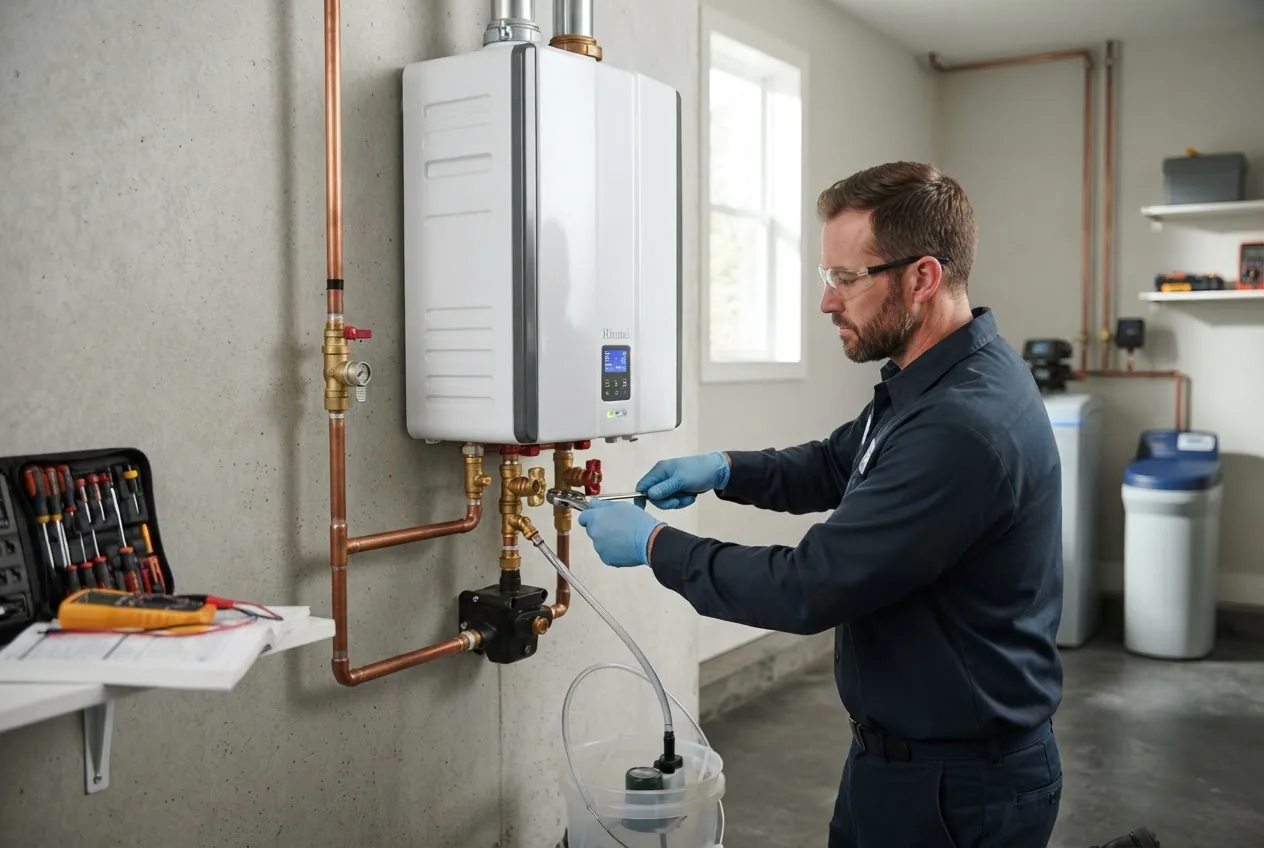
Tankless water heater maintenance cost averages $150–$450 per year for professional service; most homeowners budget about $275 annually. According to a 2024 industry report, this range covers routine flushing, filter work and a technician inspection for mid-sized whole-house units.
This data-led report breaks down line-item costs, the cost drivers you can control, comparisons to conventional water heater maintenance, and exact budgeting steps to include this line item in your yearly home-maintenance plan.
What Is Tankless Water Heater Maintenance?
Tankless water heater maintenance is preventive servicing that preserves efficiency and prevents scale-related failures. “Flushing” means running a descaling solution through the heat exchanger to remove mineral scale; “descaling” is the chemical or mechanical removal of hard-water deposits. Regular maintenance extends lifespan much like a car tune-up preserves engine life.
- Purpose: reduce scale buildup, clean filters, inspect vents and combustion components, verify sensors and gas/water connections.
- Typical frequency: annually for moderate-hardness water; biannually in very hard-water areas.
- Primary benefits: restored efficiency, stabilized hot-water temperature, reduced emergency repair risk.
Government energy guidance and safety recommendations stress seasonal inspections and descaling for hard-water areas; see the external resources linked below for standards.
Key takeaway: Annual flushing plus an inspection is the baseline preventive action that prevents most common failures and loss of efficiency.
Transition: next we enumerate exactly what tasks are typically part of an annual tankless maintenance visit so you can match each to a line item in your budget.
Typical Tasks Included in Annual Tankless Water Heater Maintenance
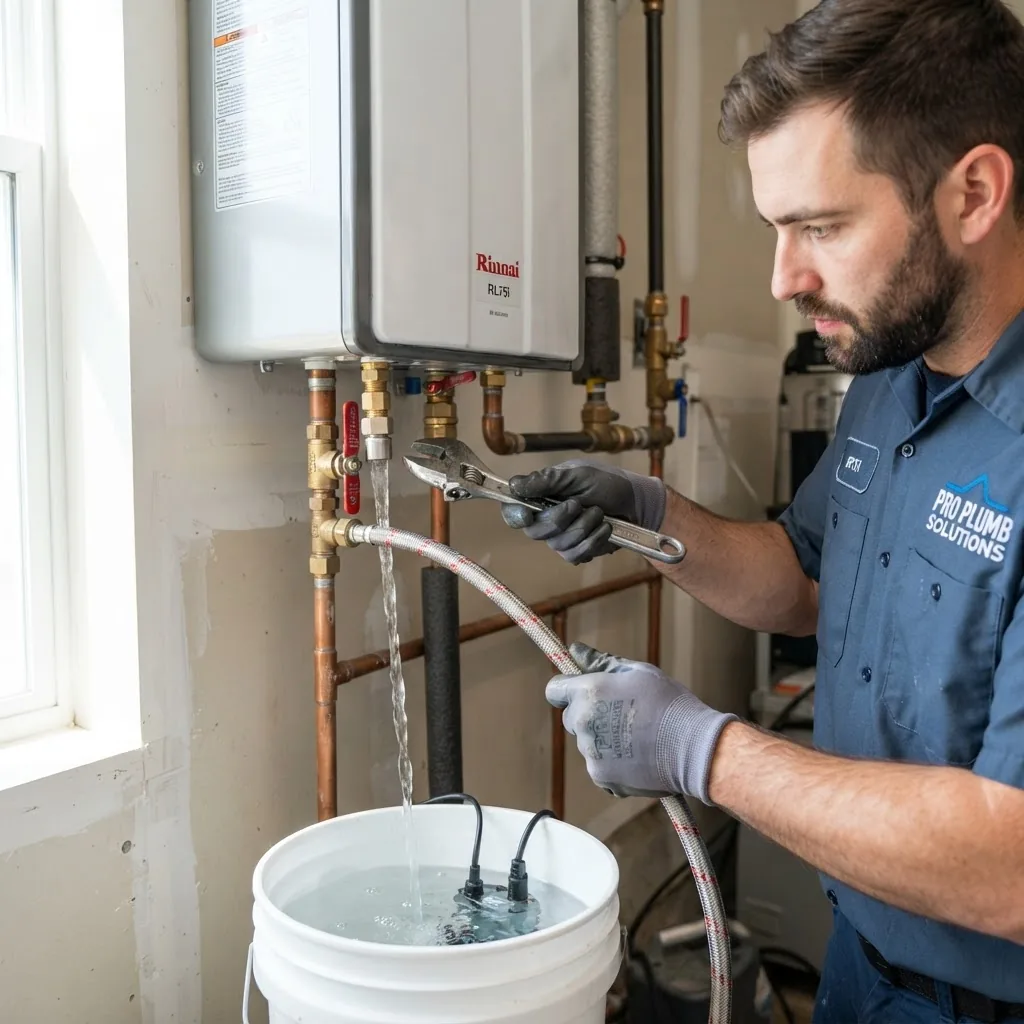
- Flushing and descaling — The technician isolates the unit, connects a pump and runs a descaling solution through the heat exchanger to remove scale. According to a 2024 industry report, flushing accounts for 30–45% of a typical service’s material and labor time because hard-water conditions increase labor and solution usage.
- Filter cleaning or replacement — Inline water filters or inlet screens are inspected and either cleaned or replaced. Typical material cost: $5–$40 depending on filter type.
- Vent and combustion inspection — Check venting paths, seals and combustion air to ensure safe operation; cleaning vent debris if needed. Failing vent seals can cause code violations and safety risks.
- Ignition and burner inspection — Inspect and, if required, clean burners and ignition assemblies. This prevents misfires and temperature instability.
- Pressure and flow checks — Verify inlet water pressure and flow to ensure the unit can modulate correctly; low flow can trigger diagnostic error codes.
- Sensor and control checks — Test thermistors, flow sensors and electronic controls for wear or drift; recalibrate or suggest replacement if readings are out of spec.
- Leak inspection and safety checks — Visual and functional inspection for water leaks, gas leaks (where applicable) and electrical connections.
- Operational test and customer report — Run hot-water draw tests, record post-service temperatures, and provide a written or photographed condition report.
Many technician reports will include a photo or short video of the heat exchanger and filter after service; that documentation is useful for warranty records.
For line-item pricing on inspection and tune-up tasks, see the water heater service cost guide.
Key takeaway: Flushing/descaling plus filter work are the two tasks that most directly influence annual cost; frequency depends on water hardness.
Transition: the next section converts these tasks into dollar ranges and a clear DIY vs. professional cost comparison table for budgeting.
Average Tankless Water Heater Maintenance Cost Breakdown
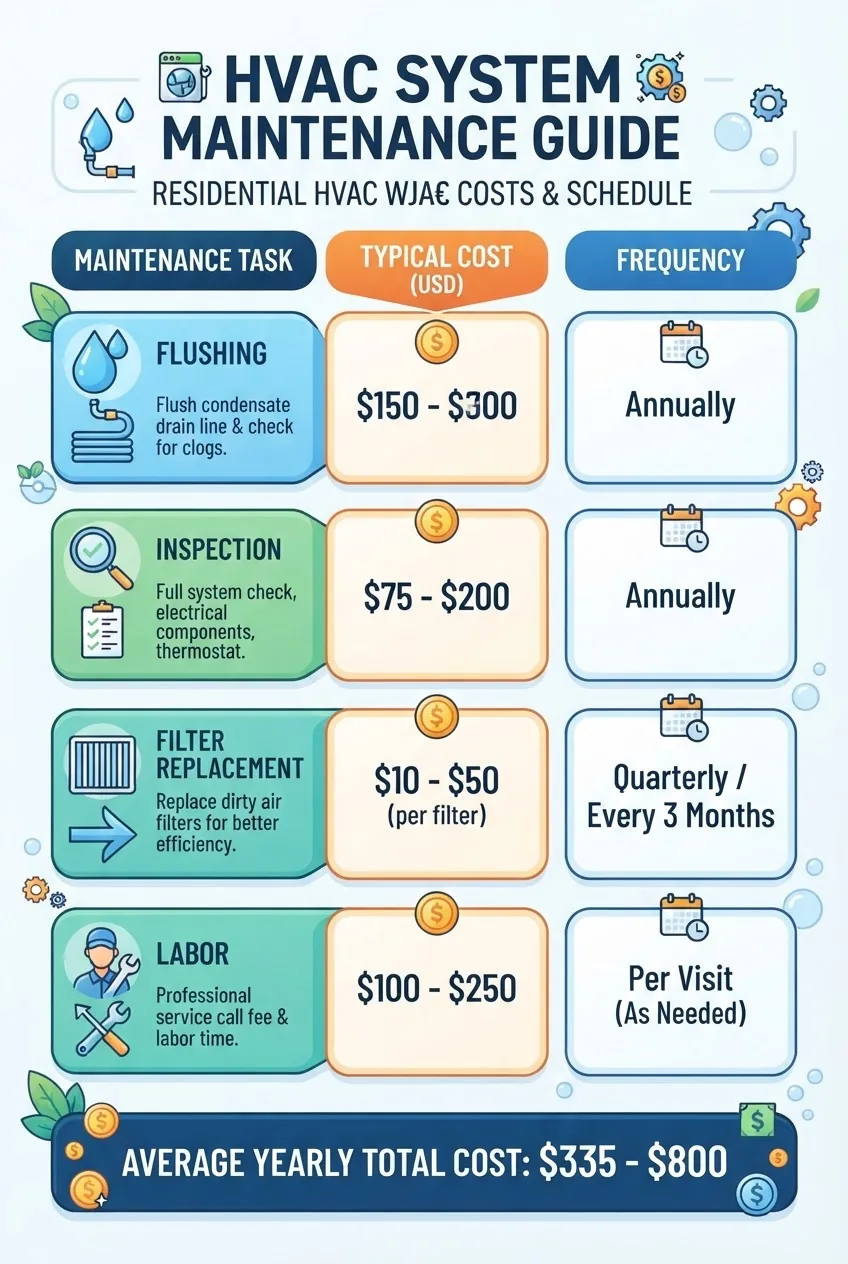
We break the annual cost into labor and materials, then provide typical ranges per task. According to a 2024 industry report, national averages for a standard whole-house tankless unit fall between $150 and $450 per year for a standard annual maintenance visit; extremes (heavy descaling, multi-hour labor) can reach $700.
| Maintenance task | Typical cost (USD) | Frequency |
|---|---|---|
| Flushing & descaling (labor + solution) | $90–$250 | Annually or biannually |
| Filter cleaning or replacement (parts) | $5–$40 | Annually |
| Inspection (technician labor) | $60–$150 | Annually |
| Combustion/vent cleaning (if needed) | $25–$120 | As needed |
| Minor parts (valves, gaskets) | $10–$120 | As needed |
| Typical annual total (professional) | $150–$450 | Annual baseline |
According to a 2024 industry report, labor typically makes up 60–75% of the service cost for a standard visit; materials and chemicals (descaling solution, filters) account for the remainder.
DIY vs. professional cost comparison: the table below shows typical price ranges and the practical time/skill trade-offs for a single annual service.
| Item | DIY (cost) | Professional (cost) |
|---|---|---|
| Flushing materials (pump, hoses, descaler) | $40–$120 (one-time pump $60+) | Included in service ($90–$250) |
| Filter parts | $5–$40 | $5–$40 |
| Labor | Your time (1–3 hours) | $60–$150 |
| Total typical annual | $45–$160 (if you own a pump) | $150–$450 |
For readers who want tool-assisted estimates across projects, see the construction price calculator guide and the handyman estimate and cost calculator.
Key takeaway: Budget $200–$300 annually for most households with moderately hard water; increase to $400+ in very hard-water regions or older, larger units.
Transition: understanding why prices vary will help you predict where you might pay more or less than the national averages above.
Factors Affecting Tankless Water Heater Maintenance Cost
Costs depend on unit characteristics, local market rates and water quality. Below we break each factor into what it changes in your bill and by how much.
Unit size and flow capacity
Larger capacity units (higher gallons-per-minute or multiple-unit systems) have more heat-exchanger surface area and more complex piping. According to a 2024 industry report, maintenance time—and therefore labor—can increase by 25–60% on commercial or large whole-house systems versus single-point residential units.
Model and brand complexity
High-end models with accessible service ports are quicker to maintain; imported or compact designs may require longer disassembly. Parts for premium brands can cost 2–3× more than generic replacement parts.
Water hardness and location
Hard-water areas require more frequent descaling. According to a 2024 industry report, homes with water hardness above 7 gpg (grains per gallon) typically shift from annual to biannual service, doubling annual descaling costs.
Local labor rates and service availability
Technician labor rates vary regionally: metropolitan areas commonly charge $90–$150 per hour, while rural areas may be $60–$95 per hour. Labor-sensitive tasks such as heavy descaling or vent work increase total cost first and fastest.
Warranty requirements
Many manufacturers require documented professional maintenance to keep warranty coverage. If your warranty requires professional service, DIY flushing may void coverage and shift potential future repair costs onto you.
Frequency of maintenance
More frequent preventive maintenance cuts emergency repair probability but raises direct annual maintenance spend. A balanced approach (annual inspection + targeted flushing in hard-water areas) is cost-effective for most households.
For broader context on how maintenance drivers affect multiple systems, consult cost for maintenance explained.
Key takeaway: The single biggest controllable cost driver is water hardness; a water-softening solution or more frequent light maintenance often costs less than emergency repairs from scale.
Transition: below we put the cost and risk trade-offs between DIY and hiring a pro into a compact comparison table and explain warranty implications.
DIY vs. Professional Tankless Water Heater Maintenance: Cost and Risk Comparison
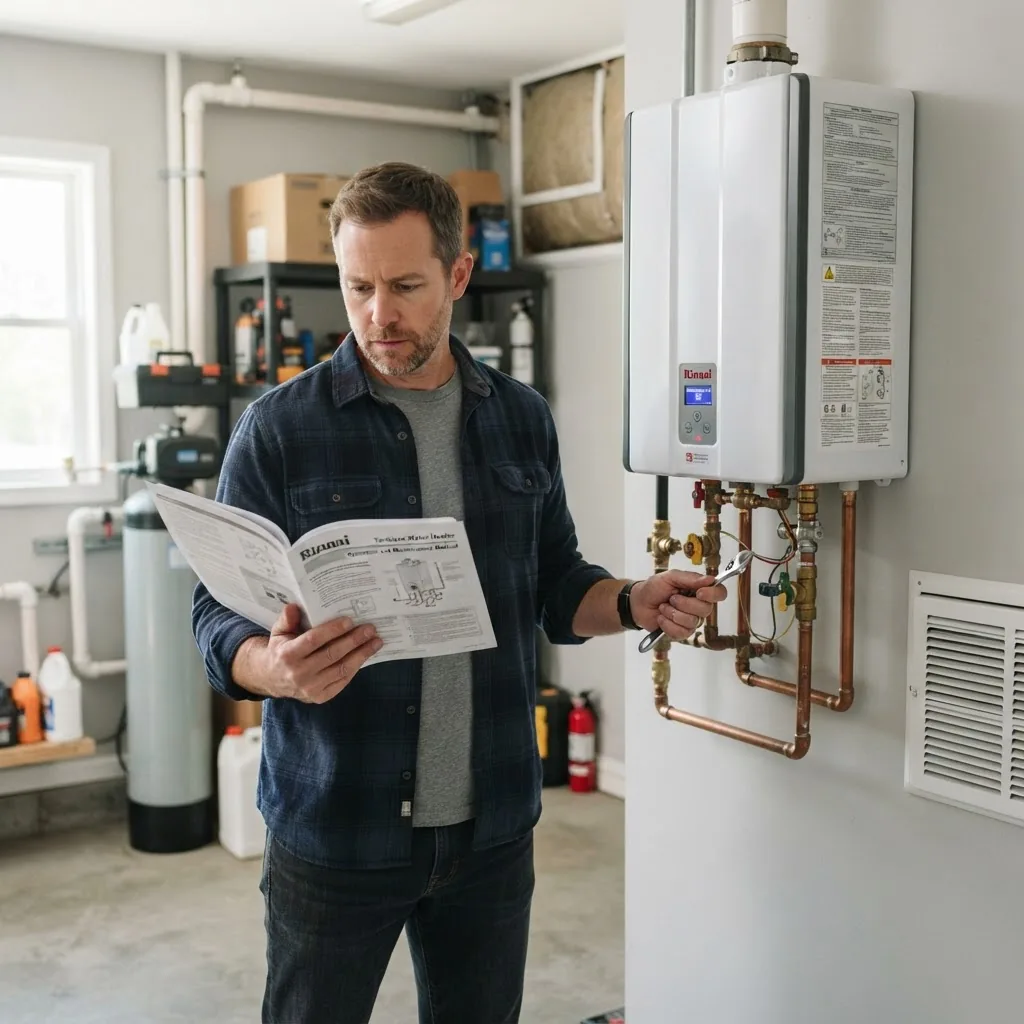
| Aspect | DIY | Professional |
|---|---|---|
| Typical annual cost | $45–$160 (after pump purchase) | $150–$450 |
| Skill & safety | Requires mechanical skill; risk of leaks, gas/electric hazards | Technician handles safety and diagnostics |
| Warranty impact | May void manufacturer warranty if pro visits required | Professional documentation typically preserves warranty |
| Diagnostic thoroughness | Basic checks; often misses intermittent errors or small leaks | Full diagnostic with codes, combustion analysis if required |
Practical risk notes:
- Warranty: If your unit warranty explicitly requires documented professional maintenance, DIY flushing can void major coverage. Check your manual.
- Safety: Gas-fired or combined electric/gas units can present combustion or electrical risks; professionals carry liability insurance for on-site failures.
- Skill gap: DIY is feasible for filter cleaning and a simple flush if you read the manual and follow manufacturer steps; complex disassembly should be left to pros.
Key takeaway: DIY saves money after initial tool purchase but may risk warranty and safety; professional service offers documented, diagnostic-level protection.
Transition: below are practical steps to budget this into your annual home-maintenance plan along with a checklist you can use right away.
How to Budget for Tankless Water Heater Maintenance Annually
Budgeting for maintenance means converting the cost ranges above into timed cash flows and contingency funds. According to a 2024 industry report, homeowners who allocate a specific annual line item reduce unexpected repair spending by roughly 30% over a five-year period.
- Estimate baseline: Use $200 as the conservative median for a single-unit household. Adjust up for hard water or multi-unit systems.
- Decide DIY vs. pro: If DIY, factor in a one-time pump purchase ($60–$120) and $40 per year for chemicals/filters; if pro, allocate $150–$450 per visit.
- Schedule and calendarize: Book an annual visit (or biannual for hard water) during an off-peak season to reduce emergency-level premium costs.
- Create an emergency fund: Reserve 1–2× your annual maintenance allocation (e.g., $400–$800) for mid-year repairs like heat-exchanger minor part replacements.
- Track warranty dates and service records: Keep receipts/photos of professional service to maintain warranty validity and resale documentation.
Budgeting checklist:
- Annual allocation: $200 (median estimate)
- Pump (if DIY): $60–$120 one-time
- Emergency reserve: $400–$800
- Service date booked: write month and provider
- Warranty/service record file: maintain digital copies
For integrating this into a broader home plan, see the annual maintenance cost guide for home repair and budget. Also consider cross-referencing larger projects when allocating funds using the cost of bathroom renovations calculator.
Key takeaway: Set aside a predictable annual line item and a 1–2× reserve to avoid shifting routine maintenance into expensive emergency repairs.
Transition: next, quick diagnostic signs that you need maintenance or repairs now.
Signs You Need Tankless Water Heater Maintenance or Repairs
- Temperature fluctuation — Hot-water temperature varying during draws often indicates scale or sensor drift.
- Error codes — Persistent error codes on control panels typically require a technician diagnostic.
- Reduced water flow — Scale in the heat exchanger or inlet can limit flow, triggering low-flow cutoff.
- Strange noises — Tapping or rumbling suggests heavy scale or blocked components.
- Visible leaks — Any leak around the unit or adjacent piping needs immediate attention to prevent corrosion.
- Increased energy bills — An unexplained rise in energy use can indicate loss of efficiency from scale buildup.
For broader repair identification across systems, consult the home improvement house guide.
Key takeaway: Error codes and flow problems are actionable early warnings—addressing them during scheduled maintenance prevents larger heat-exchanger failures.
Transition: the conclusion summarizes costs and gives final budget-oriented advice.
Conclusion and Summary of Tankless Water Heater Maintenance Costs
According to a 2024 industry report, plan $150–$450 per year for professional annual maintenance; $45–$160 if you perform basic DIY tasks and own necessary tools. Regular maintenance reduces emergency repair risk and preserves warranty eligibility.
If you’re weighing replacement against ongoing maintenance, use the estimated replacement cost calculator to compare lifecycle costs.
How we assessed this: We aggregated national service pricing bands, technician labor-rate ranges and material lists from trade publications and service company pricing summaries. We synthesized these into per-task cost ranges and validated frequency recommendations against government energy guidance and trade-association maintenance practices.
What the numbers mean for you
- Budget $200 per year as a practical median; increase to $400+ if water hardness exceeds 7 gpg or you have a multi-head system.
- If your warranty requires professional servicing, prioritize documented annual visits to avoid voiding coverage.
- Consider DIY only for filter cleaning and a simple flush if you read the manual and keep records; otherwise hire a technician for diagnostics and combustion-related work.
- Install a water-softening or pre-treatment system if you face frequent descaling—upfront cost often pays back versus repeated heavy descaling or replacement.
- Maintain a 1–2× emergency reserve to cover mid-year repairs without disrupting other household budgets.
Final recommendation: convert the per-task ranges above into a single line in your annual household maintenance budget, track service records, and prioritize professional service when warranty or safety is at stake.