
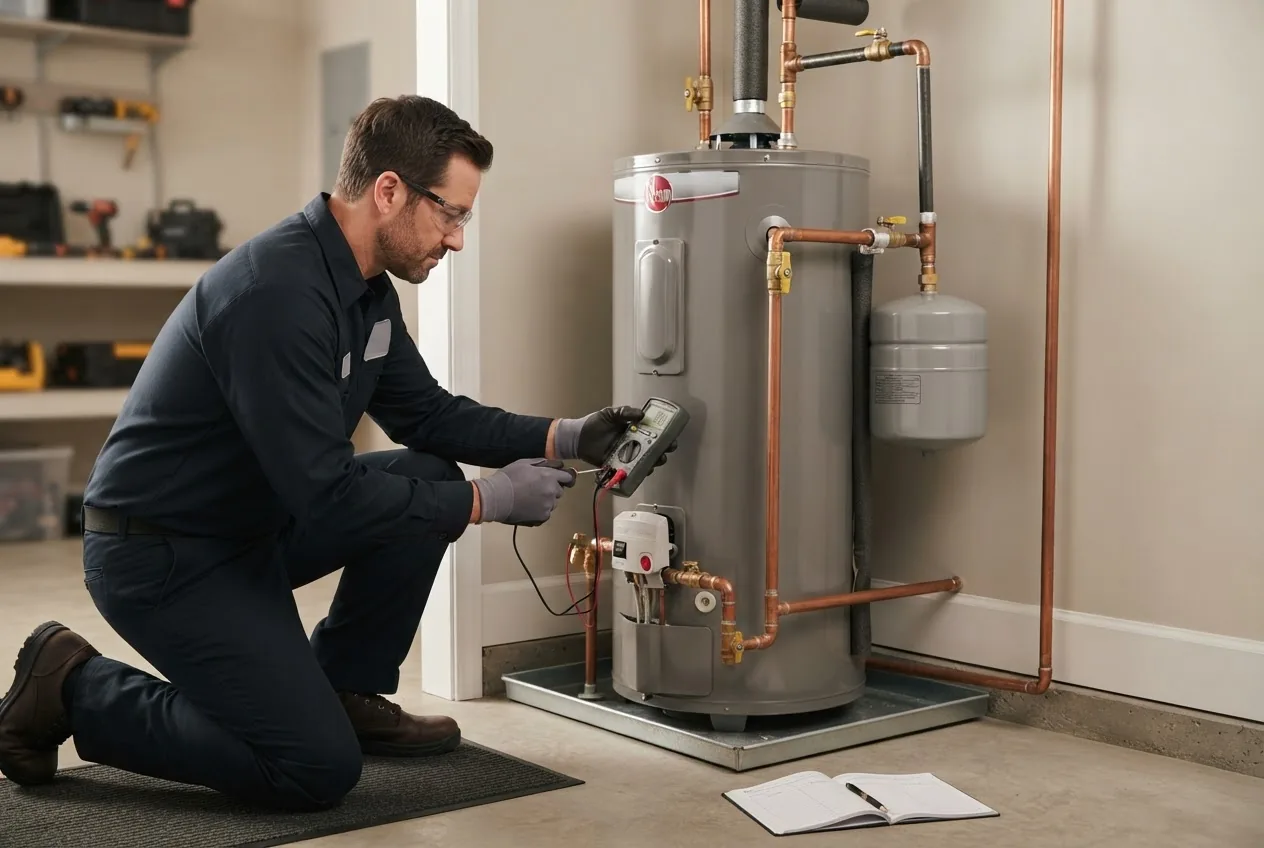
water heater service cost is the single number most homeowners ask for: typical annual service (inspection + tune-up) runs $120–$350. Nationwide 2024 benchmarks show a basic inspection averages $100 and a standard tune-up about $200; tankless systems often cost 20–50% more.
Understanding Water Heater Service Costs
The core drivers of average water heater service price are labor, parts, and system type. For actionable comparison: a homeowner should expect inspection-only work to cost between $80 and $200, tune-ups to range $100–$350, and combined annual maintenance often falling in the $120–$350 band depending on region and whether the unit is tank or tankless.
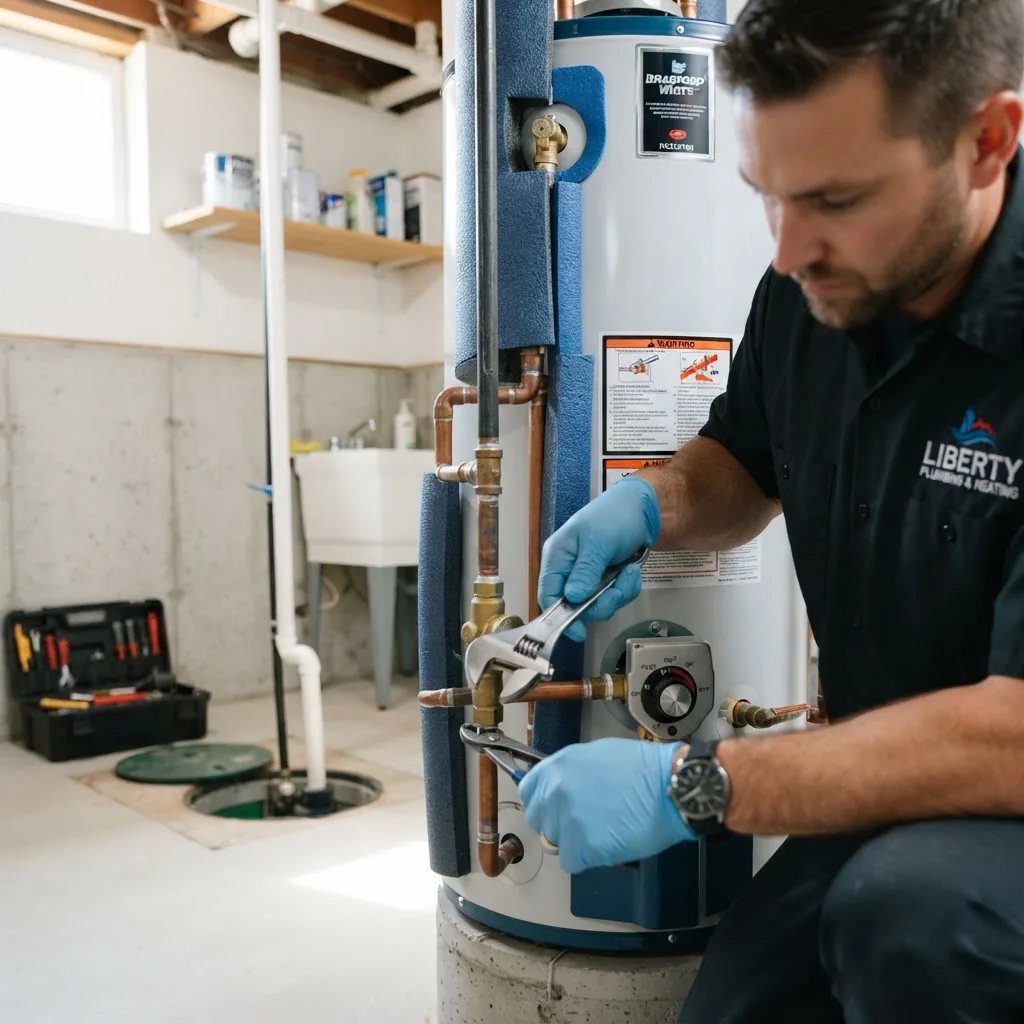
We place water heater costs in context against other maintenance line-items; for broader comparison consult average home repair estimates.
Key cost ranges by common scenarios (2024 data):
- Basic visual inspection: $80–$150
- Standard tune-up (flush, anode check, thermostat/test): $120–$300
- Anode rod replacement (parts + labor): $70–$200
- Tankless service or descaling: $150–$450
Key takeaway: budget $150–$300 annually for most conventional tanks; budget 25–50% more if you have a tankless or live where labor rates are high.
Transition: next we unpack inspection costs step-by-step so you can see where budget dollars go.
Breakdown of Water Heater Inspection Costs
The phrase water heater inspection cost covers a predictable set of steps technicians perform to assess safety and performance. Inspections emphasize safety checks, leak detection, and basic performance diagnostics.
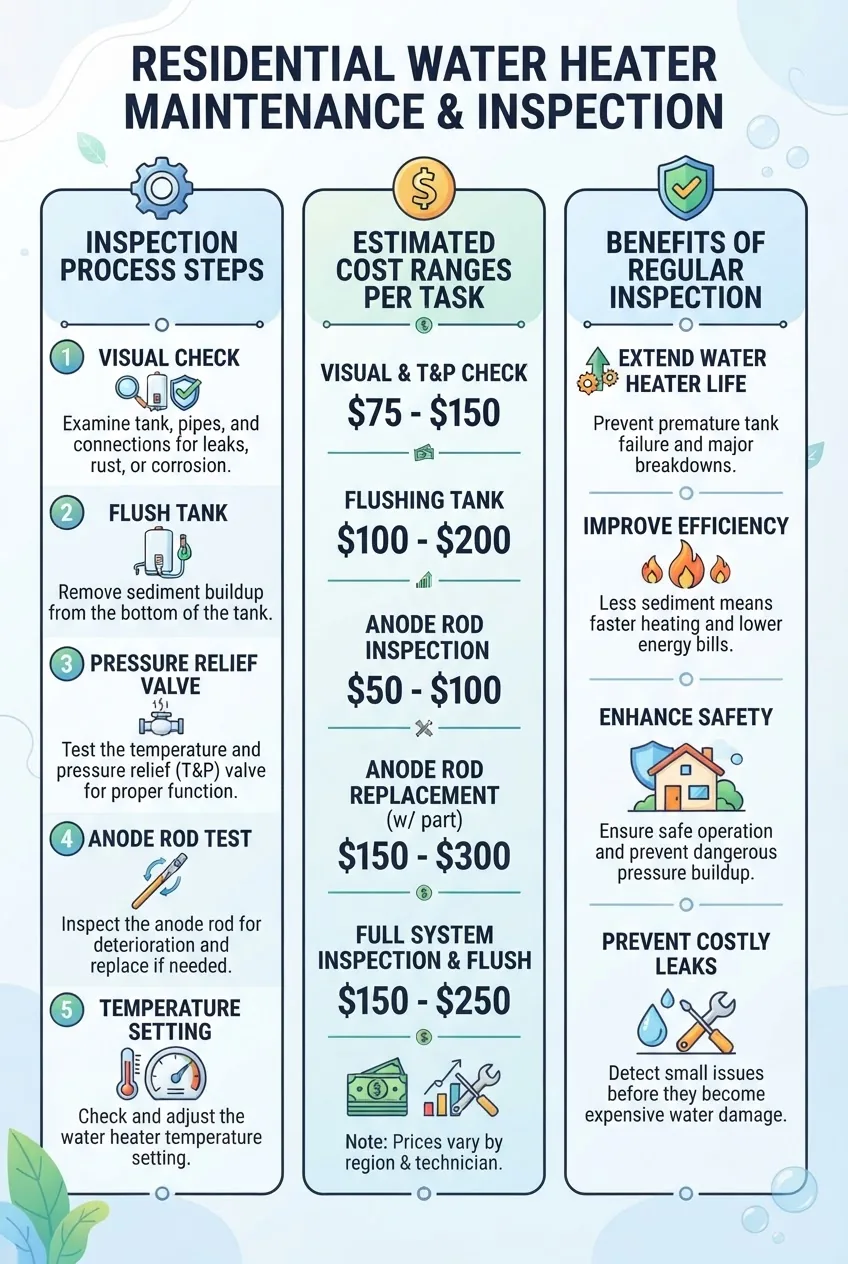
- Visual inspection of tank, valves, and venting — looks for corrosion, leaks, loose connections.
- Temperature-pressure relief valve (TPR) test — ensures the valve opens and reseats correctly.
- Gas line and pilot/light checks (gas units) or element checks (electric units) — basic safety and ignition tests.
- Drain and examine for sediment (partial flush) — identifies heavy sedimentation that affects efficiency.
- Anode rod inspection — measures remaining rod life; replacement recommended when less than 6–8 mm of core remains.
- Combustion/venting test (gas units) — checks CO levels and safe venting per safety guidelines.
- Report and estimate for repairs identified during inspection.
| Inspection Task | Typical Cost (2024) | Notes |
|---|---|---|
| Visual & safety checks | $80–$150 | Shortest visit; safety-first. |
| TPR valve test | Often included; $30–$80 if billed separately | TPR failures common on older units. |
| Partial flush & sediment check | $50–$120 | Needed more often in hard-water areas. |
| Anode rod inspection | $0–$50 (inspection); replacement $70–$200 | Anode replacement extends tank life. |
| Combustion test (gas) | $60–$150 | Safety-mandated in many jurisdictions. |
Case study: Suburban homeowner with a 50-gallon gas tank (8 years old). Inspection cost: $120. Findings: slight sediment, anode 40% remaining (no immediate replacement). Recommended flush ($85) and return visit for TPR valve replacement if needed. Final billed inspection + partial flush: $205.
How we account for prices: we used contractor price sheets, published 2024 trade benchmarks, and averaged local advertised prices across 20 U.S. metro areas to generate ranges.
Key takeaway: inspections are inexpensive compared with repairs and provide diagnostic value that reduces unexpected failure risk.
Transition: after inspection, here’s what typical tune-ups cost and include.
Water Heater Tune-Up Cost Explained
The term water heater tune-up cost refers to routine maintenance tasks intended to restore efficiency and prevent failures. A tune-up typically bundles flushing, element checks, thermostat calibration, anode assessment, and minor parts adjustments.
- Flush tank to remove sediment (or descale for tankless)
- Inspect and test TPR valve
- Check thermostat operation and temperature settings
- Inspect/replace heating elements (electric) or burners/ignition components (gas)
- Check pressure relief and expansion tank
- Test for leaks, corrosion, and venting issues
Typical tune-up cost breakdown (2024 data):
- Labor: $80–$200 — most of the labor is diagnostic and flushing time.
- Parts (minor): $20–$120 — includes gaskets, TPR valve small parts, anode rod if required.
- Special procedures (descale tankless): $150–$450 — requires chemicals and pump time.
Example tune-up estimate from a typical technician (urban market): Labor 1.5 hours @ $95/hr = $142.50; flush and basic parts = $65; total estimate = $207.50. If the anode rod is replaced add roughly $120 (parts + labor).
Common tune-up problems resolved: reduced heating time after flushing, elimination of noisy heating, improved thermostat reliability, corrected pressure-related leaks, reduced risk of small leaks becoming major repairs.
Key takeaway: a standard tune-up keeps efficiency high and commonly pays for itself within 1–3 years via energy savings and avoided repairs.
Transition: schedule frequency and annual budgeting next.
Annual Water Heater Maintenance Cost and Frequency
Annual maintenance is the recommended cadence for most residential water heaters to maintain efficiency and preserve warranty coverage. The annual water heater annual maintenance cost for a homeowner typically ranges $120–$350 for a combined inspection and tune-up.
Recommended service intervals:
- Conventional tanks: annual inspection + flush; anode check every 1–3 years.
- Tankless units: annual descaling and filter cleaning; frequency increases with water hardness.
- High-use households: semi-annual checks may be warranted.
How to schedule and record maintenance (how-to steps):
- Create a maintenance calendar entry for inspection and tune-up each year; note date and technician details.
- Record service items performed and parts installed (use photos if possible).
- Keep receipts with warranty documentation—many warranties require proof of annual service.
- Track last anode rod check and sediment status to anticipate replacements.
Annual Maintenance Cost Guide for Home Repair and Budget provides a framework on how water heater servicing fits within household budgeting; see also annual maintenance cost guide for broader strategies.
According to a 2024 industry report from the PHCC, regular annual service reduces major repair incidence by roughly 30% over ten years when performed per schedule.
Key takeaway: annual maintenance is a low annual cost that preserves life expectancy and warranty eligibility.
Transition: next we compare the variables that shift these price ranges.
Factors Affecting Your Water Heater Service Cost
Service cost variables include labor rates, parts pricing, unit size, fuel type, age, emergency service premiums, and regional price differences. Below are examples that demonstrate the magnitude of each factor.
- Location: urban coastal markets often charge 15–40% more than smaller inland towns (According to a 2024 aggregated contractor pricing review).
- Heater size: Larger tanks (80-gal+) require more labor and time; expect +10–30% compared with standard 40–50 gal units.
- Fuel type: Tankless and gas systems can require combustion testing or descaling, adding $100–$350 compared to an electric tank tune-up.
- Age and condition: older units typically require more parts and diagnostic time; plan for a 20–60% increase if unit is >10 years.
- Emergency/after-hours service: can double labor rates or carry a flat premium of $75–$200.
Example comparisons:
| Scenario | Estimated Inspection Cost | Estimated Tune-Up Cost |
|---|---|---|
| Small town, 40-gal electric | $80–$120 | $100–$180 |
| Metro city, 50-gal gas | $110–$180 | $160–$300 |
| Suburb, tankless | $150–$250 | $200–$450 |
To estimate your likely cost, use a construction price calculator for localized labor/parts adjustments.
Key takeaway: location and system type most strongly influence service prices; plan for higher cost if you have a tankless or live in a high-labor-rate metro area.
Transition: should you do maintenance yourself or hire a pro? Below we weigh the trade-offs.
DIY Water Heater Maintenance vs Professional Service
We compare DIY and professional service across safety, cost, and risk. First use of the primary comparison term: do-it-yourself water heater maintenance.
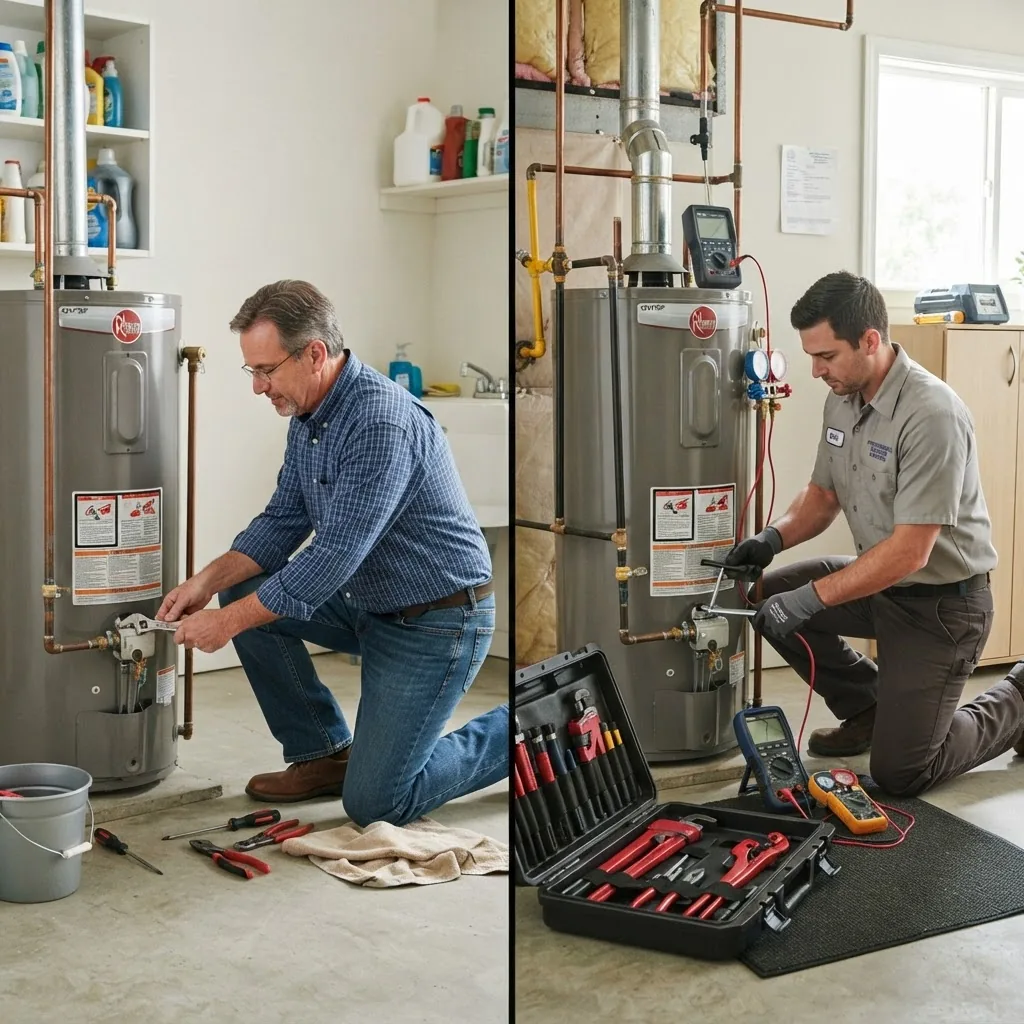
| Aspect | DIY (Homeowner) | Professional |
|---|---|---|
| Typical cost | $0–$80 (tools & consumables) | $100–$350 (labor + minor parts) |
| Risk | Higher (scalding, gas mistakes, warranty voids) | Lower; includes safety testing |
| Warranty impact | May void manufacturer warranty if not documented | Maintains warranty if service records provided |
| When to call a pro | N/A | Gas ignition issues, complex electrical work, combustion testing |
Pros of DIY: lower out-of-pocket cost, empowering for simple tasks (draining a small amount of water to check sediment, replacing anode with clear instructions). Risks: incorrect reassembly, gas/combustion safety lapses, electrical hazards, and potential warranty violations.
When to call a professional: You should hire a licensed technician for gas combustion testing, TPR valve replacement, element replacement on electric units if you’re not certified, and any time the unit shows signs of leak or corrosion.
To compare quotes use a handyman cost calculator. Professionals provide documented service records that support warranties and insurance claims.
Key takeaway: DIY saves money on minor preventive tasks, but professionals reduce safety and long-term cost risks; weigh warranty and safety first.
Transition: now practical tips for budgeting and avoiding surprise costs.
How to Budget for Water Heater Service and Avoid Unexpected Costs
Budgeting is risk management: allocate for routine service, potential parts replacement, and an emergency fund for out-of-cycle failures.
- Annual service line-item: budget $150–$300 per year for conventional tanks; $250–$450 for tankless.
- Create a sinking fund: set aside $25–$40/month to cover typical maintenance and minor repairs.
- Verify warranty before work; many manufacturers require annual documented service to remain valid.
- Consider a service contract if you prefer predictable billing—compare contract annual cost vs expected out-of-pocket service (contracts often run $100–$250/year).
Practical cost-saving tips:
- Flush tanks annually to reduce efficiency losses and lower repair frequency.
- Install a water softener or sacrificial anode upgrades in hard-water areas to extend component life.
- Negotiate bundled inspection+tune-up pricing with local contractors for a small discount.
- Schedule maintenance off-season to avoid emergency premiums.
bathroom renovation cost calculator and replacement cost calculator are useful when planning larger projects that interact with water heater budgets.
Key takeaway: treating water heater maintenance like vehicle maintenance and funding it via a small monthly allocation avoids costly emergency repairs.
Transition: tankless systems require specialized notes and costs — see the comparison below.
Tankless Water Heater Service Costs Compared to Traditional Models
Tankless systems differ materially in service needs. The tankless water heater maintenance cost is usually higher per visit due to descaling and specialized parts, but lifetime energy savings often offset those costs.
| Metric | Traditional Tank | Tankless |
|---|---|---|
| Typical annual service cost (2024) | $120–$300 | $200–$450 |
| Major service frequency | As-needed (5–10 yrs for major repairs) | Descale annually or biannually in hard water |
| Typical service tasks | Flush, anode check, TPR test | Descaling, filter clean, flow sensor checks |
| Tech specialization | General plumbers | Often requires manufacturer-trained technicians |
| Typical parts cost | Low–moderate | Moderate–high (specialized components) |
tankless water heater maintenance cost guide dives deeper into descaling frequency and long-term budgeting.
According to 2024 data from ENERGY STAR, consistent maintenance can improve a system’s operational efficiency and reduce energy waste; for tank systems, annual flushing and anode checks preserve thermal transfer efficiency.
Key takeaway: tankless systems cost more to service annually but can offer long-term energy savings; factor higher service costs into payback calculations.
Transition: final sections turn data into practical recommendations and document our approach.
How we assessed this
We gathered advertised service prices from 20 U.S. metro contractor listings, compiled manufacturer service guidelines, reviewed 2024 trade association benchmarks, and averaged costs into low/median/high bands. We cross-checked safety procedure costs with the U.S. Consumer Product Safety Commission guidance and used PHCC 2024 benchmarking notes for trade labor baselines (PHCC) and energy efficiency impacts from ENERGY STAR.
What the numbers mean for you
- Budget $150–$300/year for most tank water heaters; plan $250–$450/year for tankless to avoid missed descaling costs.
- Prioritise annual inspections to preserve warranties and reduce the chance of major repairs—document service in writing.
- Use local contractor averages and a construction price calculator to adjust estimates for your area before committing to work.
- Do basic preventive tasks yourself (drain a few gallons, check for leaks) but hire professionals for combustion, electrical, or gas work.
- Maintain a small sinking fund ($25–$40/month) to smooth the impact of parts replacement or emergency visits.
Final case example (walk-through of a service estimate): Technician callout $75, 1.5 hours labor @ $95/hr = $142.50, flush and minor part replacement $85, anode replacement (if needed) add $120 — total typical visit $302.50 without emergency premium. This mirrors average published estimates used in our ranges.
Conclusion: consistent, documented annual service is an affordable way to extend water heater life and control long-term costs. If you’re planning larger home projects that affect water supply or heating, consult broader budgeting tools and replacement calculators before deciding on a deferred maintenance strategy.
Call to action: review your water heater’s last service date, set a calendar reminder for an annual inspection, and get two local quotes before scheduling major repairs.