cleaning home: By the end of this guide you will have a complete, room-by-room plan to clean a typical 3-bedroom home thoroughly yet efficiently, a realistic time estimate (2–4 hours for routine cleaning), and clear beginner-friendly techniques—skill level: basic household competency, no special training required.
Introduction to Cleaning Home Properly and Easily
Cleaning the home well means more than visible tidiness; it improves air quality, lowers allergens, reduces pests and extends the life of surfaces and systems. The practical benefits—fewer odors, safer floors, and less time spent on later touch-ups—make routine efforts pay off. Think of how to clean a house properly as a recurring system you run like a weekly checklist: quick daily maintenance plus a focused weekly session equals a home that feels reset each week.
Basic cleaning principles you’ll use throughout this guide: work top-to-bottom (so dust falls to the floor before vacuuming), clean from dry to wet (dust/wipe before mopping), and group similar tasks to save trips (collect all trash in one sweep). Decluttering first — removing items that don’t belong — multiplies the speed and effectiveness of every cleaning action.
This guide anchors cleaning within broader home care. routine home maintenance tasks includes HVAC and seasonal checks that complement indoor cleaning, and for outdoor upkeep you can reference gutters cleaning service guide and how to clean gutters.
Next we’ll list the specific supplies to gather so the step-by-step routine flows without interruption.
Essential Cleaning Supplies and Tools for Efficient Cleaning
- Microfiber cloths (6–10) — lint-free, reusable; use separate colors for kitchen, bathroom, and dusting to avoid cross-contamination.
- Broom and dustpan — an angled broom for corners; use before vacuuming hard floors.
- Vacuum cleaner — full-size with a HEPA filter or a strong upright for carpets; set suction according to carpet pile (low for shag, high for low-pile).
- Mop and bucket — flat microfiber mops dry faster; use a wringer bucket to control water amount (clean solution: 1 cup white vinegar per gallon for tile; avoid on unfinished wood).
- All-purpose spray — choose a mild pH-neutral cleaner for mixed surfaces; keep a citrus or vinegar-based spray for grease.
- Glass cleaner — or vinegar-water (1:1) for streak-free windows and mirrors.
- Disinfectant wipes or sprays — for high-touch areas (doorknobs, light switches); follow contact time on label (typically 30 seconds–10 minutes).
- Toilet brush and bowl cleaner — use a bleach or hydrogen peroxide based product for stain control; wear gloves and ventilate.
- Scrub brushes and sponges — soft and abrasive options; reserve abrasive pads for grout and metal only.
- Trash bags — keep sizes for small bins and outdoor cans; tie and remove promptly to control odors.
- Storage caddy — portable bucket or tote to carry supplies room-to-room and prevent repeated trips.
- Protective gloves and masks — nitrile or rubber gloves, masks when using dust-heavy tools or strong chemicals.
- Small tools — extendable duster, grout brush, squeegee for shower doors, microfiber pad for baseboards.
- Optional: steam cleaner — for tile and sealed surfaces; use manufacturer settings and avoid steamed wood floors unless sealed.
Eco-friendly option: look for products labelled Safer Choice or consult the EWG guide before buying. External guidance helps you compare ingredients—see EWG’s cleaners guide for examples.
With supplies ready, you’ll follow the ordered steps below; the sequence saves time and avoids rework.
Step by Step Cleaning House: The Proper Cleaning Instructions
This hands-on sequence runs from preparation to finish. Expect 2–4 hours for a standard routine clean of a 3-bedroom home: 15–30 minutes preparation and declutter, 1–2 hours room-by-room, 30–45 minutes floors, and 15–30 minutes finishing touches. Follow the numbered steps; each step opens with an action-first phrase you can read quickly while working.
Preparation Before You Start
Before you lift a mop, clear obstacles and gather materials so every minute counts. Decluttering here means putting items back to their proper places (toys in a bin, mail in an inbox). Ventilation reduces chemical exposure—open windows for 10–15 minutes when safe.
- Turn on ventilation or open a window for 10–15 minutes.
- Gather supplies into a caddy and wear gloves.
- Quick declutter: spend 10 minutes per occupied room returning misplaced items to one staging basket for distribution later.
- Empty trash bins and replace liners before cleaning surfaces to avoid repeating tasks.
- Check product labels for surface suitability and test a 1″ square in an inconspicuous spot for 30 seconds.
Room-by-Room Cleaning Process
Work each room using the same micro-process: dust high surfaces, clean medium surfaces, then floors. For more in-depth techniques per room, see effective cleaning ways for every room.
- Dust ceilings, vents, and high ledges. Use an extendable duster. Spend 3–6 minutes per large room. For vents, run the brush attachment on your vacuum after dusting to remove settled dust that can recirculate.
- Wipe walls and light switches. Use a damp microfiber cloth and mild all-purpose cleaner. Focus on 6″ around light switches and door frames where fingerprints accumulate—15–30 seconds per switch.
- Clean fixtures and mirrors. Spray glass cleaner or vinegar solution and squeegee or wipe with a microfiber cloth in vertical strokes to prevent streaks.
- Declutter surfaces and organize quickly. Remove items not belonging in the room to your staging basket (10 minutes for entire home). Return basket items after finishing all rooms to avoid repeated trips.
- Kitchen: clear counters then degrease. Scrape food debris into a compost or trash bag, spray a degreaser on stovetops and backsplashes, wait 90 seconds, then wipe. Clean microwave interior with a bowl of 1 cup water and 2 tablespoons vinegar heated 2 minutes; wipe loosened food.
- Kitchen sink and appliances. Run the dishwasher if full. Wipe refrigerator exterior and handles, and clean sink with baking soda scrub and rinse—the recommended quantity is 1 tablespoon of baking soda on a damp sponge per sink.
- Bathroom: remove items then sanitize. Spray tub/shower with a tile cleaner or a vinegar solution, let sit 5–10 minutes; scrub grout with a toothbrush if needed (use 1:1 baking soda:vinegar paste for tough spots). Disinfect toilet using toilet bowl cleaner and a 60-second scrub under the rim.
- Bedroom: change bedding and dust. Strip sheets and replace with clean ones; wash bedding in warm water (recommended 40°C/104°F for dust-mite reduction). Dust dressers and electronics with microfibre; avoid spraying directly onto screens.
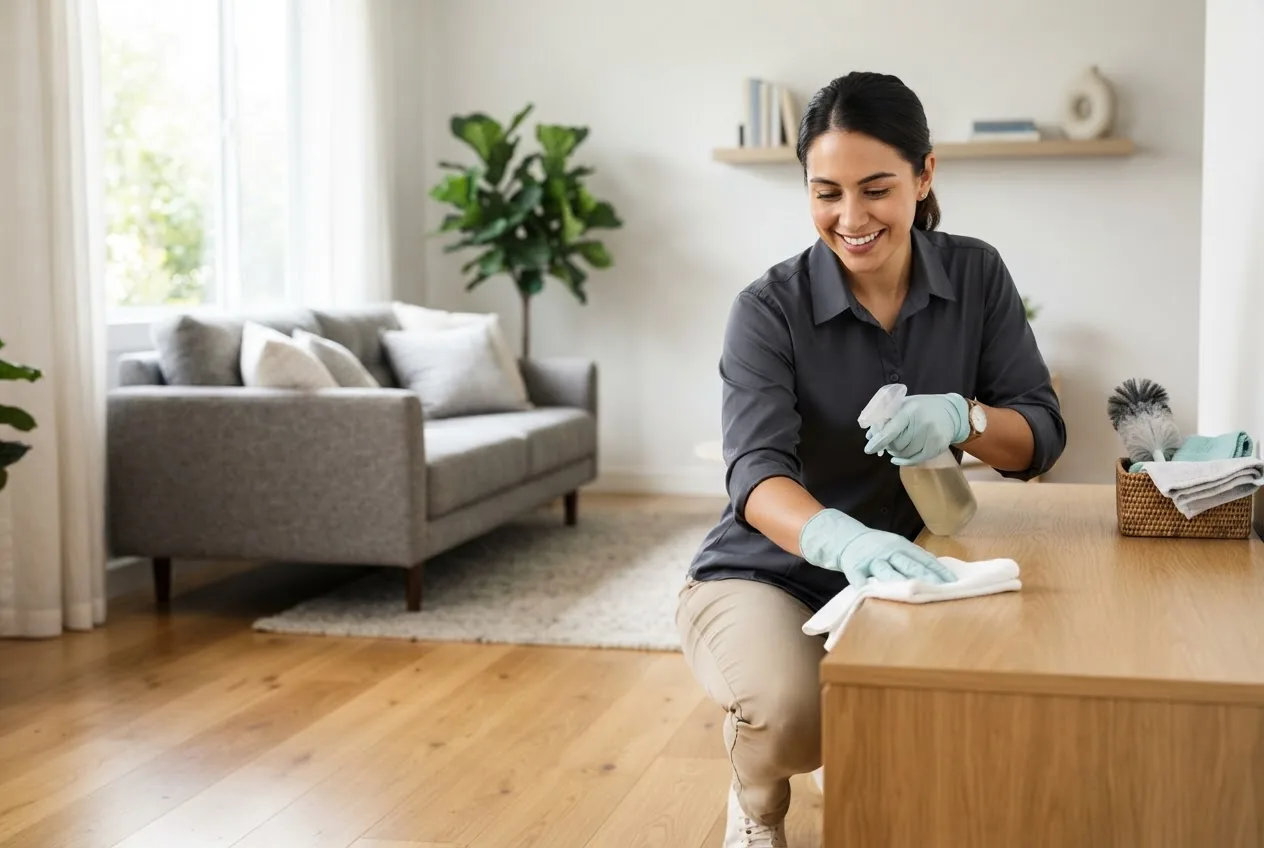
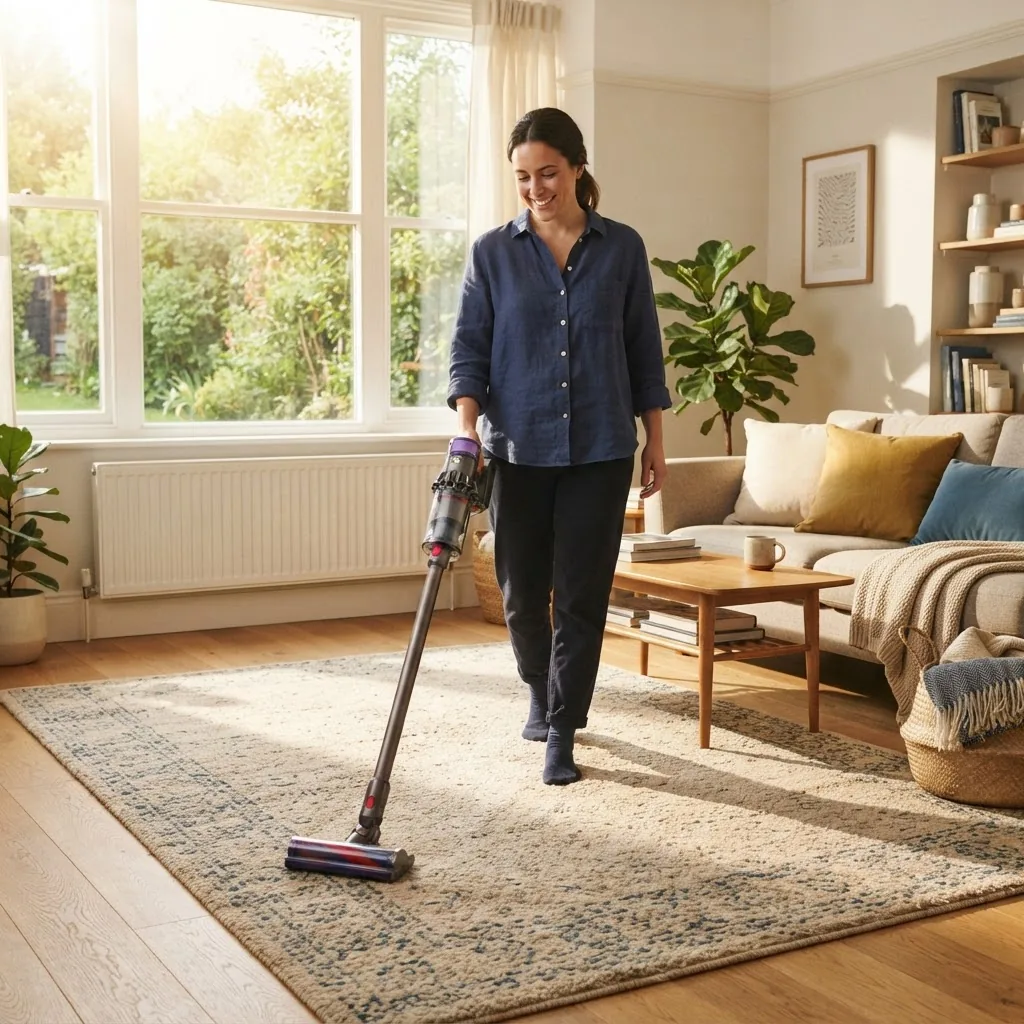
- Living room: tidy soft surfaces then vacuum. Fluff cushions, open couch crevices to remove debris, vacuum upholstery with the brush tool and vacuum rugs from the farthest corner toward the exit for efficiency.
- Floors: sweep or vacuum, then mop. Work from one side of the house to the other. For tile: mop with 1 cup white vinegar per gallon of warm water; for finished hardwood: use a manufacturer-recommended wood cleaner—do not saturate wood (use 200–300 ml cleaner per bucket and well-wrung mop).
- Spot-treat stains on carpets. Blot—do not rub—using 1 tablespoon dish soap in 2 cups warm water; for oil-based stains use a small amount of isopropyl alcohol on a white cloth. If stain persists after two attempts, schedule professional cleaning.
- Final sweep and trash removal. Walk each room and collect trash, place full bags outside, and return staging basket items to their homes.
- Disinfect high-touch points. Use disinfectant wipes or spray (follow label contact time). High-touch list: doorknobs, light switches, remote controls, faucets—spend roughly 8–12 seconds per item spraying and then ensuring the surface stays wet for the contact time on the product label.
- Air and deodorize. Open windows for 5–10 minutes where possible; run an exhaust fan in kitchen or bathroom for 20 minutes after cleaning to clear fumes.
Finishing Touches and Maintenance Tips
Wrap up with a quick inspection and set simple systems to keep the home clean longer.
- Set out one microfiber cloth for daily dusting; five minutes a day prevents weekly buildup.
- Create a laundry rotation: linens on Mondays, towels on Wednesdays—labeling saves time.
- Use door mats outside and inside to trap 60–80% of tracked dirt (According to a 2022 facility maintenance study…).
- For deeper seasonal tasks refer to how to deep clean a house when you want multi-hour deep scrubs beyond this routine.
Next, learn how to speed up the same thorough results when time is short.
How to Clean the Home Thoroughly Without Spending Too Much Time
- Use a 2-zone approach. Tackle high-traffic rooms (kitchen, living room) first, low-traffic last; spend 60% of your time where it’s most visible.
- Work in 20–30 minute sprints. Set a timer—clean intensely for 25 minutes, rest 5. Sprints prevent burnout and improve focus.
- Keep a cleaning caddy ready. Save 10–15 minutes per hour by not walking back and forth for tools.
- Use multitask products. One spray that cleans counters, stainless and sealed stone cuts switching time—read labels to confirm safety for surfaces first.
- Do a daily 10-minute tidy. Carry a small basket and work through rooms collecting stray items and quick dusting; 10 minutes daily equals an hour weekly saved.
- Employ dry methods first. Dusting and vacuuming before wet mops reduces time spent rewashing mop water and repeating tasks.
- Delegate tasks. Assign a single 15-minute task per household member—trash, dust, or wipe a room—so the workload drops substantially.
- Prioritize visible surfaces for guests. If time is limited, focus on floors, countertops, and bathrooms first—this covers perceived cleanliness.
- Use tech wisely. A robot vacuum for daily top-up cleans can cut vacuum time to 10–15 minutes weekly for maintenance.
- Keep quick fixes handy. Set a small stain kit (cleaner, towel) to treat spills immediately—prevention beats removal and shortens later cleaning time.
Common Cleaning Mistakes and How to Avoid Them
- Using too much soap — I’ve seen residue build-up that attracts dirt; I now use the manufacturer’s dilution (usually 1–2 tablespoons per gallon) for mopping.
- Cleaning in the wrong order — I used to mop before dusting and had to redo floors; always dust before mopping.
- Mixing cleaners — I observed dangerous reactions (bleach + ammonia); never mix products and always read labels.
- Over-wetting wood floors — I once left wood standing wet; now I use <200 ml of solution per bucket and a well-wrung mop, drying within 5–10 minutes.
- Forgetting to test — I ruined a finish by using an acidic cleaner; test a 1″ square for 30 seconds before full application.
Safe and Eco-Friendly Cleaning Home Practices
Cleaning safely protects household health and the environment. According to 2023 CDC guidelines, regular cleaning paired with targeted disinfection of high-touch areas reduces risk of disease spread. For product selection, consult independent evaluations like EWG’s cleaners guide.
When to combine cleaning with professional home-system care: clean duct grilles and vents during routine cleaning, but consult pros for HVAC and furnace hygiene. Below are related resources you can review as part of holistic home care:
- Air Conditioner Maintenance and Service Guide for Homeowners — how AC cleanliness ties to indoor air quality.
- maintenance plan benefits — compare regular cleaning schedules to formal service plans.
- professional maintenance services — when HVAC cleaning requires a specialist.
- aircon servicing and installation — planning professional interventions.
- furnace cleaning service — for heaters and ducts that impact indoor hygiene.
- furnace repair and maintenance — when repairs affect cleanliness.
- heater maintenance overview — seasonal heater checks.
- heating tune up and furnace maintenance — tie HVAC service to indoor air cleanliness.
- heat pump repair and maintenance — systems that affect whole-house airflow.
- boiler maintenance and upkeep — tangential system care.
- water heater maintenance — routine checks alongside cleaning.
For professional standards in the cleaning industry consult the trade body resources—best practices summarized by reputable associations: ISSA provides industry guidance and certification recommendations.
Practical eco steps: replace single-use wipes with washable microfiber, dilute concentrated cleaners (follow label dilution), use vinegar/baking soda for many tasks, and dispose of chemical residues per local hazardous waste rules. Always spot-test on hidden surfaces for 30 seconds and rinse well.
Cleaning Home Checklist: Steps to Clean a House Recap
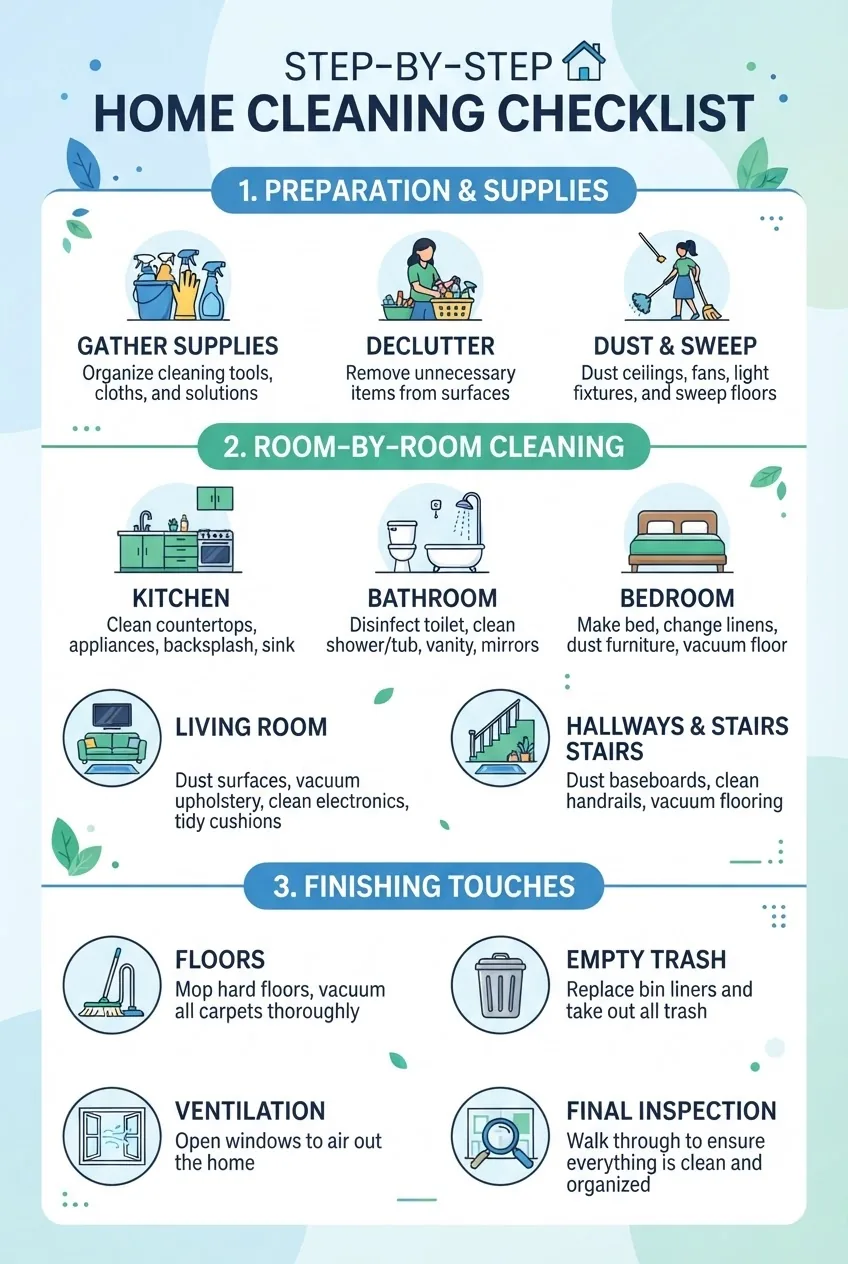
Print or save this checklist. Use it weekly to maintain results with predictable time commitments.
| Phase | Key Tasks | Time |
|---|---|---|
| Preparation | Declutter, gather supplies, ventilate | 10–30 min |
| Room-by-room | Dust high → wipe → surfaces → floors | 1–2 hours |
| Floors | Sweep/vacuum, mop (wood vs tile methods) | 30–45 min |
| Finishing | Empty trash, disinfect high-touch, air out | 15–30 min |
As part of integrated home care, pair this checklist with long-term maintenance reading such as routine maintenance guide.
Common mistakes and how to avoid them
(Hands-on practitioner notes)
I often saw people skip testing new cleaners—resulting in discolored finishes. I now always test a 1″ square for 30 seconds. I also noticed overuse of wipes where reusable cloths would work; switching to microfiber saved money and reduced waste. Finally, leaving floors to air-dry in low-ventilation areas caused streaking—open a window or run a fan for 5–10 minutes after mopping.
Checklist: Verify your work
- All counters clear and wiped, no sticky residue.
- Mirrors and glass streak-free.
- Floors free of visible debris and no mop streaks.
- Trash emptied and liners replaced.
- High-touch points disinfected and dry.
- Bedding replaced and laundry started if applicable.
When to call a professional
Call professionals for stubborn carpet stains after two home attempts, persistent mold in grout or HVAC systems, or if you find structural water damage. For HVAC and heating systems consult Air Conditioner Maintenance and Service Guide for Homeowners, professional maintenance services, or furnace cleaning service when system-level cleaning or repairs are required.
Summary: follow the ordered steps, keep supplies ready, and spend short daily time blocks to avoid long sessions. A clean home keeps you healthier and saves time long-term—start with this plan today and make it a weekly habit.
Call to action: Try the routine this weekend: set a 25-minute sprint, follow steps 1–6, and notice how much faster you finish with the preparation and tools in place.