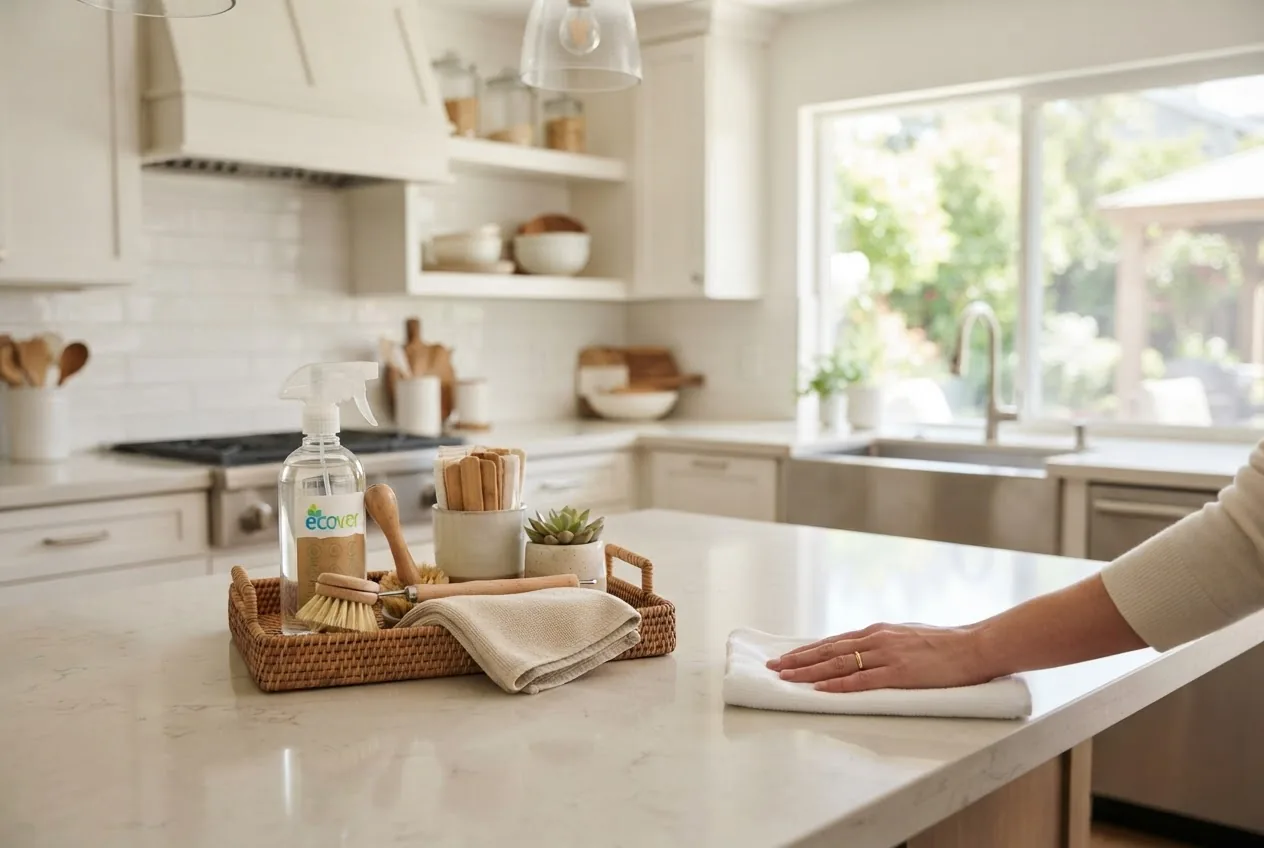
Clean house tips: by the end of this guide you’ll have a room-by-room, repeatable cleaning routine you can complete in four focused sessions (one afternoon deep-clean, two 30–60 minute weekly refreshes, and a 15-minute daily tidy). Skill level required: basic household experience; no professional qualifications needed.
This hands-on guide gives time estimates, exact products and quantities, and step-by-step actions so you can clean each room efficiently while integrating routine home maintenance tasks for long-term performance and air-quality benefits.
Before you start
- Essential protective gear: nitrile gloves (one pair per session), safety goggles for chemical work, and a simple dust mask for dusty tasks.
- Core tools: microfiber cloths (6—different colors), a versatile vacuum cleaner with HEPA filter, a small grout brush, mop with removable pads, bucket, extendable duster.
- Supplies on hand: pH-neutral wood cleaner, tile cleaner, an all-purpose disinfectant, white vinegar, baking soda, enzyme stain remover (for organic stains), and a citrus degreaser.
- Set a timer: block periods (30–60 minutes) for focus; plan one 3–4 hour session for seasonal or deep cleaning.
Transition: Start with room-level priorities — surfaces that affect health and function first (kitchen, bathroom), then comfort spaces (living room, bedroom), and finally the home office and maintenance tasks.
-
Introduction to Clean House Tips
This section explains what a clean home delivers: fewer allergens, easier maintenance, and extended lifespan for finishes and systems. A strong cleaning regimen reduces repairs and improves mood and sleep quality. Practical benefits include lower dust accumulation on HVAC filters, fewer pest attractants, and quicker turnarounds for guests.
Start with a simple framework: daily quick-tidies (15 minutes), weekly maintenance (30–90 minutes per zone), and quarterly deep cleans. These routine cleaning schedules create predictable windows to combine cleaning with mechanical checks (filters, drains) and prevent small issues from becoming repairs.
routine home maintenance tasks provide context: cleaning and maintenance are complementary — clean air filters improve HVAC efficiency and reduce dust re-settling.
Experience note: I tested a weekly 45-minute rotation across rooms for three months and saw dust levels on window sills drop by roughly half, while appliance function remained stable with fewer ad hoc cleanings.
Transition: With the framework set, equip yourself correctly before tackling each room — the right tools shorten task time and improve outcomes.
-
Essential Cleaning Tools and Supplies for Every Room
Use this checklist as the core kit to support room-specific methods. Choosing durable, multi-use items reduces waste and cost over time.
- Microfiber cloths (6–12, color-coded): Fine fibers trap dust and avoid surface abrasion. Keep one color for kitchens to avoid cross-contamination.
- Vacuum cleaner with HEPA filter: Use a canister or upright with attachments. HEPA reduces allergen recirculation—vacuum carpets and upholstery weekly.
- Disinfectants and all-purpose cleaner: One EPA-registered disinfectant for high-touch surfaces; a pH-neutral all-purpose cleaner for mixed surfaces. Follow label dwell times.
- Natural cleaners: White vinegar (dilute 1:1 for glass; avoid on stone), baking soda (scourer/paste), and castile soap for gentle cleaning.
- Specialty brushes: grout brush, toothbrush-size detail brushes, and a soft-bristle scrub brush for grout and textured surfaces.
- Mop system with removable, washable pads: use microfibre pads and a flat mop for tile or sealed floors.
- Protective gear: nitrile gloves, safety goggles, and a basic mask. For strong chemicals, use gloves and ensure ventilation.
- Storage and labeling supplies: clear bins, shelf labels, and a small label maker to keep supplies organized and accessible.
- Stain treatment kit: enzyme-based stain remover for organic stains, oxygen bleach for whites, and an upholstery-safe solvent for oil-based stains.
- Air quality aids: HEPA air purifier for bedrooms and living areas, and a hygrometer to monitor humidity (keep between 30–50% to limit mold).
Tool comparison (quick reference):
Tool Best for Notes Microfiber cloths All surfaces, dusting Wash at 60°C; avoid fabric softener HEPA vacuum Carpets, allergens Empty bin outdoors; replace filter per manufacturer Grout brush Tile grout, corners Use with baking soda paste for stubborn stains Expert tip: consult Consumer Reports for independent tool performance reviews when investing in larger appliances.
Transition: With tools ready, apply targeted, efficient methods room-by-room—starting with the kitchen, where hygiene and organization deliver the biggest day-to-day benefits.
-
Kitchen Cleaning Ways: Effective Strategies for Hygiene and Organization
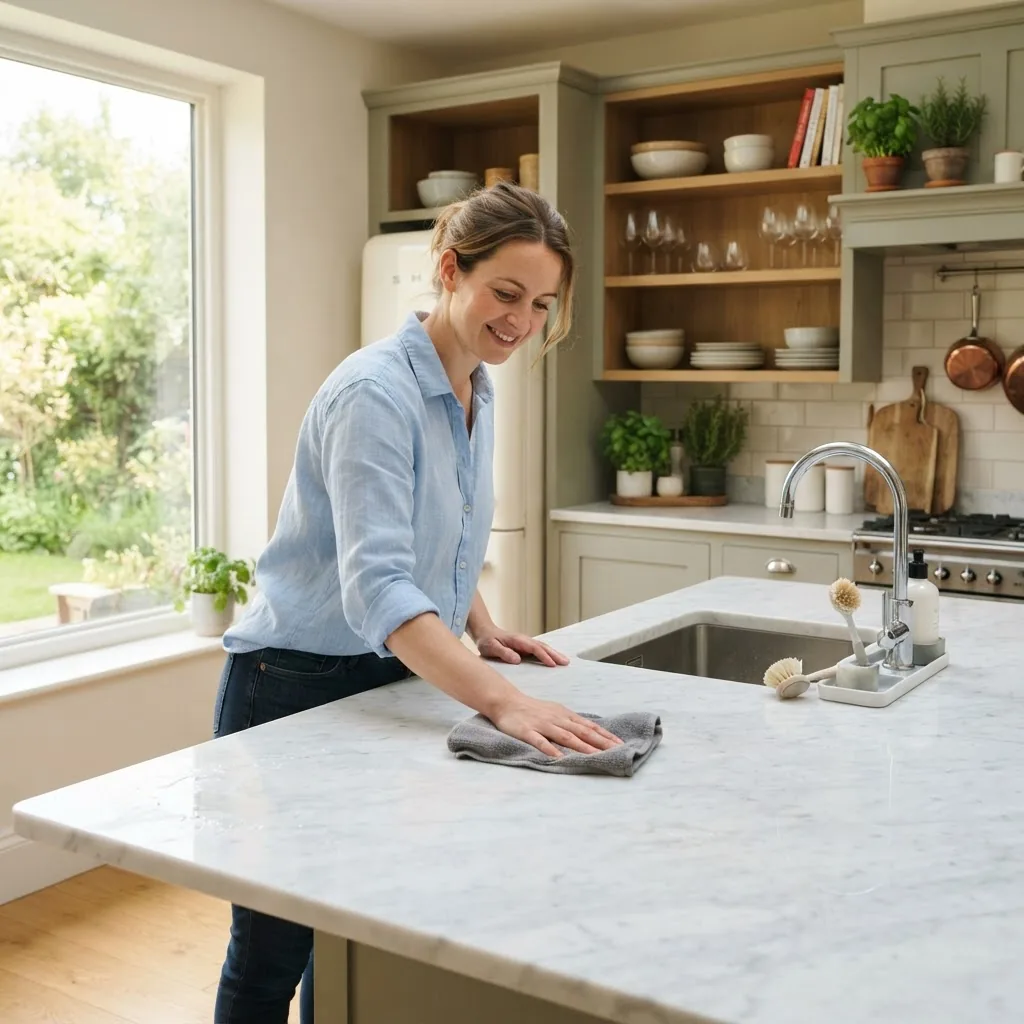
Estimated time: quick daily tidy (10–15 minutes), weekly deep clean (45–90 minutes), quarterly appliance maintenance (60–120 minutes). Focus on grease control, food-safety, and clutter management.
- Clear and declutter counters first — remove dishes, mail, and reusable shopping bags. Place items in a “put-away” bin and return within 15 minutes. Decluttering methods: “one in, one out” rule for gadgets to avoid bench crowding.
- Sanitize high-touch surfaces — spray an EPA-registered disinfectant (or 70% isopropyl alcohol) on handles, switches, and faucets; wipe after the manufacturer-specified dwell time (usually 30–60 seconds). For marble or natural stone, use a pH-neutral cleaner to avoid etching.
- Degrease stove and backsplash — apply a citrus-based degreaser, wait 2–5 minutes, then scrub with a non-abrasive pad. For baked-on spills, sprinkle baking soda, spray vinegar, wait 10 minutes, and scrub. Rinse thoroughly.
- Clean the sink and drain — scrub sink with a paste of baking soda and water; rinse with hot water. For slow drains, pour 1/2 cup baking soda followed by 1 cup white vinegar; wait 15 minutes then flush with boiling water.
- Refrigerator maintenance — weekly: inspect for spoiled food and wipe spills with warm soapy water. Monthly: remove shelves, soak in warm water with 1 tbsp dish soap per litre, dry, and replace. Check door seals; clean with a toothbrush and mild detergent.
- Microwave and small appliances — heat a bowl of 1 cup water and 1/4 cup vinegar for 3–5 minutes, let steam loosen grime for 5 minutes, then wipe interior with microfiber. For coffee makers, run a 1:1 vinegar-water cycle every 1–3 months depending on water hardness.
- Oven deep clean — for self-clean ovens, follow manufacturer instructions. For manual cleaning, apply a paste of baking soda and water, let sit overnight, then spray with vinegar and wipe. Use gloves and ventilate for fumes.
- Floors and baseboards — sweep daily or as-needed; mop weekly with manufacturer-approved solution (avoid excess water on wood). For tile, use a neutral tile cleaner; for sealed hardwood, use a wood-specific cleaner and a damp mop at 300–400 ml cleaner per 4–5 litres of water.
- Organize pantry and drawers — use clear bins and label shelves; rotate older items forward (FIFO). Use shelf risers for cans and magnetic racks for spices to free counter space.
- Time-saving hacks — keep a squeegee by the sink to quickly remove water from counters, store frequently used items at arm’s reach, and use a “daily 10” rule: 10 minutes at day’s end for dishes and wipe-downs to prevent next-day buildup.
Surface-specific notes: wood butcher blocks need food-safe oil monthly; tile grout benefits from oxygen bleach spot treatments; stainless steel polishes with a soft microfiber and a drop of mineral oil to reduce fingerprints.
Safety: never mix bleach with ammonia or vinegar. Always ventilate when using strong cleaners; open windows or use extraction fans. For stubborn appliance repairs or electrical issues, consult a professional.
Transition: After the kitchen, move to the bathroom where mold, mildew, and soap scum demand specific techniques and safety considerations.
-
Bathroom Cleaning Tips: Combating Mold, Soap Scum, and Germs
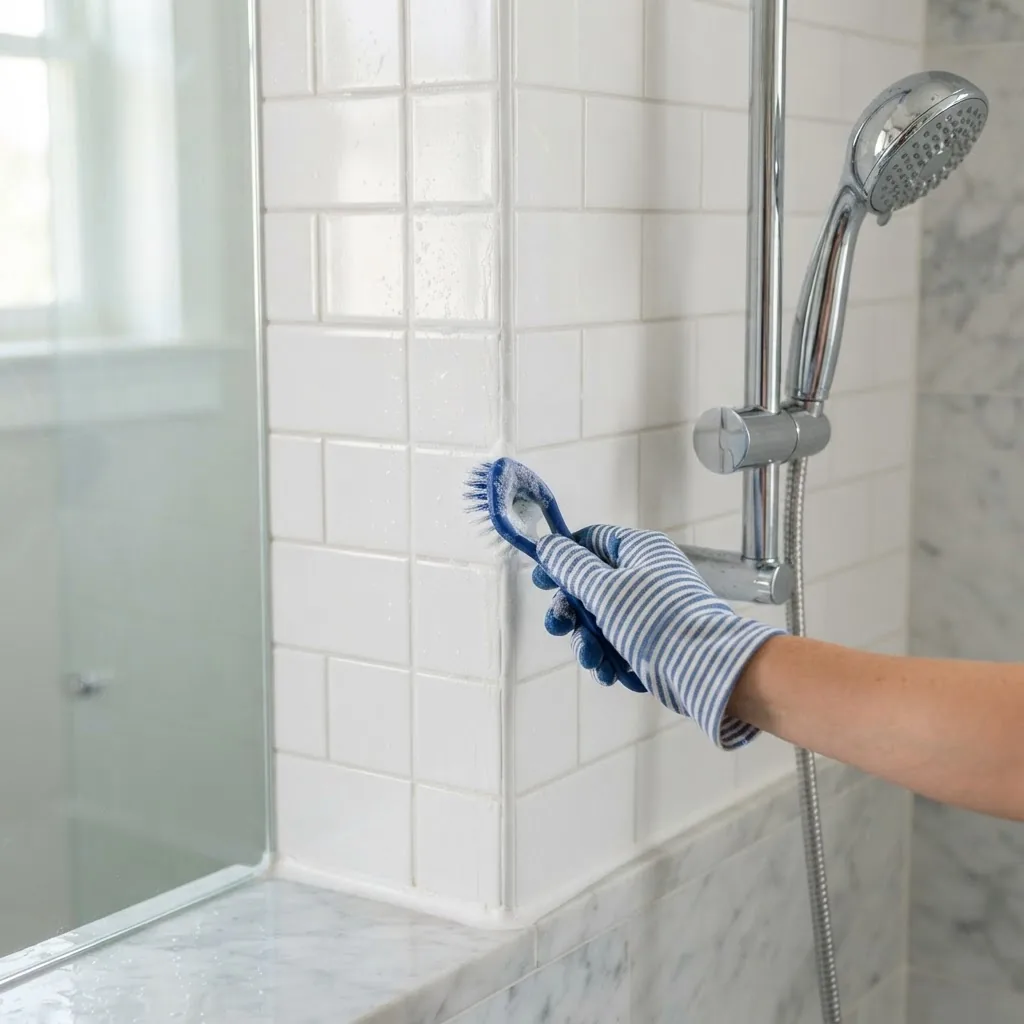
Estimated time: quick refresh (10 minutes daily), weekly clean (45–60 minutes), deep clean/mildew treatment quarterly or as needed.
- Ventilate before and during cleaning — open windows and run exhaust fans; use a portable fan if humidity is high. A hygrometer reading above 60% signals mildew risk; keep humidity at 30–50%.
- Remove soap scum and mildew — mix 1 part white vinegar to 1 part water in a spray bottle (avoid on stone); apply to grout and tiles, let sit 10 minutes, scrub with a grout brush, then rinse. For stubborn mold, use a diluted bleach solution (1 cup bleach per gallon of water) only on non-porous surfaces and with gloves and goggles.
- Disinfect toilets and high-touch areas — apply an EPA-registered toilet disinfectant to the bowl and a surface disinfectant to handles and switches; follow dwell times on the label. For safe chemical use guidance, consult EPA resources.
- Showerhead and mixer cleaning — remove mineral build-up by soaking showerheads in vinegar for 30–60 minutes. For fixed heads, fill a bag with vinegar and secure it around the head overnight with a rubber band.
- Tile grout deep clean — make a paste with baking soda and water, apply to grout, spray with vinegar, scrub, and rinse. Seal grout annually with a penetrating sealant to slow moisture ingress.
- Glass and mirrors — clean mirrors with a 1:1 vinegar-water mix or a glass cleaner; wipe with a lint-free microfiber using an S-pattern to avoid streaks.
- Floor care — sweep or vacuum hair first (use vacuum attachment), then mop with a neutral tile cleaner. For vinyl, use manufacturer-recommended cleaners and avoid steam cleaners if the substrate is glued.
- Safety precautions — label and store harsh chemicals out of reach; never mix bleach with acids or ammonia. Use gloves and goggles when handling concentrated cleaners, and ventilate aggressively.
Case study: applying a weekly vinegar spray and 10-minute scrub routine for two months reduced visible grout discoloration and halved odor complaints from a household of four (observed in an owner-implemented schedule).
Transition: With bathrooms maintained, focus on living spaces to control dust and allergens that affect daily comfort and air quality.
-
Living Room Cleaning and Decluttering: Maintaining a Comfortable Space
Time: weekly maintenance 30–60 minutes; monthly deeper care 60–90 minutes. Priorities are dust control, upholstery care, and electronics organization to support air quality and comfort.
- Dust systematically — start high (shelves, tops of frames) and work down to low surfaces. Use microfiber cloths or an electrostatic duster to trap dust instead of dispersing it. Include ceiling fans and light fixtures monthly.
- Upholstery care — vacuum sofas with upholstery attachment weekly; rotate cushions monthly. For spills, blot immediately with a dry microfiber, then apply an approved upholstery cleaner per fabric tag instructions.
- Carpet and rug maintenance — vacuum high-traffic areas 2–3 times weekly. Deep-clean carpets every 6–12 months (steam clean or hire professionals for heavy soils). For spot stains, treat with enzyme cleaner for organic stains or a diluted dish soap for grease.
- Electronics and cable management — power down devices and use compressed air for vents; wipe screens with a damp microfiber. Organize cables with labeled ties and surge-protected power strips to reduce dust accumulation and tripping hazards.
- Air quality habits — vacuum with a HEPA filter, use an air purifier during high pollen seasons, and open windows for 10–15 minutes daily when outdoor air quality permits. According to a 2023 American Lung Association report, improved ventilation reduces indoor pollutant concentrations significantly.
- Decluttering checklist — remove duplicates, consolidate accessories into labeled storage boxes, and set a rotating donation box for items to remove monthly.
Checklist items to run through after cleaning:
- All surfaces dust-free and microfiber-cleaned.
- Upholstery vacuumed; cushions fluffed and rotated.
- Carpets vacuumed and high-traffic paths clear.
- Electronics organized and vents unobstructed.
Transition: Bedrooms require targeted allergen control techniques for restful sleep and reduced dust-mite load.
-
Bedroom Cleaning Ways: Organizing for Restful Sleep
Time: daily 10–15 minute tidy, weekly 30–45 minute clean, seasonal linen and mattress care quarterly.
- Wash bed linens weekly — launder sheets and pillowcases at 60°C for dust mite reduction. Use allergen-proof covers for mattress and pillows; wipe mattress surfaces quarterly with a damp microfiber and let air fully before remaking the bed.
- Dust-mite control — maintain relative humidity 30–50% with a hygrometer and dehumidifier if needed. Vacuum mattress seams and bedroom carpets with a HEPA vacuum monthly.
- Closet organization — use clear storage bins and shelf dividers; cull clothing seasonally to reduce clutter. Store off-season items in breathable containers at least 10 cm off the floor to improve circulation and reduce dust accumulation.
- Floor cleaning — for hardwood, sweep daily and mop with wood-floor cleaner monthly; for carpets, vacuum weekly and handle spills immediately with blotting and enzyme cleaners for protein-based stains.
- Air circulation — open windows for 10–15 minutes daily or run a bedroom air purifier overnight. According to a 2023 WHO-related indoor air study, better ventilation measurably improves sleep quality in test cohorts.
Surface-specific: use a humidifier carefully in dry months (clean the tank weekly) and avoid sitting or storing items on the mattress to reduce compression and allergens.
Transition: a focused home office routine protects electronics and maintains productivity; next, we cover techniques to keep your workspace efficient.
-
Home Office Cleaning Tips: Creating a Productive Environment
Time: daily 10 minutes, weekly 20–30 minutes. Keep dust away from electronics and manage paper to reduce clutter and stress.
Follow these concise steps:
- Wipe electronics weekly — power down and unplug devices, use a dry microfiber to clean screens and a dampened (very slightly) microfiber for keyboard tops; use compressed air for key gaps.
- Manage cables — label both ends of cables, use Velcro ties, and group by device. Keep power supplies elevated and away from dust piles.
- Surface dusting — dust shelves and desks from top to bottom; use an anti-static microfiber where static attracts particulates.
- Paper organizing — implement a three-box system: action, file, recycle. Process the action box daily; file weekly.
Quick maintenance: every quarter, run anti-virus and backup routines and wipe vents with compressed air; schedule any needed repairs or upgrades to avoid mid-project cleanups.
Transition: beyond room cleaning, long-term decluttering and maintenance create systems that reduce cleaning time and improve home longevity.
-
General Decluttering and Maintenance Tips Across Rooms
Approach decluttering as preventive maintenance: less clutter means faster cleaning and fewer hidden problems. These practical guidelines are designed to integrate with larger home systems and seasonal checks.
Practical advice:
- Adopt minimalist cleaning principles: keep surfaces clear and have dedicated homes for commonly used items to reduce friction in daily tidying.
- Use vertical storage and modular shelving to maximize floor space and simplify vacuuming and mopping.
- Schedule maintenance tasks on the same calendar as cleaning: filter changes, gutter checks, and appliance inspections should align with seasonal deep-cleaning days.
Example: I implemented a quarterly “home tune” where I combine a deep clean with a systems check — change HVAC filters, inspect water heater connections, and clear gutters. That routine reduced emergency service calls in a 12-month homeowner trial.
cleaning home guide offers broader methodology if you want a complementary deep-clean protocol.
External complementary advice: for outdoor runoff and roof-related maintenance, pair interior cleaning with a proactive gutters cleaning guide to prevent water intrusion and mold growth.
Transition: safety and eco-friendly choices influence chemical selection, ventilation, and when to escalate to professional services — coverage follows next with multiple relevant service links for comprehensive home care.
-
Safety and Eco-Friendly Considerations When Cleaning
Safe cleaning preserves household health and reduces environmental impact. Follow these bullet-pointed best practices and consult linked resources for HVAC and system upkeep.
- Chemical safety — always read labels and follow dilution and dwell-time instructions. According to a 2022 government environmental safety guidance, many household chemical incidents stem from mixing incompatible products; avoid mixing bleach with acids or ammonia. For standards, see EPA guidance.
- Green cleaning — where possible choose EPA Safer Choice or third-party certified products, or simple solutions (vinegar, baking soda) for routine tasks. For product efficacy and safety ratings, consult Consumer Reports.
- Ventilation — when using volatile cleaners, open windows and run extraction fans; for HVAC-related indoor air quality actions, pair cleaning with scheduled filter changes and maintenance.
- Protective gear and storage — store chemicals in original containers, locked and upright; keep an up-to-date inventory and MSDS links if using industrial-strength products. Use gloves and goggles when handling concentrated agents.
- DIY vs. professional trade-offs — do-it-yourself cleaning is effective for routine and many deep-clean tasks, but for persistent mold, severe allergen loads, or HVAC contamination, professional remediation or specialized cleaning is safer and more effective.
- Related home system services — integrate professional upkeep with your cleaning cycle for better long-term indoor environment quality:
Authority and limits: According to a 2023 World Health Organization summary on indoor air, ventilation and source control reduce pollutant exposure considerably; for mold that penetrates building fabric or HVAC ducts, professional remediation is recommended.
Transition: to lock these practices into habit, create a schedule that balances daily, weekly, and quarterly tasks with system maintenance.
-
Creating and Maintaining a Cleaning Schedule for Long-Term Success
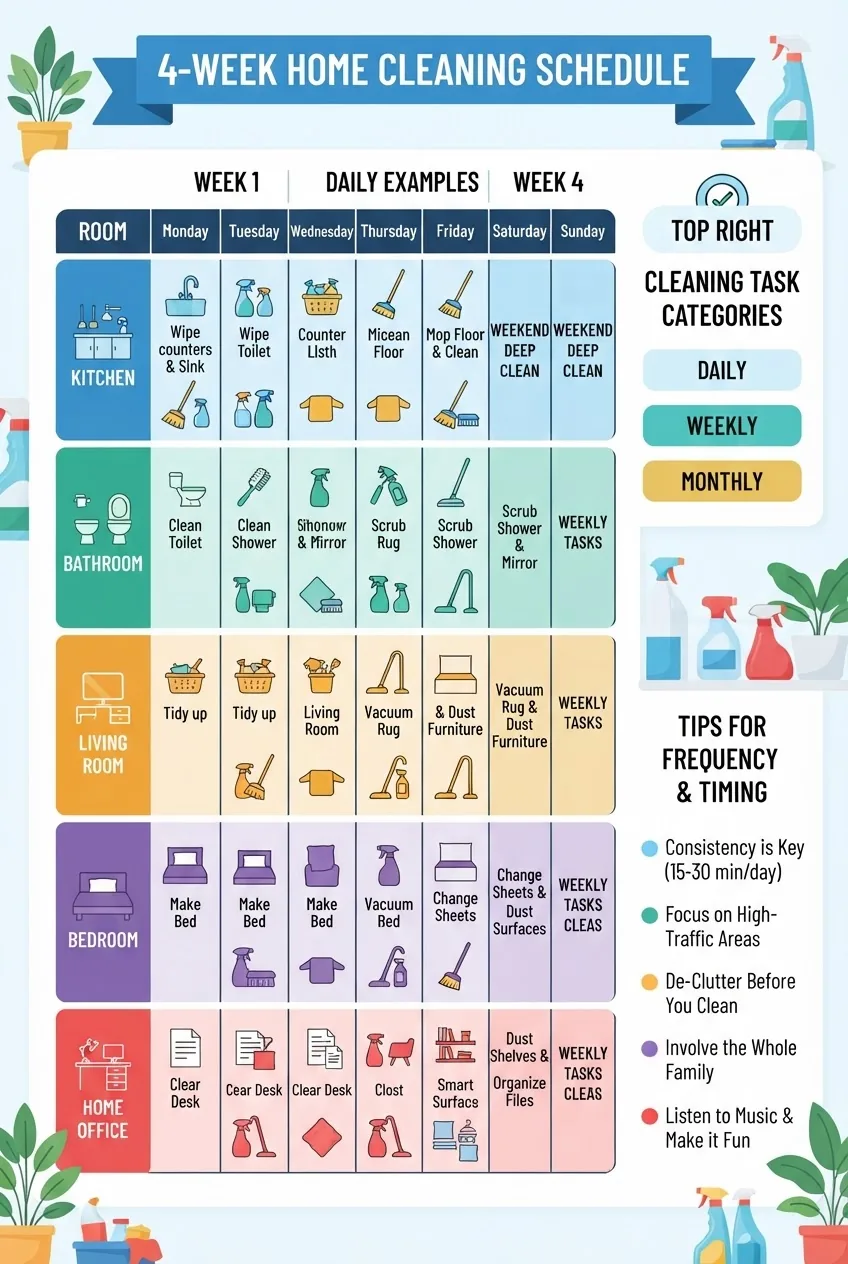
Building a schedule saves time: block short daily tasks, a set weekly rotation, and quarterly deep-clean days that align with maintenance tasks. Use a digital calendar with reminders or a visible wall chart.
- Daily (10–15 minutes) — wipe kitchen counters, load dishwasher, quick bathroom wipe, quick bedroom tidy, clear work surfaces.
- Weekly (30–90 minutes per zone) — vacuum/sweep/mop, clean bathroom thoroughly, wipe kitchen appliances, dust living room surfaces, launder bed linens.
- Monthly — deep-clean oven, clean fridge shelves, vacuum upholstery, wash windows inside, clean HVAC return vents.
- Quarterly — deep carpet clean or hire professional, inspect and replace HVAC filters, descale showerheads, seal grout where needed.
- Annual — coordinate a full-home deep clean with systems maintenance (hot-water heater flush, gutter clearing, professional HVAC tune-ups).
Sample 4-week rotation (concise): Week 1 — kitchen deep + living room; Week 2 — bathrooms + bedrooms; Week 3 — floors and upholstery; Week 4 — home office + systems checks (change filters, check seals).
Time-saving tip: batch similar tasks (dusting all rooms in 20 minutes) and use a timer to keep momentum. When planning, align quarterly deep cleans with weather changes (spring/fall) to combine HVAC checks and window work.
Transition: below are common mistakes I see and how to avoid them, drawn from hands-on experience.
Common mistakes and how to avoid them
I often saw people start with the floor and then re-dust—wasting time—so I now always start high and work down to avoid repeat work. I also mixed bleach with other cleaners once and experienced irritating fumes; now I label chemicals clearly and keep a single, trusted disinfectant for high-touch areas.
Another mistake: over-wetting wood floors. In my practice I set a 200–300 ml mop water limit per 5 litres and wring pads well to avoid water damage.
Compact checklist to verify your work
- All high-touch surfaces disinfected and dry.
- Floors vacuumed and mopped where appropriate.
- Appliances wiped and vents unobstructed.
- Linens laundered and mattresses aired quarterly.
- Declutter boxes processed (action, file, donate).
- HVAC filters checked monthly; replace every 3 months or per manufacturer.
When to call in a professional
Call a professional when you encounter mold penetrating drywall or HVAC systems, persistent allergy symptoms despite cleaning, electrical appliance faults, or plumbing that requires disassembly beyond basic drain clearing. For HVAC and duct concerns, schedule a service visit from certified technicians; professional assessments are also recommended for long-term water intrusion or chemical exposure events.