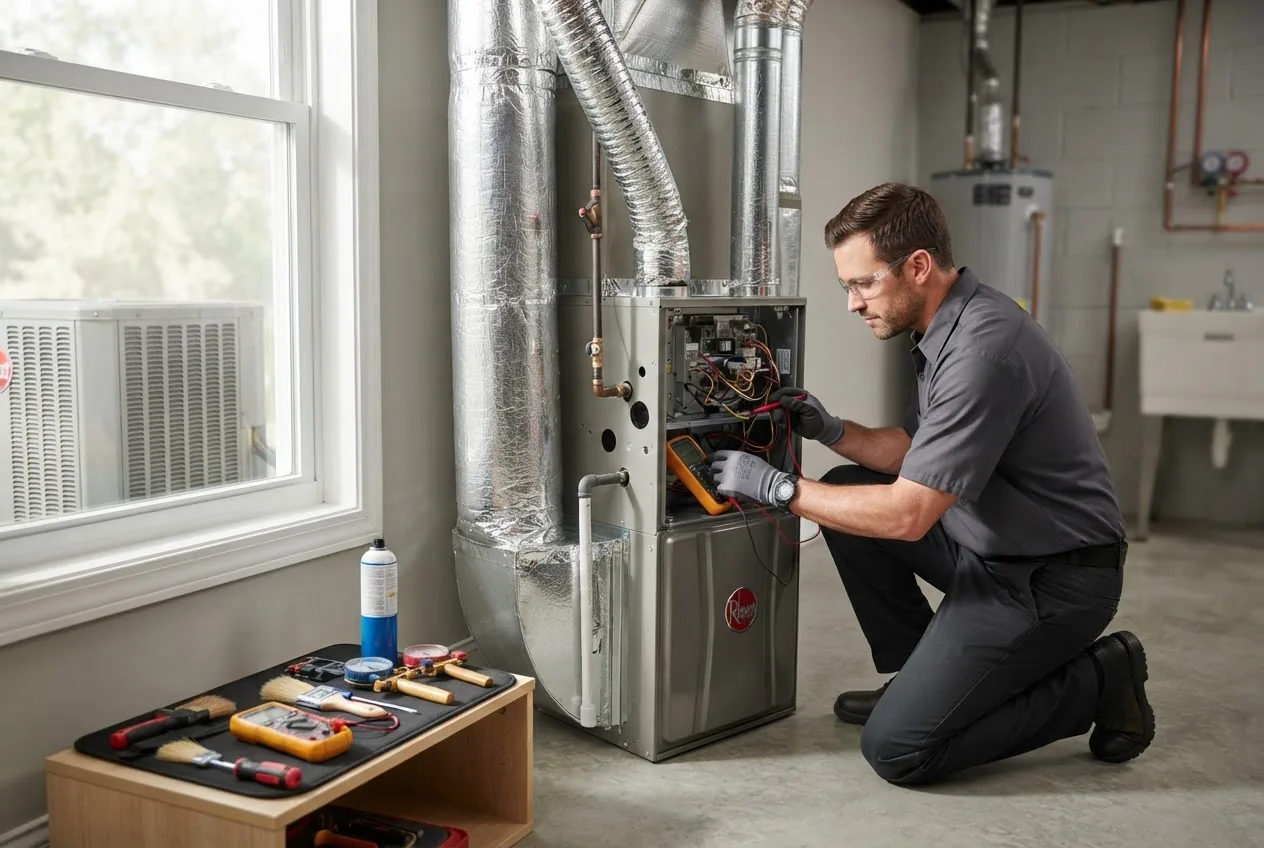
An AC tune up typically includes a full inspection, cleaning, safety and performance tests, refrigerant checks, airflow and duct assessment, and minor adjustments or recommendations — all designed to restore efficiency, prevent failures, and extend equipment life in a single service visit.
Introduction to AC Tune Ups?
Answer: An AC tune up is a scheduled service where a trained technician inspects, cleans, tests, and makes adjustments to your cooling system to ensure safe, efficient, and reliable operation.
AC tune up: a routine, typically annual service for residential cooling systems focused on inspection, cleaning, testing and minor repairs to maintain performance.
This section explains the role of a tune up in the broader context of HVAC preventative maintenance and why homeowners schedule them as part of their cooling tune up routine. A complete tune up addresses mechanical elements (compressor, coils), electrical systems (connections, controls), refrigerant system health, and airflow—each covered in depth below.
For an overarching resource on long-term care, see Air Conditioner Maintenance and Service Guide for Homeowners.
Transition: With that broad framing, the next section breaks down every tune-up task step by step so you know exactly what to expect from an AC checkup.
What Does an AC Tune Up Include? A Step-by-Step Service Breakdown?
Answer: A full AC tune up includes inspection, cleaning, refrigerant verification, electrical and safety checks, airflow testing, thermostat calibration, condensate drain cleaning, coil maintenance, and compressor and ductwork evaluation—performed in a systematic sequence.
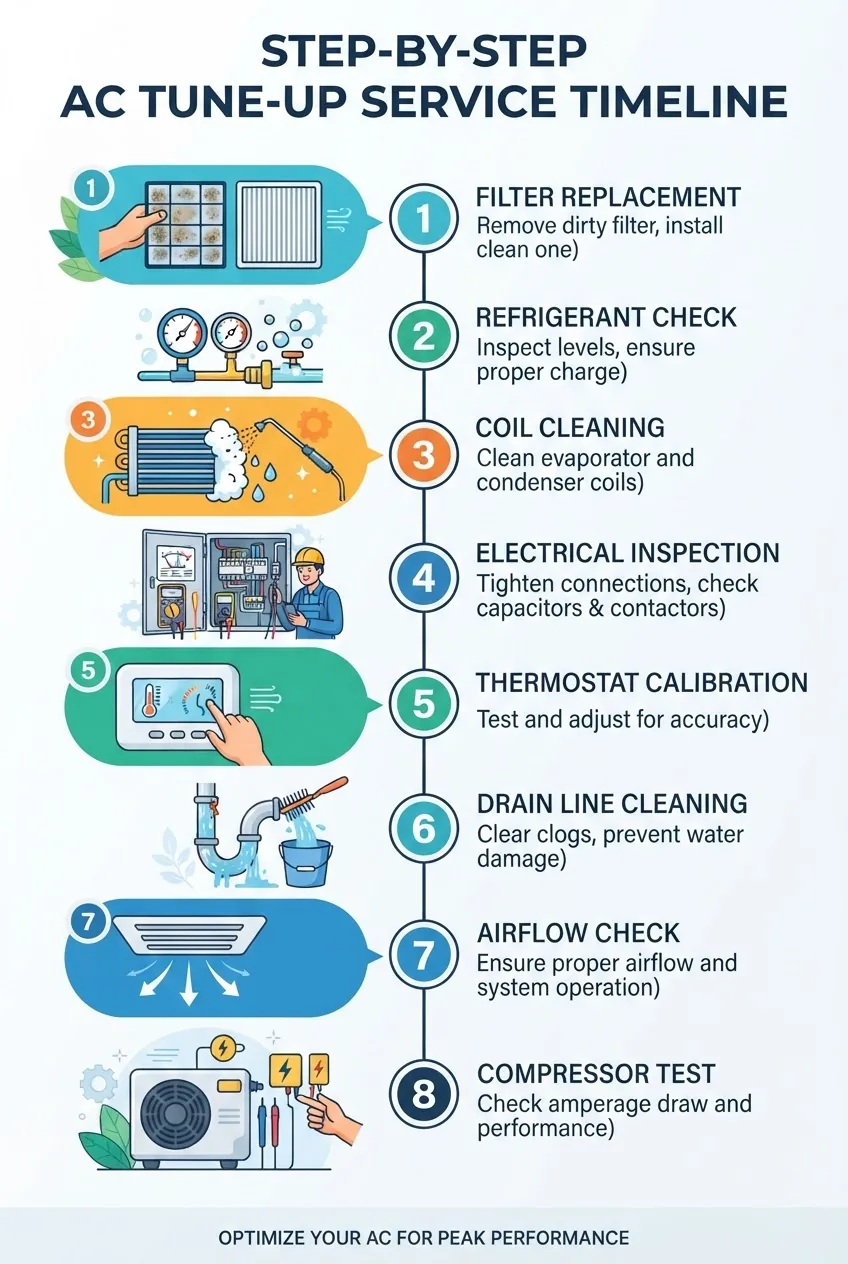
-
Visual system inspection and service history review
Technician inspects the outdoor condenser, indoor evaporator/furnace coil area, duct access points, and thermostat location. They review past service records, existing warranties, and any homeowner complaints (noise, smells, uneven cooling).
Why it matters: Early identification of wear, improper installations, or missed repairs avoids later failures.
-
Air filter replacement or cleaning
Air filter: a replaceable or washable media that captures dust and particles; it directly affects airflow and indoor air quality.
Technician inspects filter type and condition; replaces or recommends correct MERV-rated filter. For reusable filters, they advise washing/drying method.
Why it matters: A clogged filter reduces airflow, strains the compressor, and reduces efficiency—often the simplest fix to improve performance.
-
Condenser and evaporator coil cleaning
Evaporator coil: the indoor heat-absorbing coil where refrigerant evaporates; Condenser coil: the outdoor heat-rejecting coil where refrigerant condenses.
Technician inspects coil fin condition and cleanliness; removes debris, applies coil cleaner or uses low-pressure water rinse, straightens fins as needed.
Why it matters: Coils clogged with dust reduce heat transfer—analogy: “Your AC’s coils are like a car radiator; if clogged, efficiency drops.”
-
Refrigerant level check and leak detection
Refrigerant: the fluid that circulates through the system carrying heat; proper charge is critical for cooling.
Technician connects a manifold gauge set or digital refrigerant gauges to measure high- and low-side pressures, compares readings to manufacturer specs and ambient temperature, and performs leak detection with electronic sniffer, soap solution, or UV dye when indicated.
Why it matters: Low refrigerant reduces cooling and can damage the compressor; adding refrigerant without finding leaks is a short-term fix and may violate environmental regulations.
Walkthrough (diagnostic tool use): The technician uses a digital manifold gauge to record static and running pressures, then calculates superheat or subcooling per manufacturer guidance to confirm correct charge. For example, a TXV-equipped system uses superheat at the evaporator outlet; a fixed-orifice system uses subcooling on the condenser side.
-
Electrical connections, capacitors and contactor testing
Technician visually inspects wiring for wear/corrosion, tightens connections to specified torque, measures capacitor capacitance with a meter, and checks contactor operation. They also test current draw on motors with a clamp meter.
Why it matters: Loose connections cause arcing and heat, leading to component failure; failing capacitors are common causes of hard-starting compressors or fans.
-
Compressor function and motor checks
Compressor: the pump in the outdoor unit that pressurizes refrigerant; it’s the heart of the cooling cycle.
Technician listens for abnormal sounds, measures amp draw during startup and run, evaluates cycling behavior, and verifies proper relief valve and vibration isolation. If compressor performance is marginal, they recommend repair or replacement and explain implications for system life.
Why it matters: Compressor failures are expensive; early detection can delay replacement or allow planned upgrades.
-
Thermostat calibration and control checks
Technician verifies thermostat temperature accuracy against a reference thermometer, checks program schedules and setback settings, inspects sensor placement, and tests control wiring. For smart thermostats, firmware and connectivity checks are performed.
Why it matters: A miscalibrated thermostat can create perceived AC problems when the system is actually operating normally.
-
System airflow and duct inspection
Ductwork: the network of supply and return channels carrying conditioned air; leaks or blockages reduce delivered cooling.
Technician measures temperature split (delta-T) across evaporator, inspects accessible duct runs for disconnected sections or insulation issues, and checks supply registers for balanced flow. They may recommend duct sealing or a full duct test for large issues.
Why it matters: Proper airflow ensures efficient heat transfer and prevents coil freezing or compressor short cycling.
-
Condensate drain inspection and cleaning
Technician checks the condensate pan, clears the drain line of biofilm or debris, and tests the float switch or overflow safety switch to ensure the system shuts down on a clog.
Why it matters: A clogged drain can cause indoor water damage or microbial growth; safety shutdowns preserve homeowner health and property.
-
Safety controls and refrigerant recovery checks
Technician tests high- and low-pressure safety interlocks, checks flame rollout or spillage sensors in packaged systems, and verifies refrigerant recovery equipment if service requires removing charge.
Why it matters: Safety checks prevent hazardous operation and ensure compliance with refrigerant handling laws.
-
Performance verification and homeowner walkthrough
Final steps include running the system to confirm temperature drop and steady pressures, documenting measured values, explaining findings, and providing prioritized repair recommendations or an estimate for needed work.
Why it matters: Documentation and education let homeowners make informed decisions and compare future services.
Example technician detail: A typical 60–90 minute tune up will log ambient and return temperatures, suction/discharge pressures, compressor amps, capacitor readings and filter status; technicians often provide a checklist and photos for transparency.
Transition: After seeing a full service breakdown, homeowners often ask how this compares to furnace or combined HVAC tune-ups, which the next section addresses.
Differences Between AC Tune Up and Furnace and Heating Tune Up?
Answer: AC tune ups focus on cooling components (refrigerant circuits, coils, compressor, condenser) while furnace and heating tune ups focus on combustion, heat exchangers, burners, and fuel/safety systems; an HVAC checkup can combine both for year-round service.
| Service element | AC tune up (cooling) | Furnace / Heating tune up |
|---|---|---|
| Primary components | Condenser, compressor, evaporator coil, refrigerant circuit | Burner, heat exchanger, ignition, gas valves, pilot assemblies |
| Safety tests | Electrical checks, pressure safety, refrigerant leak detection | Carbon monoxide test, combustion analysis, heat exchanger inspection |
| Typical frequency | Annually before cooling season | Annually before heating season |
| Common additional tasks | Refrigerant charge verification, coil cleaning | Flue and vent inspection, gas leak checks |
Summary: Combined furnace and AC tune up packages (often called an HVAC checkup) save time and ensure both heating and cooling systems are sequenced correctly for seasonal transitions. For a deeper look at furnace services see Furnace Cleaning Service: Professional AC and Heater Maintenance, Furnace Repair Services and Maintenance: A Homeowner’s Guide, and Heating Tune Up and Furnace Maintenance: Essential Service Guide.
Transition: Knowing these differences helps homeowners appreciate the benefits of regular tune ups, which we detail next.
Why Regular AC Tune Ups Are Essential for Homeowners?
Answer: Regular tune ups maintain energy efficiency, extend system lifespan, improve indoor air quality, reduce repair costs, and enhance safety—delivering measurable savings and comfort over time.
System lifespan: routine maintenance reduces premature component failures by identifying wear early.
- Energy savings: According to a 2023 industry report, regular AC tune-ups can reduce energy costs by up to 15% when filters, coils and refrigerant charge are corrected.
- Longevity: Routine maintenance can extend equipment life by 2–5 years by preventing stress-related failures (industry technician averages).
- Air quality: Clean filters and coils reduce particulate and microbial growth, improving indoor air.
- Safety: Electrical tightening and safety switch testing reduce the risk of fires and water damage.
These benefits are supported by government and industry guidance: the U.S. Department of Energy recommends regular HVAC preventative maintenance to optimize efficiency and cites specific seasonal servicing practices for split-system central AC units. See the Department of Energy guidance for homeowners: U.S. Department of Energy: Maintaining Your Air Conditioner.
Industry standards also apply—ACCA provides service best practices and procedural checklists that professional technicians follow; refer to their guidelines for technician-level methods: Air Conditioning Contractors of America (ACCA).
Stat block (benefits vs. risks of skipping tune-ups):
Benefits: lower bills, fewer breakdowns, improved comfort, longer equipment life.
Risks if skipped: 3–5x higher chance of mid-season failure, up to 20% lower efficiency on clogged coils (manufacturer estimates), and potential safety hazards from ignored electrical issues.
Case study (anecdote): A mid-sized home owner documented an energy drop after a 2022 tune-up: replacing a clogged filter and cleaning coils reduced monthly cooling usage by 12% over July and August; technician logs showed a corrected refrigerant subcooling and reduced compressor runtime. This practical example demonstrates measurable savings and comfort gains after professional service.
To preserve these benefits through the year, consider an Air Conditioner Maintenance Plan: Service Options and Benefits that bundles scheduled tune-ups and priority repairs.
Transition: If you want the best timing for tune-ups to capture these benefits, the next section provides a recommended schedule.
When to Schedule Your AC Tune Up: Timing and Frequency?
Answer: Schedule a central AC tune up annually, ideally in spring before heavy cooling demand; high-use systems or homes with pets/allergies may need semi-annual checks.
Recommended timeline and how-to steps:
- Plan annual tune up in late spring (April–May) to ensure readiness before hot months.
- If you run the system heavily year-round or have a heat pump, schedule two checkups: spring (cooling) and fall (heating swap/defrost checks).
- After severe weather or prolonged downtime, call for an interim inspection.
- Follow manufacturer-recommended intervals listed in your unit’s manual; major brands often recommend annual professional service.
Manufacturer recommendations: Many manufacturers (e.g., Carrier/Trane) recommend professional inspection and cleaning before each cooling season; see specific guidance for your model on the manufacturer’s site: Carrier: Residential Service Recommendations.
Timing tip: Book early—top technicians’ calendars fill in spring; scheduling proactively avoids emergency repairs on the hottest days.
Transition: Regular timing mitigates common issues; the next section explains typical tune-up findings and fixes.
Common Issues Found During AC Tune Ups and How They Are Addressed?
Answer: Technicians commonly find dirty filters and coils, refrigerant leaks, electrical faults, airflow restrictions, thermostat errors, and failing capacitors or motors—each addressed with targeted cleaning, repairs, testing, or recommendations.
-
Dirty filter
Troubleshooting: Replace with recommended MERV filter; advise maintenance schedule. Outcome: restores airflow and reduces runtime.
-
Clogged coils
Troubleshooting: Clean evaporator and condenser coils using approved cleaners and rinsing; straighten fins; re-test temperature split.
-
Refrigerant leaks
Troubleshooting: Locate leak with electronic sniffer or UV dye; repair fitting or coil; evacuate and recharge refrigerant per EPA regulations; provide cost estimate—small leaks may be repairable, coil leaks often require component replacement.
-
Weak compressor or motor
Troubleshooting: Measure running amps; compare to nameplate and manufacturer tolerances. If above spec, recommend motor or compressor replacement; if marginal, recommend monitoring and schedule replacement before peak season.
-
Electrical issues (loose wires, worn contactors, failing capacitors)
Troubleshooting: Tighten/replace connections, swap capacitors or contactors on-site; explain safety implications and warranty status.
-
Airflow problems
Troubleshooting: Identify return/supply obstructions, duct leaks, or blower motor issues; recommend duct sealing or balancing when required; adjust fan speeds if accessible.
-
Thermostat faults
Troubleshooting: Calibrate or replace thermostat; for communication issues with zoned systems, inspect control board and sensors.
-
Drain clogs and microbial growth
Troubleshooting: Clear drains, sanitize pan if necessary, and install safety float switches if missing.
Practical troubleshooting insight: When an AC is blowing warm air, technicians follow a diagnostic sequence—verify airflow (filter), check evaporator coil temp (frozen or restricted), measure refrigerant pressures, and test compressor operation—this method pinpoints whether the issue is mechanical, refrigerant-related, or airflow-based.
Transition: Some of these tasks are safe for a homeowner to perform; others need a professional. The next section clarifies DIY limits versus professional services.
DIY Maintenance Tasks vs. Professional AC Tune Up Services?
Answer: Homeowners can handle basic tasks like changing filters, clearing outdoor debris, and cleaning accessible registers; trained professionals should perform refrigerant work, electrical repairs, compressor diagnostics, and coil reclamation for safety and compliance.
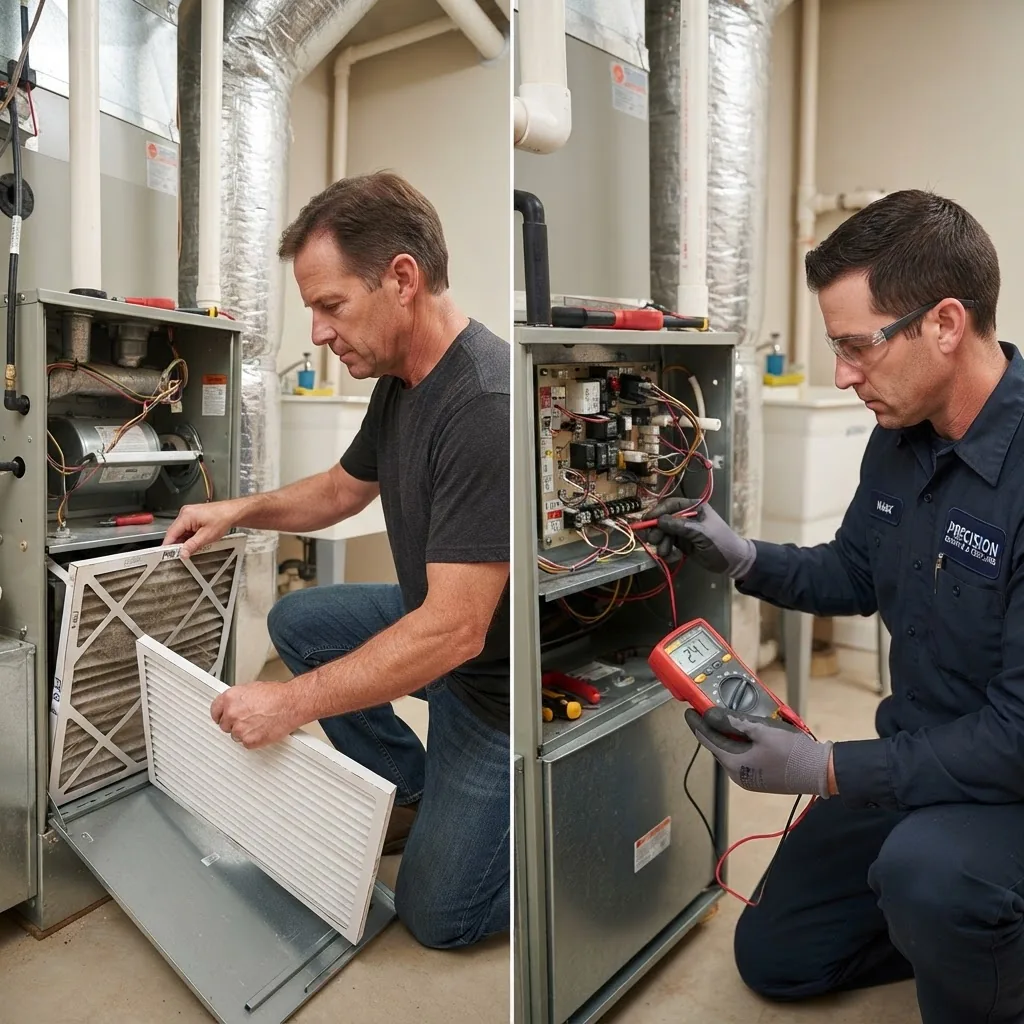
Below is a clear dos and don’ts two-column comparison to help you decide.
| Do (DIY) | Don’t (Call a pro) |
|---|---|
| Change or clean filters monthly to quarterly depending on usage. | Attempt refrigerant charging, leak repairs, or any work requiring refrigerant recovery. |
| Keep outdoor unit free of vegetation and debris; gently clear built-up leaves. | Open electrical control panels or replace capacitors without training. |
| Clean accessible supply registers and vacuum return grilles. | Attempt compressor diagnosis or replacement—call a licensed technician. |
| Monitor thermostat settings and battery changes. | Bypass safety switches or operate equipment with known electrical failures. |
Safety tips: Always disconnect power before accessing indoor equipment; if you detect a gas smell or suspect combustion issues, evacuate and call a licensed technician immediately.
For more on when to call a technician and what to expect, see Professional Aircon Maintenance and Repair Service Guide.
To compare contractor roles in servicing and installations, review Aircon Servicing and Installation: Contractor Service Guide, and for homeowner-maintenance best practices see How to Maintain AC System: Tips for Effective HVAC Maintenance.
Transition: With the DIY vs pro boundary clear, we wrap up with final takeaway points and a CTA to book service.
Conclusion: Ensuring Optimal AC Performance Year-Round?
Answer: Regular, professional AC tune ups combined with seasonal homeowner maintenance keep systems efficient, safe and long-lived; prioritize an annual spring tune up and address technician recommendations promptly.
Key takeaways:
- What a tune up includes: inspection, cleaning, refrigerant checks, electrical and airflow testing, drain cleaning, thermostat calibration, and performance verification.
- Why it matters: saves energy, prevents failures, improves indoor air quality, and protects safety.
- When to schedule: annually before heavy cooling; consider semi-annual service for high-use systems.
Next steps: Book a certified technician for a comprehensive tune up and ask for documented system readings and prioritized repairs so you can plan maintenance efficiently. If you’re looking for service options, review maintenance plans linked earlier in this guide.
Call to action: Schedule your AC tune up today to protect comfort and savings—request a pre-season appointment and ask the technician to provide a service checklist and documented performance readings.