
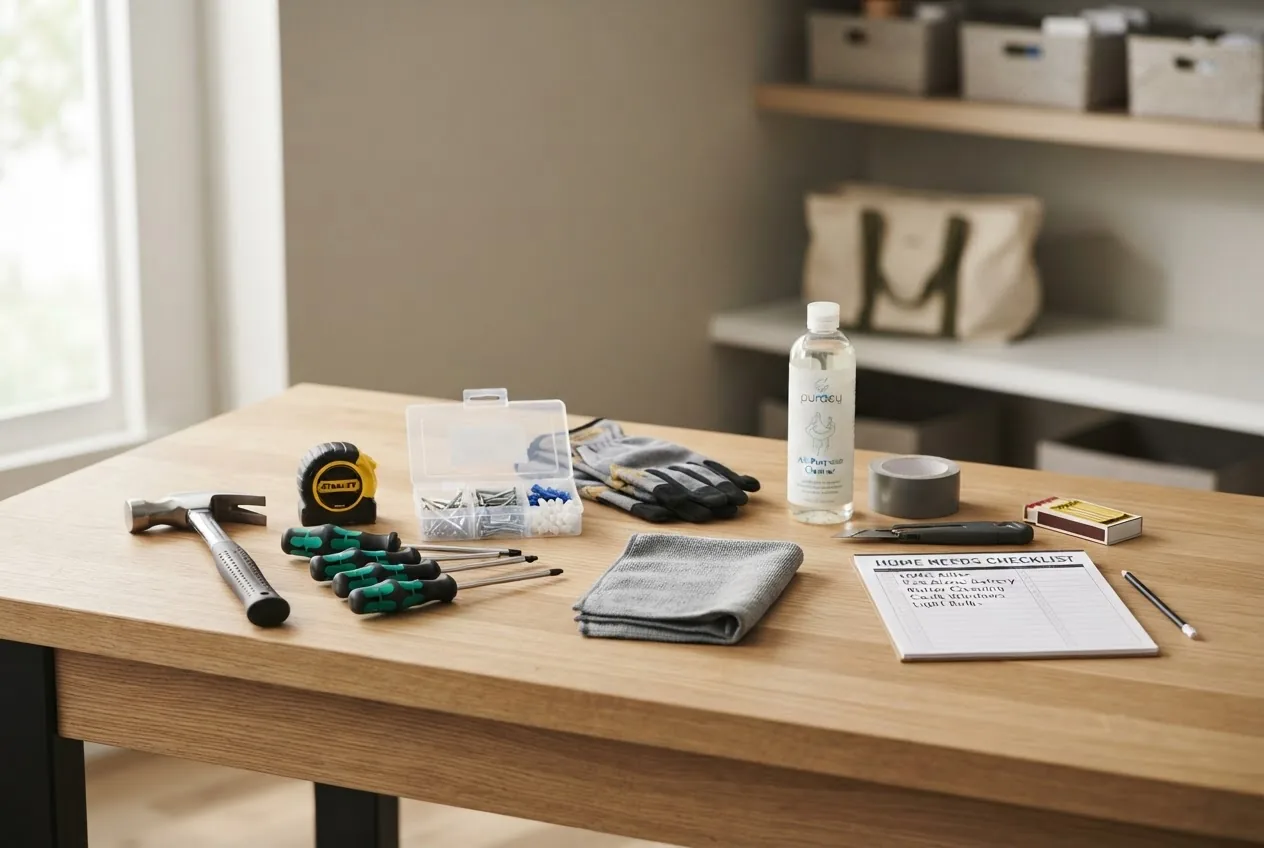
By the end of this guide you will have a room-by-room, prioritized, printable-ready “house needs” plan that equips a typical 2–3 bedroom home for everyday living. Expect to complete the initial purchase and setup in 1–3 weekends of shopping and assembly; skill level required: basic household familiarity (no specialist skills needed).
This house needs guide is written as a hands-on checklist and step-by-step plan you can follow, with exact quantities, recommended priorities, and pointers to further resources for ongoing maintenance and safety.
Before you start
- A notebook or digital list app to track purchased items and receipts
- Tape measure (at least 5 m / 16 ft) to confirm furniture and storage fit
- Basic toolset: 1x screwdriver set (Philips + flat), hammer, adjustable wrench, tape, level
- Budget target for initial fill: set low ($300–$600), medium ($600–$1,500), or full ($1,500+) depending on household size
- Boxes/bins for staged storage and sorting during setup
Transition: Start by mapping what you already own vs what must be bought; follow the numbered steps below to stock and prioritize each room.
-
Step 1 — Assess your home and household needs
Measure rooms (length × width × ceiling height) and note family composition (adults, children, pets). Create three priority lists: Immediate (first 7 days), Short-term (first 3 months), and Later (3–12 months). Typical immediate needs: bedding, cooking basics, hygiene items, and basic safety devices.
Example scenario: a moving couple with a small dog — Immediate: mattress for master, basic cookware for two, smoke detector, first aid kit, trash cans. Short-term: living room seating, dresser, more kitchen tools, vacuum. Later: decorative items, extra appliances.
Transition to the next section: once you have an inventory, stock the heart of the home — the kitchen.
-
Kitchen Essentials: The Core Stuff You Need for a House Kitchen
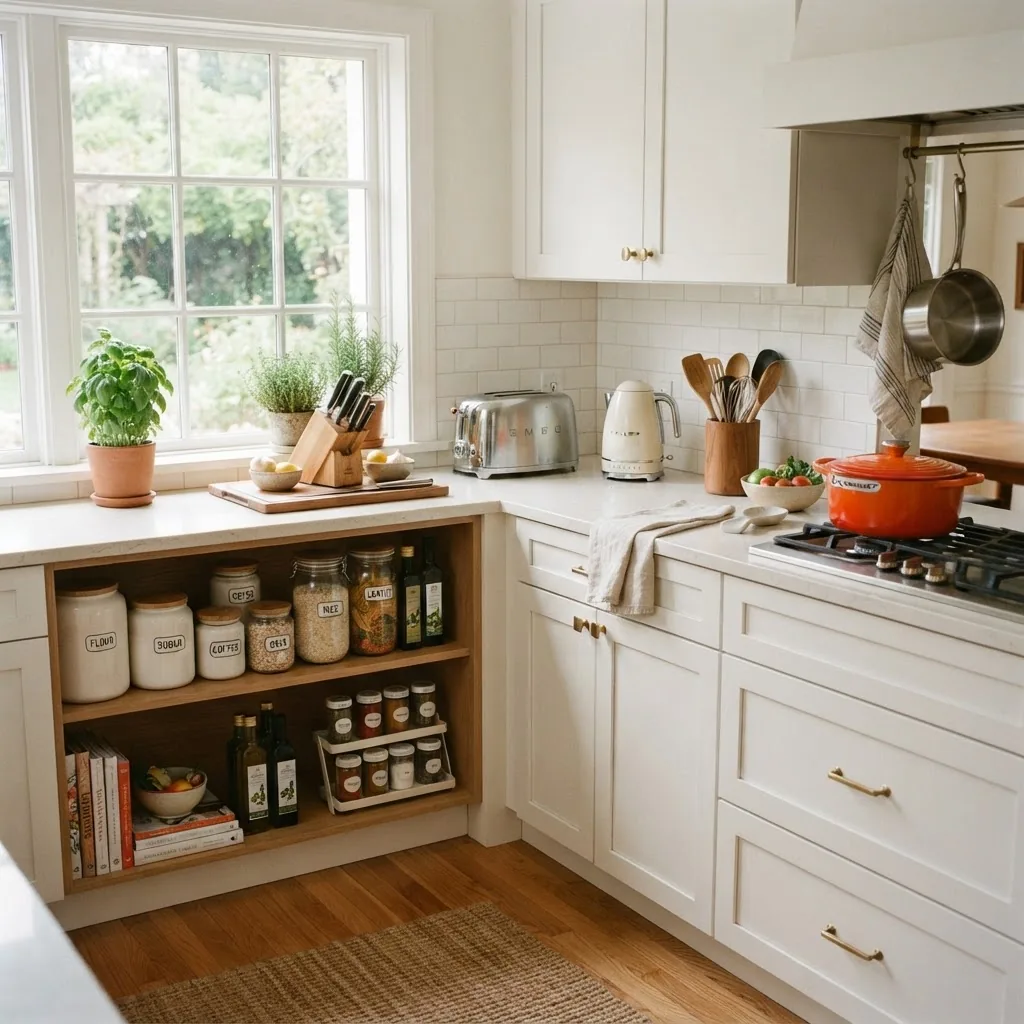
Below is a thorough kitchen supplies checklist covering cookware, utensils, pantry basics, and small appliances. Quantities assume a 2–4 person household; adjust up for larger families.
- Cookware
- 1 × 10–12″ nonstick frying pan (skillet)
- 1 × 8–10″ stainless skillet or sauté pan
- 1 × 2–3 qt saucepan with lid
- 1 × 5–7 qt Dutch oven (multiuse)
- 1 × baking sheet (rimmed), 1 × casserole dish (9×13 inch)
- Cookware extras & tools
- Cooking utensils: 1 slotted spoon, 1 solid spoon, 1 spatula, 1 pair tongs, 1 ladle
- Cutting boards: 1 wood for bread/cheese, 1 plastic for raw meat
- Sharp knives: chef’s knife (8″), paring knife (3.5″), serrated bread knife
- Knife sharpener or honing rod
- Small appliances
- Toaster or toaster oven — 1
- Electric kettle or stovetop kettle — 1
- Microwave — 1 (if not built-in)
- Blender or food processor — 1 (choose based on cooking habits)
Appliance Why it matters Buy now if… Toaster Breakfast simplicity; low cost You eat toast daily Kettle Tea/coffee fast boiling You drink hot beverages often Microwave Quick reheating and defrost You rely on convenience meals - Tableware and serving
- Plates: 4–8 dinner plates, 4–8 side plates
- Bowls: 4–8 for cereal/soup
- Cutlery set: at least 4 place settings (fork, knife, spoon)
- Glasses: 4 drinking glasses, 2 wine glasses
- Serving bowls and a serving spoon
- Pantry basics — perishables and staples
- Salt, black pepper, sugar (1–2 kg combined), basic spices (oregano, chili, cumin)
- Olive oil and a neutral cooking oil (500 mL each)
- Pasta (2 boxes), rice (2 kg), canned tomatoes (4 cans)
- Flour (1–2 kg), baking powder, yeast (if you bake)
- Coffee/tea and basic condiments (ketchup, mustard, soy sauce)
- Food storage & cleanup
- Glass or BPA-free plastic food storage containers: set of 6–12 pieces
- Aluminum foil, cling film, reusable beeswax wraps
- Dish soap, dishwasher detergent (if applicable), sponges, dish brush
- Trash bags (kitchen size) and a 10–20 L trash can
- Pantry & organization
- Labels and a permanent marker for dates
- Can opener, bottle opener, measuring cups and spoons, mixing bowls
- Colander/strainer and oven mitts (pair)
Practical tip: buy a quality chef’s knife first — it reduces prep time and frustration. For cookware, prioritize a good Dutch oven and a nonstick skillet; add specialty items later.
Transition: With the kitchen functional, move to living areas where comfort and storage matter.
- Cookware
-
Living Room and Bedroom Supplies: Comfort and Functionality
This section covers living room basics and bedroom necessities for everyday comfort and organization. Prioritize sleep and seating first; decor and extras come later.
- Sleeping basics (per bedroom)
- Mattress (size as appropriate) — buy on day 1; use a mattress protector
- Bed frame or platform — confirm weight limits and assembly time (30–90 minutes)
- Sheets: 2 sets of fitted + flat sheets per bed (cotton 300–500 thread count)
- Pillows: 2 per adult; 1–2 spare pillows
- Duvet or comforter with cover: 1 primary + 1 spare for cold climates
- Bedroom storage & lighting
- Dresser or chest of drawers (choose dimensions to fit wall space)
- Bedside table with lamp — lamp wattage 40–60W equivalent for reading
- Closet organizers: 10–20 hangers per person, storage bins for off-season clothes
- Living room furniture basics
- Sofa — choose seat depth 20–24″ and allow 2–3 feet clearance for walkways
- 1–2 side chairs or accent seating, coffee table, media console
- Rugs sized for furniture: ensure front legs sit on rug for balanced layout
- Entertainment & tech basics
- Power strip with surge protection (1–2), cable management ties
- Wi‑Fi router placement central to home or near living area
- Smart TV or monitor: wall mount hardware or stand according to specs
- Décor & comfort extras
- Throw blankets (1–2), 2–4 decorative cushions
- Blackout curtains for bedrooms where needed
- Simple artwork or mirrors to make rooms feel larger
Prioritization tip: for bedrooms, invest in a mattress and blackout curtains first; for living rooms, prioritize a durable sofa and functional lighting. If on a tight budget, purchase secondhand seating and buy bedding new for hygiene.
Upgrade note: after remodeling, re-evaluate essentials — see house remodeling and refurbish ideas for guidance.
- Sleeping basics (per bedroom)
-
Bathroom Necessities: Everything a Bathroom Needs for Daily Use
The bathroom supplies list below is organized for daily hygiene, guest readiness, and basic upkeep. Quantities assume a primary bathroom and a guest or half-bath.
- Hygiene & toiletries
- Toothbrushes and toothpaste (1 per resident + spare)
- Shampoo, conditioner, body wash or soap (1 bottle each starter)
- Hand soap (liquid pump), lotion
- Feminine products and personal medication supply
- Linens
- Towels: 2 bath towels and 2 hand towels per resident; 2 bath mats
- Shower curtain and liner (if applicable) with 12 hooks
- Washcloths: 4–8
- Cleaning & maintenance
- Toilet brush and plunger (1 each)
- All-purpose bathroom cleaner, glass cleaner, grout brush
- Spare toilet paper: keep a 1–2 week supply (12–24 rolls depending on household)
- Small items
- Trash can with liner (3–6 L)
- Over-the-door hooks or additional towel bars
- Non-slip bath mat inside shower for safety
- First aid and medication storage
- Small locked box or cabinet for medicines if children present
- Basic first aid kit placed in an accessible bathroom cabinet (see Safety section)
Practical tip: store everyday items at arm height; keep less-used supplies on higher shelves. Add moisture-absorbing packs in humid climates to avoid mildew.
Transition: assign cleaning and maintenance tools so your supplies can support daily upkeep and longer-term systems.
- Hygiene & toiletries
-
Cleaning and Maintenance Supplies: Basic Household Products for Upkeep
This section organizes cleaning supplies checklist and basic maintenance tools into clear categories: daily cleaning, periodic deep cleaning, and maintenance tools. These supplies let you perform most routine tasks; for larger repairs, consider professional services.
-
Cleaning — daily & weekly
- All-purpose cleaner (1 bottle)
- Glass cleaner (1 bottle)
- Disinfectant wipes or spray (1 container)
- Microfiber cloths: 6–12, color-coded for kitchen/bath
- Broom and dustpan; vacuum cleaner (upright or canister) — buy based on flooring type
- Mop and bucket or microfiber flat mop
- Toilet cleaner, toilet brush
For extended deep cleaning guidance, see deep cleaning house checklist.
-
Maintenance tools & supplies
- Tool kit basics: hammer, set of screwdrivers, adjustable wrench, pliers, utility knife, tape measure
- Cordless drill with a selection of bits (1 battery + charger)
- Set of spare fuses (if applicable) and a small multimeter
- Replacement bulbs: 6–12 LED bulbs (check base type and lumens)
- Caulk and caulk gun (1 tube each of silicone and paintable caulk)
- Lubricant spray (WD-40 or equivalent), basic adhesives
For inspections and larger maintenance planning, see maintenance inspection checklist for building care and consider affordable handyman subscription services when needs exceed your toolkit.
-
Pest control and seasonal supplies
- Ant and insect traps (2–4), rodent traps if needed
- Outdoor garden hose, basic garden shears (if you have yard)
- Snow shovel or leaf rake as seasonal items for appropriate climates
See preventive maintenance checklist template for scheduling seasonal tasks and preventive maintenance checks and services inspection guide for inspections.
-
Consumables and replacements
- Batteries: AA (12), AAA (12), 9V (2) — keep a small stock
- Light bulbs: 6–12 LED replacements with correct base and desired lumens
- Trash bags: kitchen and bathroom sizes — stock 1–2 boxes
- Water filter replacements and HVAC filter spares (match model)
-
Organization and scheduling
- Label maker or printable labels, clear bins for under-sink and pantry
- Wall calendar or digital planner for routine maintenance
- Checklists: use printable home cleaning checklist templates and weekly tasks and home maintenance planner to distribute chores
If you prefer professional help rather than DIY, review professional house cleaning services list or consider monthly handyman services and maintenance subscriptions.
Transition: next, ensure safety and emergency readiness so your supplies prevent small issues from becoming big problems.
-
-
Safety and Emergency Supplies Every Home Should Have
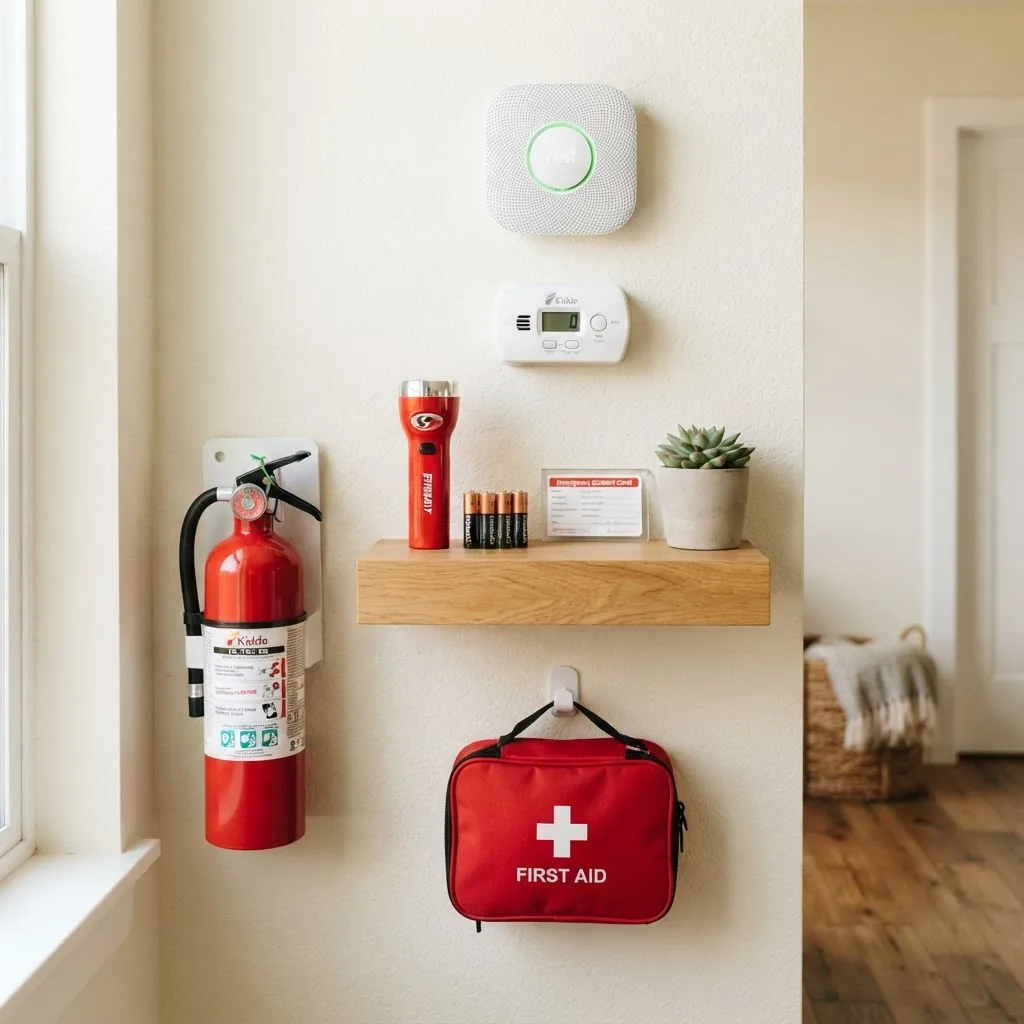
Safety items are non-negotiable. Below are mandatory and recommended items, plus why each matters. According to a 2024 industry report on home safety purchasing, households that kept a defined emergency kit reported 40% faster recovery after common incidents (source type: 2024 industry report).
- Smoke and CO detection
- Smoke detectors: install one on every level and outside sleeping areas; test monthly
- Carbon monoxide detector: at least one per floor and near bedrooms
- Replace batteries annually or use sealed 10-year battery units
Authoritative guidance: see Consumer Product Safety Commission for product safety and installation recommendations.
- Fire safety
- ABC-rated fire extinguisher: 1 for kitchen, 1 for garage or workshop; check pressure gauge monthly
- Fire blanket for kitchen grease fires
- First aid & emergency kit
- Preassembled first aid kit (expand to include extra bandages, antiseptic wipes, burn gel)
- Flashlight per person + spare batteries; headlamps useful for hands-free tasks
- Portable battery bank and a crank/solar radio for power outages
- Emergency water: 1 gallon per person per day (3-day supply minimum)
- Nonperishable food: 3-day supply per person, rotate annually
For recommended kit components follow guidance from Ready.gov and medical first-aid recommendations from the American Red Cross.
- Home security & documentation
- List of emergency contacts and insurance numbers stored both physically and digitally
- Spare keys in a secure location or with a trusted neighbor
- Maintenance-related prevention
- Know common problems that safety supplies help prevent—see common home maintenance problems and repair solutions
- Schedule detector and extinguisher checks every 6–12 months
Transition: finish the initial setup by collecting smaller but essential miscellaneous items often forgotten by first-time homeowners.
- Smoke and CO detection
-
Miscellaneous Household Items: The Small Things You Need for a New House
These miscellaneous house items are the small but critical pieces that make a home function smoothly. Keep them in an easy-access drawer or bin for first-week use.
- Batteries: AA ×12, AAA ×12, 9V ×2, coin cell for remotes
- Light bulbs: 6–12 LED bulbs (check base: E26/E27 or B22)
- Tool kit basics: screwdriver set, hammer, adjustable wrench, level
- Measuring tools: tape measure (5 m / 16 ft), kitchen scale
- Adhesives and fasteners: super glue, duct tape, electrical tape, picture hooks (20), screws and drywall anchors
- Reusable shopping bags, apron, oven mitts, spare keys
- Notepad and pens, sticky notes, markers
- Small step stool or sturdy folding step — load rating 150–250 kg depending on needs
- Extension cords and surge protectors (2–3)
- Door mats for exterior entrances to reduce dirt
- useful household items guide
Practical storage tip: keep a “first-box” with batteries, a screwdriver, spare bulbs, and a utility knife so small fixes don’t require a purchase run.
-
How to Prioritize Your House Needs and Build a Budget-Friendly Shopping Plan
This section is a step-by-step prioritization and budgeting plan so you buy essentials first and avoid wasted spending. Think of it as triage: immediate survival and safety, then comfort, then convenience.
- Step A — Set your initial budget and timeline
- Decide your initial spend tier: Low $300–$600, Medium $600–$1,500, Full $1,500+
- Allocate: 30% kitchen, 25% bedroom (mattress), 15% safety & essentials, 10% living room seating, 10% cleaning tools, 10% misc
- Step B — Buy for safety and sleep first
- Immediately purchase: mattress and protector, smoke/CO detectors, first aid kit, basic cookware set, minimal tableware for immediate eating
- Estimated spend: Low tier — mattress (budget) $150–$400, detectors $25–$60 each, starter cookware $50–$120
- Step C — Fill the kitchen for function
- Prioritize cookware and utensils preventing takeout dependence: Dutch oven, skillet, knife, cutting board, storage containers
- Buy small appliances last in this phase; borrow or use temporary methods if budget constrained
- Step D — Buy living room seating on a timeline
- Consider secondhand options: check local listings for sofas under $300 in good condition
- Allocate 1–2 weekends to inspect and pick up furniture safely (measure doorways first)
- Step E — Use cost-saving strategies
- Buy multipurpose items (e.g., Dutch oven = roasting + braising), use coupon periods (sales seasons), and prioritize secondhand for furniture
- Follow DIY approaches from DIY home repair projects guide for assembly and small fixes to save labor costs
- Step F — Schedule purchases and set reminders
- Create a 90-day purchase calendar. Week 1: mattress, detectors, basic kitchen. Week 2–4: core cookware, vacuum, towels. Month 2: living room seating, appliances. Month 3: organizational systems and decor.
- Use top home maintenance apps and home improvement online resources and repair websites to track purchases and maintenance.
- Step G — Build resilience into the plan
- Allocate a small emergency fund: $100–$250 for unplanned immediate needs (leaks, broken bulbs, small part replacements)
- Plan for replacements: swap to long-life LED bulbs and quality batteries to reduce frequent purchases
- Step H — Train and upskill
- Develop basic skills with essential home repair skills and maintenance training so you can handle common tasks yourself
- For complex or hazardous tasks, consult professionals or subscription services (see affordable handyman subscriptions)
For ongoing maintenance checklists beyond initial supplies, consult the Complete Home Maintenance Checklist for Yearly and Monthly Care.
Transition: after you prioritize and buy, consolidate everything into a tidy, printable checklist for recurring reference.
- Step A — Set your initial budget and timeline
-
Printable House Needs Checklist for Easy Reference
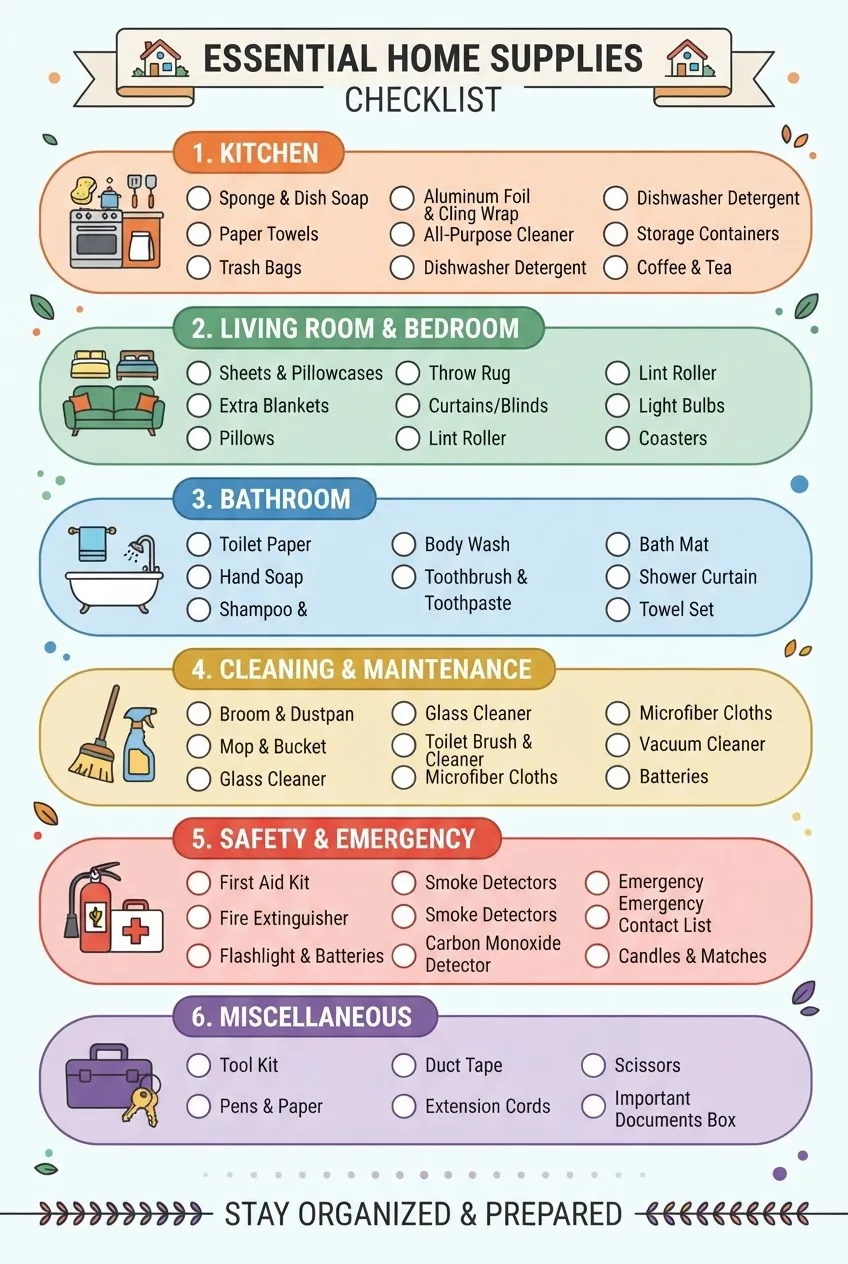
Below is a short summary and a callout to download or print the full checklist. Use this as a grab-and-go list when shopping or doing inventory.
Callout: For a printable full-sheet version and a compact pocket checklist, see home must haves checklist for essentials. (Note to developer: provide downloadable PDF and print-friendly CSS.)
Summary lines (printable quick view): Kitchen (cookware, utensils, small appliances, pantry), Bedrooms (mattress, linens, storage), Bathroom (towels, toiletries), Cleaning (cleaners, vacuum, mop), Safety (detectors, extinguisher, first aid), Misc (batteries, bulbs, tools).
Common mistakes and how to avoid them
I once helped set up a rental where the tenant bought multiple small appliances before buying a mattress; they ended up sleeping on a couch for weeks. Avoid this by always buying safety and sleep items first. I’ve seen households store batteries and bulbs in hidden cupboards — keep a visible small kit so you don’t make repeated convenience-store trips. I’ve also seen people buy mismatched light bulbs; always check your fixture base and lumen needs before purchasing.
Compact verification checklist
- Safety: Smoke detectors and CO detectors installed and tested
- Sleep: Mattress, bedding, pillows in place
- Kitchen: Basic cookware, utensils, plates and pantry staples on hand
- Bathroom: Towels, soap, toilet brush, spare toilet paper stash
- Cleaning: Vacuum/broom, all-purpose cleaner, microfiber cloths
- Misc: Batteries, spare bulbs, basic tool kit accessible
- Documentation: Emergency contacts and insurance numbers stored
When to call a professional
Call a licensed professional for electrical work, gas appliance installation, major plumbing repairs, or structural alterations. If you find mold beyond a small patch, hire remediation. Use subscription or vetted handyman services for recurring maintenance if you prefer not to DIY; review options in affordable handyman subscription services and monthly handyman services and maintenance subscriptions.
Conclusion
Key takeaways: prioritize safety and sleep, equip the kitchen with the few highest-impact items first, keep a small but complete maintenance kit, and use a 90-day buying plan to spread cost. Start by completing the compact verification checklist and schedule remaining purchases using a calendar. Ready to make a purchase plan? Print the checklist, set budgets per category, and begin with mattress and detectors this weekend.