

household keeping: by the end of this hands-on guide you will have a realistic, timed daily routine that keeps your home tidy in 15–45 minutes per day and requires only basic cleaning skills. This guide assumes you can use common cleaning tools and follow a short checklist; no specialist training needed.
Before you start
- Basic cleaning kit: all-purpose spray, microfiber cloths (3), broom, dustpan, small handheld vacuum.
- Storage & sorting supplies: 2 small baskets for corraling items, a laundry basket, 1 bin for recycling, 1 bin for trash.
- A printed or digital checklist and a timer (set 10–20 minutes for quick sessions).
- Optional: calendar or one of the home maintenance apps to remind tasks.
Introduction to Household Keeping
This guide is a practical, room-focused plan for daily upkeep so you spend less time on deep cleaning later and more time enjoying your home. Daily household keeping reduces visible clutter and small repairs that can become larger problems; cleaning up the house daily also supports a healthier indoor environment. According to a 2024 industry report, households that adopt a short daily tidying routine report up to 30% fewer hours spent on monthly deep cleans.

Daily upkeep is not a substitute for scheduled maintenance; it’s the everyday habit layer that protects finishes and reduces stress. Use this guide alongside the Complete Home Maintenance Checklist for Yearly and Monthly Care to tie quick daily tasks into longer-term care.
Transition: With the purpose and benefits clear, the next section lays out the core principles that make household keeping efficient and sustainable.
Essential Principles of Effective Household Keeping
Effective household keeping focuses on preventing mess build-up, keeping tasks short and repeatable, and matching effort to impact. Below are the guiding principles I use with homeowners and renters to make daily tidying predictable and manageable.
- Principle 1 — Small, frequent actions beat rare big ones: A 10–20 minute daily tidy prevents hours-long catch-ups later. Routine cleaning is habit work, not hero work.
- Principle 2 — Zone your efforts: Focus on high-impact areas (kitchen surfaces, entryway clutter, bathroom sinks). This optimizes visible cleanliness for minimal time.
- Principle 3 — Use the two-minute rule: If a task takes less than two minutes (putting away shoes, wiping a spill), do it immediately to avoid pile-up.
- Principle 4 — Keep a one-touch policy: When you pick something up, decide and act — return it to a home, recycle, or trash — rather than moving it to a “later” pile.
- Principle 5 — Build environmental cues: Place baskets at doorways, set visible timers, and use a calendar to cue tasks until they are habits.
- Principle 6 — Balance quick daily cleaning versus periodic deep cleaning: Daily routines maintain surfaces and clutter; deep cleaning (vacuum motors, oven interior) is scheduled monthly or seasonally.
- Principle 7 — Keep tools accessible and minimal: A compact toolkit saves time. Store cloths, spray, and a small vacuum where you use them most.
Daily cleanliness also complements repair and resale efforts: if you’re preparing your home for sale, routine tidiness helps reveal issues earlier. repairs before selling a home.
Combine daily upkeep with handyman support when tasks exceed your time or skills. affordable handyman services.
Finally, preventing small messes can stop them becoming structural or system problems. common home maintenance problems.
Transition: With the principles clear, follow the step-by-step daily routine below that turns those ideas into an actual, timed plan you can do each day.
Creating a Daily Household Keeping Routine

This numbered routine is the core daily program. It’s designed to be done in sequence each morning or evening; pick the time that fits your household (morning for families getting out the door, evening for shared resets). Use a timer on each step: 5–20 minutes per zone, total 15–45 minutes depending on your home size.
-
Start with a two-minute entryway reset.
Action: Remove shoes, hang keys, place mail in one basket. Time: 2–5 minutes. Tools: 1 small basket, wall hook. Outcome: clear path and fewer spread items into the house.
-
Do a quick kitchen sweep and surface wipe (5–10 minutes).
Action: Load the dishwasher or wash essentials, wipe countertops with an all-purpose spray, clear sink. Time: 5–10 minutes. Technique: work left-to-right; wipe before you dry dishes to catch crumbs. Set a 7-minute timer and keep cloths in a caddy.
Tip: When prepping dinner, keep a short “clean-as-you-go” rule: rinse pans immediately to avoid soak-and-scrub later.
-
Perform a bathroom 5-minute refresh.
Action: Wipe the sink and faucet, quick squeegee shower glass, replace towels if damp, empty small waste bin. Time: 4–6 minutes. Supplies: disinfectant wipe or spray, microfiber cloth, squeegee.
Technique: Use a spray/leave-for-30-seconds approach for germ-prone areas before wiping.
-
Quick living-room tidy and 10-minute surface/declutter pass.
Action: Straighten cushions, collect stray items in a basket, fold blankets, wipe coffee table. Time: 8–12 minutes. Use a “one basket” for items that belong elsewhere; redistribute later in a 3–5 minute sweep.
-
Bedroom reset and laundry triage (10–15 minutes).
Action: Make the bed (45 seconds), put clothes in hamper, sort visible clutter into keep/donate/trash boxes for later. Time: 6–12 minutes. If laundry is due, start a small 30–45 minute load to run while you finish other tasks.
-
Waste and recycling sweep (3–5 minutes).
Action: Empty small bins where needed, consolidate recyclables, take out kitchen trash if full. Time: 3–5 minutes. Keep outside bins on a schedule (e.g., every other day or per municipal pick-up).
-
Finishing pass: 5-minute floors and transition checks.
Action: Quick vacuum high-traffic zones or sweep; spot-mop visible spills. Time: 5–10 minutes. Keep a small cordless vacuum ready for quick runs; deep vacuuming is weekly.
-
Five-minute household admin and prep for tomorrow.
Action: Check calendar, note any maintenance tasks, prep items for morning (bags, lunches). Time: 3–5 minutes. Use your maintenance schedule template to log anything that needs longer attention.
Supplemental organization: print or download one of the printable home cleaning checklist templates and place it on the fridge for 30 days to form the habit.
printable home cleaning checklist templates
Common scenario: you’ll have a 20–30 minute “reset window” after dinner that works well in most households — if mornings are better, shift the routine earlier. Use a timer for each zone to keep momentum.
Common mistakes and how to avoid them
I often see people try to do everything at once and burn out. I once tried a 90-minute daily routine and stopped after two days — shorter bursts work better. I also saw homeowners keep many cleaning products under sinks and waste minutes choosing; pick 3 reliable products and stick to them. Finally, don’t postpone small tasks: I’ve learned that ignoring a spilled cereal bowl led to ants; immediate two-minute actions prevent escalation.
Daily household keeping checklist (verify you did each item)
- Entryway: shoes and mail sorted.
- Kitchen: dishes addressed, counters wiped.
- Bathroom: sink wiped, towels rotated.
- Living room: clutter corralled, surfaces wiped.
- Bedroom: bed made, laundry started if needed.
- Trash/recycling: checked and emptied if >75% full.
- Floors: quick spot-vac or sweep of high-traffic areas.
- Admin: 5-minute review of calendar and maintenance notes.
When to call a professional
Call a professional when you encounter electrical hazards, persistent water leaks, or HVAC and pest issues that daily cleaning won’t resolve. If a cleaning task requires industrial equipment (mold remediation, heavy soot clean-up), schedule pros. If you need help keeping up, consider monthly handyman services or a professional cleaner for periodic deep cleans.
Transition: With your daily routine established, the next section gives action-first, room-by-room steps for the most efficient daily cleaning and tidying.
Room-by-Room Daily Cleaning and Tidying Guide
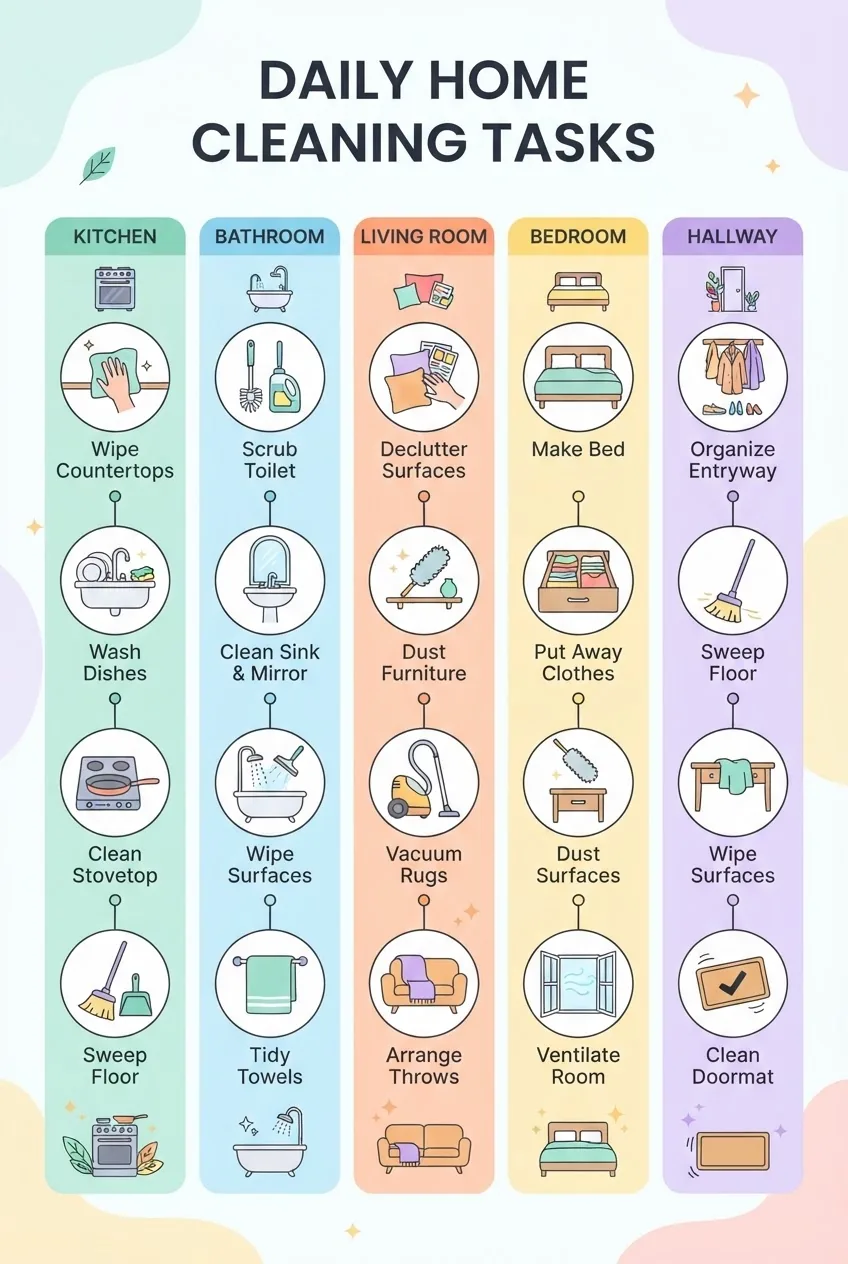
This section breaks down exactly what to do in each major room. Each mini-routine is 3–12 minutes; follow the “do-it-now” preference for two-minute tasks.
Kitchen — daily cleanup (5–12 minutes)
- Clear and load dishes: Put dishes in dishwasher or hand-wash immediately. Time: 3–8 minutes depending on load.
- Wipe high-touch surfaces: Countertops, stove knobs, and handles with an all-purpose spray. Time: 90 seconds per surface.
- Check perishables: Dispose of spoiled food immediately; rotate next-day meal items to front. Time: 1–2 minutes.
- Quick floor sweep: Spot-sweep crumbs; main sweep weekly. Time: 2–3 minutes.
Note: daily kitchen care prevents odors and pest attraction. For periodic intensive cleaning use the detailed deep cleaning checklist.
Bathroom — quick clean (4–8 minutes)
- Spray and wipe sink/faucet: Use disinfectant or EPA-recommended cleaner. Time: 1–2 minutes.
- Squeegee shower glass: Prevent water spots and soap scum. Time: 60 seconds.
- Replace damp towels and empty waste: Rotate towels every 2–3 days. Time: 1–2 minutes.
Living room — tidy and surface care (5–12 minutes)
- Corral clutter: Use a basket to collect items to return to other rooms. Time: 2–4 minutes.
- Straighten textiles: Fold throws and fluff cushions. Time: 1–2 minutes.
- Wipe surfaces: Coffee tables and remote controls with microfiber; disinfect high-touch points weekly. Time: 2–4 minutes.
Bedroom — daily maintenance (3–8 minutes)
- Make the bed: Tighten corners; a made bed improves perceived cleanliness. Time: 1 minute.
- Put clothes away: Laundry in hamper; hang or fold overnight items. Time: 2–5 minutes.
- Clear bedside surfaces: Books, glasses, chargers returned to chargers stations. Time: 1–2 minutes.
Hallway and entry — daily checks (2–5 minutes)
- Quick sweep of shoes and outerwear: Put away coats and shoes; check for wet items.
- Surface wipe of console table: Remove junk mail, restock essentials (keys, masks).
Transition: With room-by-room steps in place, the right tools and supplies make everything faster and safer.
Tools and Supplies for Efficient Household Keeping
Choosing effective, safe tools reduces cleaning time and protects surfaces and health. For hygiene guidance, follow public health advice: According to a 2023 public health guideline, regular cleaning of high-touch surfaces reduces transmission risks in the home; see official guidance below for product and technique details.
- Core toolkit: Microfiber cloths (3–5), spray bottle with diluted cleaner, disinfectant wipes (for quick use), broom, dustpan, small cordless vacuum, squeegee for shower glass.
- Specialty items: Extendable duster, grout brush (for weekly use), rubber gloves, bucket for spot-mopping.
- Storage helpers: Labelled baskets, magazine file for papers, clear bins for pantry sorting.
Practical checklist — keep these within reach:
- Microfiber cloths × 4 (rotate daily; wash weekly at 60°C for greasier residue).
- All-purpose cleaner (diluted concentrate if possible) and a separate disinfectant for bathrooms.
- Small cordless vacuum (minimum run-time 20 minutes) for quick daily passes.
- Hand soap and paper towels or a reusable towel designated for quick spills.
For health and product guidance refer to trusted authorities:
CDC cleaning and disinfecting guidance — recommended methods for surface disinfection and high-touch areas.
EPA Safer Choice — label guidance for safer, eco-friendly cleaning products.
U.S. Consumer Product Safety Commission — general safety advice for cleaning equipment and household products.
healthy homes assessment checklist
Choosing between eco-friendly and traditional chemical cleaners: eco-friendly products reduce harsh fumes and are recommended for daily surface cleaning; stronger disinfectants are appropriate for bathrooms and kitchen surfaces that contact raw foods or bodily fluids. According to a 2024 industry report, households that switch to concentrated cleaners reduce plastic waste by up to 40% annually.
Transition: Next, apply time-saving tricks that fit into five minutes or less and multiply your efficiency across the week.
Time-Saving Tips and Tricks to Keep Your House Clean Daily
- Set 10-minute timers for micro-sessions. Use short, intense bursts to avoid drift and procrastination.
- Adopt laundry habits that reduce bulk: Do one small load every other day vs. one big weekly load — 30–45 minute cycles help keep closets clear.
- Corral items with “landing zones.” A basket by the door reduces the need to hunt for things and saves five minutes per person per day.
- Multitask on appliance cycles. Fold or sort laundry while a dishwasher runs (15–20 minutes) — combine low-attention tasks to reduce total time.
- Use quick dry-clean hacks: Place a damp cloth under a tray for pet food messes or use rubber gloves to gather pet hair faster.
- Declutter in 5-minute bursts: Use a box labelled “donate” and fill it over 7 days; drop it at donation center weekly.
- Keep a small caddy of supplies per floor: Saves walking time and increases the chance you’ll do quick spot tasks.
- Combine simple repairs with tidying: Tighten loose screws or replace a bulb when you see them to avoid return visits; refer to simple DIY home repair projects for safe small fixes.
Transition: Time-saving tactics help form the habit loop; the section below explains practical ways to build lasting household keeping habits and keep everyone motivated.
Maintaining Motivation and Building Lasting Household Keeping Habits
Daily household keeping is behavior work: you’re training a new automatic routine. Use behavior science basics — clear cue, short routine, immediate reward — to create consistency. Start with one cue (morning coffee, after dinner) and attach a 5–15 minute routine to it.
Start small and stack habits
Pick one micro-habit for 30 days: make the bed each morning, do a 5-minute kitchen wipe after dinner, or empty waste bins every evening. Habit stacking — attaching a cleaning task to an existing routine (e.g., after brushing teeth) — creates reliable triggers.
Use incentives and visible progress
Track wins on a visible chart or app. Reward systems (family points toward a shared treat once a week) increase cooperation. For families, assign age-appropriate micro-tasks and rotate roles weekly to keep fairness.
Lead by example and involve family
I recommend short chore sprints (10 minutes) where everyone participates — I run a 10-minute “end-of-day reset” in my household and it cut clutter regressions significantly. Teach kids one simple routine (put toys in the bin) and praise completion to reinforce habits.
maintenance inspection checklist
Long-term projects: pair routines with simple home maintenance projects (like adding more storage or installing hooks) to reduce daily effort.
If you need ideas or troubleshooting, consult curated home improvement online resources to expand skills and learn efficient techniques.
Final transition to wrap up your plan and offer next steps.
Conclusion — Key takeaways: small, consistent daily actions protect your home and reduce deep-cleaning time; a focused 15–45 minute routine will keep clutter and harm at bay. Start with one micro-habit, use timers, keep supplies accessible, and involve household members. Ready to try it? Download a checklist, set a calendar reminder, and commit to 30 days — you’ll see measurable improvement. For deeper seasonal work, pair this routine with your Complete Home Maintenance Checklist for Yearly and Monthly Care.