
Keeping house by the end of this guide you’ll have a reproducible daily-and-routine system that takes 15–45 minutes per day and a weekend 60–90 minute weekly check that any homeowner can manage. Skill level assumed: basic household competence — you know how to use a vacuum, washer, and common cleaners.
What you will achieve: an actionable daily checklist, weekly/monthly scheduling, a compact supplies plan, decluttering rules that stick, and clear thresholds for when to call in help.
Before you start
- Basic tools: vacuum or broom, microfiber cloths (3–6), multi-surface spray, glass cleaner, mop, bucket.
- Consumables: trash bags (13–30 gallon), laundry detergent, stain remover pen, one disinfectant (EPA-registered) and one eco-friendly spray.
- Organizational items: a small basket for daily collection, 2–3 labeled bins for sorting, a command tray by the door.
- Time blocks: plan three 10–20 minute windows (morning, afternoon, evening) and one 60–90 minute weekly block.
- Print or open the printable home cleaning checklist templates for quick use.
Introduction to Keeping House: What It Means and Why It Matters
The goal of keeping house is daily upkeep that preserves comfort, reduces cleaning time over the long run, and supports health. Visible benefits—less dust, fewer stains, easier entertaining—often appear within 2–4 weeks of a consistent routine. According to a 2024 industry report, households adopting simple daily habits report measurable reductions in mess-related tasks within 30 days.
Keeping house intersects with broader home maintenance: small, regular tasks prevent bigger repairs later. For a year-round plan that links daily upkeep to seasonal care, see the Complete Home Maintenance Checklist for Yearly and Monthly Care.
Cleansing routines also matter for indoor health. For basic sanitation guidance and when to use disinfectants, consult public health guidance like the CDC on cleaning and disinfection: CDC cleaning and disinfection guidance. For air quality and pollutant reduction advice, see EPA resources: EPA indoor air quality. Consumer product safety and efficacy comparisons are available at Consumer Reports: Consumer Reports cleaning.
Transition: With the why covered, next we build a realistic daily routine that fits into busy lives.
Establishing a Practical Daily Cleaning Routine
Below is a hands-on, timed sequence to make keeping house a daily habit. Use the checklist templates referenced earlier and tailor times to your home size (studio—15 minutes, 2-bed—25–45 minutes).

- Morning reset — 10 minutes:
- Make beds (60–90 seconds each bed).
- Open windows 5–10 minutes (if weather allows) to exchange air.
- Collect laundry in basket; start a load if washer is empty (select quick/normal, 30–45 minute cycle).
- Wipe high-use surfaces in kitchen and bathroom with a microfiber cloth and multi-surface spray (approx. 4–6 wipes, 3–5 minutes).
- Empty small trash bins if 2/3 full; replace bag if kitchen bin >50% full.
- Midday tidy — 10–15 minutes:
- Gather stray items into a “morning basket” and return to rooms (limit: 10 items total, 5–8 minutes).
- Quick sweep or vacuum high-traffic zones (entry, kitchen) — use 2-pass method, 5–8 minutes.
- Spot-clean visible splashes on stove or counters with a degreaser (apply, wait 30 seconds, wipe).
Tip: Keep a small caddy with essentials (spray, dust cloth, disposable gloves) near the kitchen for speed. See the visual of an organized caddy below for setup ideas.
- Evening reset — 10–20 minutes:
- Dish duty: load dishwasher or hand-wash; rinse and air-dry small items (10–15 minutes depending on volume).
- Quick bathroom spot-check: wipe sink and faucet with disinfectant, squeegee shower glass after use (2–3 minutes per bath).
- Put away incoming mail and paperwork into a two-tray system (action / archive).
- Set out clothes for next day and fold dry laundry (5–10 minutes).
- End-of-day sweep — 3–5 minutes (optional but effective): quick walk-through to pick up visible clutter and close open containers; this lowers morning reset time.
- Weekly prep step — schedule one 60–90 minute block:
- Rotate through rooms: vacuum upholstery, mop floors, change towels and bedding (if needed), clean toilet bowls, and run a full load of towels/linens.
- Address any dishes not handled daily and check pantry for spills or expired items (5–15 minutes per room).
- Follow a room-by-room checklist for consistency — consider using the weekly house cleaning schedule and housekeeping guide.
- Case example (typical 2-bed household):
Household: two adults, one small dog. Daily average time spent using this routine: 30 minutes. After one month, visual clutter reduced by 70% and vacuum sessions dropped from 3 to 2 per week because dirt buildup was prevented — a practical example aligning with the earlier 30-day improvement note.
For more structured daily chore lists see the household chores list and checklist and the household keeping guide for daily cleaning.
- Quick time-savers:
- Set phone timers for each 10-minute block; treat them like appointments.
- Keep shoe-rack and coat hooks by the door to limit corridor clutter.
- Use a doormat both outside and inside to trap 70–90% of outdoor dirt before it spreads.
- Maintenance log entry: at the end of each week, note one persistent problem area (stains, pet hair zone) and add an action step to the next week’s block.
Weekly and Monthly Housekeeping Tips to Maintain Cleanliness
Transition: Daily habits reduce work; scheduled weekly and monthly tasks eliminate hidden dirt and prevent deep cleaning emergencies.
- Create a weekly agenda — pick a consistent day:
- 60–90 minute block: vacuum entire home, mop hard floors (use recommended floor cleaner dose: 1 cap per 4 liters of water for most concentrates), clean bathroom fixtures, dust baseboards (use microfiber), and empty/reline trash bins.
- Rotate tasks so one room gets deeper attention each week (rotate 3–4 rooms per month).
- Use the detailed deep cleaning house checklist when a room needs more than routine upkeep.
- Monthly checks — 45–90 minutes:
- Clean behind appliances (range, fridge): move appliance if simple to do or wipe accessible gaps. For refrigerators, vacuum coils annually or every six months to maintain efficiency.
- Wash windows interior (and exterior seasonally), clean light fixtures, dust vents and replace HVAC filters according to manufacturer (every 3 months typical, more often with pets).
- Check grout and caulking for gaps; minor fixes prevent mold growth.
- Use a maintenance calendar or the maintenance schedule template and program to keep timing consistent.
- Seasonal tasks — quarterly and annually:
- Quarterly: rotate mattress, deep-clean upholstery, de-scale showerheads.
- Annually: inspect roof/gutters, test smoke detectors, professional carpet cleaning if high-traffic (every 12–18 months).
- Organization checklist for weekly use:
Task Frequency Time Floors (vacuum/mop) Weekly 20–40 min Bathrooms (wipe, toilet, mirrors) Weekly 15–30 min Laundry (linens/towels) Weekly 60–90 min (includes machine time) Kitchen deep wipe (appliances/exterior cabinets) Monthly 30–60 min - Tools and automation: set reminders in a calendar app, and consider subscription services for regular tasks (see professional options in later sections).
- Transition: now that schedules are clear, ensure you have the right supplies to execute efficiently.
Essential Cleaning Supplies and Tools for Effective Housekeeping
Good supplies reduce task time and improve results. Below is a practical list for a typical homeowner with notes on frequency and eco-considerations.
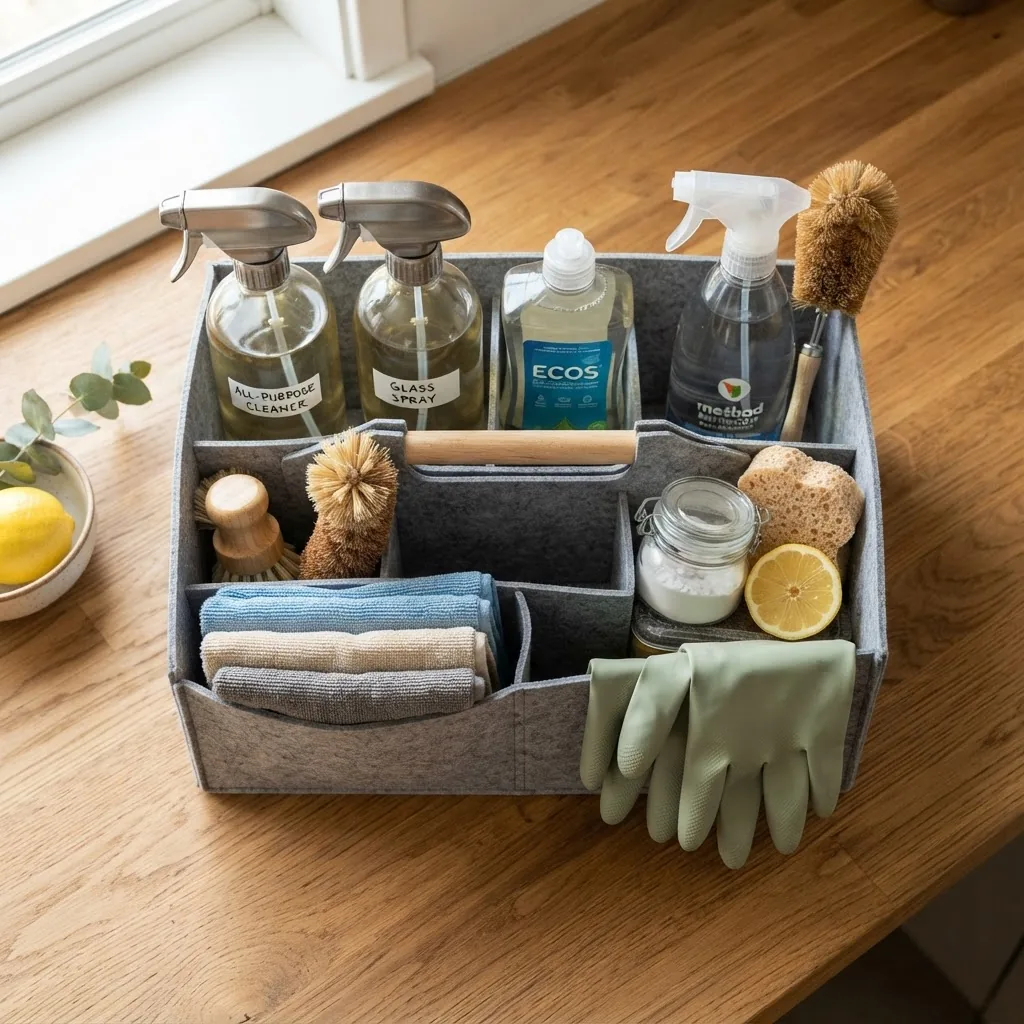
- Cleaning caddy (one): keeps core items portable — microfiber cloths (6), all-purpose spray, glass cleaner, disinfectant wipes.
- Floor care: vacuum (or stick vac) and mop (microfiber pad). Choose HEPA-filter vacuums if allergies are present.
- Specialty tools: grout brush, squeegee for shower, lint roller for pet hair, stain pen for fabrics.
- Protective items: nitrile gloves, eye protection for strong chemicals.
- Eco-friendly options: concentrate cleaners and refillable bottles reduce waste; used correctly, they match conventional cleaners for many routine tasks.
Choosing and organizing supplies — a brief walkthrough for beginners:
- Sort by task: group all kitchen items in one section of caddy, bathroom items in another. Keep daily-use items visible. Quantity: 2 microfiber cloths per room works well.
- Label shelf space: dedicate one low cabinet or bin per zone (kitchen, bathroom, utility closet).
- Prioritize safety: never mix bleach and ammonia-based cleaners; keep chemicals out of reach of children/pets.
- Resupply cadence: check consumables every 2 weeks — replace trash bags and refill concentrated spray when bottle falls below 25%.
For a printable list of recommended products and exact SKU-style guidance, consult the house cleaning supplies checklist. For product safety and comparative reviews, refer to Consumer Reports: https://www.consumerreports.org/cleaning/.
Transition: with supplies in hand, reduce clutter next—decluttering is the single biggest time-saver for routine housework.
Decluttering and Organizing for Easier Housekeeping
Decluttering reduces surfaces that collect dust and creates efficient cleaning paths. Use a hands-on method: sort, keep, donate, dispose. Do this in short sessions (20–40 minutes) to avoid decision fatigue.
- Set clear thresholds: keep only what is used at least once per month in high-visibility areas. Items used less frequently go into labeled bins (seasonal / sentimental / donate).
- Room-by-room action:
- Entry: install a tray and hooks; limit table items to one functional basket.
- Kitchen: remove duplicates—keep one or two everyday tools out, rest stored. Toss expired pantry items monthly.
- Living room: apply the “one-minute rule” — if it takes less than one minute to return, do it now.
- Storage solutions: use clear bins for visibility, vertical shelving for small rooms, and under-bed boxes for seasonal items (limit each to a labeled bin of max 30 liters).
- Paper and mail: limit flat surfaces by introducing a two-tray system: action (to-do) and archive (to file). Process action tray three times per week.
- Maintenance habit: 10-minute nightly tidy prevents drift: set a timer and return items to their homes.
Example: I once observed a family where toys accumulated on the sofa; introducing one labeled bin and a 5-minute tidy rule cut living-room cleaning time by 40% within two weeks.
Transition: now apply focused tactics to high-traffic and troublesome areas.
Tackling High-Traffic and Problem Areas in Your Home
High-traffic zones demand targeted tactics to prevent rapid decline. Below are area-specific tips with repair and service link suggestions.
Kitchen
- Daily: wipe counters after meal prep, run dishwasher nightly or wash by hand; clean spills immediately with microfiber and degreaser.
- Weekly: clean appliance exteriors and handles; check sink drain for buildup and run hot water and baking soda/vinegar monthly if slow.
- When a repair prevents cleanliness (e.g., fridge leaks, weak seals), consider professional help such as affordable handyman subscription services to fix issues quickly.
Bathroom
- After each shower: use squeegee on glass and wipe down high-use surfaces (60–90 seconds).
- Weekly: disinfect toilet and clean grout; replace bath mats when damp or musty.
- Monthly: inspect caulk; small gaps invite mold and require resealing.
Floors and Carpets
- High-traffic: vacuum 2–3 times per week; spot-treat stains immediately with fabric-appropriate cleaner.
- Hard floors: sweep daily in high-traffic zones and mop weekly with the recommended cleaner dose (see supplies section).
Pets
- Keep a dedicated brush and lint roller by entry points; brush pets outdoors 2–3 times weekly to reduce shedding.
- Use washable pet bedding and launder weekly; spot-clean accidents immediately with enzyme cleaner.
Cleaning is often hindered by structural or maintenance issues. For guidance on root causes and fixes consult the common home maintenance problems and repair solutions.
Transition: busy households need hacks to keep routines realistic—read on for time-saving strategies.
Time-Saving Strategies and Tips for Busy Households
Transition: apply these practical shortcuts to maintain standards without extra hours.
- Batch similar tasks: group wiping tasks together (all counters, then all mirrors) to reduce tool switching — saves 15–25% time.
- Delegate with clear micro-tasks: assign 10-minute tasks by person — e.g., “Empty trash from kitchen and two bathrooms.” Use a shared checklist or app.
- Use appliance timers and cycles: run dishwashers at off-peak times and set washer on delay to finish right before folding block.
- Install low-maintenance finishes: consider stain-resistant rugs or sealed grout to reduce cleaning frequency; small home projects cut cleaning time — see DIY home repair projects and home maintenance projects for easier upkeep.
- Adopt “clean as you go”: cook with a habit of washing utensils while food simmers — usually saves 10–20 minutes later.
These tactics, when implemented together, can cut weekly cleaning time by a third in many households.
Preventing Dirt and Mess: Proactive Habits for Long-Term Cleanliness
Transition: prevention is where the largest time-savings come from—habit formation is the key.
Build these proactive habits and you’ll avoid 70–90% of common clutter sources:
- Entry rules: shoes off at door, bags on hook, mail into an action tray. These three behaviors prevent corridor clutter and reduce floor dirt transfer.
- One-touch policy: if you pick up or open something, handle it to completion (file, wash, return) rather than creating a stack.
- Nightly reset: a 10-minute evening sweep is like brushing your teeth — consistency matters. After four weeks this forms an automatic habit.
- Inspection and repair: schedule quarterly checks with your household or a pro to address leaks, seals, and HVAC filters. For deeper inspections that catch mess-causing issues early, review the comprehensive maintenance inspection checklist and the what to repair before selling a home guidance.
- Pet routines: designate a wipe-down towel by the door for quick paw cleaning after walks; keep grooming scheduled weekly to cut indoor hair accumulation.
Caveats: cleaning frequency should be tuned by household size, pets, and health needs. If someone has allergies, increase vacuuming frequency and consider a HEPA filter.
Transition: now let’s acknowledge common mistakes and how to avoid them so your plan stays sustainable.
Common mistakes and how to avoid them
I used to skip the evening reset and then face two hours of catch-up on weekends; setting a 10-minute timer erased that backlog. I also overloaded weekly blocks—now I split heavy tasks across two days so energy and results stay consistent.
I relied on one multi-surface product for everything; switching to targeted cleaners for glass and grout gave faster results and reduced rework time.
I ignored mail at the door; adopting the two-tray system stopped papers from becoming permanent clutter.
Conclusion and Encouragement for Ongoing Household Care
By following the steps above you’ll convert large, infrequent cleaning sessions into short daily habits plus a focused weekly block. Expect visible improvements within 2–4 weeks, and measure success by decreased time spent per cleaning session and fewer urgent cleanups. Keep the plan adaptable: tweak time blocks, rotate tasks, and swap tools based on results.
Final CTA: start today by doing a 10-minute evening reset and scheduling your first 60–90 minute weekly block on a calendar. If you find a repair or persistent issue beyond cleaning, consider professional help; see the options linked earlier for handyman subscriptions and deeper diagnostic checklists.
Quick verification checklist
- Daily: beds made, dishes washed/loaded, counters wiped — 15–45 minutes total.
- Weekly: full-floor cleaning, bathroom wipe, linen rotation — 60–90 minutes scheduled.
- Monthly: appliance backs, filter check, grout inspection — 45–90 minutes.
- Supplies: stocked caddy, 3–6 microfiber cloths, one disinfectant, one eco option.
- Habits: nightly 10-minute reset, mail triage, shoes-off entry rule.
When to call a professional
Call a pro when problems reduce the effectiveness of cleaning: persistent water leaks, mold beyond surface cleaning, appliance failures that cause dirt or odors, or recurring pest issues. For ongoing small repairs consider subscription options to keep systems running and eliminate mess catalysts.