By the end of this hands-on guide you’ll have completed a full hvac maintenance checklist for your home, learned which seasonal tasks you can safely do yourself and which need a certified technician, and created a repeatable preventive-maintenance routine. Expect to spend about 1–3 hours per season on homeowner tasks (plus one annual pro tune-up); skill level: basic DIY with safe use of hand tools.
Before you start, gather the right tools and understand safety limits so you don’t void warranties or handle refrigerant or high-voltage parts.
Before you start
- Basic tools: screwdriver set, cordless drill, flashlight, nut driver set, adjustable wrench, small hand vacuum or shop vac
- Consumables: furnace/AC filters (replacement sizes), coil cleaner (no-rinse), microfiber cloths, disposable gloves
- Safety gear: safety glasses, disposable N95 mask (for dusty ducts), carbon monoxide detector battery check
- Access: owner’s manual, model & serial numbers for HVAC units, and a camera or phone to photograph panels and wiring before touching
- Time blocks: allow 60–180 minutes per season for homeowner tasks; schedule a 60–90 minute professional tune-up once per year
Introduction to HVAC Maintenance for Homeowners
Regular seasonal HVAC maintenance reduces energy bills, improves indoor air quality, and prolongs system life. According to a 2024 industry report, routine maintenance can improve system efficiency by up to 12–15%, lowering running costs and reducing emergency repairs. This guide covers all common residential systems — central air conditioners, furnaces, heat pumps and boilers — and ties homeowner tasks to manufacturer care and safety standards.
A short case study from my fieldwork: a 1998 split‑system homeowner followed a seasonal checklist, replaced MERV‑8 filters quarterly, kept outdoor condensers clear, and scheduled annual tune-ups. Over 12 months their cooling electricity use dropped 9% and the system avoided a mid-summer compressor failure — saving the owner an estimated $2,200 in replacement and lost-cooling costs, based on local repair quotes.
For in-depth air conditioner care see Air Conditioner Maintenance and Service Guide for Homeowners. For federal guidance on energy-saving HVAC practices see U.S. Department of Energy recommendations.
Transition: next we’ll explain why a seasonal checklist matters and then walk through actionable, numbered tasks for each season.
Why Use a Seasonal HVAC Maintenance Checklist?
A seasonal checklist turns HVAC upkeep into repeatable, verifiable steps so homeowners can prevent failures, maintain comfort, and improve air quality. Think of it like a car tune-up or garden seasonal plan: small repeated investments avoid large, urgent repairs.
- Preventive maintenance importance: scheduled checks catch worn belts, dirty coils and failing capacitors before they cause breakdowns.
- Avoid breakdowns: seasonal tasks reduce stress on compressors and blowers when systems switch heavy loads during summer/winter peaks.
- Improve air quality: regular filter replacement and duct checks reduce dust, pollen and VOC circulation.
- DIY vs. professional checks: homeowners can replace filters, clear debris and inspect vents; certified techs should handle refrigerant, electrical diagnostics and combustion safety tests.
- Annual planning: pair this checklist with an annual HVAC preventative maintenance schedule to track service windows and warranties.
Transition: now the step-by-step seasonal checklists begin — spring first, focused on preparing cooling equipment.
Spring HVAC Maintenance Checklist
- Replace the indoor filters: Change disposable filters (MERV 6–11 common) every 1–3 months; for homes with pets or allergies, use MERV‑8 to MERV‑11 and replace at 1 month. Record date in your PM log.
- Inspect and clear outdoor unit: Remove leaves, mulch and 2 ft of vegetation around the condenser. Straighten bent fins with a fin comb if necessary. Clear any sitting water to avoid rust.
- Clean evaporator and condenser coils: Lightly brush or use a no‑rinse coil cleaner. If coils are heavily soiled, schedule pro cleaning to avoid damaging aluminum fins.
- Check condensate drain line: Flush the drain with 1 cup white vinegar followed by 1 cup hot water; ensure the condensate pump operates and the trap is clear.
- Inspect air handler/blower: Turn power off at breaker, remove access panel, vacuum dust from blower and motor housing; check belt tension if belt‑driven.
- Verify thermostat settings and sensors: Replace thermostat batteries; set cooling schedule and confirm temperature reading within ±1°F of a handheld thermometer. Calibrate if off more than 1°F (refer to manufacturer manual).
- Check refrigerant indications (visual only): Look for oil spots or damaged lines — do not handle refrigerant. If you suspect leaks or the system is short-cycling, call a certified tech.
- Inspect electrical connections: Look for loose wiring at accessible terminals; if you see frayed insulation or burnt marks, stop and call a technician.
- Test system operation: Run the AC for 15 minutes and confirm steady airflow, consistent temperature drop (typically 15–20°F across the evaporator coil), and no unusual noises.
- Update maintenance log and schedule pro tune-up: Note dates, filter types, issues found, and schedule your pro for a pre-summer tune-up if you haven’t had one in 12 months.
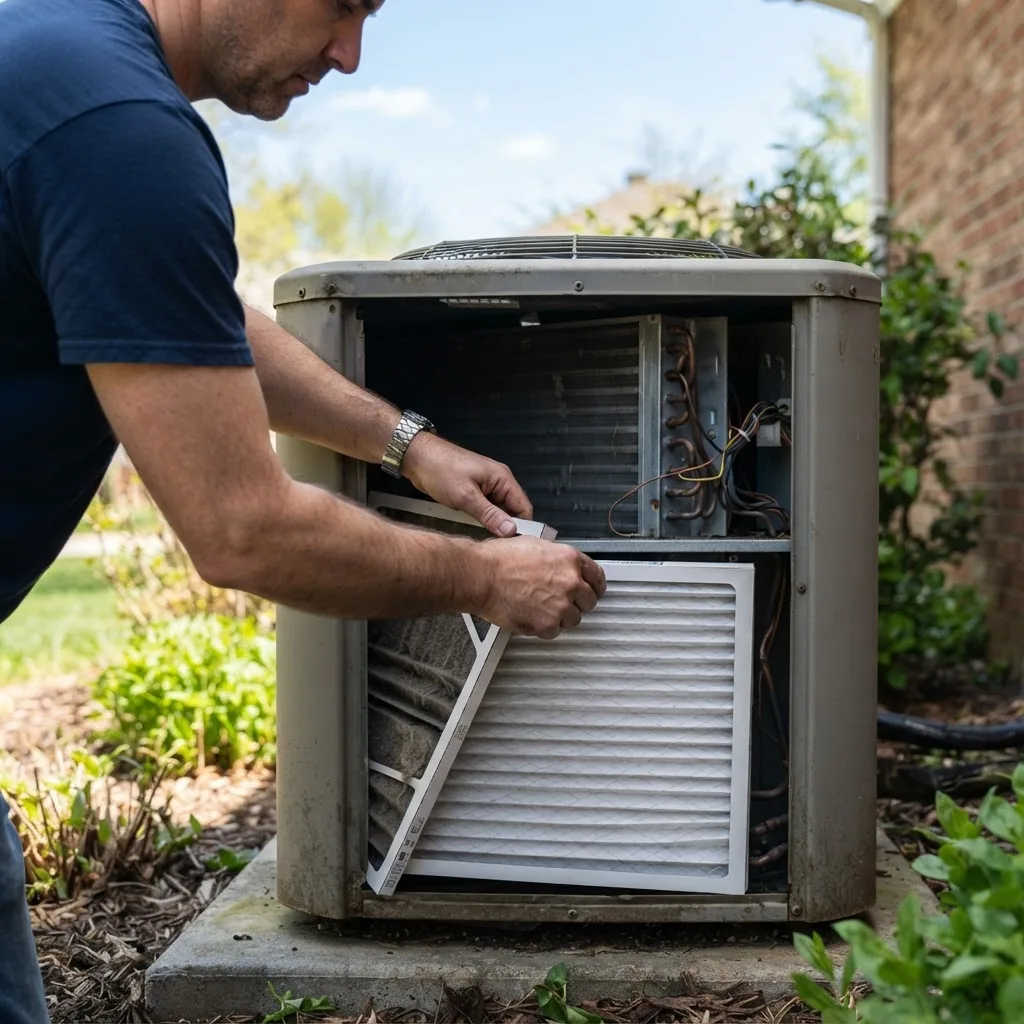
For more detailed air‑conditioning steps and parts photos see detailed air conditioner maintenance tips.
Transition: summer focuses on efficiency and emergency readiness when cooling demand is highest.
Summer HVAC Maintenance Checklist
- Confirm airflow and register balance: Check each supply register for strong, even airflow. If rooms are unevenly cooled, check dampers in the duct trunk or have a pro perform airflow balancing.
- Replace or clean filters monthly during heavy use: In summer, change disposable filters every 30–60 days; washable filters should be cleaned every 30 days and fully dry before reinstalling.
- Inspect compressor and refrigerant lines visually: Ensure insulation on the suction line is intact; if the outdoor unit cycles frequently or cools poorly, book a professional refrigerant and performance check (licensed tech required).
- Clean condenser fins and straighten if needed: Use gentle rinsing from the inside out with a garden hose on low pressure; avoid pressure washers which can damage fins.
- Check fan motor and blades: With power off, ensure blades spin freely and motor mounts are secure; listen for squeaks or grinding during startup.
- Test safety controls and breakers: Confirm the condenser’s outdoor disconnect and indoor breaker are labeled and functional; replace blown fuses and clear tripped breakers only after diagnosing cause.
- Maintain a 10–15% emergency cooling plan: Identify a portable fan or small window AC and ensure extension cords and circuits can handle startup loads; record emergency contact numbers.
- Monitor energy use: Compare monthly energy use to prior summer months; unusual spikes may indicate failing components or refrigerant leaks. Keep notes in your PM log for the technician.
- Prepare for vacation or extended absence: Set the thermostat to setback modes and change filters before leaving to reduce dust buildup while away.
- Schedule a mid-summer visual check: Walk the equipment monthly during peak season to catch debris, insect nests or signs of wildlife damage.
For practical upkeep tips relevant to cooling systems see effective AC system maintenance tips and check what pros include in a tune-up in the comprehensive AC tune-up guide.
Transition: as temperatures fall, focus shifts to heating safety, combustion checks and furnace preparation.
Fall HVAC Maintenance Checklist
- Replace filters before heating starts: Install fresh filters (every 1–3 months; check in 30 days if pets/allergies). Record filter MERV rating in log for future comparison.
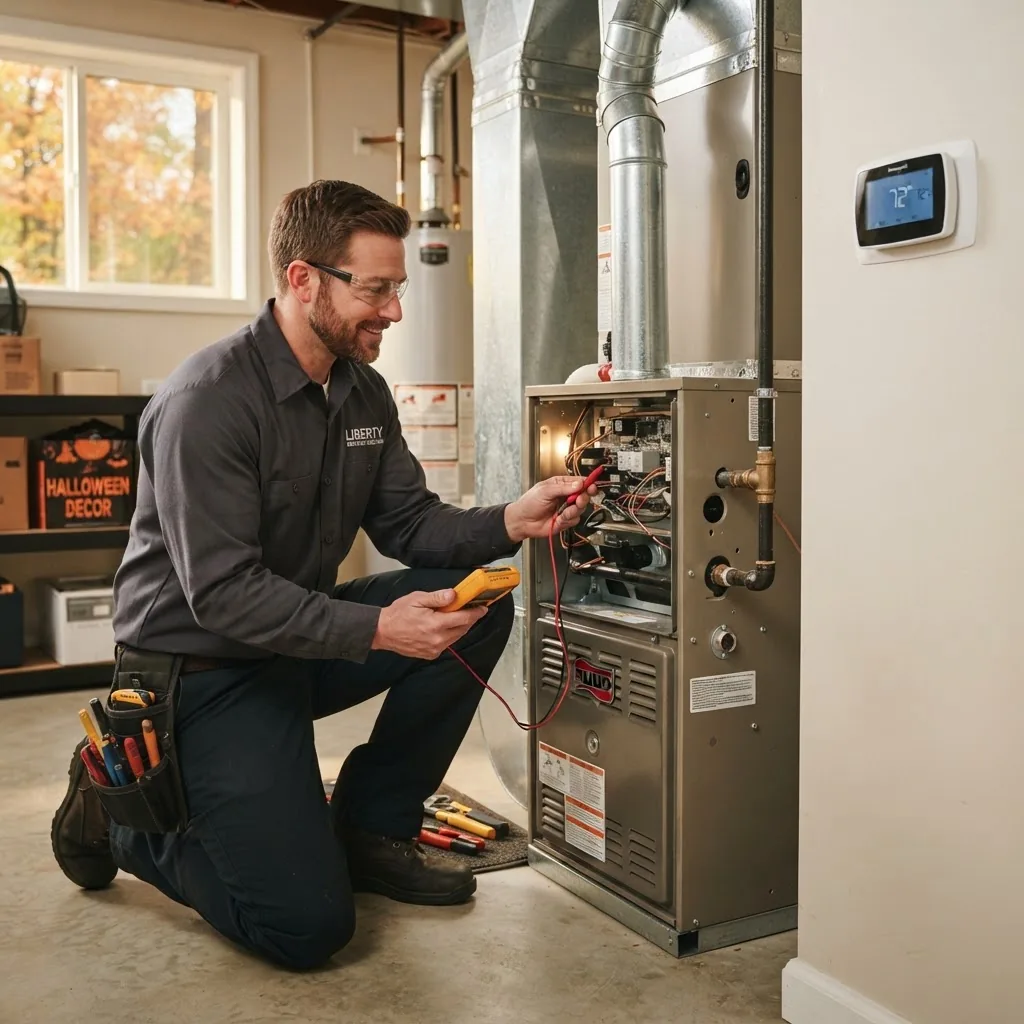
- Inspect and test the furnace or heater: Turn on heat and listen for smooth ignition, stable flame (if gas), and steady blower operation. If you see yellow flames, soot, or irregular ignition, shut down and call a pro immediately.
- Check carbon monoxide detectors and vents: Test CO alarms and replace batteries annually; visually inspect flues and vents for blockages and corrosion. Follow NFPA guidance on CO alarms — see NFPA for safety standards.
- Schedule professional combustion analysis: For gas furnaces, boilers or combustion appliances, have a certified technician perform a combustion efficiency and safety inspection annually.
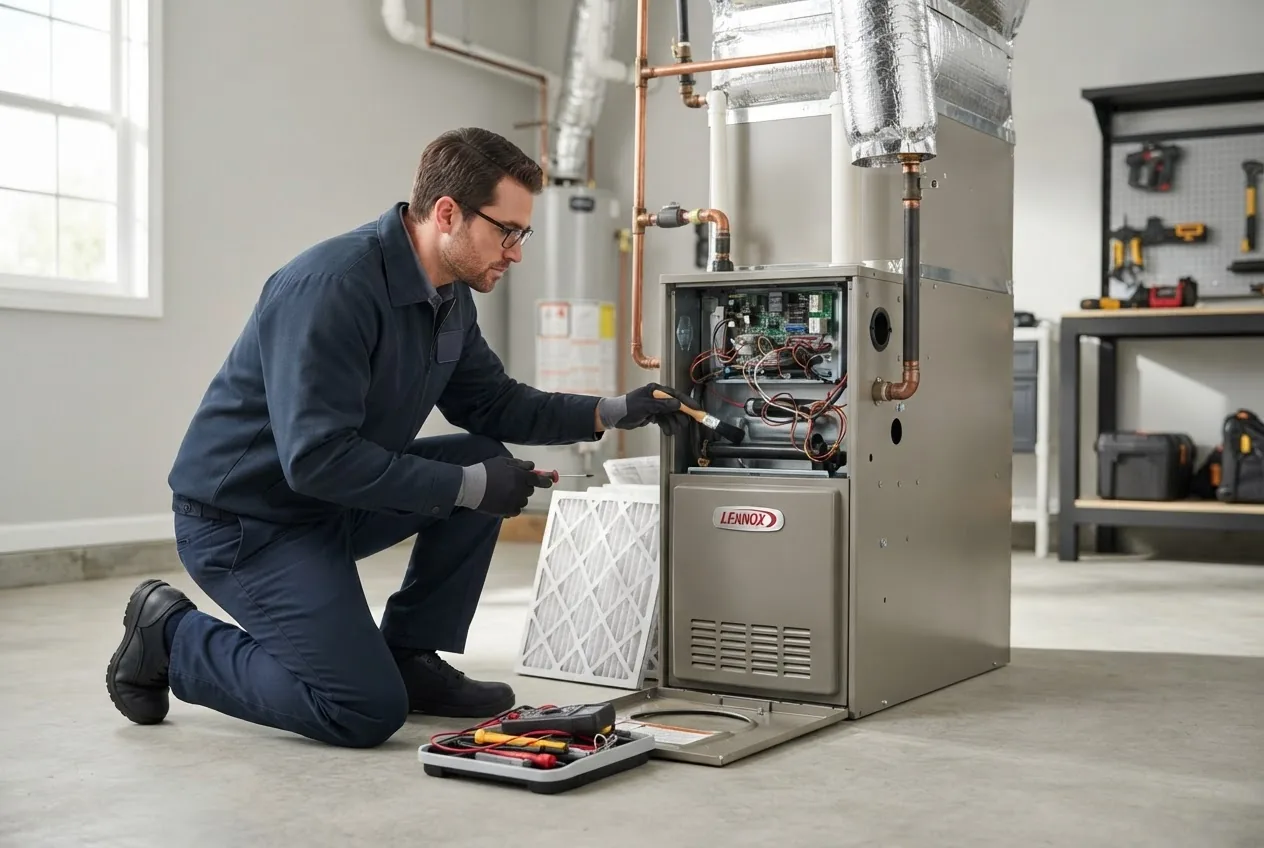
- Clean or vacuum burner assemblies and heat exchanger areas (visual only): With power and gas off, gently vacuum accessible dust but do not attempt internal combustion repairs.
- Inspect air ducts and seals: Look for disconnected or crushed ducts in crawlspaces and attics. Seal visible joints with foil HVAC tape or mastic; large duct repairs should be left to pros.
- Check and insulate exposed ductwork: Add R‑6 or higher insulation to exposed ducts in unconditioned spaces to reduce heat loss.
- Test thermostat heating calibration: Heat the home to a setpoint and verify actual temperature within ±1°F; program setback schedules for overnight savings.
- Service blower motor and change belts: Inspect blower motor bearings for play; replace worn belts and lubricate motors only if manufacturer allows (some are permanently sealed).
- Arrange professional furnace cleaning or repairs: If the furnace is older than 10 years, showing inefficient heating or odd odors, consider professional furnace cleaning services, review furnace repair and maintenance advice, and consult this gas heater maintenance overview for safety tips and maintenance scope.
- Pre-winter test run: Run the heating system for 30 minutes before cold sets in to confirm steady operation and to surface any startup issues while you can still schedule repairs.
- Consider an annual heating tune-up: Schedule a certified technician for heating tune-up and furnace maintenance to inspect burners, heat exchangers, and safety controls.
Transition: winter maintenance emphasizes reliable heating and emergency preparations.
Winter HVAC Maintenance Checklist
- Keep filters fresh: Replace disposable filters every 30–90 days depending on use; check monthly during heavy heating seasons.
- Calibrate and verify thermostat performance: Test thermostat setpoints against a digital thermometer; recalibrate if off by more than 1°F. For programmable thermostats, verify setback schedules and battery health.
- Inspect vents and registers for blockages: Ensure furniture or curtains do not block supply or return vents; measure room temperatures to confirm even distribution.
- Protect condensate and water lines: Insulate exposed condensate lines and nearby water pipes with foam sleeves to prevent freezing in cold climates.
- Check alternative heat sources and safety supplies: Verify wood stove chimneys are cleaned and that portable electric heaters have tip-over protection; store a safe alternative heat plan.
- Monitor for unusual noises or smells: Rattles, banging, or burning odors indicate mechanical or electrical faults — shut down system and call a pro.
- Maintain outdoor heat pump clearance: Remove snow and ice buildup from heat pump outdoor units; allow 12–24 inches clearance for airflow. Do not use sharp tools that could damage coils.
- Check water heater service items: For homes with hydronic systems or boilers, follow preventive water heater maintenance guidelines — including annual draining schedules and pressure checks — see preventive water heater maintenance guidelines, water heater cleaning and maintenance tips, and when to hire pros at professional water heater maintenance services.
- Check boiler pressure and bleed radiators: For hot-water systems, keep boiler pressure within manufacturer range (typically 12–15 psi cold); bleed radiators to remove air for even heat distribution.
- Emergency troubleshooting pointers: If heater fails to start, check thermostat, circuit breaker, and furnace switch; if electrical or gas-related, stop and call a licensed technician — do not attempt repairs involving gas valves or high-voltage components.
- Document winter performance: Note unusual behavior, runtime, and any emergency calls; this history helps pros diagnose recurring issues quickly.
For heat-pump specifics consult heat pump maintenance and repair advice and for boilers see boiler maintenance and service guide.
Transition: now a set of general year-round practices that support seasonal efforts.
General HVAC Maintenance Tips Throughout the Year
These recurring tasks and schedules keep your system healthy and complement seasonal checks. The EPA offers guidance on indoor air quality and filter selection; see EPA resources for filter standards and IAQ tips.
- Filter replacement frequency: Standard disposable filters: every 1–3 months; high-efficiency MERV 11–13: every 1–2 months in heavy use; washable filters: clean monthly and fully dry before reinstalling.
- Inspection intervals: Visual homeowner checks monthly; professional inspection and tune-up annually (60–90 minutes) for safety and efficiency diagnostics.
- Signs of problems: reduced airflow, increased energy bills, odd odors or noises, uneven temperatures, and frequent cycling. Log these signs in your preventive-maintenance file.
- DIY maintenance scope: filter swaps, clearing drain lines, cleaning exterior condensers, tightening accessible screws, and replacing thermostat batteries. Avoid refrigerant work or combustion system repairs.
- Schedule professional visits: Book spring for AC tuning and fall for heating tune-ups; ask techs to provide a written checklist and safety report for your records.
- Complementary home cleaning: Regular dusting, vacuuming, and sealing gaps improves HVAC efficiency — see effective home cleaning tips and cleaning home guide for HVAC efficiency.
- Protect outdoor equipment: Keep gutters clean and directed away from outdoor units to prevent water and debris build-up — see gutters cleaning for HVAC protection and our DIY gutter cleaning tips.
- Integrate HVAC tasks into home routines: Treat HVAC upkeep as routine home maintenance — see routine home maintenance activities.
- Water heater coordination: Follow recommended flushing frequency for water heaters to avoid sediment that can affect hydronic systems — see water heater flushing frequency.
- Preventive service options: Annual or semi-annual contracts can be cost-effective — explore preventive HVAC maintenance services.
- Deep cleaning periodically: Quarterly deep-cleaning improves airflow — consult deep home cleaning best practices and clean home guide for HVAC efficiency.
Transition: templates help document these tasks reliably — next, how to use and customize an HVAC PM checklist template.
Using and Customizing HVAC PM Checklist Templates
A hvac pm checklist template keeps maintenance records, dates, part numbers and notes. Use a printable PDF for inspection rounds and a digital spreadsheet for history and reminders.
How to build and customize a template:
- Create header fields: System type (AC/furnace/heat pump/boiler), model/serial, install date, technician contact, homeowner contact.
- Seasonal task sections: Four grouped blocks (Spring, Summer, Fall, Winter) listing specific actions, dates completed and initials.
- Maintenance history log: Table with date, action taken, parts replaced (part number), cost and notes for 5+ years.
- Safety checks column: CO alarm test date, flame observation, pressure readings, and whether a combustion test was performed (tech signature).
- Digital reminders: Set calendar alerts 30 days before recurring filter changes and 60 days before scheduled pro tune-ups.
- Tool and parts checklist: Include common replacement filters, capacitor sizes (if known), belt part numbers, and lubricants allowed by manufacturer.
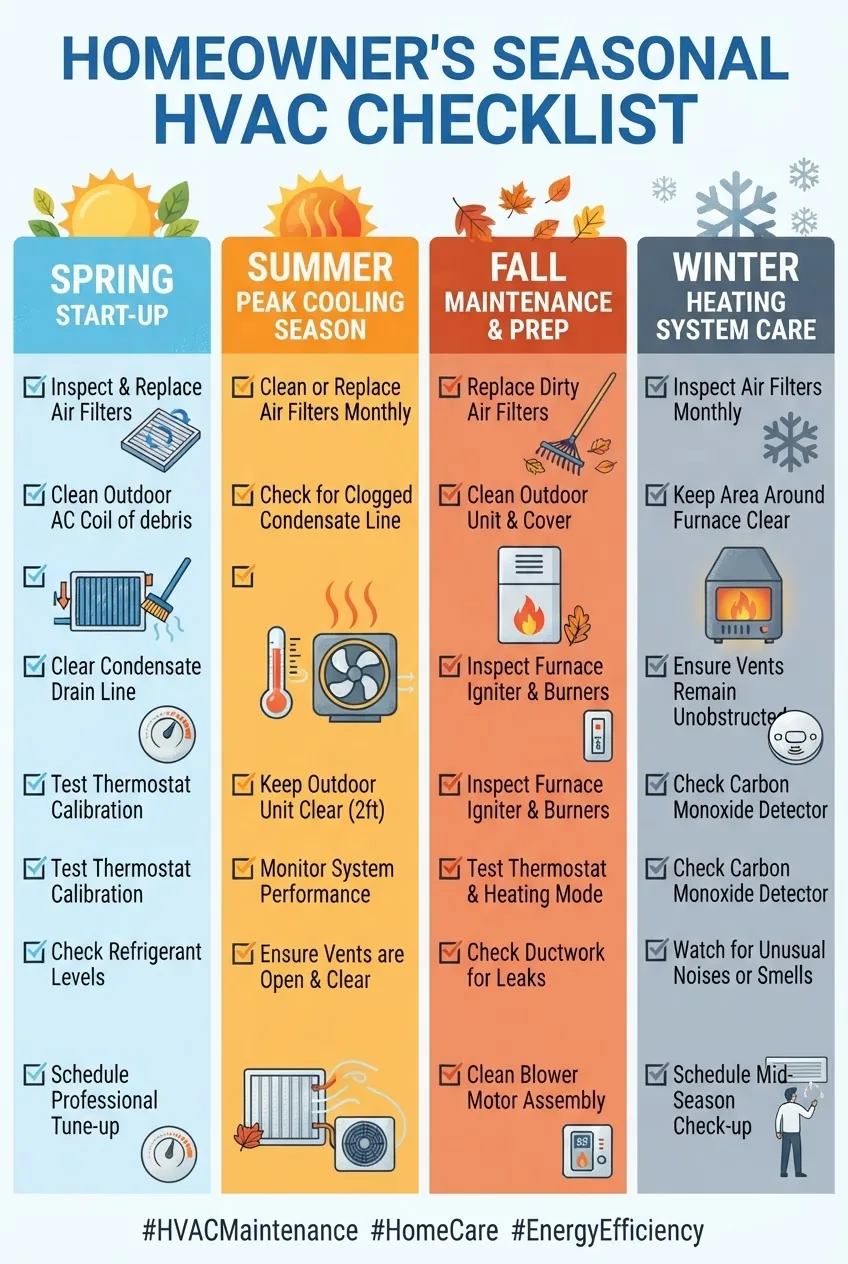
Example template description: a two-page PDF — page one lists seasonal quick-checks with checkboxes and space for notes; page two is a rolling 48-month maintenance log and a place to attach receipts. Use the infographic below for an at-a-glance seasonal view you can print and pin to your utility room.
Transition: avoid common pitfalls that undermine your maintenance efforts.
Common HVAC Maintenance Mistakes to Avoid
- Skipping filter changes: I once saw a homeowner run a system on a two-year-old filter — reduced airflow raised blower run time and energy use by 20%. Replace filters per schedule to avoid strain.
- Attempting refrigerant work: Homeowners who tried to top off refrigerant often introduced contaminants; refrigerant charging requires certified equipment and EPA handling.
- Ignoring electrical signs: Loose connections cause arcing — I’ve observed scorched terminals that began as a loose screw. When you see burnt smells or black residue, stop and call a pro.
- Using the wrong filter rating: Overly restrictive high‑MERV filters in older furnaces can reduce airflow and damage motors. Match MERV to equipment and consult the owner manual.
- Over-cleaning coils improperly: Aggressive pressure washing can bend fins or force water into electrical boxes. Use no‑rinse coil cleaners or professional services for heavy fouling.
Transition: know when DIY stops and professional service is required.
When to Call a Professional HVAC Technician
Call a certified technician for complex repairs, refrigerant handling, electrical faults and annual safety testing. If the system shows combustion irregularities, excessive vibration, or loss of refrigerant, stop DIY attempts and call a pro.
- Complex repairs and diagnostics: electrical faults, compressor issues, refrigerant leaks.
- Safety-critical checks: combustion analysis and carbon monoxide testing per NFPA standards — see NFPA.
- Seasonal tune‑ups and performance verification: consider AC maintenance plans and benefits to maximize uptime and discounts on repairs.
- Major component replacement: compressor, heat exchanger, or failing control boards.
- Finding a provider: use local reviews and certification checks — see trusted local air conditioning repair services.
- Professional repair and maintenance referrals: learn when to hire professional air conditioning maintenance and repair or engage trusted contractors for aircon servicing and installation services.
Transition: finish with practical closing steps, a verification checklist and final recommendations.
Downloadable Seasonal HVAC Maintenance Checklist PDF
What you get: a printable, two-page PDF with season‑by‑season checkboxes, a 48‑month service log, common part numbers and a homeowner tool list. Use it to document each task, vendor visit, and bills.
How to use it: print and pin near your HVAC unit, or import the spreadsheet version into your calendar app to set automated reminders for filter changes and technician visits. Recommended tools and part list are included.
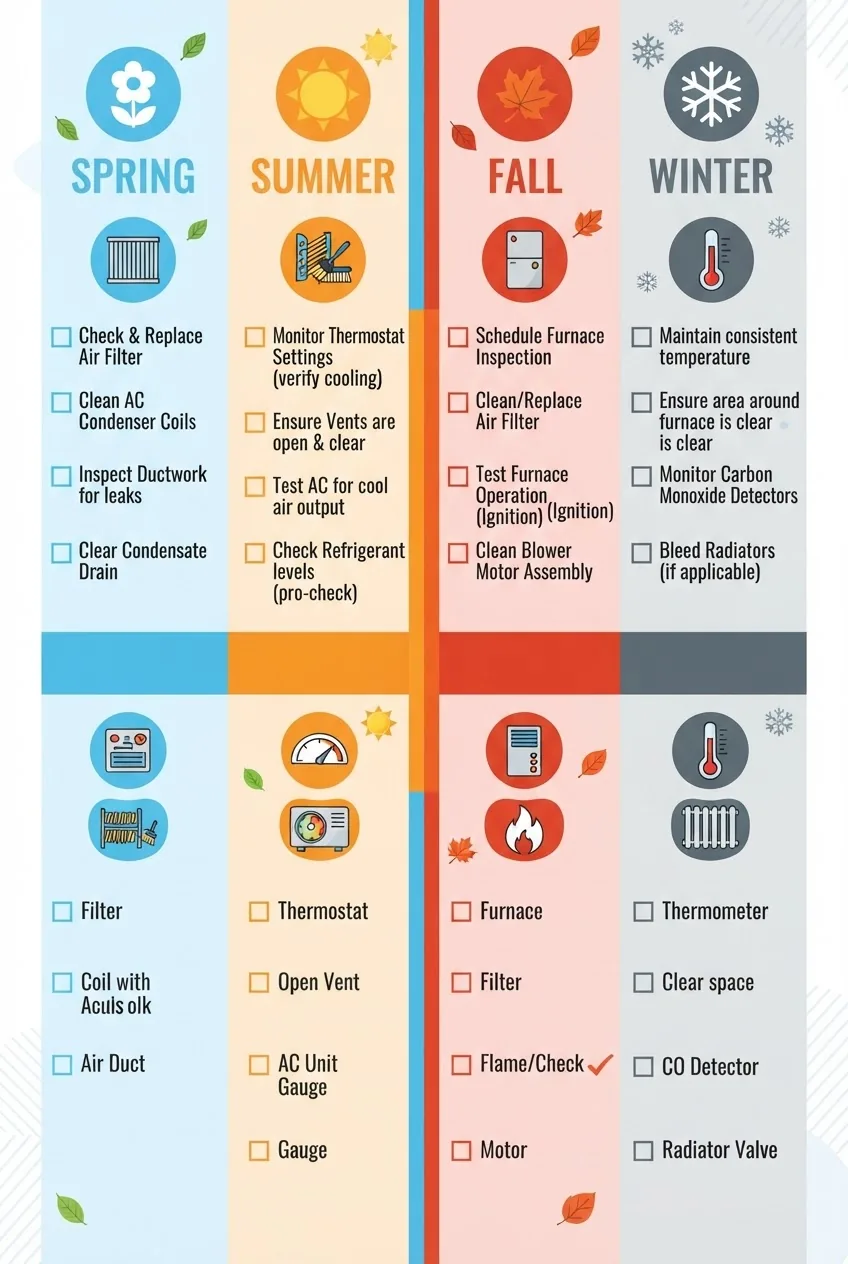
Infographic preview below summarizes the checklist for quick reference.
Conclusion and Final Recommendations
Regular seasonal maintenance using a structured hvac checklist saves energy, extends equipment life and prevents inconvenient failures. Keep a simple log, replace filters on schedule (1–3 months), perform monthly visual inspections, and book certified technicians for refrigerant, electrical and combustion work. According to a 2024 industry report, systematic maintenance reduces emergency repairs by a measurable margin and prolongs system life.
Final CTA: Download the printable checklist, schedule this season’s prep, and if you need help locating trusted contractors or plan options, start with the resources and links in this guide and contact a certified technician for any tasks beyond the homeowner scope.
Hands-On Step-by-Step Core Tasks (Quick Action List)
Follow these core homeowner steps each season. Each step starts with an action-first phrase and includes the target timing or threshold.
- Inspect and replace filters: Every 30–90 days depending on use and MERV rating; write date and MERV in log.
- Clear outdoor unit area: Remove debris and keep 24 inches clearance; check monthly in shedding seasons.
- Run system test: Start system and run for 15–30 minutes; confirm proper temperature differential (AC: 15–20°F across coil).
- Check drains: Flush condensate drain line with vinegar monthly in cooling season.
- Visual electrical check: Inspect for burnt wires or loose terminals; call a pro if you find damage.
- Program thermostat: Set cooling/heating schedules and verify ±1°F calibration monthly.
- Log results: Enter dates, issues and actions into your PM template immediately after each session.
Common mistakes and how to avoid them
I’ve seen homeowners skip follow-up after a quick fix — a loose screw later burned a terminal. To avoid this, always document repairs and set a calendar reminder for verification. Don’t attempt refrigerant charging or combustion repairs; these require certified technicians. When in doubt, photograph the problem and contact a pro before power is restored.
Final checklist to verify your work
| Task | Done (date) |
|---|---|
| Replaced indoor filter | |
| Cleared outdoor condenser | |
| Checked condensate drain | |
| Tested thermostat calibration | |
| Inspected vents/ducts | |
| Scheduled professional tune-up |
When to call a professional: if you encounter refrigerant leaks, burning smells, persistent pressure/temperature irregularities, or need equipment replacement. For AC plans, repairs, and installations consult the linked professional guides and local service directories included above.