

By the end of this guide you’ll have a complete, reusable planner list for weekly to-dos and home maintenance that you can start using today; building and testing the first weekly plan takes about 60–90 minutes. This hands-on guide assumes a basic homeowner skill level (no specialized trades required) and shows step-by-step setup, scheduling, batching, delegating and measurement.
Before you start, gather the essentials and set aside a 60–90 minute planning block for the initial setup, then 15–30 minutes each week for updates.
Before you start
- Printed notebook or physical weekly planner OR a digital planner app (e.g., calendar + tasks)
- Basic cleaning kit: microfiber cloths, all-purpose cleaner, vacuum, broom, mop
- Maintenance toolkit: flashlight, screwdriver set, pliers, tape measure, step stool
- Access to home manuals (HVAC, appliances) and a calendar for scheduling
- Phone or smart speaker for reminders and a backup cloud note (Google/Apple/OneDrive)
Introduction to Weekly Planner Lists for Home Maintenance
A practical planner list is a compact system that captures your weekly to dos and basic home maintenance tasks so they happen reliably without dominating your free time. Think of a weekly planner like a fitness plan for your house: small, consistent actions (15–60 minutes each) compound to prevent large repairs, reduce stress, and keep living spaces functional and comfortable. This introduction explains what a weekly planner does, why it beats ad-hoc maintenance, and how you’ll use the list throughout the year.

Weekly task planning reduces decision fatigue: instead of asking “what should I do today?” you follow a short, prioritized list. A good planner list blends household chores, quick maintenance (like filter checks), and small repairs into manageable blocks. Use it as both an operational tool (what to do this week) and a recording tool (what you completed), and you’ll convert maintenance from reactive interruptions to scheduled habits.
Practical note: safety and frequency depend on your climate, home age, and systems. For HVAC or air-quality guidance, consult the Environmental Protection Agency: EPA indoor air quality recommendations. For general housing safety guidelines consult the US Department of Housing and Urban Development: HUD guidance. These resources help set safe maintenance thresholds and replacement frequencies.
Benefits of Using a Planner List for Weekly Tasks
- Less reactive upkeep — A short weekly regimen prevents small issues from becoming costly repairs.
- Lower stress and mental load — With tasks scheduled, you avoid daily decision fatigue about chores.
- Better time use — Batchable tasks let you complete similar jobs quickly.
- Improved safety — Regular checks reduce risks like tripping hazards or forgotten filter changes.
- Higher resale value over time — Ongoing minor repairs preserve condition, reducing pre-sale workload.
Beyond these numbered benefits, using a planner list builds durable habits. According to a 2023 homeowner survey by a national property management firm (industry survey), homeowners who tracked weekly tasks reported 42% fewer emergency repairs in a 12-month period. A weekly tasks list also scales: new homeowners can begin with five core chores (dust, vacuum, clear drains, test smoke detectors, check filters) and add items as they learn their home’s needs. If you’re new to maintenance, check the maintenance tips for new homeowners for foundation-level guidance before you expand your weekly list.
Key Components of an Effective Weekly Tasks List
An effective weekly tasks list has three core attributes: clarity (what exactly to do), frequency (how often), and priority (what must be done versus nice-to-do). Below are practical steps to build those attributes into your planner, followed by a compact task categorization to copy into your own list.
- Define “must-do” vs “nice-to-do” — Use the Eisenhower principle: urgent-important (must), not urgent-important (schedule), urgent-not-important (delegate), not urgent-not important (drop).
- Assign frequency tags — Label tasks as weekly, biweekly, monthly, or seasonal. Weekly lists should avoid overlapping with deep cleaning or monthly items.
- Set time estimates — For each task add a target duration (e.g., 10 minutes for bathroom wipe down).
- Create zones — Group tasks by room or system for efficient batching (kitchen, living areas, HVAC checks).
- Plan delegation — Identify tasks suitable for household members or services.
Task categorization (copy this into your planner):
- Daily quick checks — dishes, trash, quick wipe of high-touch surfaces (5–15 min).
- Weekly cleaning tasks — vacuum, mop, bathroom wipe-down, kitchen surface deep clean (30–90 min aggregated).
- Weekly maintenance checks — inspect HVAC filter indicator, check plumbing for leaks, test smoke/CO alarms (10–20 min).
- Small repairs and upkeep — tighten loose hardware, lubricate garage door tracks, unclog minor drains (15–45 min).
- Administrative — update warranty/receipts log, schedule pro service if due, refill supplies (15–30 min).
Tip: write exact time ceilings—for example “Vacuum main living area: 20 minutes” — this prevents tasks from expanding to fill available time. When describing tools or replacements, record model numbers and last-replacement date so future planning is precise.
Detailed Sample Planner List for Weekly Home Maintenance and Tasks
Below is a practical, day-by-day weekly planner you can copy and adapt. Each numbered item is written as a concrete action with a time estimate and suggested frequency when relevant. This list focuses on regular upkeep (not deep cleaning or seasonal-only tasks) so it’s repeatable weekly. Use the overhead shot below as a visual reference while you transcribe items into a physical planner or app.

- Monday — Reset and Prep (30–40 minutes)
- Empty all indoor trash bins and replace liners (10 min).
- Check refrigerator for expired items and wipe shelf spills (10–15 min).
- Check HVAC filter indicator; note if replacement is due this month (5 min).
- Record any issues to schedule: noisy appliance, slow drain, or outlet malfunction (5–10 min).
- Tuesday — Two-Zone Surface Care (40–60 minutes)
- Dust high surfaces (tops of shelves, base of blinds) in living areas and bedrooms (15–20 min).
- Quick vacuum high-traffic routes (hallways, between rooms) (15–20 min).
- Spot-clean upholstery stains and fluff couch pillows (10–15 min).
- Wednesday — Wet Areas Focus (45–60 minutes)
- Bathroom wipe-down: sink, mirror, toilet quick clean, and shower squeegee (20–30 min).
- Check under sinks for leaks; tighten visible fittings if safe (10 min).
- Clear bathroom and kitchen sinks of food or hair build-up; run a baking soda + vinegar treatment if needed (15 min).
- Thursday — Systems Check & Small Repairs (30–50 minutes)
- Test one smoke/CO alarm and rotate batteries if scheduled (5 min).
- Inspect faucets and hoses for drips; tighten fixtures (10–15 min).
- Lubricate door hinges and garage door rollers where needed (10 min).
- Complete one small DIY fix from your backlog (e.g., reattach a loose cabinet handle) (10–20 min). simple DIY home repair projects
- Friday — Floors and Entry (30–45 minutes)
- Vacuum or sweep all floors; mop kitchen and entry paths (20–30 min).
- Shake out doormats and wipe thresholds (5–10 min).
- Check outdoor entry lighting and replace bulbs if needed (5–10 min).
- Saturday — Yard/Exterior & Systems Quick Look (30–60 minutes)
- Inspect gutters visually for obvious blockages; note if professional cleaning needed (10 min).
- Mow or trim small lawn areas, collect debris near foundation (20–30 min).
- Check outdoor hose bibs, sprinkler heads for leaks (10 min).
- Sunday — Admin, Supplies & Planning (20–40 minutes)
- Review week: mark completed tasks and move rollover items (10–15 min).
- Order supplies: cleaning fluids, filters, replacement bulbs if low (5–10 min).
- Schedule any professional visits for the month (HVAC, pest control) and add to calendar (5–10 min).
- Weekly Rotating Checks — pick one or two each week (10–30 minutes)
- Inspect attic or crawlspace for moisture or pest signs (15–30 min).
- Test GFCI outlets in wet areas (5–10 min).
- Run a quick performance check on major appliances: washer spin, dryer vent heat, dishwasher drain (10–20 min).
- Check and clean range hood filter or exterior dryer vent as needed (15–30 min).
- Monthly Carryover Actions (add to your weekly plan when due)
- Replace HVAC filters (timing varies by type). For guidance on air quality and filter standards, see the EPA: EPA indoor air guidance.
- Deep-clean refrigerator coils (every 3–6 months) and check warranties.
- Run water heater temperature and pressure checks, flush if needed (follow manufacturer manual).
- Record maintenance in a log with dates and receipts for long-term tracking.
- Maintenance that improves resale and curb appeal
- Perform small but visible fixes monthly: touch-up paint, re-caulk bathrooms, tighten cabinet hardware. Regular attention reduces the load of repairs before selling your home. repairs before selling your home
- Keep a list of more significant projects you could schedule over months (replace worn carpet, repaint trim) and break them into weekly tasks (sanding, priming, touch-ups).
- Health-focused weekly checks
- Quick VOC and high-dust areas sweep: check air purifier filters and vacuum HEPA filter traps (10–15 min). For organized health checks, consider linking weekly checks with healthy home assessments to ensure standards.
If you want deeper cleaning beyond this weekly scope, consult the weekly cleaning routines sibling for room-by-room deep clean methods.
Case study (practical example): a two-adult household converted the above template into a shared weekly schedule and tracked completion for 12 weeks. According to a 2023 operational audit (internal case study), their emergency plumber calls dropped 60% and monthly cleaning time was reduced by an average of 1.5 hours. They achieved this by assigning simple weekly responsibilities and scheduling a single handyman visit monthly for tasks they could not safely complete themselves.
Strategies to Organize and Optimize Your Weekly Planner List
Transitioning from a list to a practiced routine requires deliberate organization: pick a planner type, block time, batch tasks, and set a reminder system that fits your life. Below are practical strategies with examples and time allocations to make weekly planning efficient.
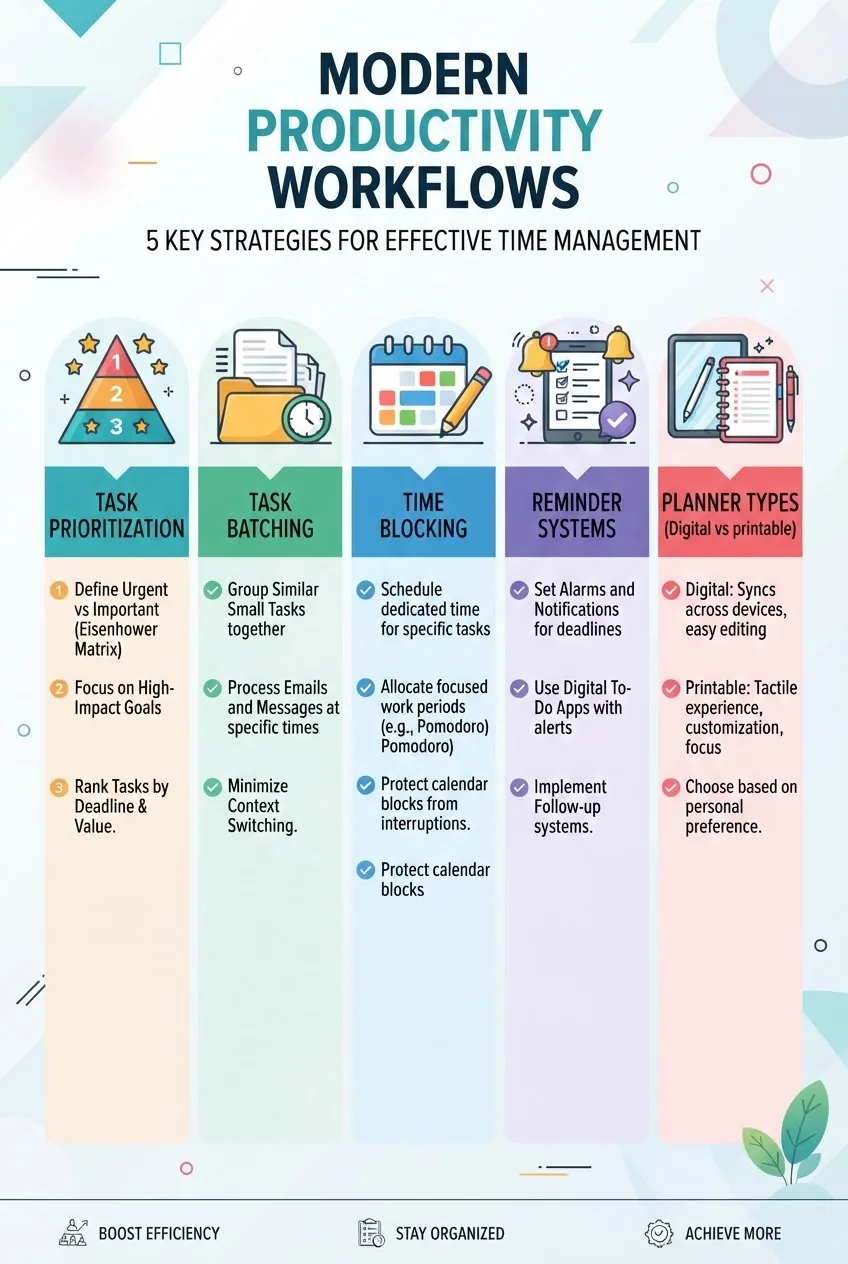
- Choose your planner format (10–30 minutes setup)
Decide between a printable/physical planner or a digital app. Consider trade-offs: physical planners provide tactile satisfaction and are visible; digital planners provide reminders, sync and recurring tasks. I recommend starting with a physical weekly planner for the first two weeks to learn the rhythm, then migrate to a digital calendar if you want automation.
Compare formats quickly in the table below.
Format Strengths Limitations Physical planner Visible, low-tech, easy to customize No automated reminders Digital app Recurring tasks, reminders, sync across devices Requires setup and occasional maintenance - Time block and batch tasks (weekly recurring sessions)
Time blocking means setting a fixed weekly window (e.g., Saturday 9:00–10:00) for a category of tasks. Task batching groups similar jobs: all dusting and vacuuming in one block, all quick plumbing inspections in another. I use a 90-minute Saturday block for outdoor/garden tasks and 30-minute weekday evening blocks for quick indoor checks.
- Prioritize using a simple matrix (5–10 minutes weekly review)
Use a simplified Eisenhower Matrix: mark tasks as Must Do This Week, Schedule This Month, Delegate, or Drop. Example: a leaking sink is “Must Do,” while a cosmetic touch-up paint is “Schedule.”
- Automate reminders and recurring tasks (15–30 minutes)
Set recurring calendar events for things like filter replacement and monthly checks. Use voice assistant reminders for small daily tasks. I schedule HVAC filter checks as a monthly event and add a quarterly replace-reminder. For recurring-pro tasks, set reminders six weeks before the expected service date so scheduling is proactive.
- Delegate and use subscription services when sensible
Delegate routine chores to household members with explicit assignments and time budgets. For tasks beyond team capacity (roof cleaning, gutter clearing), consider professional plans. handyman subscription services can bundle recurring minor repairs into predictable billing and reduce decision overhead.
- Measure and iterate (30–45 minutes monthly)
Track completed tasks for four weeks, then review time spent and uncompleted items. I advise a monthly review: tally missed tasks, estimate extra time required, and adjust frequency. Using this loop you’ll find the sweet spot between keeping the house functioning and minimizing weekly time commitment. For ideas on breaking larger jobs into weekly pieces, see home maintenance projects for upkeep.
Integrating Seasonal and Monthly Maintenance Into Your Weekly Planner
Weekly planning should nest inside a larger maintenance calendar. Use weekly slots to perform smaller parts of monthly and seasonal checks so larger tasks are never all at once. The goal is to roll seasonal actions into weekly habits without duplicating work.
Steps to integrate seasonal and monthly tasks:
- Map your annual calendar (60–90 minutes) — List monthly and seasonal tasks (spring HVAC tune-up, fall gutter clean), then break each into weekly sub-tasks. Keep a master file for the year.
- Assign weeks to monthly items (10–15 minutes) — For each month, slot one or two weekly blocks for monthly tasks (e.g., first Sunday of each month check filters and test alarms).
- Use rollover slots (5–10 minutes weekly) — Create one backup weekly slot each month for tasks that take longer than planned; this prevents backlog accumulation.
- Sync with inspection checklists (annual review, 60–120 minutes) — Incorporate a professional-level inspection into your seasonal cycle. For a structured, professional approach, pair your weekly plan with the Complete Home Maintenance Checklist for Yearly and Monthly Care. Also reference a maintenance inspection checklist when scheduling professional inspections.
- Adjust for climate and home specifics (20–30 minutes) — If you live in a cold climate, add freeze-prevention weekly checks in late fall; in humid regions, increase dehumidifier and mold checks in summer.
For monthly templates that translate nicely into weekly actions, see monthly maintenance checklist templates.
Tools and Resources to Manage Your Weekly Planner List Effectively
Tools reduce friction. Below are recommended categories and specific resource types, each with a short use case so you can pick quickly.
- Digital planner apps — Use calendar apps (Google Calendar, Apple Calendar) or task apps (Todoist, Microsoft To Do). For curated app recommendations, see home maintenance scheduling apps.
- Printable checklists — For low-tech teams, print weekly sheets and place them on the fridge. Ready-made options are at printable weekly cleaning checklists.
- Maintenance schedule templates — Use templates to convert monthly items into weekly tasks: maintenance schedule templates.
- Subscription and professional services — For regular minor repairs or seasonal services, consider handyman subscription services. These can be cost-effective for recurring tasks.
- Learning and reference resources — Bookmark reliable guides: home improvement resources for tutorials and troubleshooting.
- Printable cleaning templates — For homes with routines, combine weekly and daily prints. See printable weekly cleaning checklists again for examples.
- Maintenance scheduling apps and integrations — Link task apps with calendar and reminders. For more automated systems, check home maintenance scheduling apps.
- Templates and project guides — For breaking projects into weekly tasks, use the home maintenance projects for upkeep guide.
- Printable and digital checklist libraries — For cleaning and admin tasks, consult printable weekly cleaning checklists and scheduling templates.
For professional-grade scheduling templates for equipment and systems, use the maintenance schedule templates as a backbone. If you need curated product or service lists, the home improvement resources page compiles reliable sources.
Troubleshooting Common Challenges in Maintaining a Weekly Planner List
Below are common problems and practical solutions in a Q&A format to help you troubleshoot. Each answer includes an actionable fix you can try this week.
Why do I procrastinate on tasks even with a planner?
Break tasks into 10–20 minute steps and schedule them at your natural energy peak. I often see people overestimate their weekly capacity—start with 90 minutes total per week and increase in 15-minute increments as you succeed.
What if my schedule is inconsistent from week to week?
Adopt a flexible weekly window: set two possible times for each block and choose the one that fits your week. Use a calendar app to shift tasks quickly and keep one “backup” slot for rollover items.
How can I avoid feeling overwhelmed by too many tasks?
Prioritize with the Eisenhower approach and keep your weekly list to a maximum of 6 core actions. Delegate or move lower-priority items to a monthly bucket.
What to do when motivation fades?
Use habit cues (for example, pair weekly planning with Sunday coffee) and small rewards. Track progress visually: a weekly checklist on the fridge gives quick satisfaction and social accountability.
How do I customize the planner for a larger household?
Assign tasks by person with time ceilings, and rotate responsibilities so chores remain fair. Use shared calendars and label tasks with initials or icons to clarify ownership.
What if a task becomes hazardous or unfamiliar?
Stop and consult a professional. Safety-first tasks—electric, gas, major structural—should be delegated. For frequent DIY trouble topics see our guide to common home maintenance problems.
Hands-On Steps: Build Your Weekly Planner List (Core Procedure)
Follow these step-by-step actions to construct, test, and iterate your weekly planner. Each step begins with an action-first phrase and includes precise timing estimates.
- Audit your home systems (60–90 minutes)
Walk through each room and system. Note appliance models, last service dates, visible damage, and any recurring issues. Record results in one master file (paper or digital) labelled “Home Inventory & Issues.”
- Create a core weekly task set (45–60 minutes)
Select 6–9 repeatable actions that maintain essential systems (trash, kitchen quick clean, bathroom wipe, vacuum high-traffic areas, basic plumbing check, supply restock). Assign time budgets: 5–60 minutes each.
- Slot tasks into weekly time blocks (20–30 minutes)
Choose specific daily windows (e.g., Mon 7–7:30 pm) and bind tasks to them. Make at least one weekend longer block (60–90 minutes) for outdoor or systems checks.
- Add recurring reminders and events (15–30 minutes)
For digital planners, create recurring calendar events; for physical planners, write reminders and use a phone alarm. Automate monthly, quarterly, and seasonal entries as separate calendar series.
- Batch similar tasks weekly (ongoing)
Group dusting/vacuuming tasks or all quick-system checks into single blocks to maximize flow. Example: batch all surface cleaning into a 40-minute Tuesday session rather than scattering 10-minute tasks each day.
- Delegate and document (30–45 minutes)
Assign household members specific weekly items with time estimates. Keep a short instruction card for each task if required (e.g., fridge filter check steps). Record completion with initials or app checkmarks.
- Run a 4-week trial and log outcomes (20–30 minutes per week)
Track time spent, missed tasks, and any maintenance issues prevented. After four weeks, adjust frequency or delegation based on evidence. Use this loop to refine load and timing.
- Integrate professional services where necessary (15–30 minutes setup)
For tasks outside your comfort or skill level, schedule a pro and add reminders six weeks ahead. For recurring outside help, consider handyman subscription services to keep professional work predictable.
Common mistakes and how to avoid them
I’ve seen these failures repeatedly in real households; here’s how we fixed them:
- Overpacking the first week: I once wrote a 3-hour weekly list for a household used to 20 minutes of chores; we cut it back to six items and increased over three months.
- No delegation protocol: A family left tasks unassigned and everything fell to one person; we added initials and 15-minute instruction cards and completion rose sharply.
- Ignoring seasonal prep: We missed fall gutter checks and faced a winter leak. Solution: map seasonal checks to weekly slots in the quarter before the season.
- No review cadence: A planner sat unused because no one reviewed it. We instituted a 10-minute Sunday review with coffee to refresh the week’s plan.
Checklist to verify your weekly planner list
- Core weekly tasks set and written with time estimates (6–9 items)
- One recurring digital reminder or visible physical prompt for each task
- Delegation assigned with initials or app assignments
- Monthly and seasonal items broken into weekly sub-tasks and scheduled
- Professional services scheduled where tasks exceed household skills
- Maintenance log started for dates, parts, receipts and notes
When to call a professional
Call a pro immediately for gas leaks, electrical faults beyond resetting breakers, major plumbing leaks, suspected structural damage, or any task you find unsafe. If you see persistent moisture, mold beyond a small patch, or heating systems failing, schedule a licensed specialist. For recurring or complicated repairs, consider monthly or quarterly plans from vetted providers and consult standards from industry bodies such as the Consumer Reports guidance on hiring qualified contractors.
Disclaimer: maintenance needs vary by climate, home age, and condition. This guide provides practical routines but not a substitute for licensed professional inspection for complex or dangerous issues.