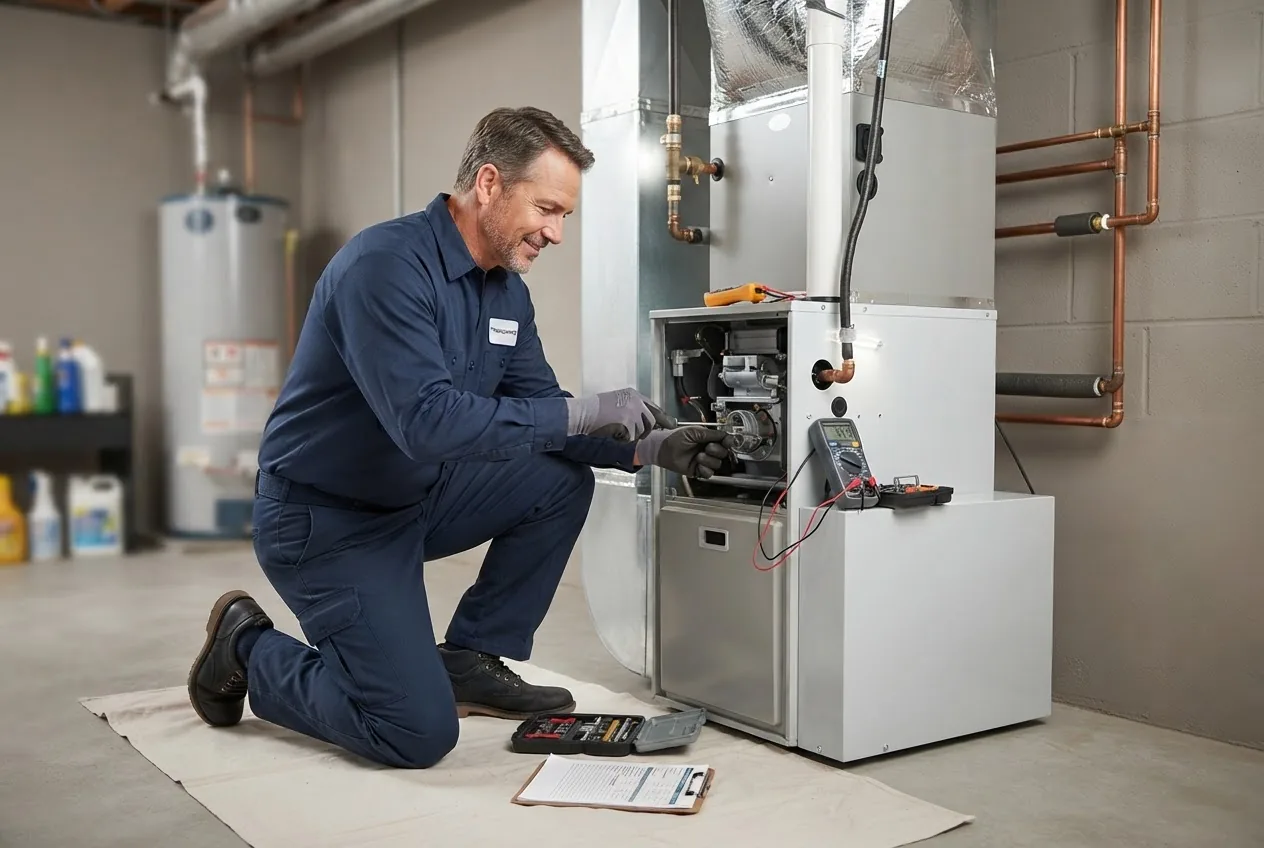
Furnace repair services explained in a hands-on way: by the end you will be able to diagnose common furnace issues, complete safe basic maintenance, and decide when to call a licensed technician. Expect to spend 2–6 hours for hands-on checks and one afternoon for a seasonal tune-up; skill level required: basic handyman knowledge and willingness to follow safety steps.
Before you start
- Tools: flat-head and Phillips screwdrivers, nut drivers (1/4″–1/2″), multimeter, flashlight, vacuum with brush attachment, shop gloves, safety goggles.
- Materials: replacement filters (correct MERV and size), condensed water-safe cloths, manufacturer screws for access panels, small brush, furnace-approved lubricant (if manual specifies).
- Requirements: shut off power at the furnace switch and at the breaker; turn off gas supply for gas furnaces if a major inspection is required; read the furnace owner’s manual.
- Safety: carbon monoxide (CO) alarm on the same level as the furnace, ventilation for test runs, know how to shut off gas and electricity.
Understanding Furnace Repair Services and Why They Matter
Goal: Learn what professional and DIY furnace repair services cover, how they protect home safety and comfort, and typical problems professionals address.
A well-serviced furnace reduces breakdowns and improves heating system efficiency. Think of routine service like a car tune-up—filters, airflow, ignition and safety systems inspected. A typical furnace repair service visit addresses diagnostic checks, replacement of failed components (thermostat, blower motor), combustion inspection for gas units and sealing of airflow leaks.
Common reasons homeowners call for central heating repair or HVAC service include loss of heat, cycling on/off too frequently, strange noises, and safety lockouts. Professional technicians combine hands-on repair with HVAC inspection services and testing to restore safe operation.
Routine maintenance also prevents emergency furnace repair calls. For an overview of broader home maintenance tasks that include heating checks, see Routine Maintenance Guide: Essential Home Maintenance Activities.
Transition: next we’ll list the specific failures that usually require repairs so you can recognise symptoms early and act decisively.
Common Furnace Problems That Require Repair
The following numbered list covers 8 frequent furnace problems, symptoms to watch for, likely causes, and the typical homeowner action or when to call a pro.
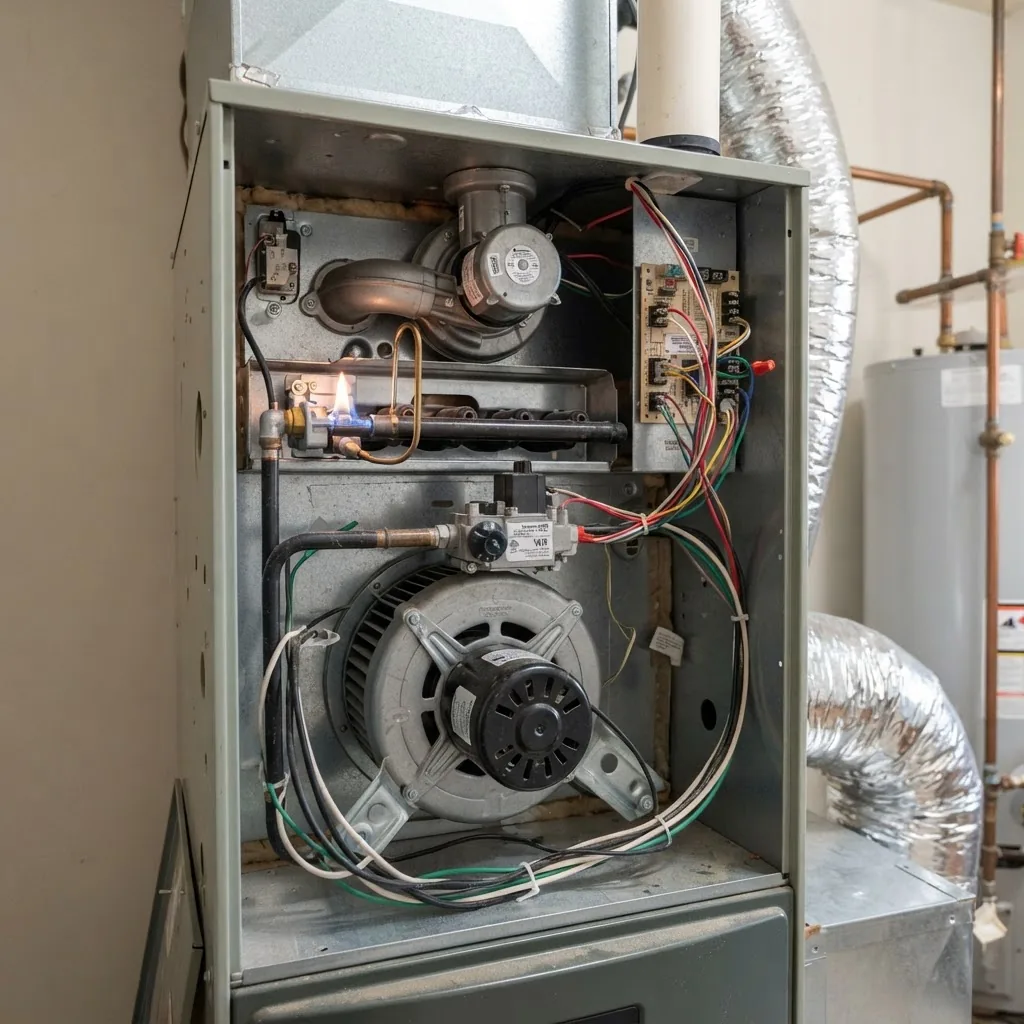
- Furnace not heating — Symptom: no warm air or very weak heat from vents. Causes: failed ignition or pilot light (gas units), faulty gas valve, or blocked burners. Home action: check thermostat settings, replace batteries, confirm power and gas supply. Call a licensed technician if ignition or gas valve suspected.
- Pilot light or ignition issues — Symptom: pilot light won’t stay lit or furnace won’t ignite. Causes: dirty pilot assembly, thermocouple failure, or electronic ignition fault. Home action: for standing pilots, gently clean soot and check thermocouple position; otherwise contact a professional to avoid gas hazards.
- Thermostat problems — Symptom: system short-cycles, won’t turn off/on, or incorrect temperature. Causes: miscalibration, dead batteries, wiring faults, or poor placement. Home action: replace batteries, confirm thermostat mode and schedule, and level or relocate if near heat sources. If wiring or persistent offset remains, call for HVAC inspection services.
- Blower motor failure or weak airflow — Symptom: limited airflow from registers, motor humming or no start. Causes: worn motor bearings, capacitor failure, dirty blower wheel, clogged filters, or duct restrictions. Home action: replace filter, vacuum accessible dust, and ensure registers are open; for motor or capacitor issues call central furnace repair technician.
- Strange noises — Symptom: banging, squealing, or rattling during operation. Causes: loose panels, broken blower belt (older systems), motor bearings, or expansion/contraction in ducts. Home action: tighten panels and check mountings. Persistent squeal or bang suggests mechanical failure requiring a pro.
- Frequent cycling or short-cycling — Symptom: furnace turns on and off rapidly. Causes: oversized furnace, clogged filter, thermostat placement issues, or safety limit switch trips. Home action: check and replace filter; if cycling continues, schedule professional HVAC inspection services to check sizing and limit controls.
- Yellow pilot light or soot — Symptom: pilot light is yellow (not blue) or soot buildup. Causes: incomplete combustion, dirty burners, or venting issues—this indicates potential carbon monoxide risk. Action: shut down furnace, ventilate, and call a licensed technician immediately. Install or test CO detectors.
- Water or condensation leaks — Symptom: moisture near furnace base, dripping from PVC vent or flue. Causes: blocked condensate drain (high-efficiency furnaces), cracked heat exchanger, or plumbing crossover. Home action: clear condensate line with a wet vac and check drain trap; if leak persists, contact a pro—heat exchanger cracks are safety-critical.
Practical homeowner scenario: I once saw a homeowner replace a filter weekly but ignore a humming blower—diagnosis later found a failing capacitor that caused slow airflow and higher fan run time. That small repair avoided a full motor replacement.
Transition: you can prevent many of the problems above with consistent maintenance steps you can safely perform yourself; the next section shows how.
Regular Furnace Maintenance: What Homeowners Can Do
Goal: perform safe, repeatable tasks that keep furnace systems clean, functional and less likely to need central furnace repair. These are hands-on steps any homeowner with basic tools can complete.
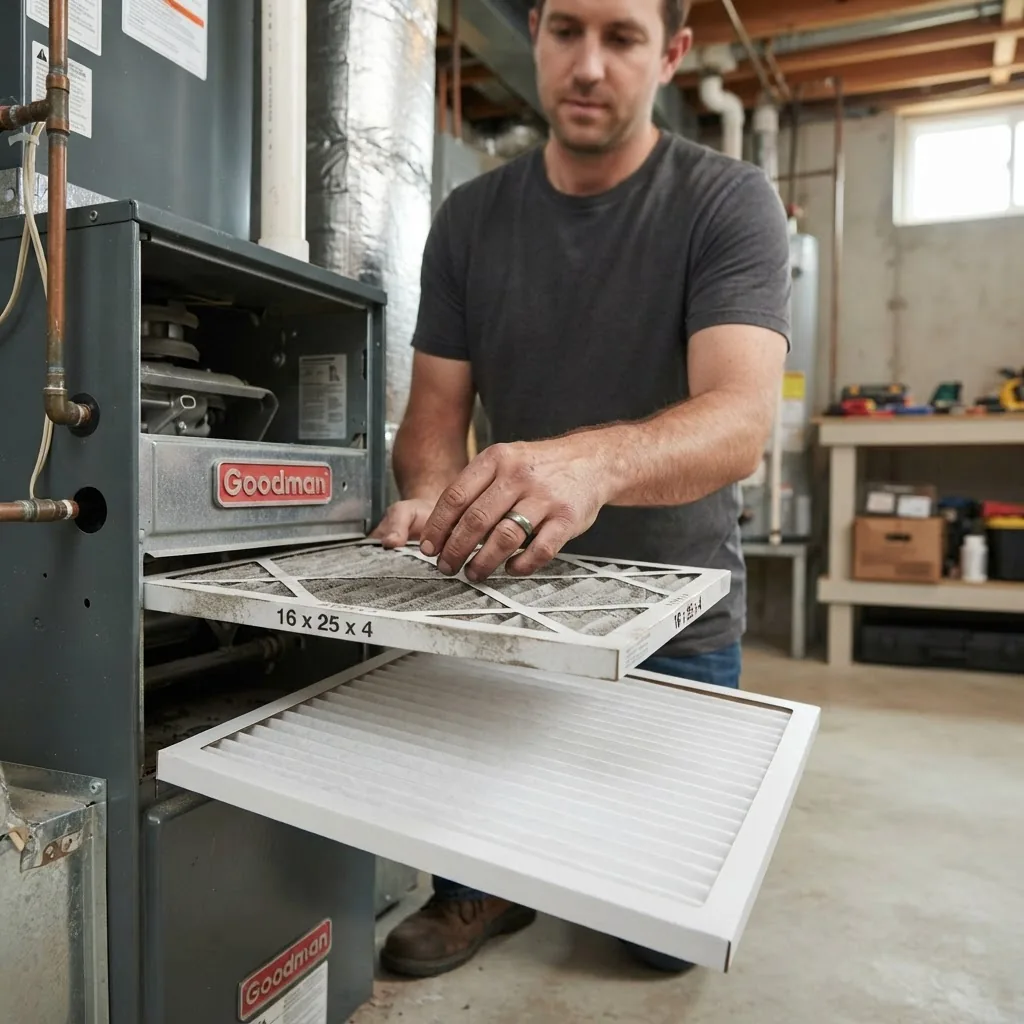
- Replace the air filter every 1–3 months. Remove the old filter and note the MERV rating and size printed on the frame. Install a replacement with the airflow arrow pointing toward the furnace. For homes with pets or allergies, use a higher MERV (8–11); change monthly during heavy use.
- Clean the furnace exterior and accessible interior surfaces quarterly. Turn off power, remove the access panel, vacuum dust from around burners (gas) and the blower area using a soft brush attachment. Don’t disturb sealed components. Time: 20–40 minutes.
- Inspect and clean vents and registers biannually. Remove and vacuum registers, brush ducts visible at returns. Ensure returns are unobstructed—leave 2–3 inches open around return grilles for airflow. Link these efforts to overall home cleaning with Clean House Tips: Effective Cleaning Ways for Every Room and Cleaning Home Guide: How to Clean a House Properly and Easily.
- Check thermostat settings monthly and replace batteries annually. Set programmable thermostats to sensible setbacks (e.g., 68°F occupied / 62°F unoccupied) and confirm the fan setting is AUTO, not ON, for normal operation.
- Inspect pilot assembly or ignition visually every heating season. For standing pilot systems, look for steady blue flame; for electronic ignition, listen for ignition clicks. If you see yellow flame, soot, or smell gas, shut off and call a pro immediately.
- Test safety devices and CO detectors monthly. Press test buttons on CO alarms and check battery backups. Replace CO detector units every 5–7 years per manufacturer. For furnace safety, confirm the limit switch and door safety interlock are functional when the panel is removed and power restored.
- Clear the condensate drain on high-efficiency furnaces annually. Remove the small PVC trap and flush with a cup of distilled vinegar followed by water; vacuum the line if slow. Time: 15–30 minutes. If you encounter persistent clogging, schedule professional drain service.
- Lubricate fan motor bearings if applicable, and tighten electrical connections. Some motors are sealed and require no oil—consult the manual. Tighten visible terminal screws and check for discoloration on wires indicating heat damage. If you see melted insulation, call a licensed HVAC professional.
- Seasonal checklist reference: use HVAC Maintenance Checklist: Seasonal Guide for Homeowners and consider Preventive Maintenance Services: Repairs and Upkeep Guide.
- Coordinate related system upkeep. For gas furnace owners wanting specialized cleaning guidance, review Gas Heater Maintenance and Furnace Cleaning Service Overview. For water heater scheduling context, see How Often to Flush Water Heater: Maintenance and Service Guide.
Transition: regular homeowner maintenance covers many tasks, but some checks and tune-up elements need a professional’s tools and expertise—next explains when to call in experts.
Professional Furnace Maintenance Service: When and Why to Call Experts
Goal: Identify which services require licensed technicians and what benefits professional furnace maintenance service delivers compared with DIY tasks.
Call professional HVAC maintenance services for any of the following: ignition system repairs, gas valve or heat exchanger issues, blower motor replacement, complex electrical faults, high-efficiency unit maintenance requiring sealed-system tools, and safety-related diagnostics like combustion analysis. Professionals provide a comprehensive furnace inspection service including carbon monoxide testing, flue and vent checks, combustion efficiency measurement, and electrical safety testing.
- Schedule an annual furnace inspection — recommended in fall before heavy use. Many trade associations suggest yearly service; professionals will check heat exchanger integrity, test for CO, clean burners and pilot/ignition assemblies, and verify airflow. For a professional air conditioning counterpart, see Professional Aircon Maintenance and Repair Service Guide.
- Choose a tune-up package that includes filter inspection, burner cleaning, motor checks, and safety test. Ask for written findings and an itemised quote for any recommended repairs. For detailed tune-up protocols consult Heating Tune Up and Furnace Maintenance: Essential Service Guide.
- Consider professional furnace cleaning services every 1–3 years — they use filtered vacuums and disassembly where needed. See Furnace Cleaning Service: Professional AC and Heater Maintenance.
- Ask about service warranties and parts guarantees. A reliable provider will offer 30–90 day workmanship guarantees and 1–5 year parts warranties depending on parts. Compare quotes and request manufacturer part numbers.
- For hybrid or heat-pump systems, use combined expertise. If your home has a heat pump backup or hybrid heating, request technicians familiar with both systems; reference Heat Pump Repair and Maintenance Service: Expert Home Guide.
- Coordinate AC and furnace maintenance for year-round HVAC health. Professionals can bundle services—compare what an AC tune-up includes at What Does an AC Tune Up Include: Comprehensive Service Guide and maintenance plans at HVAC Preventative Maintenance: Annual Schedule and Service Guide.
- Use professionals for electrical and gas permits or code compliance. Licensed technicians handle local code approvals and can provide documentation for insurance or real-estate transactions. For AC-focused maintenance options, compare Air Conditioner Maintenance Plan: Service Options and Benefits.
- Maintain a service log. Ask your technician to record dates, parts replaced, measured combustion numbers (CO and O2), motor amperage, and recommended next steps. This log improves diagnosis and resale value.
Transition: skilled professional work improves safety and efficiency; the next section explains how central heating maintenance translates into measurable energy savings.
How Central Heating Maintenance Supports Your Furnace’s Efficiency
Goal: understand energy and performance gains from central heating maintenance and specific metrics you can expect after a proper tune-up.
Regular central heating maintenance keeps burners, heat exchangers and blowers operating at designed efficiency. According to a 2024 industry report, routine HVAC tune-ups can improve system efficiency by 5–15% when filters and burners are cleaned and airflow restored. Example: a furnace with a clogged filter and dirty burners may run 10–20% longer to produce the same heat, increasing fuel or electricity costs.
Support stat block (typical improvements):
| Maintenance Action | Expected Efficiency Gain | Typical Frequency |
|---|---|---|
| Filter replacement | 3–5% energy improvement | Every 1–3 months |
| Burner/combustion cleaning | 4–8% improvement | Annually |
| Blower tuning and duct sealing | 5–10% improvement | Every 1–3 years |
According to a 2023 U.S. Department of Energy overview, properly maintained heating systems use fuel more efficiently and reduce annual energy consumption, especially in older homes.
Transition: if you schedule maintenance, know what to expect during a repair visit—next section walks through the service visit step-by-step.
What to Expect During a Furnace Repair Service Visit
Goal: prepare the home and understand the diagnostic and repair timeline so you can make informed decisions and spot unnecessary upsells.
- Prepare the area (10–15 minutes). Clear 3 feet around the furnace, remove pets from the area, have your service log and thermostat information available. This speeds access and reduces trip time.
- Initial safety and diagnostic checks (15–30 minutes). Technician will confirm identity, power/gas shutoff points, and run basic safety tests: check carbon monoxide levels, gas pressure, pilot/ignition operation, venting and heat exchanger visual inspection. Expect a safety test report if issues are found.
- System performance tests (15–45 minutes). Measure blower motor amperage, duct static pressure, and combustion efficiency (CO and O2) where applicable. Time varies by furnace type (standard vs. high-efficiency).
- Present findings and repair options (10–20 minutes). Good technicians explain failures, show worn components, list repair vs. replacement options with parts and labor estimates, and recommend priority fixes for safety.
- Perform agreed repairs (30–180 minutes). Simple repairs (capacitator, sensor, filter change) often complete same day. Complex repairs (heat exchanger replacement) may require return trips or system replacement and permits—plan 1–3 days for full replacement scheduling.
- Post-repair verification (10–20 minutes). Technician should run the furnace through a full cycle, re-measure key parameters, and leave a service report with replaced part numbers, measured values, and recommended return interval.
Typical same-day timeline: diagnostics and minor repairs completed in 1–3 hours. Major replacements may require lead time for parts (2–7 days) and additional labor. Get a written estimate and ask about emergency service fees for nights/weekends.
Transition: choosing the right provider matters—next section gives a clear comparison and checklist to help you select one.
Choosing the Right Furnace Repair and Maintenance Provider
Goal: pick a trustworthy HVAC service using clear criteria: licensing, warranties, certifications and verified customer feedback.
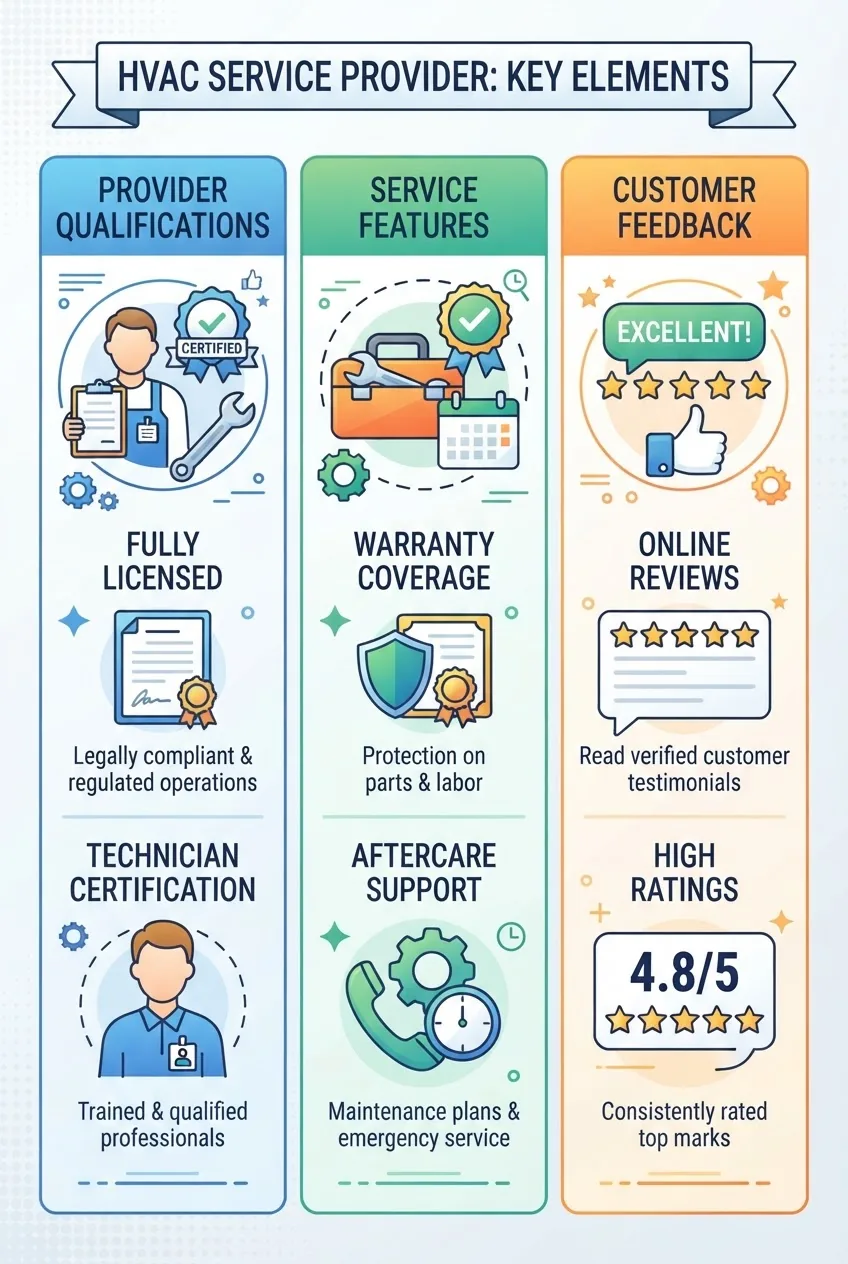
Use this table as a quick checklist to compare providers during calls.
| Criteria | What to ask | Red flags |
|---|---|---|
| Licensing & certifications | Request state license number, NATE or ACCA membership. | No license or vague answers. |
| Warranties & guarantees | Ask for written warranty terms, labour and parts coverage. | No written guarantee, only verbal promises. |
| Customer reviews | Request references and check online ratings; ask about repeat customers. | No verifiable reviews or pressure sales tactics. |
| Pricing transparency | Get itemised estimates and compare parts costs. | Flat, no-detail pricing or high-pressure upgrades. |
| Insurance & permits | Confirm liability insurance and permit handling for replacements. | No insurance proof or unwillingness to permit work. |
For broader contractor selection guidance covering installation and other HVAC tasks, consult Aircon Servicing and Installation: Contractor Service Guide. For providers who also maintain water heating systems, see Hot Water Heat Boiler Maintenance: Service and Upkeep Guide and these water heater references: Water Heater Cleaning: Service and Maintenance Tips for Homeowners, Water Heater Maintenance: Preventive Service and Upkeep Guide, Water Heater Maintenance Service: Professional Cleaning and Repair.
Transition: budgeting for service helps avoid surprises—next section outlines typical costs and saving tips.
Furnace Repair and Maintenance Costs: What Homeowners Should Know
Goal: provide realistic cost ranges, emergency fee expectations, and practical ways to reduce lifetime expenses.
Typical cost ranges (national averages):
- Routine maintenance / seasonal tune-up: $75–$200 per visit (According to a 2024 industry report).
- Minor repairs (thermostat, filter, capacitor): $100–$450 including parts and labour.
- Blower motor replacement: $400–$1,200 depending on motor type and access.
- Heat exchanger replacement: often $1,500–$4,000; heat exchanger failure commonly leads to a system replacement recommendation for older units.
- Emergency weekend/night call-out fees: $100–$300 added to standard rates.
Cost-saving tips:
- Keep up with filters and basic maintenance to avoid motor strain and inefficient combustion that increase fuel costs by 5–15% annually.
- Schedule off-season service (late spring or early fall) when rates may be lower and technicians have better availability.
- Bundle HVAC services—many companies offer discounted combined furnace and AC maintenance plans; compare with Air Conditioner Maintenance and Service Guide for Homeowners and Air Conditioner Maintenance Plan: Service Options and Benefits.
- Get multiple quotes and insist on itemised estimates to compare parts and labour separately.
Transition: while furnace maintenance is central in winter, pairing services with AC upkeep ensures year-round comfort—briefly covered next.
Furnace Maintenance and Aircon Servicing: Complementary Home Comfort Services
Goal: explain how furnace work and aircon servicing package options complement each other and support balanced HVAC performance.
Coordinated scheduling reduces trip fees and allows technicians to inspect the entire HVAC system for airflow balance, matched thermostat control, and shared duct issues. Consider combined annual service appointments: furnace in fall and AC in spring, or bundled service plans that include both.
For full air conditioning maintenance guidance, read Air Conditioner Maintenance and Service Guide for Homeowners and for plan options compare Air Conditioner Maintenance Plan: Service Options and Benefits.
Transition: regular maintenance protects safety and the environment—next explains safety precautions and emissions benefits with authoritative sources.
Safety Precautions and Environmental Benefits of Regular Furnace Maintenance
Goal: outline safety checks homeowners should prioritise and how maintenance reduces emissions.
Safety steps every homeowner should perform: monthly CO alarm tests, annual combustion checks by a pro, and immediate shutdown if you smell gas or see sustained yellow flame. For official safety guidance consult the U.S. Consumer Product Safety Commission for domestic appliance safety recommendations: U.S. Consumer Product Safety Commission.
Maintenance reduces emissions by keeping combustion efficient and preventing incomplete combustion that produces CO. For maintenance best practices, refer to industry recommendations such as those from the Air Conditioning Contractors of America (ACCA): ACCA. For energy impact and national-level efficiency statistics see the U.S. Department of Energy: U.S. Department of Energy (see 2023–2024 guidance on heating efficiency).
Local home-safety note: keep gutters and roof drainage clear to prevent water intrusion near external furnace vents; poor drainage can affect outdoor venting and create freezing or corrosion risks—see Gutters Cleaning Service Guide: Professional Maintenance Tips and How to Clean Gutters: DIY Tips and Professional Cleaning Guide.
Transition: before you act, review common mistakes I’ve seen and a checklist to verify your work.
Common mistakes and how to avoid them
I’ve observed several recurring mistakes during service calls—here’s what I tell homeowners to avoid:
- Skipping filter changes: I once repaired a motor that failed because a homeowner neglected filters for 18 months. Avoid by replacing filters every 1–3 months.
- Working with power/gas on: I witnessed a DIY owner tighten a connection without shutting power—this caused a short. Always shut off power and gas before accessing components.
- Ignoring strange smells and noises: I found a cracked heat exchanger after a homeowner delayed calling for intermittent CO detector trips. If in doubt, stop the furnace and call a pro.
- Trusting a single estimate without details: I’ve seen quotes that hide part costs; insist on itemised estimates and warranties.
Checklist: Verify your work
- Filter replaced and label noted (size & MERV).
- Vents and returns vacuumed and unobstructed.
- Thermostat batteries replaced and schedules confirmed.
- CO detector tested and within service date.
- Combustion area visually clean, no yellow flames or soot.
- Condensate drain cleared and flowing freely.
- Service log updated with date and tasks performed.
When to call a professional
Call a licensed technician immediately for any of these: suspected cracked heat exchanger, persistent yellow flames or soot, gas leaks (smell of rotten eggs), recurring CO alarm triggers, electrical burning smell, or if you must remove sealed panels or perform wiring work. For professional options and local service guidance see Local Air Conditioning Repair Services: Trusted HVAC Guide.
Final transition into FAQs and a compact wrap-up.
Furnace Maintenance and Aircon Servicing: Complementary Home Comfort Services
Note: this final short section reiterates coordinated scheduling and linked resources. For a deeper dive into AC maintenance and combined plans, see Air Conditioner Maintenance and Service Guide for Homeowners and Air Conditioner Maintenance Plan: Service Options and Benefits.
Conclusion: Regular furnace repair services and maintenance keep your home safe, efficient and comfortable. Start with monthly filter changes, annual professional inspections, and use the checklist above to validate your work. If you see signs of combustion issues, irregular cycling, or electrical faults, call a licensed technician. To schedule professional inspections or compare local providers, use the checklist and ask for itemised quotes—your home’s winter comfort depends on it.
Call to action: Begin today by checking and replacing your filter, testing your CO detector, and booking a fall tune-up with a licensed HVAC provider if your unit hasn’t been inspected in the past 12 months.