
By the end of this guide you will have a complete, professional-grade house cleaning services list and a ready-to-use “how to clean a house professionally checklist” that you can follow in one full-day session (6–8 hours) for a 2,000 sq ft home, or scale to shorter blocks for routine visits. Skill level: intermediate—basic familiarity with household cleaners and a willingness to follow sequence and timing.
house cleaning services list and the companion professional checklist below give you a service-level view and the exact step-by-step actions pros use; use it to hire, supervise, or perform a commercial-standard clean yourself.
Understanding Professional House Cleaning Services
Professional house cleaning services are organized offerings from a cleaning company or independent expert cleaners that bundle tasks into service packages. These packages range from routine visits that maintain daily living standards to specialized cleaning that addresses stains, allergens, or property turnover. Professional cleaners apply residential cleaning best practices and industry standards to deliver predictable outcomes.
Examples of common service models:
- Subscription/recurring service: Weekly, biweekly, or monthly standard cleanings intended to maintain a home’s baseline condition.
- One-off deep clean: Intensive attention to high-dirt areas, often before seasonal events or after renovations.
- Move-in/move-out cleaning: Turnover cleaning that meets landlord or real-estate acceptance criteria.
- Specialized services: Carpet shampooing, upholstery cleaning, exterior window washing, and eco-friendly or allergen-focused plans.
Professional cleaners train on cleaning order, chemical use, and cross-contamination control. For example, pros always clean from the highest surfaces to the lowest and from the cleanest zones to the dirtiest to avoid re-soiling surfaces—this procedural discipline is a core differentiator from casual housekeeping.
Service scope is defined in proposals and statements of work; a clear scope will list rooms, surfaces, fixtures, and exclusions (e.g., inside appliances or high exterior windows). Case scenario: a two-hour standard clean for a two-bedroom apartment typically includes dusting, vacuuming, kitchen surface wipe-downs, and bathroom sanitizing. A four-to-six-hour deep clean expands to baseboard cleaning, inside cabinet wipeouts, and grout scrubbing.
Professional standards are increasingly influenced by public health guidance. According to a 2024 EPA guideline, disinfectant choices and dwell times matter for pathogen inactivation, and professionals reference these when selecting chemical protocols. See the EPA guidance for household disinfecting: EPA cleaning and disinfecting guidance.
Transition: now that you understand what professional services are and how they differ from ad-hoc housekeeping, the next section lists every major service type you can purchase or request from pros.
Comprehensive House Cleaning Services List
- Standard / Recurring Cleaning — Basic maintenance tasks done on a schedule (weekly, biweekly, monthly). Includes dusting, vacuuming, mop floors, wipe kitchen counters, clean sinks, toilets, mirrors, and trash removal. Ideal for homes wanting regular upkeep with predictable time slots.
- Deep Cleaning — Intensive, time-boxed cleaning that targets hidden dirt: baseboards, under appliances, cabinet fronts, deodorizing drains, descaling fixtures, and high dusting. Pros allocate 4–8 hours depending on home size. Recommended seasonally or before major events.
- Move-Out / Move-In Cleaning — Full property turnover cleaning: inside cabinets, inside appliances, wall spot cleaning, window sills, and often meeting landlord or realtor checklists. Pros commonly provide a checklist and warranty period for landlord acceptance.
- One-Time Event Cleaning — Post-party restoration and pre-event preparation. Focuses on stain removal, intensive waste removal, and odor control. Often scheduled as extended emergency sessions.
- Spring or Seasonal Cleaning — A deep clean with attention to seasonal maintenance: HVAC vents, patio doors, gutters debris clearing prep (if included), and seasonal storage organizing. Usually paired with a seasonal maintenance plan.
- Green / Eco-Friendly Cleaning — Uses non-toxic cleaners, microfiber, and HEPA-filter vacuums. Suited for allergy-sensitive households and clients prioritizing reduced environmental impact. Pros may provide MSDS or product lists on request.
- Carpet and Rug Cleaning — Hot-water extraction (steam) or dry-clean methods depending on fiber type. Pros test patches, pre-vacuum, apply pretreat, and extract at recommended temperatures. Warranty periods and dry-time estimates (6–24 hours) should be communicated up front.
- Upholstery and Mattress Cleaning — Stain treatment, steam cleaning, and deodorization performed with specialized extractors. Professionals note fabric codes (W, S, WS, X) and follow manufacturer recommendations.
- Window Washing (Interior/Exterior) — Interior window cleaning standard; exterior up to first-story typically included; high-reach or suspended systems are specialized and quoted separately. Includes track cleaning and screen inspection.
- Appliance Interior Cleaning — Ovens, refrigerators, dishwashers and washing machines cleaned inside/out; grease extraction and gasket inspection included when requested as an add-on.
- Sanitization & Disinfection Services — Hospital-grade disinfectants and EPA-registered products used to reduce pathogen load. Pros follow dwell-time requirements and surface compatibility checks. See professional disinfectant standards at the ISSA: ISSA.
- Odor Removal and Air Quality Services — Ozone-free deodorization, activated charcoal treatments, and HVAC filter replacement/inspection as part of an extended package. Often bundled with deep cleans for allergic households.
- Mold and Mildew Remediation (Non-structural) — Surface mold removal and cleaning; structural remediation requires licensed contractors. Pros document mold findings and recommend further action when needed.
- Post-Construction Cleaning — Removes fine dust, paint splatter, and debris. Includes high-dusting, HVAC register cleaning, and detailed surface prep for occupancy. Typically quoted per-project.
- Specialty Surface Care — Granite, marble polishing, hardwood floor maintenance (screen and recoat vs. full refinish), and tile/grout sealing. Pros follow manufacturer care instructions and provide maintenance schedules.
- Organizing and Decluttering — Not strictly cleaning but often bundled: sorting, labeling, donation staging, and targeted space maximization. Professionals provide a plan for items to keep, donate, or discard.
- Pet-Focused Cleaning — Tackles pet hair, dander, odor neutralizing, and litter-area sanitizing. Pros recommend frequency increases if pets have heavy shedding or incontinence issues.
- Commercial-Grade Add-Ons — High-touch point disinfection, building-entry mat sanitation, and check-in logs for properties that need audit trails for multi-unit rentals.
Service selection depends on goals: maintenance, turnaround, allergy control, or property sale preparation. Next, you’ll get a full, professional step-by-step cleaning checklist to perform these services to industry standards.
How to Clean a House Professionally Checklist
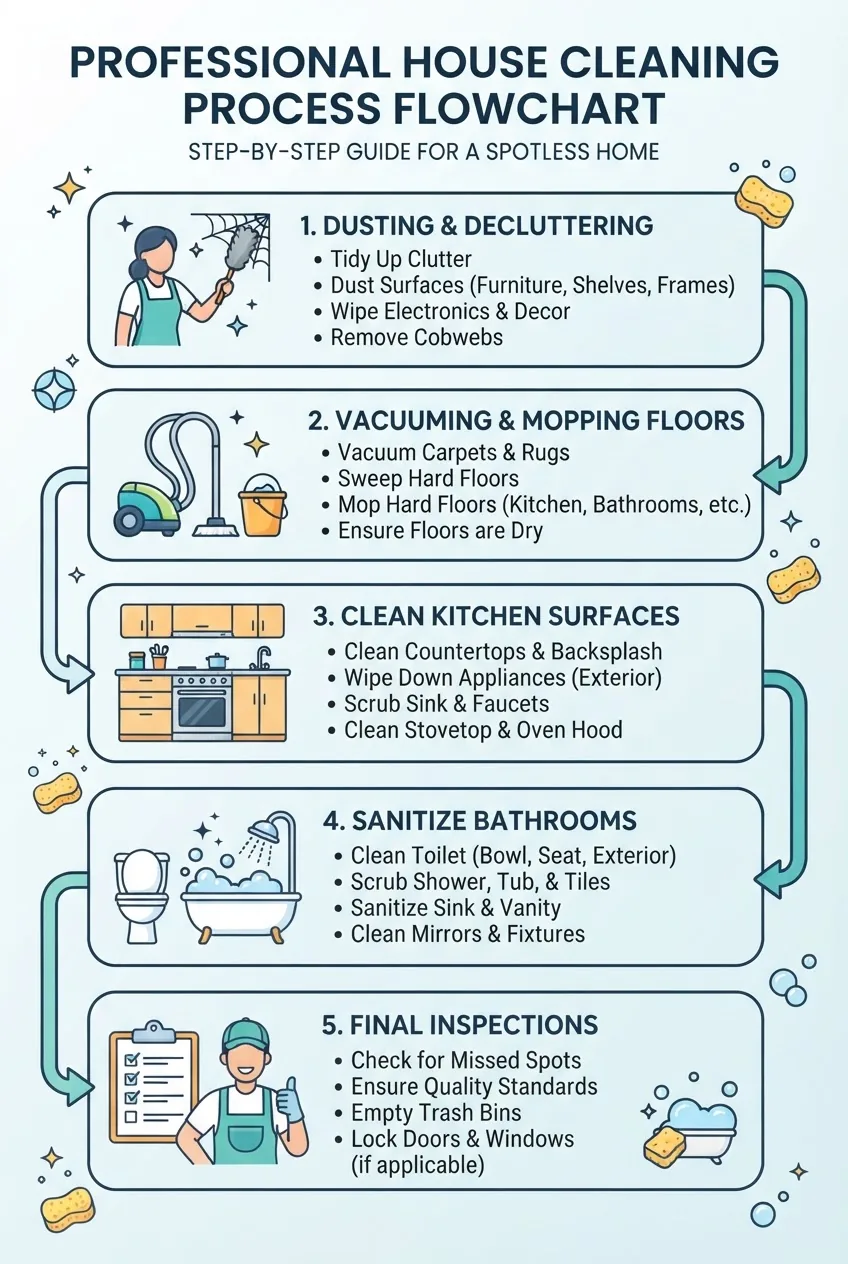
This section is the hands-on core. Follow the numbered steps below in order. For a typical 2,000 sq ft house allocate 6–8 hours for a professional deep-clean sequence; for regular maintenance, expect 2–3 hours. Use timed blocks: 30–45 minutes per bedroom, 60–90 minutes for kitchen, 45–60 minutes per bathroom, and 45–60 minutes for living areas.
Before you start
- Prerequisites: Wear gloves and, if using concentrated disinfectants, eye protection. Ensure adequate ventilation (open windows or run exhaust fans).
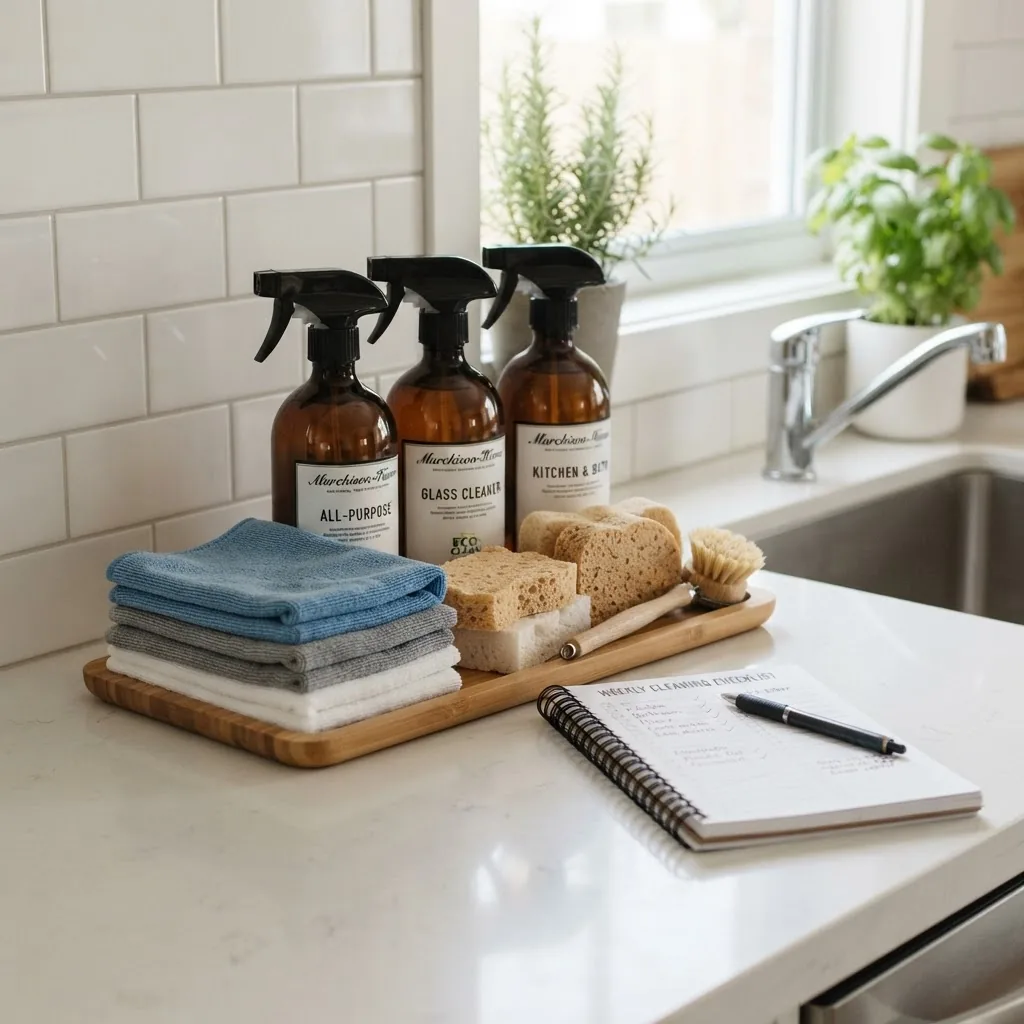
- Tools & Consumables: See Tools and Supplies section below; bring extra microfiber cloths (12+), spare HEPA vacuum bags/filters, mop heads, and assorted brushes.
- Time-blocking plan: Block uninterrupted time (e.g., 8:00–12:00 deep clean morning; 13:00–15:00 follow-up touches).
- Client expectations: Confirm scope and exclusions in writing; note sensitive surfaces.
Core checklist as procedural steps (perform in sequence):
- Declutter and remove loose items — Clear countertops, floors, and furniture surfaces. Use bins (trash, relocate, donate). Time: 15–30 minutes per common area. Rationale: Removes obstacles and lowers re-soiling during cleaning.
- High dust and cobweb removal — Start at ceiling, light fixtures, vents, and crown molding using extension duster or microfiber pole. Spend 5–10 minutes per room for ceilings, 10–20 minutes for living rooms with multiple fixtures.
- Spot-treat stains and surface marks — Identify stains on upholstery, carpets, and walls. Use manufacturer-recommended cleaners; test in an inconspicuous spot. Allow pretreat dwell times: 5–10 minutes for enzymatic cleaners, per product instructions.
- Kitchen detailed cleaning — Sequence: degrease range hood, clean stovetop, wipe cabinet fronts, clean countertops, descale sink and faucet (use a 1:1 vinegar-water solution for mineral deposits if safe for the surface). Interior appliance cleaning (fridge, oven) is performed if included; dry time: refrigerator shelves 20–30 minutes to air-dry after wiping.
- Bathroom deep sanitation — Apply disinfectant to toilet bowls, showers, tubs, sinks; allow product dwell time per label (typically 1–10 minutes). Scrub grout with stiff nylon brush. Replace or wash shower curtains and clean behind toilets if accessible.
- Window sills, tracks and interior glass — Vacuum tracks, then wipe with microfiber and ammonia-free glass cleaner. Use a small brush for debris in window mechanisms. Dry and polish with a lint-free cloth to avoid streaks.
- Vacuuming — Use high-power vacuum with HEPA filtration. Vacuum upholstery crevices with brush attachment and lift cushions where applicable. For carpets, pass slowly (1–2 ft/sec) to allow agitation; repeat in high-traffic areas.
- Mopping and floor care — After vacuuming, apply microfiber flat mop with manufacturer-approved solution. For hardwood, use a damp (not wet) mop and a neutral pH cleaner; 2–3 passes on stubborn spots. For tile, use a heavier-duty cleaner and grout brush for joints. Allow floors to dry 20–40 minutes before foot traffic.
- Final surface polish and microfiber finishing — Re-wipe horizontal surfaces with a clean, dry microfiber to remove streaks. Polish faucets and stainless steel with designated polish. Check light switches and door handles for smudges and disinfect.
- Quality control inspection — Walk each room on a 10-point checklist: floors, baseboards, windows, surfaces, fixtures, appliances, bathroom sanitation, trash removal, odors, and customer-requested extras. Address any misses immediately. Document with time-stamped photos for client records if requested.
- Client handoff and feedback — Review completed items with client or leave a printed checklist. Note any items requiring follow-up (repairs or deep stain treatment that needs contractors).
3. Dry dust horizontal surfaces — Use microfiber cloths with an “S” pattern, working from farthest corner toward the exit. Dust electronics with anti-static cloths and use a soft brush for blinds. Replace cloths every 2–3 rooms to avoid re-depositing dust.
Timing keys: use a kitchen timer for each major block (45–90 minutes). Equipment tip: always change mop heads and vacuum bags/filters after deep cleans to preserve performance.
When you need more intense stain remediation or hazardous material handling (e.g., black mold behind drywall), refer clients to certified remediation professionals rather than attempting beyond-scope remediation.
Transition: with the checklist steps done, the next section details the professional-grade tools and supplies you’ll use to get these results consistently.
Tools and Supplies Used by Professional Cleaners
Professional cleaners use efficient equipment, measured solutions, and surface-appropriate products. Below is a categorized inventory with usage tips and care notes.
Cleaning Equipment
- HEPA-filter vacuum (upright or canister) — Use for carpets and fine dust; change filters per manufacturer or monthly in heavy-use; document filter changes in a maintenance log linked to a maintenance schedule for cleaning equipment.
- Commercial extractors (carpet/upholstery) — Hot water extraction units for deep carpet cleaning; maintain pump seals and flush lines after each use.
- Microfiber cloths and mop pads — Color-code by zone (bathroom, kitchen, general) to prevent cross-contamination. Replace after 50–100 washes depending on soil load.
- Extendable dusters and poles — For high dusting and ceiling fixtures; use soft microfiber heads for delicate surfaces.
Cleaning Chemicals & Consumables
- pH-neutral floor cleaners for wood and laminate.
- EPA-registered disinfectants for high-touch surfaces (follow dwell times). See EPA guidance: EPA disinfectant information.
- Enzymatic cleaners for organic stains and odors; rinse protocols vary by product.
- Non-toxic, plant-based cleaners for eco-friendly packages; check certifications and MSDS for allergies.
Hand Tools & Accessories
- Scrub brushes (nylon, brass for safe surfaces), grout brushes, putty knives for adhesive residue.
- Spray bottles labeled with dilution ratios — professionals mark bottles (1:64, 1:128) and log prepared batches.
- Disposable gloves and masks for chemical-sensitive tasks.
- Portable caddies for efficient transport of supplies between rooms.
For sourcing professional-grade supplies, consult curated vendors and marketplaces. See the internal resource for buying guides: online cleaning supply resources.
Equipment upkeep: follow the manufacturer’s recommended service intervals and keep a small spare parts kit. For program planning reference, pair tool maintenance with the maintenance schedule for cleaning equipment.
Transition: understanding tools and supplies helps determine how often to schedule professionals and which frequency fits your home’s needs.
Scheduling Professional Cleaning Services – Frequency and Tips
Scheduling is about balancing budget, traffic, and health goals. Below are pro recommendations and planning strategies to match service type and frequency to household needs.
- Weekly — For large households, pets, or allergy sufferers. Keeps dust and allergen levels low and preserves finishes.
- Biweekly — The most common recurring schedule for families and working professionals; balances cost and cleanliness.
- Monthly — Suitable for small households or those pairing with in-between DIY maintenance. Combine monthly deep cleans with the monthly home maintenance PDF for broader upkeep.
- Seasonal / Quarterly — Deep clean once per season for allergens, HVAC vent cleaning, and seasonal prep; align with the Complete Home Maintenance Checklist for Yearly and Monthly Care for integrated planning.
- One-off — For move-outs, post-renovation, or event cleanup.
Scheduling strategies:
- Block recurring appointments at the same time and day to maintain consistency and cleaner accountability.
- Use digital tools to coordinate appointments and reminders; see recommended apps: cleaning scheduling apps.
- Bundle services (e.g., combine carpet cleaning with a deep clean every 6–12 months for cost savings).
- Coordinate cleaning before major maintenance inspections; reference the maintenance inspection checklist to align cleaning cadence with building inspections.
- Pair cleaning with simple upkeep tasks from efficient home upkeep projects to extend clean intervals.
Transition: regular professional service offers measurable benefits—time saved, improved health, and property protection—which the next section outlines.
Benefits of Hiring Professional House Cleaning Services
Hiring professionals delivers measurable advantages beyond basic tidiness:
- Time savings: Reclaim hours per week—pros typically complete a biweekly clean of a 3-bedroom house in 2–3 hours, according to a 2023 industry report on service averages.
- Health improvements: Reduced allergens, mold spores, and bacterial load when pros follow disinfectant dwell times per EPA recommendations (EPA).
- Professional-grade results: Pros use equipment and techniques (HEPA vacuums, hot-water extraction) that outperform typical home tools in removing embedded dirt.
- Stress reduction and reliability: A contracted schedule removes the decision fatigue around cleaning tasks.
- Property preservation: Regular cleaning and proper surface care reduce wear, protect finishes, and help spot small repairs early; combine with a repair checklist before selling for sale preparation.
- Combined services: Many providers partner with handyman services; see benefits of home maintenance services combined with cleaning when you want integrated solutions.
- Maintenance prevention: Regular cleaning reduces issues listed in the common home maintenance problems and can extend appliance life.
- Inspection readiness & healthy home standards: Professionals can help maintain compliance for rental or inspection standards; align cleaning with the healthy home standards.
- DIY complement: Pairing cleaners with homeowner efforts (see DIY home repairs and cleaning) saves cost and improves outcomes.
Transition: if you’re weighing costs or quality, the FAQ below answers common choices and cost drivers.
Frequently Asked Questions About Professional House Cleaning
Practical answers to common queries, short and actionable.
What services are typically included in a professional house cleaning list?
Typical services include dusting, vacuuming, mopping, kitchen surface cleaning, bathroom sanitation, trash removal, and light appliance exterior wiping. Deep-clean add-ons cover baseboards, inside appliances, upholstery, carpet extraction, and window tracks.
How does professional house cleaning differ from regular housekeeping?
Professional cleaning follows a structured protocol with high-grade equipment, measured chemicals, systematic sequencing, and quality checks, whereas housekeeping tends to be ad-hoc maintenance without standard operating procedures or validated disinfecting steps.
How do I create a checklist for cleaning my house like a professional?
Start with a room-by-room inventory, order tasks from high-to-low and clean-to-dirty, assign timed blocks (30–90 minutes), list supplies and dilution ratios, and include a final quality-control inspection checklist.
Which rooms or areas require deeper cleaning during professional service?
Kitchens and bathrooms require the deepest attention—appliances, grout, and plumbing fixtures—followed by high-traffic entryways and upholstered furniture where embedded soil and allergens accumulate.
How often should I schedule professional house cleaning services?
Weekly for heavy-use homes or allergy concerns, biweekly for most families, monthly for light occupancy; deep clean or specialized services quarterly or seasonally as needed.
What is the average cost of professional house cleaning services?
Costs vary widely: according to a 2023 industry report, standard recurring cleanings average $75–$200 per visit and deep cleans $200–$500+ depending on home size, region, and add-ons.
What can I do if a cleaning service misses spots or areas?
Document missed areas with photos, notify the company immediately, and request a re-clean within their satisfaction window; reputable companies will return or credit services per their policy.
How can I ensure the cleaning products used are safe and eco-friendly?
Ask providers for product lists, MSDS, and green certifications; choose services offering plant-based or low-VOC options and request non-scented formulas for allergy-sensitive households.
Transition: the FAQ above covers common operational questions—next, I’ll share hands-on practitioner mistakes I see and how to avoid them.
Common mistakes and how to avoid them
I’ve seen these failures on many jobs; here’s how I fixed them.
- Under-timing tasks: I once booked a full deep clean into a three-hour slot; the result was rushed corners. Solution: always allocate 4–8 hours per deep clean for a 2,000 sq ft home and break into timed blocks.
- Cross-contamination from cloth reuse: I reused a single cloth across bathrooms—this spread grime. Solution: color-code microfiber cloths and swap after each room.
- Improper chemical dilution: I diluted a disinfectant too weakly to be effective. Solution: mark bottles with exact dilution ratios (e.g., 1:128) and follow manufacturer dwell times.
- No client sign-off: I assumed approval and missed client-specific requests. Solution: always perform a walk-through or leave a signed checklist at handoff.
Compact verification checklist
Verify these items after any professional clean (tick-box approach):
- High dusting completed (ceilings, vents)
- Kitchen: counters, stovetop, sink, and appliance exteriors cleaned
- Bathrooms: toilets, showers, tubs, mirrors, and grout inspected
- Carpets and upholstery vacuumed; spot treatments recorded
- Floors mopped using surface-appropriate cleaner and allowed to dry
- Trash removed and liners replaced
- Quality control inspection completed and client notified
When to call in a professional instead
Call certified specialists for hazardous materials, structural mold, major water damage, or when property-sale standards require full remediation. Also engage pros for heavy upholstery extraction, large-area carpet cleaning, or when you need documented certifications of sanitation compliance for rental or healthcare-adjacent properties.
Disclaimer: Service scope, pricing, and chemical use vary by provider and region. According to a 2024 consumer home-services survey, satisfaction correlates strongly with clear written scopes and documented quality control. For local regulations and safety, consult government health guidance: CDC household cleaning guidance.
Final transition: below are links to resources and templates to help integrate cleaning into your broader maintenance plan.
Useful internal resources: printable cleaning checklists, detailed deep cleaning checklist, and House Cleaning Supplies Checklist for Effective Home Cleaning.
Experience note: I recommend documenting each deep clean with photos and a signed checklist to ensure consistency and to support any warranty claims on move-out cleans or sale preparations.