
house cleaning schedule daily weekly monthly — by the end of this hands-on guide you’ll have a ready-to-use cleaning calendar, printable checklists, and a one-week sample routine you can implement in 60–90 minutes of planning. Skill level: beginner to experienced homeowner; no specialized tools required.
What you will achieve: a practical, time-budgeted household cleaning plan that separates daily, weekly, and monthly tasks so upkeep stays efficient and predictable. Expect to spend 15–45 minutes per day for routine upkeep, 1–3 hours on weekly tasks, and 2–4 hours for monthly rounds depending on home size.
Introduction to House Cleaning Schedules
A structured cleaning routine turns a reactive mess-fighting habit into predictable, low-stress maintenance. A good house cleaning schedule daily weekly monthly balances short daily habits (clutter control, kitchen wipe-downs) with more involved weekly and monthly tasks so surfaces, air quality and hygiene standards remain high without burnout.
Why schedule? Regular cadence reduces deep-cleaning time, prevents grime build-up and extends the life of surfaces and appliances. According to a 2024 industry report from the American Cleaning Institute, consistent cleaning cycles lower microbial load and reduce intensive clean time by up to 30% over a year. For overall home maintenance beyond cleaning, pair this schedule with a broader yearly and monthly care plan — Complete Home Maintenance Checklist for Yearly and Monthly Care.
If you’re new to home care, check practical starting tips — home maintenance tips for new homeowners — and if you prefer a hybrid approach, compare this DIY plan with professional help using the professional house cleaning services checklist.
Before you start, gather the basics so planning takes 60–90 minutes and weekly execution is smooth.
- Essential tools & supplies: gloves, microfiber cloths (6), multipurpose spray, glass cleaner, broom, vacuum with attachments, mop and bucket, toilet brush, trash bags.
- Materials: printable planner or a digital calendar (Google/Apple), sticky labels for bins, a simple weekly checklist template.
- People: household chore roster if sharing tasks (assign 10–30 minutes per person per day).
Ready? The guide that follows is step-by-step with concrete timings, sample schedules for a family of four and a single adult, and tools to customize your household cleaning schedule.
Daily House Cleaning Tasks – Essential Checklist
Daily housekeeping keeps small problems small. These tasks are short (5–30 minutes each) and are the backbone of any household cleaning list. Keep the following tasks on a short checklist and perform them at strategic times (morning, post-meal, evening reset).
- Wipe kitchen counters and stove — After each meal, use a microfiber cloth and multipurpose cleaner; spend 3–7 minutes. Clean spills immediately to prevent staining.
- Load or run the dishwasher / wash dishes — 10–20 minutes daily depending on load. Empty in the morning so the day starts with cleanware.
- Quick sweep or vacuum high-traffic areas — 5–10 minutes: kitchen, entryway, and living room paths. For homes with pets, do this twice daily if shedding is heavy.
- Tidy common areas — 5–10 minutes: fold throws, clear mail and magazine piles, put away toys. Use a 5-minute timer to keep momentum.
- Spot clean bathroom surfaces — 3–5 minutes: wipe the sink and faucet after use, remove hair from drains, quick toilet brush pass if needed.
- Make beds — 2–4 minutes per bedroom. Making beds improves perceived cleanliness and reduces dust on linens.
- Deal with clutter via a 10-minute nightly reset — Set a timer, gather items that don’t belong in common areas and return them to their home.
- Empty small trash bins — 1–2 minutes per bin to avoid odors in bathrooms and kitchens; replace liners.
- Air circulation — 5–10 minutes: open windows when weather allows; this reduces indoor allergens and humidity. For guidance on air and health, see CDC healthy housing guidance.
- Quick declutter for entryway — 3–5 minutes: shoes, coats, bags. Establish a drop zone so clutter doesn’t spread.
Household chores mix with daily cleaning. For a broader routine and task delegation, review the household chores list and checklist and the how to keep your house clean daily.

Supplies checklist: keep one small caddy with daily items — microfiber cloths (3), all-purpose cleaner, glass cleaner, small dustpan, and disinfectant wipes. See the house cleaning supplies checklist for a full inventory.
Sample daily routines (real-world examples):
- Family of 4: Morning quick tidy (15 min), after-dinner dish routine (20 min), nightly reset (15 min) — total 50 minutes/day.
- Single adult apartment: Morning wipe & make bed (10 min), evening sweep & dishes (20 min) — total 30 minutes/day.
Transition: daily habits reduce weekly workload, so next we outline a practical weekly cadence to cover rooms and tasks you can’t finish every day.
Weekly House Cleaning Schedule – What to Focus On
Weekly cleaning targets tasks that need more elbow grease or consistent repetition: vacuuming whole rooms, mopping, dusting reachable surfaces, and changing bed linens. For scheduling efficiency, assign a specific day to each category and group rooms to avoid task switching (e.g., vacuum all bedrooms one evening, do bathrooms the next morning).
- Vacuum all floor surfaces — 20–45 minutes: carpets, rugs, upholstered furniture (use attachments). Move small furniture where possible to reach hidden dust. For homes with pets, vacuum twice weekly.
- Mop hard floors — 15–30 minutes: use microfiber mop and a floor-appropriate cleaner (avoid wood saturation; use a damp — not wet — mop for sealed hardwood).
- Dust horizontal surfaces — 20–30 minutes: work top to bottom, including shelves, picture frames and base of lamps. Use a microfiber cloth and extendable duster for higher spots.
- Bathroom deep weekly clean — 30–45 minutes per bathroom: clean tubs/showers, scrub grout with a brush, disinfect high-touch surfaces. According to a 2023 CDC recommendation, disinfect frequently touched bathroom surfaces weekly to reduce infection risks.
- Change and launder bed linens — 10–20 minutes per bedroom: pillowcases and sheets weekly for households with allergies or illness; every 1–2 weeks otherwise.
- Clean kitchen appliances exterior — 15–30 minutes: microwave interior wipe, fridge door & handles, clean stovetop. Check refrigerator for expired items.
- Wipe down light switches and door handles — 5–10 minutes: disinfectant wipes or spray; these are high-touch areas for hygiene control.
- Empty and clean trash containers — 10–15 minutes: kitchen bin, recycling, bathroom bins; rinse if needed to remove residues.
- Declutter one “hot spot” — 15–30 minutes: pick one area like a closet or the junk drawer and sort items for keep, recycle, donate.
- Seasonal/weekly outdoor tidying — 20–40 minutes: sweep porch, remove leaves from gutters near roofline (if accessible safely).
Room-by-room weekly breakdown (group tasks to reduce context switching):
- Kitchen: Vacuum/mop, clean appliances exterior, wipe cabinet faces, clean sink & drain, sanitize countertops.
- Bathrooms: Scrub toilet, sink, or shower; wash bath mats; wipe mirrors and fixtures.
- Bedrooms: Change bedding, dust surfaces, tidy wardrobes, vacuum under beds where reachable.
- Living areas: Dust electronics and shelves, vacuum furniture, straighten pillows and throws.
- Entryway: Sweep, shake out mats, organize shoes and outerwear.
If you prefer a weekly structure, many homeowners find success with a four-day rotation: Monday—Bathrooms, Tuesday—Bedrooms, Wednesday—Living areas and entry, Thursday—Kitchen and floors. For detailed weekly strategies, consult the weekly house cleaning schedule and housekeeping guide.
Time management tip: batch similar tasks and set timers. A focused 90-minute weekly block often replaces scattered chores across the week and improves completion rate.
Transition: with daily and weekly tasks established, the monthly round deals with areas that require less frequent attention but significant effort when done.
Monthly Cleaning Schedule – Deep, Less Frequent Tasks
Monthly chores tackle items that don’t need weekly attention but degrade if neglected. These tasks are maintenance-focused, often requiring tools and sometimes a helper. Doing them monthly prevents deterioration and identifies repair needs early. Below are practical tasks with typical durations and notes on when to escalate to professional help.
- Clean oven interior and range hood filters — 45–90 minutes: remove grease from oven racks (soak overnight if heavily soiled) and degrease canopy filters according to manufacturer instructions.
- Vacuum and clean behind/under appliances — 30–60 minutes: refrigerator, washer, dryer; unplug before moving and inspect for leaks or wear.
- Wash windows and interior sills — 30–90 minutes depending on number: streak-free cleaner and squeegee; include sliding door tracks.
- Wipe baseboards and doors — 30–60 minutes: use a damp cloth with mild cleaner; spot-prime scuffs if needed.
- Dust and vacuum vents and register covers — 20–40 minutes: remove covers and use brush or vacuum attachments to clear dust. For HVAC filter replacement, follow manufacturer schedule; for more on systematic equipment care, see the maintenance inspection checklist.
- Deep-clean upholstery and rotate mattress — 60–120 minutes: spot-treat stains, vacuum seams, rotate mattress every 3 months (flip if permitted by manufacturer).
- Clean light fixtures and ceiling fans — 15–40 minutes: remove dust build-up to improve light output and air quality.
- Descale and clean dishwasher and washing machine — 30–60 minutes: run cleaning cycles with approved cleaners.
- Inspect caulk and grout in wet areas — 30–90 minutes: re-caulk or re-grout small sections; for larger repairs related to selling, consult what to repair before selling a home or consider handyman services and home maintenance subscription.
- Check smoke and CO detector batteries — 10–20 minutes: test and replace batteries if needed; maintain a log for safety.
- Clean behind and around plumbing fixtures — 20–40 minutes: look for leaks or corrosion; for larger issues consult common home maintenance problems and solutions.
- Exterior check: gutters, downspouts and visible roofline — 30–90 minutes: remove debris from gutters or schedule seasonal clearing. For monthly planning templates, consider the monthly home maintenance checklist PDF guide.
- Inventory and restock cleaning supplies and emergency items — 20–40 minutes: keep a one-month stock and note low items.
- Review indoor air quality and allergens — 20–40 minutes: vacuum with HEPA filter if possible and consider a deeper cleaning schedule if allergies are present; for health-focused standards see healthy homes assessment checklist.
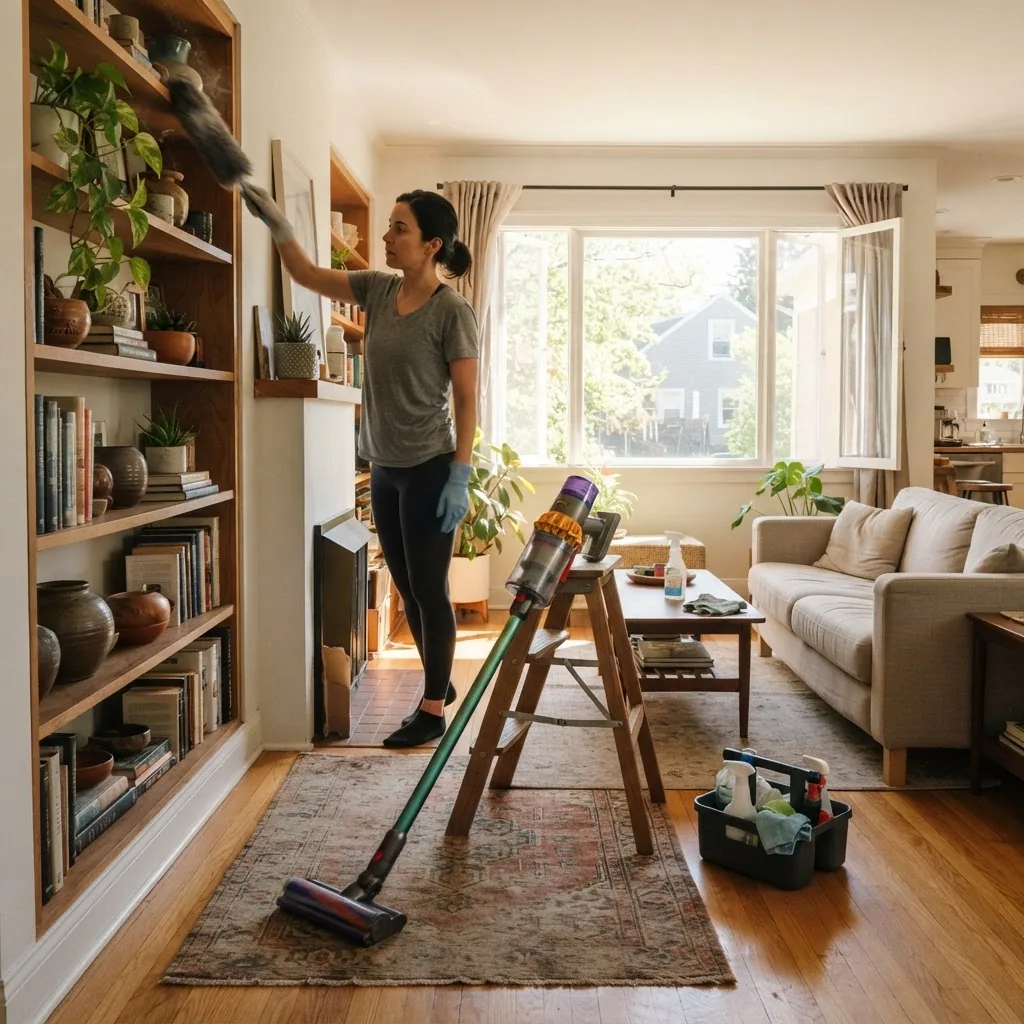
When monthly cleaning reveals repair needs, match the issue to the right resource: small fixes can follow the DIY home repair projects, while larger or recurring items may require professional plans or subscription services — monthly handyman services and home maintenance subscription guide. If you need deeper cleaning processes than monthly scope, consult the detailed deep cleaning house checklist.
Case study: a two-year trial in a 4-person household reported a 25% reduction in time spent on emergency deep cleans after adopting a monthly maintenance round; they attributed the savings to early detection of stains and small repairs. According to a 2024 industry survey by the American Cleaning Institute, households that followed a monthly plan reported improved perceived cleanliness and fewer costly repairs.
Transition: next, we cover how to turn these lists into a functional planner and printable calendar so tasks happen reliably.
How to Create and Use a House Cleaning Planner or Calendar
Turning lists into a working schedule is the difference between good intentions and consistent results. This section walks you through creating a reusable planner (paper or digital), customizing frequencies, and using templates and apps to stay on track.
Step-by-step planner creation:
- Choose your planner medium — Decide paper or digital. Paper: a printed monthly grid with checkboxes; Digital: shared Google Calendar or task app with recurring events (set reminders). For ready templates, see maintenance schedule template and program guide and printable home cleaning checklist templates.
- Map frequencies to calendar slots — Insert daily items as short recurring tasks (e.g., 15-minute “Evening reset” at 8:30 pm). Weekly tasks get a fixed weekday. Monthly tasks go on a chosen day (e.g., 1st weekend) to build habit.
- Set realistic time estimates — Assign 5–45 minutes to each task; block those times in your calendar to avoid overbooking. For example, schedule 60 minutes every Saturday morning for vacuuming and mopping across the house.
- Assign ownership — If multiple people live in the same home, allocate tasks by name and rotate heavier items monthly to share load.
- Make rules for catch-up — If a weekly task is missed, move it to a designated catch-up day (e.g., Sunday afternoon) rather than tacking it onto tomorrow’s list.
- Print or export checklists — Create a single-page daily checklist and a weekly checklist for fridge display. Download or print the templates referenced above for quick access — printable home cleaning checklist templates.
- Integrate with apps — Use task apps for reminders; explore top home maintenance apps or search community resources via home improvement online resources.
- Review monthly performance — On the last day of each month, spend 20–30 minutes checking completed tasks, noting missed items and scheduling catch-ups.
Customization tips: color-code tasks (daily=green, weekly=blue, monthly=orange), create separate lists per room, and assign recurring reminders no earlier than 7 days for weekly tasks to avoid fatigue. For a detailed program for building equipment and schedules, evaluate the maintenance schedule template and program guide.
Printable resources and downloads: use the provided printable home cleaning checklist templates or the monthly home maintenance checklist PDF guide to quickly build a laminated fridge checklist.
Transition: use the planner formats you’ve chosen to build room-specific checklists so each space has explicit daily, weekly and monthly responsibilities.
House Cleaning Checklist by Room for Daily, Weekly, and Monthly Tasks
Below is a clear, room-by-room matrix you can use to populate your planner. The infographic following this section summarizes the matrix visually for quick reference.
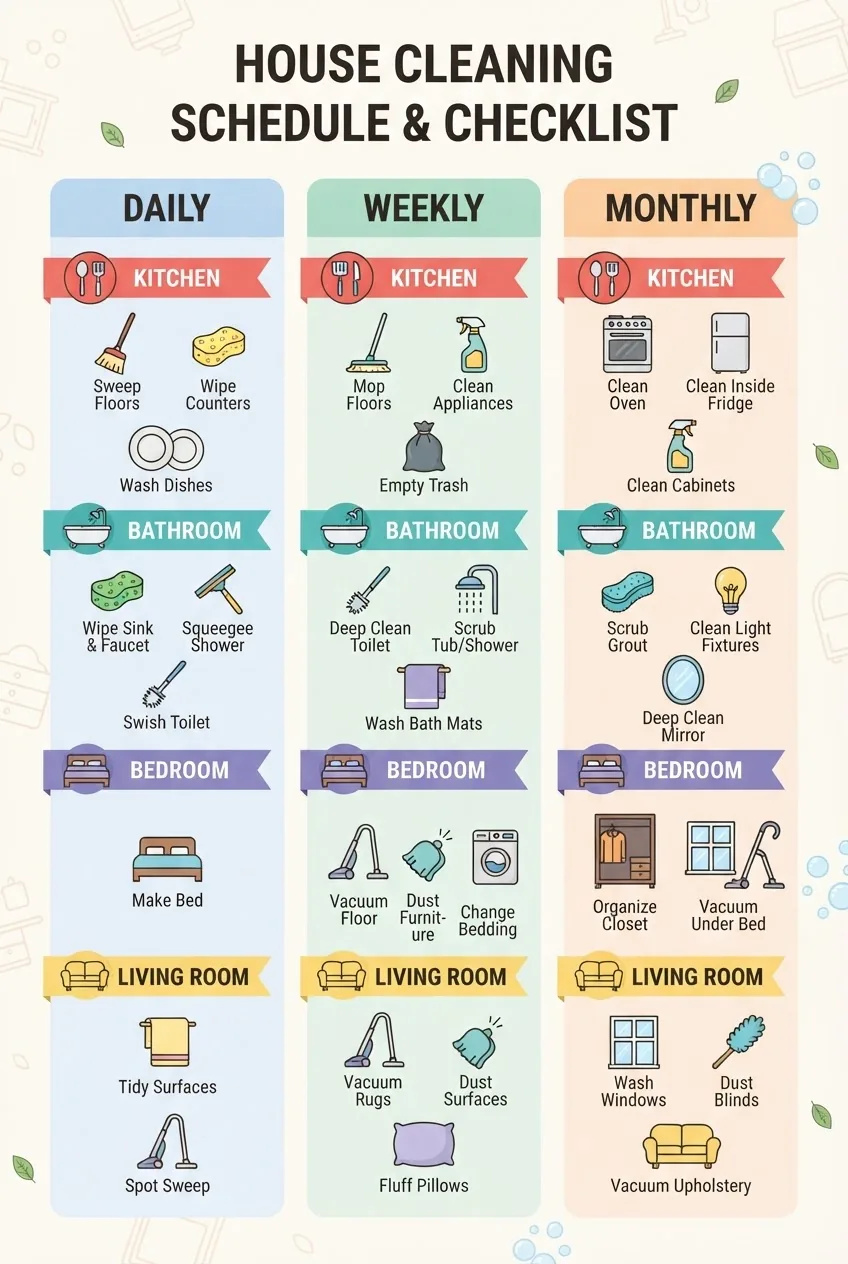
| Room | Daily | Weekly | Monthly |
|---|---|---|---|
| Kitchen | Wipe counters, wash dishes, spot sweep | Mop floors, clean stove top, wipe appliance exteriors | Clean oven interior, defrost and clean fridge, wash behind fridge |
| Bathroom | Wipe sink, quick toilet brush, hang towels to dry | Scrub tub/shower, mop floor, replace bath mats | Re-grout/caulk check, deep-clean grout, descale fixtures |
| Bedroom | Make bed, quick tidy, put laundry away | Change linens, dust surfaces, vacuum | Rotate mattress, deep-clean carpets, wash curtains |
| Living Room | Straighten cushions, clear clutter, spot sweep | Vacuum upholstery, dust electronics and shelves | Clean behind furniture, wash throws and slipcovers |
| Entry & Mudroom | Tidy shoes and coats, wipe door handles | Sweep, shake mats, organize storage | Inspect door seals, clean thresholds |
| Laundry Area | Clear lint, wipe machines | Clean lint trap and vacuum behind dryer | Run cleaning cycles for washer and dryer vent check |
For printable room-by-room lists you can cut out and add to your planner, use the printable home cleaning checklist templates.
Transition: a plan is only as good as your ability to stick to it. The next section shares practical motivation and habit-forming tips to keep your schedule consistent.
Tips for Staying Consistent and Motivated with Your Cleaning Schedule
Consistency is built from small wins, social accountability and simple incentives. Treat your cleaning schedule like a fitness regimen: short daily sessions, weekly workouts (longer sessions) and monthly “rest and review”.
- Set micro-goals: 10–15 minute cleaning bursts—use a timer to stay focused.
- Use habit stacking: attach a 5-minute tidy-up to an existing habit (e.g., after morning coffee).
- Track progress visually: put checkmarks on a printed calendar; seeing streaks motivates continuation.
- Make it social: assign tasks and swap responsibilities weekly; reward completion with a shared activity.
- Automate reminders: use alarms or the apps suggested in the planner section; for app suggestions, see top home maintenance apps.
- Be flexible: skip or swap tasks when life gets busy — the schedule should bend, not break.
- Learn from failures: when I skipped weekly cleaning for two weeks, I refocused by halving the tasks and rebuilding momentum with 15-minute boosts.
For more behavioral tips, read practical tips on how to keep your home clean.
Hands-On Guide: Step-by-Step Implementation
What follows is the practical “do this now” section: numbered steps with concrete times and actions so you can build and start using your schedule in one session.
Before you start
- Printed weekly planner or a Google Calendar ready to edit.
- Cleaning caddy with daily supplies (see Daily Supplies above).
- 30–90 minutes of uninterrupted planning time.
- Collect baseline data (30–45 minutes): Walk through your home with a notebook and list every daily surface and weekly area—time how long current cleaning takes for each room. Note special conditions: pets, allergies, infants. This helps set realistic task durations.
- Draft your daily checklist (15–25 minutes): Write 6–8 items that can be completed in 15–45 minutes total. Example: morning bed (3 min), kitchen wipe (5–7 min), evening dishes (15–20 min), nightly reset (10 min). Put this as a recurring daily task in your planner.
- Schedule weekly blocks (20–40 minutes): Allocate 1–3 hour blocks on specific days for grouped tasks: Monday—Bathrooms (60–90 min), Wednesday—Bedrooms (45–75 min), Saturday—Floors and Kitchen (90–150 min). Enter these as recurring events with reminders.
- Assign monthly tasks to a fixed weekend day (20 minutes): Choose one weekend each month (e.g., first Saturday) to do the monthly round. List tasks in order: HVAC vents (20 min), oven clean (45–90 min), windows (30–60 min).
- Create a catch-up rule (5–10 minutes): If a task is missed, move it to Sunday afternoon. Limit catch-up sessions to 90 minutes so they don’t overwhelm weekdays.
- Print or create laminated checklists (15–30 minutes): Use the printable templates — printable home cleaning checklist templates — or format a one-page daily & weekly checklist for the fridge. Laminate so you can mark with a dry-erase pen.
- Set reminders and automation (10–20 minutes): Add calendar reminders 15–30 minutes before each block. For shared homes, use a shared calendar so everyone sees assignments. Consider syncing with an app from top home maintenance apps.
- Run a 7-day pilot (7 days): Follow the plan exactly for one week. Track actual time spent on tasks; adjust durations where necessary. This pilot validates your schedule in real conditions.
- Review and optimize monthly (30 minutes): On the last day of each month, check missed tasks and reasons. Adjust weekly blocks or reassess ownership if you consistently run over time.
Common mistakes and how to avoid them
I once scheduled three large tasks on the same Saturday and burned out — now I cap weekly blocks at 2 hours per session. I also used vague task labels like “clean kitchen” and learned to break tasks into explicit actions (wipe counters, clean sink, sweep, mop). Finally, I used to skip tracking time; timing every task for a week revealed realistic durations and stopped over-scheduling.
Quick verification checklist
- Daily checklist exists and is visible (fridge or app).
- Weekly blocks placed in calendar with reminders.
- Monthly round scheduled on a fixed weekend.
- Supplies caddy stocked with microfiber cloths (6), multipurpose cleaner (one bottle), glass cleaner (one bottle), vacuum attachments accessible.
- Household chore ownership assigned and understood by all members.
When to call a professional
Call a professional when tasks exceed safety limits (roof/gutter work over ladders), when you detect structural issues during monthly checks (cracks, persistent leaks), or when specialized deep cleaning is needed (mold remediation, heavy biohazards). For recurring repairs or scheduled maintenance, consider handyman services and home maintenance subscription or review the professional house cleaning services checklist for scope and pricing.
If monthly inspections uncover health concerns (persistent damp, suspected mold), consult a specialist and refer to the healthy homes assessment checklist.
Summary: a predictable house cleaning schedule daily weekly monthly reduces stress, saves time over the year and surfaces problems early. Start small, use the planner, and iterate monthly.
Ready to adopt this system? Start with the 7-day pilot above and download the checklists to your phone or print them for the fridge. For more extensive maintenance templates, check the maintenance schedule template and program guide and the monthly home maintenance checklist PDF guide.