

By the end of this guide you’ll have a finished, customizable home maintenance checklist, a realistic monthly and yearly schedule, and a one-page verification checklist you can use immediately. Expect about 6–10 hours to set up the plan and 1–3 hours per month to maintain it; skill level: basic homeowner with occasional DIY tasks and an understanding of common tools.
Introduction to Home Maintenance Checklist
A consistent, prioritized home maintenance checklist turns reactive repairs into predictable upkeep and protects the largest investment most of us own. Home upkeep importance is more than aesthetics: preventive work extends system lifespans, reduces energy costs, and averts safety hazards. Homeowner responsibilities include routine inspections, seasonal tasks, and coordinating professional services for complex systems.
Benefits of a clear maintenance schedule include lower long-term repair costs, predictable budgeting for replacements, and improved resale readiness. According to a 2024 industry report, homeowners who follow a documented maintenance schedule reduce major repair incidence by an estimated 30% (source type: industry report). Variability exists by climate, home age, and materials: adapt the list to your region’s conditions and your home’s construction.
Before you start, gather the basics and set expectations: this is a practical, hands-on plan—not a deep repair manual or a cleaning-only program. If you’re new to upkeep, see our home maintenance tips for new homeowners for orientation.
How to Create an Effective Home Maintenance Checklist
Transition: With the goals and basics clear, follow the steps below to build a checklist you’ll actually use. This section is the core execution plan: identify systems, prioritize tasks, allocate time, and create a repeatable schedule.
Use the Complete Home Maintenance Checklist for Yearly and Monthly Care as your master reference when tailoring tasks to your house.
For skill-building and small repairs, consult the DIY home repair projects guide and our home improvement resources.
Before you begin the numbered steps, confirm your priorities by listing systems (HVAC, plumbing, roofing, electrical, appliances) and the most urgent risks (leaks, power issues, mold). Treat preventive maintenance like car servicing: checkpoints and parts replacement at set intervals prevent breakdowns.
Before you start
- Tools and materials: screwdriver set, adjustable wrench, ladder (extension to roof height), flashlight, replacement HVAC filters (1–3″ or specified MERV), silicone sealant, plumber’s tape, simple multimeter, gutter scoop, safety glasses, gloves.
- Documents: appliance manuals, warranty dates, previous inspection notes, utility bills (for energy tracking).
- Software: calendar (Google/Apple), task manager or a home maintenance app; sample templates: maintenance schedule template.
- Time block: schedule an initial 2–3 hour setup session and 1–2 hours monthly follow-up.
- Inventory systems and create zones. Walk each level of the house and list systems: HVAC (make/model), hot water heater, plumbing risers, main electrical panel, roof type, gutters, exterior cladding, deck or balcony, and appliances by location. Record ages and warranty end dates. Use a simple spreadsheet with columns: item, location, install date, last service, notes.
- Assign task frequency for each item. For every system, note tasks as monthly, quarterly, semiannual, or annual. Example: HVAC filter monthly (or every 3 months for 1–3″ filters depending on household), water heater inspection annual, roof inspection biannual. Back these choices with standards: According to a 2023 government housing guidance, smoke detection and CO alarms should be tested monthly and batteries replaced per manufacturer schedules (source type: government housing guidelines).
- Prioritize by risk and cost. Rank tasks by likelihood of failure and cost to repair if neglected. High risk/high cost (roof leaks, water intrusion) are top priority; low risk/low cost (touch-up paint) can be scheduled less frequently. Create a simple scoring matrix (1–5) for likelihood and impact and sum for priority.
- Create monthly and yearly task lists. Aggregate all monthly and annual tasks into two master lists. Use the lists later as the basis for recurring calendar events. For printable formats see our monthly maintenance checklist PDF.
- Block time on a calendar and automate reminders. Create recurring calendar events with 30–90 minute durations depending on task (e.g., filter change: 15–30 minutes; gutter clean: 1–2 hours). Sync reminders 1 week and 1 day before to prepare tools and parts.
- Assign ownership and budget. Decide who does what: homeowner, a family member, or a service. Set a maintenance budget: a common rule is 1%–4% of home value annually for maintenance; according to a 2022 industry report, many homeowners budgeting at least 1% of home value reduce emergency repair spend (source type: industry report).
- Document results and receipts. After each task, record completion date, notes, and any parts replaced. Keep receipts and warranty updates. A single folder or cloud storage organized by year reduces friction and supports resale documentation.
- Review and adjust seasonally. At the start of each season, review tasks and add/remove items based on weather, remodels, or system changes. Keep a running “to-evaluate” list for items that may need professional inspection.
- Train for basic diagnostics. Learn simple checks: how to test GFCI outlets, how to read HVAC filter types (MERV rating), how to find the main water shutoff, and how to use a multimeter for basic voltage checks. Allocate one afternoon to learn and practice these skills using guides like our essential home repair skills.
- Create a one-page emergency contact and service list. Include gas, electric, water shutoff instructions, and preferred contractors with phone numbers. Update this annually.
Transition: With the checklist structure set, the next section lists practical monthly tasks you should perform or schedule to keep systems healthy.
Monthly Home Maintenance Checklist
The following monthly home maintenance checklist is presented as a prioritized numbered list with time estimates and why each matters. For printable cleaning task support see printable cleaning checklist templates.
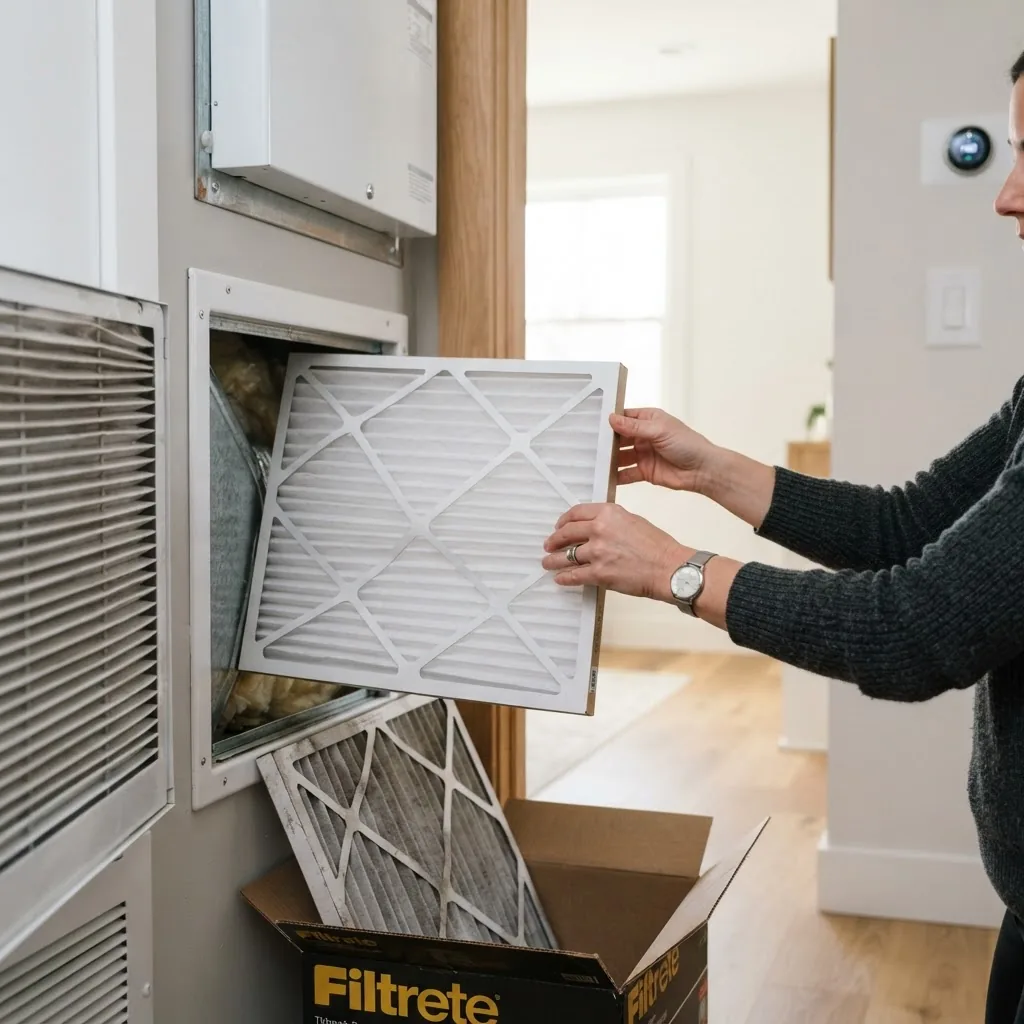
- Replace or inspect HVAC air filter — 15–30 minutes. Check filter monthly; replace every 1–3 months depending on filter thickness, MERV rating, and household factors (pets, allergies). Clean reusable filters per manufacturer directions.
- Test smoke and CO alarms — 5–10 minutes. Press test button monthly. Replace batteries yearly unless alarms use long-life batteries. According to a 2024 government housing safety report, monthly testing significantly reduces alarm failure risk (source type: government report).
- Check HVAC system for irregular sounds — 5 minutes. Listen during startup and shutdown. Note unusual vibration, grinding, or tripping thermostats—schedule service if detected.
- Inspect and clear dryer lint trap and duct outlet — 10–20 minutes. Empty lint trap every use; inspect duct outlet for residual lint monthly. Clean vent pathway annually to prevent fire—lint buildup is a common cause of dryer fire.
- Run water and inspect for leaks — 10–20 minutes. Check under sinks, around toilets, and near appliance supply lines. Look for new stains or damp smells; address immediately.
- Clean kitchen disposal and check plumbing drains — 10–15 minutes. Run disposal with cold water; freshen with ice and citrus. Use enzyme drain cleaner monthly for slow drains; avoid harsh chemicals that can damage pipes.
- Inspect exterior for new damage — 15–30 minutes. Walk the perimeter: look for peeled paint, siding cracks, or small gaps that invite pests or moisture.
- Check and reset ground fault circuit interrupters (GFCIs) — 5 minutes. Test bathroom, kitchen, garage, and exterior GFCI outlets monthly using the test button; replace faulty outlets promptly.
- Inspect attic and crawlspaces for moisture signs — 20–30 minutes. Look for condensation, mold, or rodent signs. Address ventilation or insulation shortfalls.
- Lawn and landscaping quick check — 20–40 minutes. Trim vegetation away from exterior walls and check grading for water flow away from foundation. Maintain irrigation controllers seasonally.
- Check water heater pressure relief and temperature settings — 10–15 minutes. Verify temp set to 120°F (49°C) to balance scald risk and energy efficiency. Test valve per manufacturer’s instructions annually; note any leaks.
- Inspect and lubricate door hardware — 10–15 minutes. Apply graphite or light oil to hinges and locks to prevent wear and sticking.
- Clean and inspect range hood filters and vents — 10–20 minutes. Grease buildup reduces efficiency and increases fire risk.
- Check refrigerator coils — 20–30 minutes. Vacuum coils quarterly or monthly if accessible to maintain efficiency.
- Review home safety kit and first-aid supplies — 10–15 minutes. Replace expired items and confirm flashlight batteries are fresh.
- Update records — 10–15 minutes. Log completed tasks and any part replacements, including dates and receipts for warranties.
Transition: Monthly habits reduce emergency repairs, but deep seasonal checks ensure long-term health; the next section organizes annual and seasonal tasks into a clear plan.
Annual and Seasonal Home Maintenance Checklist
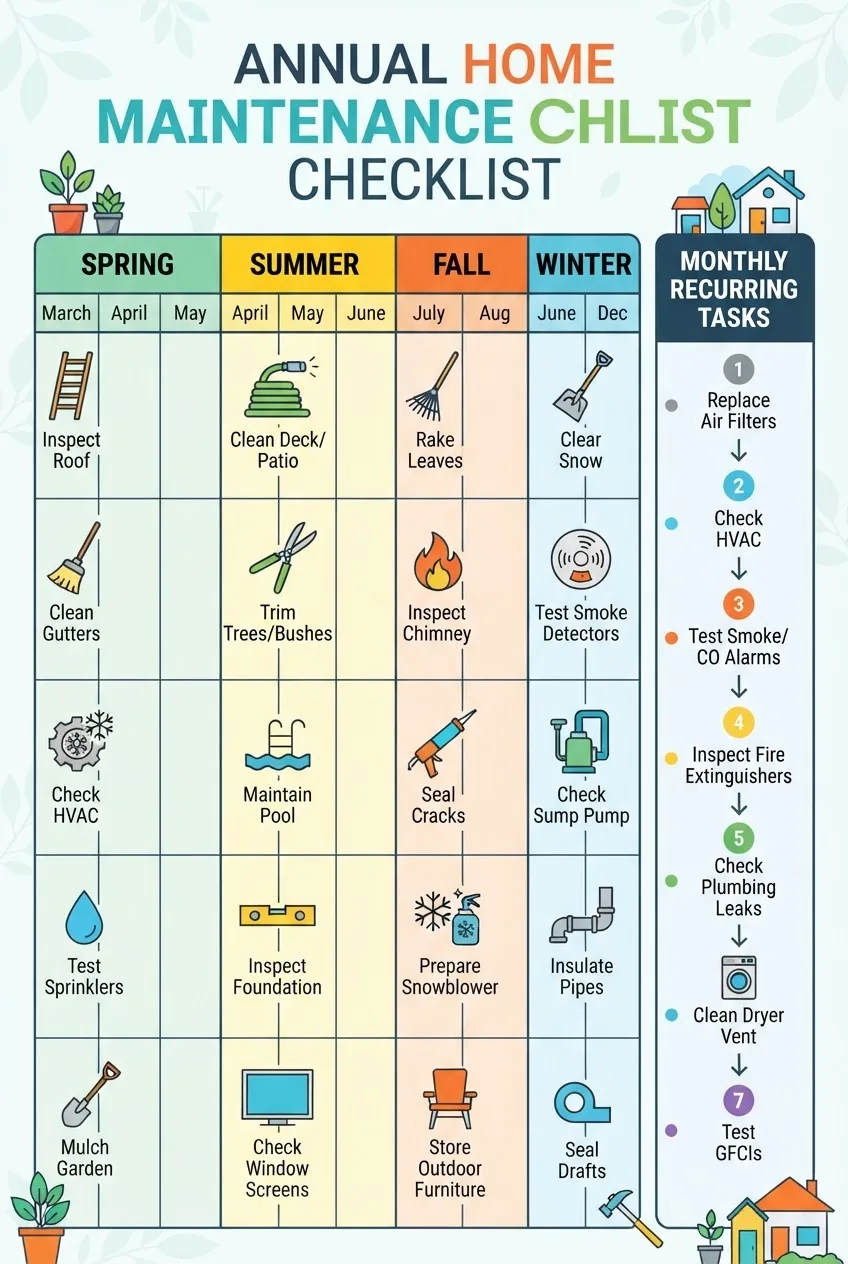
This yearly home maintenance checklist groups important inspections and maintenance by season for clarity and to match common weather cycles. For expanded inspection detail consult the comprehensive maintenance inspection. For seasonal deep-clean tasks also see our deep cleaning checklist which complements structural maintenance.
Also compare your property’s health to standards with a healthy homes assessment annually.
Spring
- Inspect roof and flashing — 1–2 hours. Look for missing shingles, cracked flashing, and soft spots. Schedule repairs for visible damage. According to a 2024 industry report, spring inspections catch winter damage early and prevent interior water damage (source type: industry report).
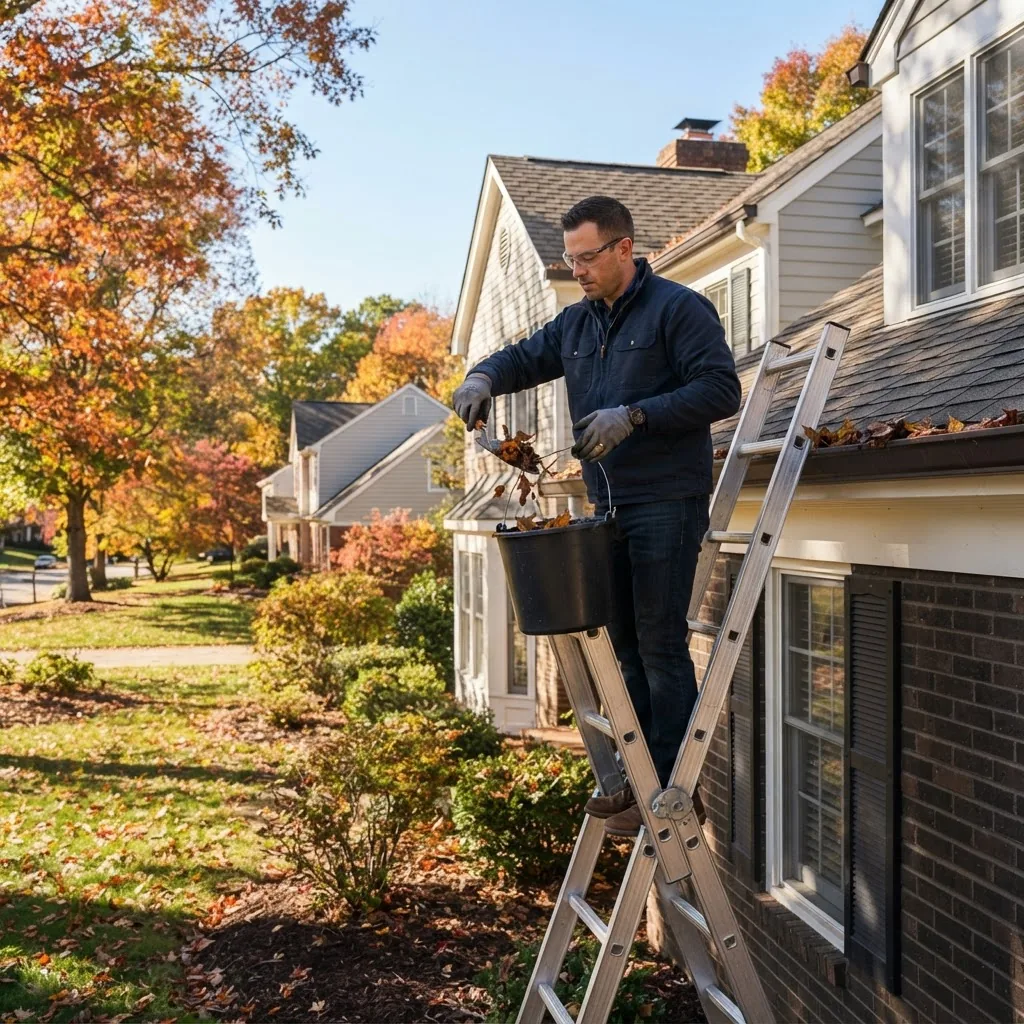
- Clean gutters and downspouts — 1–3 hours. Remove leaves and debris; check for secure hangers and proper downspout discharge. Consider installing or inspecting gutter guards.
- Service HVAC pre-season — 1–2 hours. Replace filters, clean condensate drain, and run cooling system. Hire professional HVAC tune-up annually if system warranty requires it.
- Check exterior paint and caulk — 1–3 hours. Touch up caulk around windows and doors to prevent water intrusion.
- Inspect deck and balconies — 1–2 hours. Tighten fasteners, check railings, and reseal wood as necessary.
Summer
- Service lawn irrigation and check timers — 30–60 minutes. Adjust schedules for peak heat and monitor for leaks.
- Inspect attic insulation and ventilation — 1–2 hours. Ensure ventilation fans operate and insulation is adequate to limit heat gain.
- Check exterior grading and drainage — 1 hour. Verify water flows away from foundation, repair as needed.
- Test backup power (generators) — 30–60 minutes. Run load tests and change oil per manufacturer’s service intervals.
Fall
- Fall roof and gutter inspection — 1–3 hours. Remove fallen leaves; confirm slope and fasteners. Prepare for winter storms.
- Service furnace and replace filters — 1–2 hours. Schedule professional inspection if last service was over 12 months ago.
- Winterize outdoor faucets and irrigation — 30–60 minutes. Drain lines, shut off valves, and insulate exposed piping.
- Chimney and fireplace check — 1–2 hours. Inspect for creosote and caps; schedule sweep if used regularly.
Winter
- Inspect for ice dams and roof load — 30–90 minutes. Clear roof edges where safe; monitor attic temps and insulation to reduce ice dams.
- Test heating system mid-season — 15–30 minutes. Verify consistent heat and check venting and carbon monoxide detectors monthly.
- Check plumbing insulation and monitor pipes — 10–20 minutes. For cold climates, allow faucets to drip during extreme cold to prevent freeze.
- Inspect sump pump and backup power — 30–60 minutes. Test operation and clean pump pit; replace battery backup every 3–5 years.
Transition: These seasonal tasks form the backbone of an annual plan; now let’s turn those into a practical, repeatable schedule with tools and templates.
Home Maintenance Schedule and Planning Tips
A household maintenance schedule converts checklists into action. Use time-blocking, recurring reminders, and a simple template. Below is an illustrative table showing a sample schedule and monthly time budgets. For subscription or outsourced help, consider handyman subscription services if you prefer recurring professional assistance.
| Period | Key Tasks | Estimated Time |
|---|---|---|
| Monthly | Filter checks, smoke/CO test, drain checks, exterior walkaround | 1–3 hours/month |
| Quarterly | HVAC basic inspection, appliance coil cleaning, GFCI tests | 2–4 hours/quarter |
| Seasonal | Gutter cleaning, roof check, furnace/AC service, irrigation prep | 2–6 hours/season |
| Annual | Comprehensive inspection, chimney sweep, major appliance service | 4–8 hours/year plus professional service |
Practical planning tips:
- Use recurring digital reminders and a shared calendar if multiple household members split tasks.
- Set priorities monthly: pick top two high-priority tasks and schedule others for lower-traffic weeks.
- Batch tasks geographically (e.g., all exterior checks in one afternoon) to save time.
- Adopt a rolling three-month review to adjust for unusual weather or wear.
Tools to stay organized include task managers and apps. See our list of home maintenance apps and our home maintenance projects suggestions to make upkeep manageable. If you prefer templates, grab the maintenance schedule template.
For authoritative guidance on safety and maintenance intervals consult the U.S. Department of Energy for HVAC efficiency tips (energy.gov), the U.S. Department of Housing and Urban Development for housing safety standards (hud.gov), and the National Fire Protection Association for smoke alarm recommendations (nfpa.org).
Transition: With scheduling in place, make sure you have the right tools and supplies on hand to execute tasks safely and efficiently.
Essential Tools and Supplies for Home Maintenance
- Basic hand tool kit — Phillips/flat screwdrivers, adjustable wrench, pliers, hammer. (Keep in a durable organizer.)
- Ladder — 6–8 ft step ladder and extension ladder rated for roof access; inspect for integrity before use.
- Flashlight/headlamp — LED, with fresh batteries.
- HVAC filters — stock standard sizes for your system; note MERV rating (MERV 6–13 common for homes).
- Plumbing basics — plumber’s tape, basin wrench, small hand auger (drain snake), silicone sealant.
- Electrical basics — non-contact voltage tester, multimeter, replacement GFCI outlets (if comfortable with minor wiring).
- Gutter tools — scoop, garden hose for flush, safety gloves, and eye protection.
- Safety gear — gloves, safety glasses, dust mask, ear protection.
- Consumables — replacement batteries, HVAC filters, light bulbs, basic repair parts (washers, screws, fuses).
- Record-keeping — labeled folder or cloud storage, maintenance log template.
Transition: Even with tools and schedule, common problems can still arise. The next section lists recurring issues and how maintenance prevents them.
Common Problems and How to Prevent Them with Maintenance
Regular maintenance prevents many issues. Below are common failure modes, symptoms, root causes, and preventive steps, with direct links to deeper resources like our common home maintenance problems for repairs.
- Leaky roofs and ceilings — Prevention: Keep gutters clear, inspect shingles in spring and fall, and repair flashing promptly. If you spot stains or sagging, act immediately to prevent structural rot or mold. Case example: I followed a seasonal plan and detected a small flashing gap in spring; a $450 repair avoided a $7,000 ceiling replacement.
- Clogged gutters and water intrusion — Prevention: Clean gutters twice yearly and after major storms. Install downspout extenders and correct grading if water pools near foundation. According to a 2022 industry report, unattended gutters are a leading cause of foundation moisture problems (source type: industry report).
- HVAC inefficiency and failures — Prevention: Replace filters per schedule, clear condensate drains, and get annual professional service. Keep outdoor units clear of vegetation. DIY tip: replace standard filters every 1–3 months and write the replacement date on the filter frame.
- Frozen or burst pipes — Prevention: Insulate exposed pipes, maintain consistent indoor temps, and know the main water shutoff location. In cold snaps, open cabinet doors under sinks and allow a slow drip to reduce freeze risk.
- Electrical hazards and nuisance tripping — Prevention: Test GFCIs monthly, label circuit breaker panel, and replace aging wiring found during inspections. If breakers trip repeatedly, stop and consult an electrician.
- Appliance breakdowns — Prevention: Clean coils, maintain seals, and schedule manufacturer-recommended servicing. Replace inexpensive seals and hoses at first sign of wear to prevent water damage.
- Mold and indoor air quality issues — Prevention: Control humidity (ideally 30–50%), maintain HVAC, and address leaks immediately. Use exhaust fans in wet rooms and inspect attic and crawlspaces seasonally.
- Exterior paint failure and rot — Prevention: Repaint and seal wood per product intervals (typically every 5–10 years), repair caulk and flashing, and keep vegetation trimmed away to allow surfaces to dry.
- Safety equipment failure — Prevention: Test alarms monthly and replace batteries annually; maintain fire extinguishers and check expiration dates.
- Pest entry and infestation — Prevention: Seal small gaps, maintain door sweeps, and remove debris around the foundation. Inspect annually for termite risk in susceptible regions.
For homeowners preparing to sell, prioritize structural and water-related issues; see our guide on what to repair before selling your home.
Transition: Practical experience teaches specific mistakes to avoid; the next section captures common missteps and how I personally learned to prevent them.
Experience examples
Scenario 1 — A homeowner followed this checklist and caught a slow attic leak during a spring inspection; they repaired flashing within two weeks and avoided insulation and drywall replacement. Scenario 2 — A different homeowner deferred filter changes and experienced a burned-out fan motor costing $1,200; regular filter replacement would likely have prevented it.
DIY vs Professional trade-offs
Do-it-yourself: filter changes, basic caulking, gutter clearing, and appliance coil cleaning are good homeowner tasks. Hire professionals for roof repairs, complex electrical work, gas line work, major HVAC servicing, and any task that involves safety risks beyond your skillset. If unsure, schedule an inspection—spending on proper diagnostics often reduces total repair cost.
For extended problem lists and repair solutions see our common home maintenance problems.
Conclusion and Maintaining Consistency in Home Upkeep
Summing up: a documented homeowner maintenance checklist converts irregular care into an efficient program. You should now have a working monthly plan, a season-by-season annual list, a tools inventory, and a scheduling method. Start by blocking two hours this weekend to implement the first monthly tasks and set recurring calendar reminders.
Limitations: adapt timelines by climate, home age, and local codes; these recommendations assume a typical single-family home in a temperate climate. According to a 2023 government housing guidance, individual intervals may vary by manufacturer and local standards (source type: government guidance). Update your checklist annually as systems change.
Call to action: create your personalized checklist now using the master template and sync it to a calendar. If you need a downloadable starter pack, use the monthly maintenance checklist PDF.
Common mistakes and how to avoid them
I once ignored a small drip in the garage for months; by the time I inspected the roof in spring the rot required a larger repair. Lesson: document small issues immediately and set a 30-day follow-up. I have also over-scheduled tasks: less is more—pick two high-priority tasks each month to ensure consistency.
Compact verification checklist
- Monthly: HVAC filter, smoke/CO test, visual plumbing check, dryer vent check.
- Quarterly: Vacuum fridge coils, test GFCIs, clean roof valleys.
- Seasonal: Gutters (spring/fall), HVAC service (pre-season), roof inspection (spring/fall).
- Annual: Comprehensive inspection, chimney sweep, major system service.
- Records: All tasks logged and receipts stored for the year.
When to call a professional
- Visible structural damage (sagging, large leaks, compromised beams).
- Electrical systems with repeated tripping, burning smell, or exposed wiring.
- Roof repairs involving steep slopes or beyond simple shingle replacement.
- Complex HVAC repairs, refrigerant handling, or gas line issues.
- Sewer line backup, significant foundation movement, or suspected mold growth requiring remediation.