
By the end of this guide you’ll have completed a full, prioritized spring clean house checklist covering every room, appliance and surface for a true seasonal deep clean. Expect to spend 1–3 full weekend days (8–20 hours total) for a typical 3-bedroom house; skill level: basic to intermediate homeowner (no specialist tools required).
This hands-on guide is written for someone about to do the work themselves: exact steps, time estimates, quantities, safety checks and when to call a pro are included.
Quick benefits & time-savings
- Cleaner indoor air and allergen reduction — ventilating and filter work can cut particulates (see EPA guidance).
- Fewer emergency repairs later — clearing drains, debris and checking seals prevents costly fixes.
- Time: following the checklist saves about 20–35% of repeat work versus ad hoc cleaning (practitioner estimate).
Introduction to Spring Clean House Checklist
Spring cleaning is your seasonal reset: deep-clean surfaces, refresh soft furnishings, clear out winter dust and inspect systems that benefit from lower indoor-humidity and warmer weather. This guide focuses on actionable, room-by-room steps and how to sequence them so you finish efficiently.
To extend your cleaning into broader home maintenance, consider the Complete Home Maintenance Checklist for Yearly and Monthly Care as a companion resource.
Preparing for Your Spring Cleaning
- Create a schedule and zones. Break the house into 2–4 zones per day (e.g., kitchen + one bathroom Day 1, bedrooms Day 2). Estimate time: 2–6 hours per zone depending on house size. Block times on your calendar with 15-minute buffer breaks.
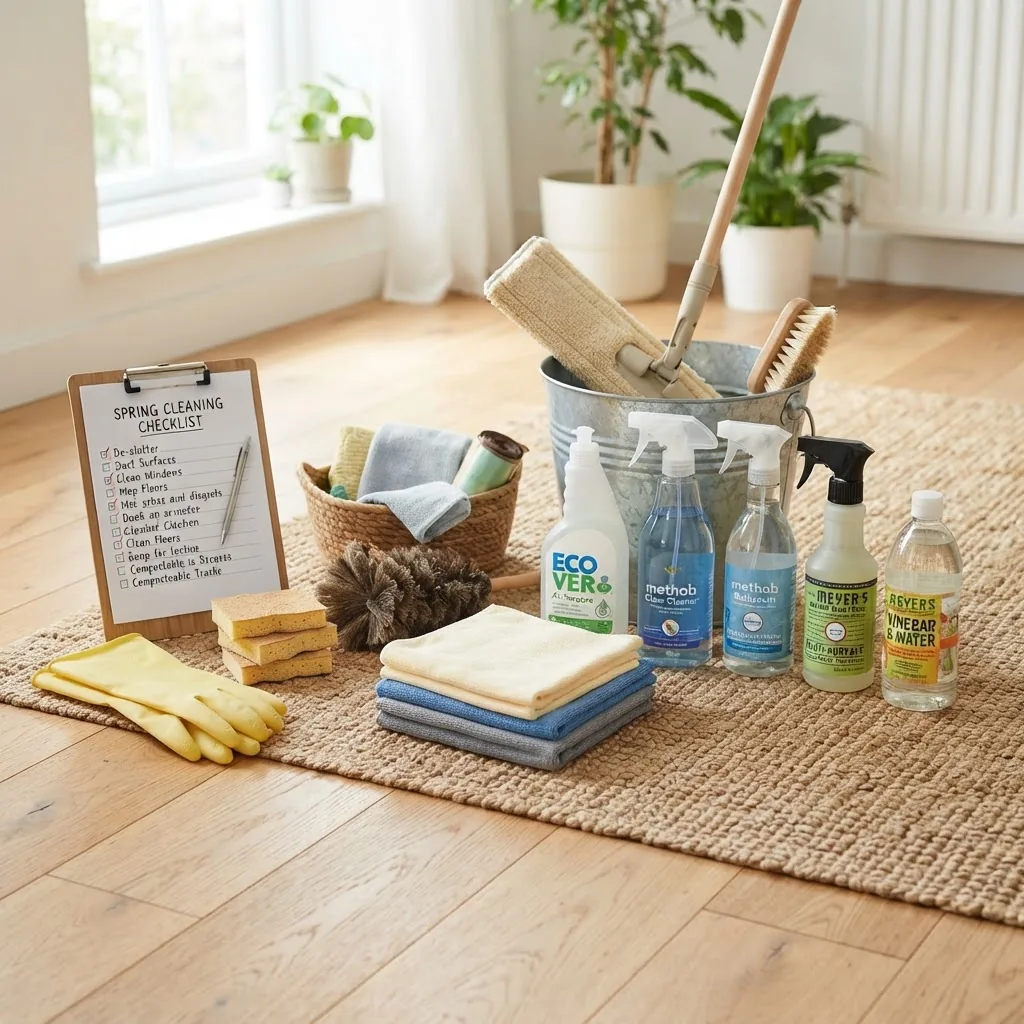
- Gather supplies and PPE. Minimum kit: 2 microfiber cloths/room, a mop (microfiber or steam), bucket, all-purpose cleaner, degreaser, glass cleaner, grout brush, vacuum with HEPA filter, disposable gloves, safety goggles. For upholstery and carpets: enzyme spot cleaner and a carpet spot brush.
- Declutter before cleaning. Sort items into Keep/Donate/Trash/Recycle boxes. Aim for one 30–60 minute declutter pass per room before moving to deep cleaning.
- Plan larger tasks. Schedule appliance deep cleans (fridge/freezer defrost, oven self-clean or manual cleaning), filter replacements (HVAC, range hood) and upholstery steaming. Note tasks requiring a professional and schedule them early.
- Download templates and apps to track work. Use scheduling templates and the top home maintenance apps to create reminders and assign tasks to household members.
- Safety checks and ventilation. Open windows where possible, run exhaust fans, and follow label instructions for chemicals. According to a 2024 EPA report on indoor air, ventilating while cleaning reduces airborne pollutant exposure and improves effectiveness of wet cleaning methods.
- Assign roles. Decide who does heavy lifting, who handles trash sorting, and who operates powered equipment. Pair tasks by skill: heavier lifts and ladder work for the most experienced person.
- Tackle simple repairs early. For minor fixes you plan to do yourself, review the DIY home repair projects guide before starting and schedule them alongside cleaning.
Room by Room Spring Cleaning Checklist
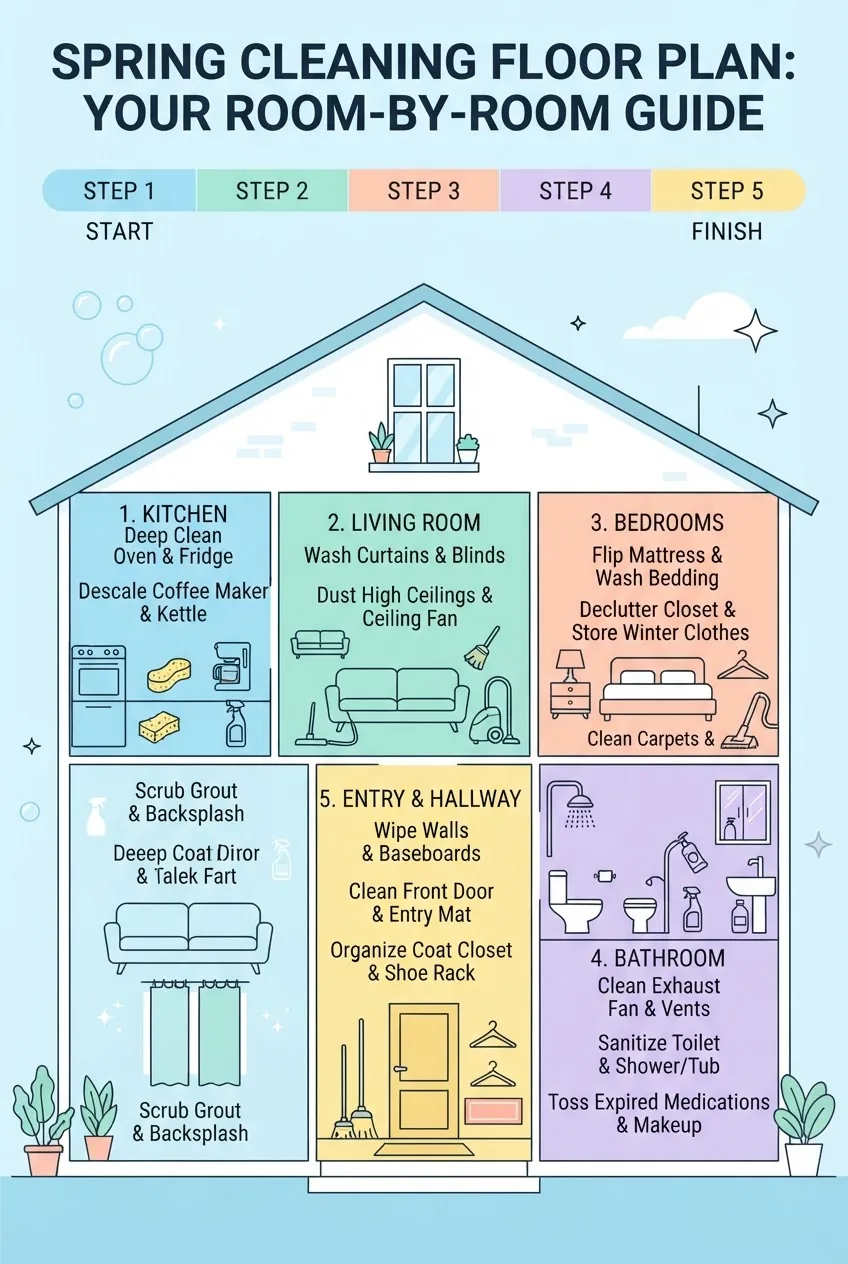
Follow the numbered steps below; each room has ordered tasks starting with dust and declutter, then surfaces, soft goods and finally floors and ventilation. Use the detailed deep cleaning checklist as a complementary reference for procedural cleaning checklists and printable templates.
detailed deep cleaning checklist
-
Kitchen Spring Cleaning Tasks

- Empty and declutter cabinets (30–60 minutes). Remove everything, sort into Keep/Donate/Trash, wipe shelf interiors with warm water and mild detergent, dry fully (use a towel then air-dry 30 minutes). Time per cabinet: 10–15 minutes.
- Degrease range hood and backsplash (15–30 minutes). Remove filter; soak in hot water + 2 tbsp baking soda per liter for 30 minutes, scrub with brush. For backsplash, use a 1:1 vinegar-to-water spray for tile or a degreaser for baked-on grease.
- Deep clean oven and stovetop (60–120 minutes). Use oven self-clean if available (follow manufacturer instructions) or a paste of baking soda + water applied overnight, then wipe and finish with vinegar spray. For gas burners, remove caps and soak 30 minutes.
- Defrost and clean refrigerator/freezer (60–90 minutes + cooldown). Unplug if manual defrost; move perishables to cooler. Remove shelves, soak in warm soapy water. Wipe interior with 1 tbsp baking soda per quart of water, dry, and replace items sorted by expiry.
- Sanitize sink and garbage disposal (15–20 minutes). Scrub sink with cream cleanser, flush disposal with ice cubes + lemon peels; run cold water for 30 seconds. Spray faucet fixtures with a 1:1 vinegar solution and buff with microfiber.
- Check appliances and seals (15 minutes each). Wipe door seals on dishwasher and fridge; inspect for cracks and mold. Replace worn seals or schedule service if leaking.
- Cabinet fronts and hardware (20–40 minutes). Wipe cabinet faces from top to bottom, clean knobs with disinfectant. For wood, use a manufacturer-recommended wood cleaner (1–2 teaspoons per liter).
- Clean small appliances (20–40 minutes). Descale kettle with 1:1 vinegar and water boil then rinse; wipe coffee maker reservoir and run a water-only cycle; clean toaster crumb trays.
- Floor to ceiling finish (30–45 minutes). Vacuum crevices and mop. For tile grout, apply grout cleaner, scrub with stiff brush, and rinse. For wood, use a damp microfiber mop only; avoid standing water. Replace HVAC/range hood filters if due.
- Waste sorting and recycling (15 minutes). Dispose of old food responsibly, compost organics if available, recycle packaging by municipality rules. Bag hazardous items (e.g., old batteries) separately for proper disposal.
-
Bathroom Spring Cleaning Tasks
- Declutter counters and medicine cabinets (15–30 minutes). Dispose of expired medications via take-back programs; sort cosmetics and toiletries into Keep/Donate/Trash.
- Ventilation and mold inspection (10–15 minutes). Run and test exhaust fan; remove vent covers and vacuum accumulated dust. According to a 2024 public health guidance, reduce bathroom moisture to limit mold growth; if mold covers >1 sq ft, consider calling a professional.
- Tile, grout and shower cleaning (30–60 minutes). Apply a bleach-free mold remover or 1:3 hydrogen peroxide solution to grout, wait 10 minutes, scrub with nylon brush. Rinse and squeegee. For stubborn grout staining, repeat or use specialized grout paste.
- Descale fixtures and showerhead (20–30 minutes). Soak showerhead in white vinegar for 1 hour or use a CLR-type descaler per label. Wipe faucets with vinegar or a mild citric cleaner and buff dry.
- Toilet deep clean (15–20 minutes). Apply toilet bowl cleaner under the rim, scrub thoroughly, and wipe the exterior with a disinfectant paying attention to base and tank lid.
- Clean cabinets and mirrors (15–25 minutes). Remove drawers and wipe interiors; clean mirrors with glass cleaner or 50/50 vinegar/water and lint-free cloth.
- Floor and vent cleaning (20–30 minutes). Vacuum floor and mop; check the bathroom vent for lint/dust and clean as needed; replace exhaust fan if it’s noisy or underperforming.
- Laundry and linen refresh (10–15 minutes). Wash shower curtains and bath mats on hot cycle if material allows; replace or clean bath rugs and liners.
- Safety check (5 minutes). Confirm non-slip mats, test GFCI outlets, and ensure a working smoke detector nearby.
-
Bedrooms Spring Cleaning Tasks
- Strip beds and deep-wash linens (30–60 minutes). Wash sheets, mattress protectors and duvet covers on the hottest setting allowed by labels; air-dry in sun when possible for natural sanitizing (sunlight reduces microbes).
- Mattress care (30–40 minutes). Vacuum mattress surface with upholstery tool, spot-treat stains with enzyme cleaner (follow instructions), and rotate or flip if designed for it. For mattress odors, sprinkle 1 cup baking soda per twin/full, leave 4 hours, then vacuum thoroughly.
- Closet purge and organization (45–90 minutes). Use the one-year rule: donate items not worn in 12 months. Clean shelves, vacuum floors, and install or renew storage solutions (shelves, boxes). Label donation bags immediately.
- Dust high to low (20–30 minutes). Dust ceiling fans, crown molding and tops of wardrobes, then furniture surfaces, finishing with baseboards and vents. Use a microfibre duster or electrostatic cloth to trap dust.
- Window and blind cleaning (30–45 minutes). Wipe window tracks with a toothbrush dipped in detergent, clean glass with glass cleaner, and dust or vacuum blinds. For curtains, check care tags — machine wash or steam clean accordingly.
- Soft furnishing care (20–40 minutes). Vacuum upholstery and under cushions, spot-treat stains, schedule steam clean for sofas if heavily used (every 12–24 months).
- Floor care (20–45 minutes). For carpet: vacuum thoroughly, consider spot shampooing (enzyme cleaners for organic stains). For hard floors: sweep, then mop with manufacturer-recommended cleaner.
-
Living Areas Spring Cleaning Tasks
- Declutter and sort (30–60 minutes). Remove items that accumulated over winter—clear coffee tables, media consoles and shelving. Use a temporary staging box for items that have no place and sort later.
- Upholstery clean (30–90 minutes). Vacuum sofas and chairs with upholstery attachment. Test a hidden patch with your cleaner; for removable covers, wash per label. Schedule professional steam cleaning for heavy soils (every 12–24 months).
- Carpet deep clean (60–180 minutes). Spot-treat stains (enzymatic cleaners for biological stains), then use a rented upright cleaner or professional service. For a DIY rental: use two passes (hot water extraction) and aim for 20–30 psi water pressure; allow 12–24 hours to dry.
- Window washing and frame cleaning (30–90 minutes). Clean interior and exterior windows if accessible. Wipe frames and sills of dirt and pollen; lubricate sash hardware if sticky.
- Curtain and blind refresh (30–120 minutes). Vacuum curtains with upholstery brush, wash machine-safe options, and steam-clean or spot-clean others. For blinds, lower and wipe each slat; use a microfiber glove for speed.
- Electronics and media centers (20–40 minutes). Unplug devices, dust vents, use compressed air for ports, and wipe screens with screen cleaner. Label cords if unknown and reorganize behind consoles to improve airflow.
- Light fixtures and ceiling fans (20–40 minutes). Dust and then wipe fixtures with a damp cloth. Replace bulbs with LED equivalents and check dimmer switches for dust buildup.
- Air quality tune-up (15–30 minutes). Replace HVAC and portable air purifier filters as recommended. For guidance on indoor air quality, consult the EPA’s indoor air resources.
-
Additional Areas (Hallways, Entryways, Garage)
- Entryway and hallway refresh (30–60 minutes). Sweep/vacuum thresholds, clean mats, and reorganize shoe storage. Wipe scuff marks from baseboards and door frames.
- Garage declutter and organization (90–240 minutes). Remove everything, sweep, sort tools into keep/donate/dispose piles. Install wall hooks or shelving for bikes and large tools. For disposal of hazardous liquids, follow local regulations.
- Floor, threshold and exterior door checks (30–60 minutes). For concrete garage floors, apply degreaser to oil stains and scrub; seal cracks if visible. Check weather stripping and replace if cracked.
- Shoe and coat storage optimization (15–30 minutes). Create a dedicated zone for daily items; use labeled bins for seasonal storage. Donate shoes that are damaged or unused.
- Fixtures and lighting (15–30 minutes). Dust and wipe light fixtures, replace burnt-out bulbs and test exterior lights for operation.
- Check for common issues and repairs. While cleaning, note issues like peeling paint, small leaks, or warped trim. For a list of frequent problems discovered during cleaning, consult the common maintenance problems and prioritize fixes. For market-ready prep, also consider reviewing home repairs before selling.
Tips for Effective Spring Deep Cleaning
Use these practitioner-tested tips to speed work, reduce chemical exposure, and make results last longer.
- Work top to bottom and dry to wet. Always start with dusting ceilings and fixtures, then work down to counters and floors — this prevents re-cleaning surfaces.
- Pre-treat and soak. Apply baking soda paste or enzyme cleaner to stains and grout first, then move to other tasks while it works—most pre-treats need 10–60 minutes.
- Use the right tool for the surface. Microfiber for glass and electronics, nylon brush for grout, brass brush not recommended on painted surfaces. For delicate finishes, use pH-neutral cleaners listed by the manufacturer.
- Choose green cleaners strategically. Many natural products (vinegar, baking soda, citric acid) are effective for light soils and safer for indoor air; however, for heavy grease, a commercial degreaser or enzyme product is more effective. Compare trade-offs: green cleaners minimize VOC exposure but may require more elbow grease. For official guidance on product safety and alternatives, see the EPA’s guidance on safer cleaning.
- handyman subscription services — use these when tasks require trade professionals (HVAC servicing, major mold remediation, electrical work).
- Time-box tasks. Set 25–45 minute timers for each task to keep momentum. Example: 45 minutes for kitchen cabinet interiors, 30 minutes for bathroom grout—take 10–15 minute breaks between major tasks.
- Teamwork: pair and pass. One person declutters while another dusts; rotate to prevent fatigue. For families, assign kids clear responsibilities like sorting toys or wiping baseboards.
- healthy home assessment — use as a follow-up to verify that cleaning reduced hazards and improved standards.
- Record and repeat. Mark completed tasks on a printable checklist and schedule follow-ups: filters every 3 months, carpets yearly, curtains every 6–12 months.
- Follow safety and label instructions. Never mix bleach with ammonia or vinegar. Wear gloves and goggles for chemical use; ventilate areas and test cleaners on hidden patches.
Maintaining Your Clean Home After Spring Cleaning
A successful spring deep clean is a seasonal investment; maintenance makes it last and reduces future workload.
- Daily habits (5–15 minutes/day): wipe high-touch surfaces, put away clutter, empty sink, quick sweep of entryway.
- Weekly tasks (30–90 minutes/week): vacuum main traffic areas, mop kitchen and bathrooms, laundry and linen rotation.
- Monthly tasks (30–120 minutes/month): replace HVAC/air purifier filters as needed, clean oven drip pans, inspect caulking and seals. Consider downloading a monthly maintenance checklist PDF to keep consistency.
- Seasonal tasks: repeat targeted deep clean every 3–6 months for high-use rooms; inspect roof gutters each spring and fall.
For a structured follow-up plan and inspection priorities use the maintenance inspection checklist. For ongoing projects that reduce workload, see home maintenance projects. When you need a compact monthly reference, download the monthly maintenance checklist PDF.
Printable Spring Clean House Checklist and Resources
Below are quick resources and templates to help you run the project: print them, assign tasks and track completion.
- printable cleaning checklists — daily, weekly and deep clean templates you can print and tick off.
- home improvement resources — curated repair tutorials, how-to videos and parts sources.
- Top home maintenance apps to schedule recurring tasks and set reminders: try the options listed in the top home maintenance apps for scheduling and management to automate follow-up work.
- External authority references:
- EPA indoor air quality guidance — ventilation and filtration recommendations.
- CDC healthy homes information — cleaning, mold, and hazard reduction tips.
- ISSA industry resources — professional cleaning standards and guidance.
Conclusion and Next Steps for Home Maintenance
You now have a prioritized, room-by-room action plan for spring deep cleaning plus tools and links to keep your home maintained. Finish the checklist, schedule recurring items in your calendar, and use the linked resources to address larger maintenance projects and inspections. Ready for ongoing upkeep? Start by printing the checklist and choosing two tasks to complete this weekend.
When to call a professional
- Mold covering >1 sq ft or hidden leaks — professional remediation.
- HVAC or electrical issues discovered during cleaning — licensed technician.
- Large-area carpet or upholstery restoration after floods — professional cleaner.
Hands-On Steps and Practical Checklist
Before you start
- Prerequisites: basic cleaning supplies, access to washing machine, vacuum with attachments, a ladder (6 ft max), PPE (gloves, goggles), trash bags and donation boxes.
- Materials list: microfiber cloths (8), bucket, mop, sponge, grout brush, enzyme stain remover, baking soda (2 kg), white vinegar (1L), all-purpose cleaner (1L), degreaser (250 mL), HEPA vacuum bag/filter spare.
- Time plan: Block two 4–6 hour weekend days for a 3-bed house; smaller homes can do it in one long weekend.
- Zone and schedule the house. Create 2–4 zones, assign a date/time per zone, and set a 45-minute timer per focused task block. Example: Day 1 Morning—Kitchen (4 hours), Day 1 Afternoon—Bathroom 1 (2 hours).
- Declutter and remove everything removable. Start each room by emptying surfaces, counters and hutches. Box items into Keep/Donate/Trash/Recycle, label boxes immediately and move donate boxes to trunk.
- Dust top-down and vacuum. Dust ceiling fans and high shelves first (use an extension duster), then work down walls to baseboards. Vacuum with brush attachment; set vacuum height appropriate to carpet pile (medium setting).
- Pre-treat stubborn soils. Apply baking soda paste (1 cup baking soda + 2–3 tbsp water to form paste) on oven stains or grout; let sit 30–60 minutes before scrubbing.
- Tackle kitchen intensive tasks. Follow the Kitchen checklist above: degrease hood, deep clean oven, defrost fridge, and sanitize disposal. Time highest priority appliances first.
- Sanitize bathrooms thoroughly. Apply cleaners to grout and shower components early so dwell time works while you clean mirrors, counters and floors.
- Refresh soft goods. Wash curtains and linens at hottest label-safe setting; mattress baking soda treatment with 4-hour dwell and vacuuming afterwards.
- Finish with floors and ventilation. After top-to-bottom cleaning, vacuum and mop floors. Replace HVAC and purifier filters, and run fans for 30–60 minutes to clear fumes.
- Final inspection and touch-ups. Walk each room with checklist in hand, inspect corners and inside drawers, and fix missed spots (average 15–30 minutes per room).
Common mistakes and how to avoid them
I’ve learned the hard way that rushing leads to repeated work. I once cleaned baseboards before dusting higher shelves and had to re-clean—always do top-to-bottom. I also tried a DIY solvent on painted cabinets that dulled the finish; test cleaners on a hidden patch. And I’ve rented carpet machines without pre-treating stains—pre-treat for 20–30 minutes to avoid multiple passes.
Compact verification checklist
- All rooms: dusted top to bottom, vents cleaned, windows washed, and floors vacuumed/mopped.
- Kitchen: fridge emptied/cleaned, oven cleaned, range hood filter cleaned, cabinet faces wiped.
- Bathroom(s): grout treated, showerhead descaled, exhaust fan cleaned, waste sorted.
- Bedrooms: linens washed, mattress vacuumed and rotated, closet decluttered.
- Living areas: upholstery vacuumed, carpets spot-treated or scheduled for cleaning, media centers dust-free.
- Garage/Entry: hazardous materials sorted, floors swept, storage organized.
When to call a professional
- Large mold growth, repeated water intrusion, electrical panel issues, or persistent HVAC problems — call licensed remediation, plumber, electrician, or HVAC technician.
- For major carpet restoration or fabric cleaning after flooding/water damage, contact a certified restoration service.