By the end of this guide you’ll have a ready-to-use weekly house cleaning plan, a room-by-room checklist, and a kitchen deep-clean routine you can complete in one typical weekend (or spread over weeknights) — total initial setup takes 60–120 minutes; weekly maintenance requires 2–4 hours. Skill level: beginner to experienced homekeeper.
weekly house cleaning is the backbone of a calm, healthy home: you will learn how to organize cleaning days, prioritize tasks, and adopt sustainable housekeeping habits so the work stays manageable and consistent.
Before you start
- Clear a 60–90 minute block to draft your first weekly plan and assign tasks
- Gather basic supplies (see the Tools and Supplies section later)
- Print or open a planner page for a 7-day schedule; use a phone app if preferred
- Decide household rules (shoes off, dishes in dishwasher) to reduce workload
Introduction to Weekly House Cleaning
Weekly house cleaning produces measurable benefits: cleaner indoor air, fewer allergens, and a lower chance of pest attraction. Regular weekly routines reduce the time needed for deep cleans and cut stress because tasks are predictable and divided. Weekly cleaning also anchors a broader home maintenance program such as the Complete Home Maintenance Checklist for Yearly and Monthly Care, which schedules monthly and seasonal tasks.
Weekly cleaning supports healthy homes: it keeps high-touch surfaces hygienic, laundry under control, and kitchens safe for food preparation. For readers interested in inspection standards, weekly efforts pair well with a comprehensive maintenance inspection checklist and feed into a healthy homes assessment checklist.
Weekly routines are like weekly exercise for your home: small, repeated efforts keep the whole system healthy and make seasonal deep cleans manageable rather than monumental.
Transition: Now we’ll move from why weekly cleaning matters to exactly how to create a schedule you can follow consistently.
How to Create an Effective Weekly House Cleaning Schedule
Follow these step-by-step actions to build an efficient and realistic weekly cleaning plan that balances energy, time, and household needs.
- Assess your home and priorities — Walk each room for 15–30 minutes and note high-traffic or problem areas (kitchen counters, entryway, pet zones). Record how many people and pets live there, and whether anyone has allergies. Use this to decide frequency: high-traffic surfaces = weekly; low-use storage = monthly. According to a 2023 public health guidance from a government health agency, high-touch household surfaces should be cleaned at least weekly and more when occupied by ill members (CDC cleaning & disinfection guidance).
-
Set time blocks — Choose one or two cleaning days (example: Saturday morning 9–12 or Monday/Thursday 30–60 minutes). For most 3-bedroom homes, plan 2.5–4 hours weekly total. Use time-blocking to match energy: schedule heavy tasks (vacuuming, bathroom scrubbing) when you have most energy; reserve quick tidy tasks for evenings.
Tip: Use a timer (25–45 minute sprints) with 5–10 minute breaks to avoid cleaning fatigue. Time management research shows shorter focused sprints increase task completion and reduce perceived effort (Harvard Business Review on productivity).
- Allocate room owners and roles — Assign rooms to household members by ability and time: e.g., adult A: kitchen and floors; adult B: bathrooms and laundry; kids: toy pickup and dusting. If living alone, assign blocks of tasks by day. Keep tasks small (10–30 minutes) for higher completion rates.
- Create a day-by-day plan — Break weekly tasks across seven days: daily tidying + 1–2 bigger tasks per day. Example: Monday—bathrooms; Tuesday—kitchen surfaces & dishes; Wednesday—vacuum living areas; Thursday—bedrooms; Friday—laundry + linens; Saturday—floors & trash; Sunday—declutter & planning. This keeps each day under 60–90 minutes.
- Prioritize tasks — Rank tasks A (must do weekly), B (biweekly or as needed), C (monthly/seasonal). A-example: empty trash, clean high-touch surfaces, sweep floors. B-example: dust blinds, clean baseboards. C-example: clean oven interior, wash windows. Quick rules: A tasks take ~70% of your weekly time.
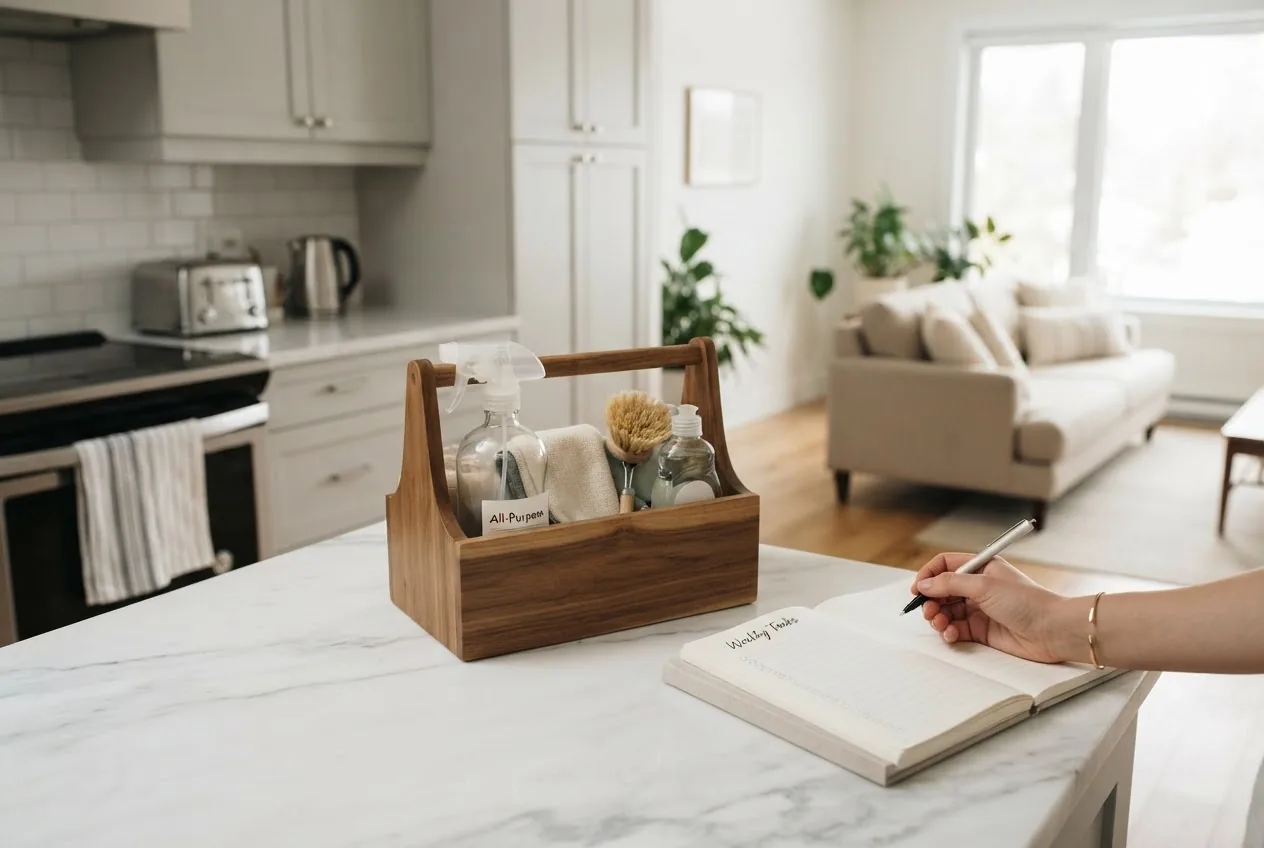
- Choose tools and supplies — Prepare a weekly caddy with microfiber cloths, multipurpose cleaner, disinfectant, broom, vacuum, mop, and gloves. See the Tools and Supplies section for product recommendations and certified eco-labels like Green Seal (Green Seal).
- Integrate laundry management — Schedule laundry day(s) to avoid buildup: 1–2 loads on laundry day for a 2–4 person household. Fold and return within 24 hours to avoid rework. Use mesh bags for delicates and a timer reminder to remove clothes when cycle ends.
- Time each task and adjust — During the first 4 weeks, track actual time spent per task. If bathrooms take 45 minutes but you scheduled 20, split them into two shorter tasks (clean sink/toilet one day, shower another).
- Make it sustainable — Keep the plan simple: no more than 6 assigned weekly tasks per person. Use positive reinforcement: add rewards on completion (coffee, a walk). Habit research suggests pairing new routines with an existing cue (e.g., after breakfast) speeds adoption.
- Use tech to stay on track — Use a calendar, reminders, or home maintenance apps for scheduling to automate reminders and track completion. Test 1–2 apps before committing.
Common mistakes and how to avoid them
I used to plan a marathon “clean everything” Saturday and burned out by midday — the house still needed work Sunday. Splitting tasks into 30–60 minute blocks and spreading heavier chores prevented fatigue and improved consistency.
Another mistake I made was underestimating laundry time: I scheduled wash but forgot folding time. Now I schedule 60–90 minutes for each laundry session (wash, dry, fold, put away).
Quick verification checklist
- Each room has 1–3 weekly tasks assigned
- Time blocks total 2–4 hours/week for a 3-bedroom home
- Cleaning caddy assembled and stored in an accessible place
- Family roles or app reminders set
When to call a professional
- Carpet steam cleaning for deep stains or allergens beyond household equipment
- Mold remediation beyond surface cleaning
- Major appliance repairs discovered during cleaning — consider professional support
Transition: With your schedule and step routine created, use the next section to map concrete room-by-room tasks across the week.
Weekly House Cleaning Schedule: Room-by-Room Breakdown
This section gives an explicit, day-by-day plan you can copy. Times below are realistic averages; adjust for home size and household members. For printable versions see printable home cleaning checklist templates and, for deeper tasks beyond weekly scope, consult the deep cleaning house checklist.
| Day | Primary Rooms | Tasks (time estimate) |
|---|---|---|
| Monday | Bathrooms | Clean sinks & mirrors (8–10 min), disinfect toilet (10–12 min), wipe shower/tub (10–15 min), empty trash (2 min). Total 30–45 min. |
| Tuesday | Kitchen | Wipe countertops & backsplashes (10 min), load/unload dishwasher (5–10 min), sweep floor (8–10 min), spot clean appliances exteriors (5–10 min). Total 30–45 min. |
| Wednesday | Living room / Entry | Tidy surfaces (10 min), dust electronics & shelves (10–15 min), vacuum/sweep (15–25 min), straighten cushions (5 min). Total 30–55 min. |
| Thursday | Bedrooms | Change bedding if scheduled (15–20 min), dust surfaces (10 min), vacuum/mop floors (15–25 min), declutter surfaces (10 min). Total 40–60 min. |
| Friday | Laundry & Linens | Wash 1–2 loads (wash/dry cycles unattended; fold & put away 30–45 min), replace towels and kitchen cloths, disinfect hamper rims. Total active 45–60 min. |
| Saturday | Floors & Trash | Deep vacuuming or sweeping (25–40 min), mop hard floors (15–20 min), empty all trash bins, recycling, compost (10–15 min). Total 50–75 min. |
| Sunday | Declutter & Planning | 20–30 minute declutter session (kids’ toys, mail), quick dusting (10 min), plan next week’s tasks and shopping list (15–20 min). Total 45–60 min. |
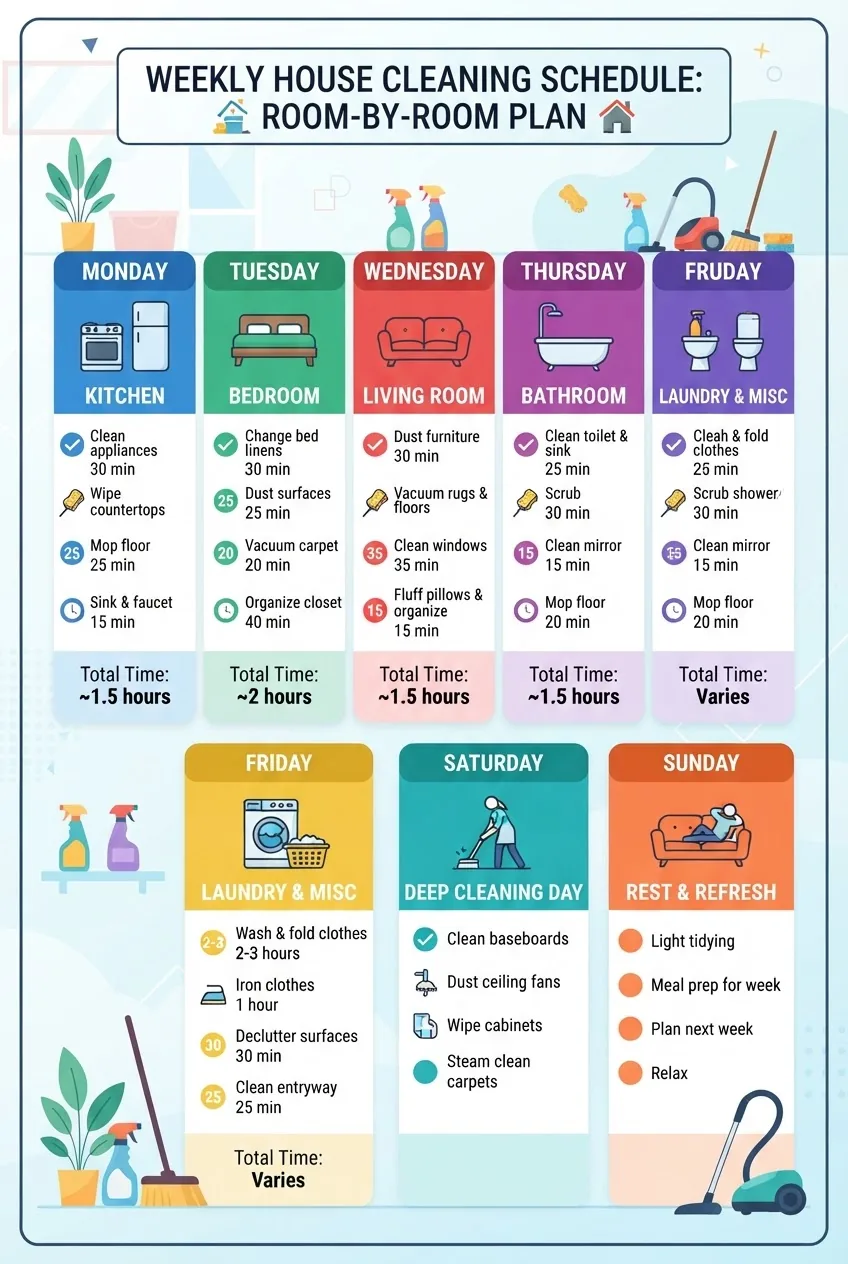
The table above is a practical default. Adjust frequencies: if you have pets, vacuum 3×/week; if you cook daily, wipe counters nightly and deep clean the sink weekly. For additional schedule formats, check the house cleaning schedule guide.
Room-specific quick notes:
- Entryway: set a 5-minute nightly reset — shoes, coats, and mail.
- Kids’ rooms: 10-minute toy pickup at night keeps weekly jobs short.
- Home office: clear surface once weekly; shred unnecessary paper.
Transition: Next we deep-dive into the kitchen — weekly essentials and a stepwise deep-clean method.
Cleaning Schedule for a Kitchen: Weekly Essentials and Deep Clean
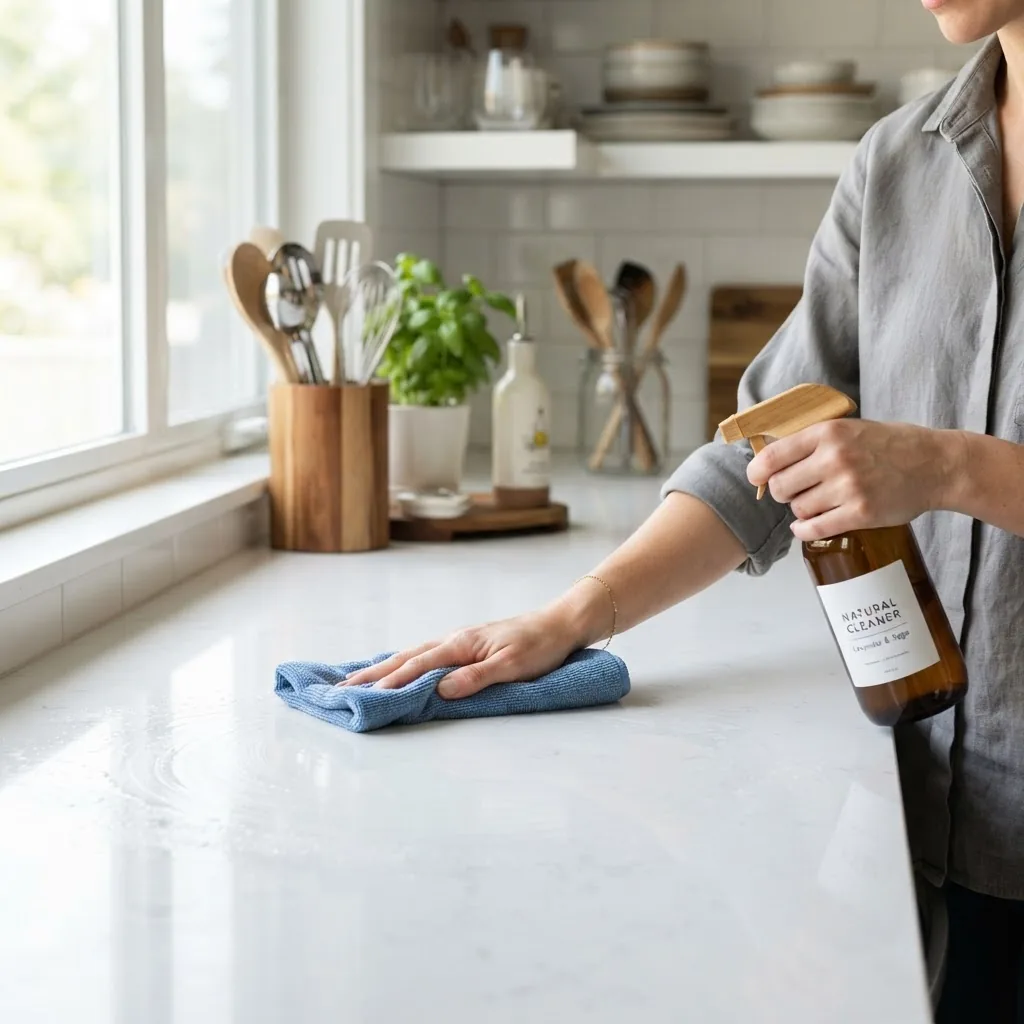
The kitchen needs the most consistent attention because it’s where food safety intersects with household hygiene. Below is a weekly plan plus a step-by-step deep clean you can do monthly.
- Daily quick finish — After each meal, rinse dishes into the dishwasher or hand-wash within 30 minutes. Wipe sinks and counters with a microfiber cloth and multipurpose cleaner (spray, wipe, dry). This reduces bacterial growth and nightly cleanup time.
-
Weekly wipe-and-sweep — Once a week (suggest Tuesday), do:
- Clear counters; remove crumbs and food residues (5–7 min)
- Wipe backsplashes and cabinet faces within reach (8–12 min)
- Clean stovetop surface and knobs (10–15 min)
- Sweep and spot-mop floor (10–15 min)
- Empty trash & sanitize bin liner area (5 min)
- Weekly sink care — Use a 1:1 mixture of white vinegar and water or a mild dish detergent to scrub the sink basin. For stainless steel, dry with a microfiber cloth to avoid water marks. Run the disposal with ice and lemon half once weekly to reduce odors (2–3 minutes).
- Food storage check — Each week, do a quick fridge sweep: remove expired items, wipe visible spills, and rotate produce. Deep fridge cleaning is monthly; weekly checks prevent cross-contamination.
- Appliance exterior cleaning — Wipe microwave, oven door, fridge handles, and coffee maker surfaces once weekly. For stainless steel, wipe with the grain and finish with a microfiber cloth for shine.
-
Monthly deep-clean routine (60–90 minutes) —
- Empty the fridge and dispose of expired food. Remove shelves and drawers — wash in warm soapy water, dry completely before returning (20–30 min).
- Clean oven interior: use manufacturer instructions or an oven cleaner; run self-clean if available and safe. Allow ventilation (30–60 min active + cool down).
- Pull out appliances (if possible) and vacuum behind fridge and stove to remove lint and debris that attract pests (10–15 min).
- Degrease range hood filter: soak in hot water and baking soda, then scrub (20–30 min including soak).
- Surface disinfection — For high-touch zones (handles, light switches), use a disinfectant labeled for household use and follow contact time on label. Define “disinfecting” as using a product that kills specified pathogens after a set wet time; follow the product instructions.
-
Countertop-specific techniques — Identify the countertop material:
- Granite/stone: use pH-neutral cleaner; reseal yearly (if recommended).
- Quartz: non-abrasive cleaner, avoid harsh acids.
- Laminate: warm soapy water, avoid excessive water at seams.
- Grease and stain handling — For grease buildup, apply a small amount of dish soap to a warm, damp microfiber cloth and rub gently, then rinse. For stubborn stains on ceramic tile grout, use a 3:1 water-to-bleach solution applied briefly, then rinse thoroughly; test an inconspicuous area first.
-
Weekly checklist (condensed) —
- Wipe counters & backsplashes
- Clean sink and run disposal
- Wipe appliance exteriors
- Sweep & spot-mop floor
- Fridge food check
- Empty trash & sanitize bin
Step-by-step walkthrough — cleaning a countertop (practitioner method):
- Clear the surface: remove small appliances, salt shakers, and utensils; set them aside for a quick wipe (2 minutes).
- Dry dust & crumb removal: use a dry microfiber cloth or a handheld vacuum to remove loose debris (1–2 minutes).
- Apply cleaner: Spray a multipurpose cleaner or the manufacturer’s stone-safe product across the surface in overlapping passes (4–6 sprays per medium counter).
- Agitate gently: use a clean microfiber cloth to work the cleaner in circular motions for 30–60 seconds per square meter.
- Rinse and buff: if the cleaner requires rinsing, wipe with a damp microfiber cloth and then buff dry with a second microfiber to avoid streaks (2–4 minutes).
Transition: The kitchen plan is the most prescriptive part of weekly cleaning; next we’ll cover broader housekeeping tips to make these routines stick long-term.
Weekly Housekeeping Tips to Maintain Cleanliness Long-Term
Use these practical, habit-driven tips to preserve the work you do weekly and reduce the effort needed over time.
- Clutter control — adopt a “one in, one out” policy for non-essentials (toys, small appliances). Set a 10-minute nightly reset to prevent clutter piling up.
- Daily upkeep — small 10–15 minute nightly chores (dishes, quick surface wipes) eliminate much of the weekly workload.
- Laundry scheduling — for a 3–4 person household, run laundry twice weekly (e.g., Wednesday & Friday). Aim for no more than 2 active loads per laundry session to keep folding under 45 minutes.
- Cleaning motivation — use music or podcasts to make cleaning enjoyable; set a 30–45 minute timer and reward completion with a small treat. Behavioral studies show pairing tasks with rewards increases adherence.
- Teamwork — create clear, short task lists for each person. Use color-coded chore charts or a shared app so every member knows responsibilities.
- Preventive cleaning practices — use doormats, remove shoes, and place coasters to protect surfaces. These reduce stain incidents and lower required cleaning frequency.
- Seasonal swaps — rotate linens and do a wardrobe purge each season; label storage bins so items aren’t left in living spaces.
- Use routines as cues — pair cleaning with an existing event (after dinner, before morning coffee) to build habit-stacking momentum.
- Keep supplies accessible — a portable caddy saves travel time; restock weekly.
- Reward system — set weekly goals and a small household reward when met (family movie night or takeout) to build consistency.
- Maintenance projects — schedule small projects quarterly to reduce weekly workload long-term; see efficient home maintenance projects for ideas.
Transition: To complete your weekly toolkit, check the essential cleaning tools and recommended eco-certifications below.
Tools and Supplies Needed for Weekly House Cleaning
Assemble a compact set of trusted tools — choose durable equipment and eco-certified products where possible.
- Microfiber cloths (6–10): soft, lint-free; use color-coding for kitchen/bath/other. Microfiber traps dirt and reduces chemical need.
- Multipurpose cleaner: pH-neutral for general surfaces. Look for certified products; see Green Seal for eco-label guidance.
- Disinfectant: EPA-registered or government-recommended products for high-touch surface disinfection. Use per label instructions.
- Broom & dustpan: upright or angled broom for corners. Replace biannually.
- Vacuum cleaner: HEPA-rated for homes with pets/allergies; empty canister or replace bags when 2/3 full.
- Mop options: flat microfiber mop for daily use; sponge mop or string mop for heavy soil. Rinse mop heads after each use and launder weekly.
- Scrub brushes & grout brush: for tile and stubborn spots.
- Bucket with wringer: for mopping; use separate solution for particularly dirty floors.
- Gloves & protective gear: nitrile gloves for strong cleaners; goggles when using bleach solutions.
- Small tool kit: to tighten loose handles or fix small snags found during cleaning — see the maintenance schedule template for equipment care scheduling.
- House cleaning supplies checklist: for a comprehensive list see house cleaning supplies checklist.
Recommendation: choose at least two eco-certified cleaners (one multipurpose, one disinfectant) to reduce chemical exposure. According to a 2022 industry report, households using certified eco-label products reported fewer odor complaints and less skin irritation than those using conventional cleaners (source type: industry report).
Transition: Even with a plan and supplies, common challenges arise — here’s how to resolve them.
Troubleshooting Common Challenges in Weekly House Cleaning
Q: I feel cleaning fatigue — how to stay consistent?
Problem: burnout from big sessions. Solution: split tasks into 25–45 minute focused sessions across the week. I switched to 30-minute sprints and reduced fatigue immediately. If motivation lags, schedule chores with a partner and set small rewards.
Q: Missed a cleaning day — what now?
Problem: backlog increases. Solution: triage tasks into A/B/C priority and allocate a 60–90 minute catch-up slot. Reassign or defer C tasks. If repeated misses reveal capacity limits, reduce weekly scope and increase daily upkeep.
Q: Pet hair everywhere — best approach?
Problem: constant shedding. Solution: vacuum 3× weekly with a HEPA vacuum, lint-roll upholstery daily, and use washable throws in pet zones. Groom pets weekly to reduce shedding at the source.
Q: Cleaning reveals repair needs — what next?
Problem: you find loose tiles, leaks, or worn seals. Solution: small DIY fixes are fine, but for larger issues review repair tips before selling a home and consider handyman subscription services or consult common home maintenance problems and solutions for guidance.
Q: Time constraints — how to fit cleaning into a busy week?
Problem: limited time. Solution: prioritize A tasks only and use nightly 10–15 minute resets. Outsource occasional tasks or use a professional cleaner for a monthly deep clean if budget allows; research DIY home repair projects for small fixes you can handle yourself and consult home improvement online resources for tutorials.
When cleaning reveals repair needs, consider service options such as handyman subscription services or schedule a local contractor if it exceeds DIY scope. For preparing a home for sale, refer to repair tips before selling a home to prioritize fixes.
Transition: To wrap up, here are clear next steps and a short conclusion with rewards to keep momentum.
Conclusion and Next Steps for Consistent Weekly House Cleaning
Summary: A reliable weekly housekeeping plan breaks the home into manageable daily tasks, prioritizes high-impact chores, and uses sustainable habits to reduce long-term effort. Start with a single 60–90 minute planning session, assign clear roles, and keep tools accessible.
Next steps:
- Finalize your week plan and post it where everyone sees it.
- Set two test weeks and record actual times; adjust accordingly.
- Download or print the weekly planner (see printable templates) and integrate with your monthly maintenance tasks such as the monthly home maintenance checklist.
Final CTA: Start your first weekly run this week — pick one day for kitchen and bathroom upkeep and build from there. Consistency beats intensity: small weekly steps keep your home healthier and easier to maintain.