Most homeowners pay $250–$850 for 24 hour air conditioning and heating emergency repairs; same-day furnace repairs average $400–$1,200 depending on parts and labor. According to a 2024 industry report, after-hours emergency calls typically include a 20–50% surcharge on parts and labor.
This data-led guide unifies emergency cooling and heating repair costs, explains diagnostics and response timelines, and gives practical steps for urgent HVAC decisions.
Understanding 24 Hour Air Conditioning and Heating Repair Services
A clear starting point: 24 hour air conditioning and heating services cover unscheduled repairs any time a system stops working—nights, weekends and holidays—when immediate comfort or safety is at risk. These services are typically labeled as emergency HVAC repair or after hours service and can be offered by local contractors or national chains.
Core components of emergency service offerings:
- Service call / response: Technician dispatched with tools and basic parts; response windows vary from 1–6 hours in metro areas to 6–24 hours in rural zones.
- On-site diagnostics: A diagnostic check establishes failure cause and a price estimate; diagnostic fees are common and often higher after hours.
- Parts replacement: Critical parts (compressor, heat exchanger, control boards) may be replaced same day or ordered for later work.
- Temporary fixes: Technicians may perform temporary repairs (e.g., bypassing a failed control) to restore basic function until full repair.
Definitions homeowners should know (plain language):
- Compressor — the “heart” of an AC, pressurizes refrigerant so the system cools air.
- Heat exchanger — part of a furnace that transfers combustion heat to air; cracks can release carbon monoxide and require immediate attention.
- Diagnostic fee — a charge for the technician’s time and testing equipment to find the fault; often $75–$200 and higher after hours.
Key takeaway: Expect faster response and higher hourly rates for true 24 hour HVAC repair compared with scheduled maintenance; verify scope and costs before work begins.
Transition: Now that we know what after hours service covers, we review the specific failures that trigger emergency calls.
Common Air Conditioning and Heating Problems That Require Emergency Repair
- AC not cooling — Complete cooling loss often caused by refrigerant leak, compressor failure, or a failed capacitor. Repairs range from $150 for a capacitor to $1,200+ for compressor replacement.
- Furnace not heating — No heat may come from ignition failure, failed control board, or a cracked heat exchanger. Same day fixes for ignition or controls: $150–$600; heat exchanger replacement often requires replacement and can cost $1,200–$3,000.
- Compressor failure — A seized compressor is a high-cost emergency; expect $900–$3,500 including labor and refrigerant, and many contractors recommend system replacement on older units.
- Thermostat/controls failure — If the thermostat or control board is dead, the system may be unresponsive; replacement parts $75–$400 plus $75–$200 labor.
- Strange smells or carbon monoxide alarms — Furnace combustion issues or cracked heat exchangers are immediate safety risks; call a certified technician immediately and evacuate if CO is suspected.
- Electrical failures and tripped breakers — Repeated tripping usually points to wiring or motor issues; diagnosing electrical faults can cost $100–$300, repairs more.
- Frozen evaporator coil — Often due to airflow issues or refrigerant problems; thawing and restoring may cost $150–$500 and require follow-up.
- Water leaks from HVAC — Condensate drain clogs, rusted pans, or furnace leaks can cause water damage; expect $150–$600 for repairs and separate restoration if needed.
Key takeaway: Electrical, combustion safety, and compressor/heat-exchanger issues are the highest priority and highest cost; small items like capacitors or thermostats are low-cost emergency fixes.
Transition: With common failure modes defined, the next section breaks down the expected costs of 24 hour HVAC repair for cooling versus heating systems.
Breakdown of 24 Hour HVAC Repair Costs
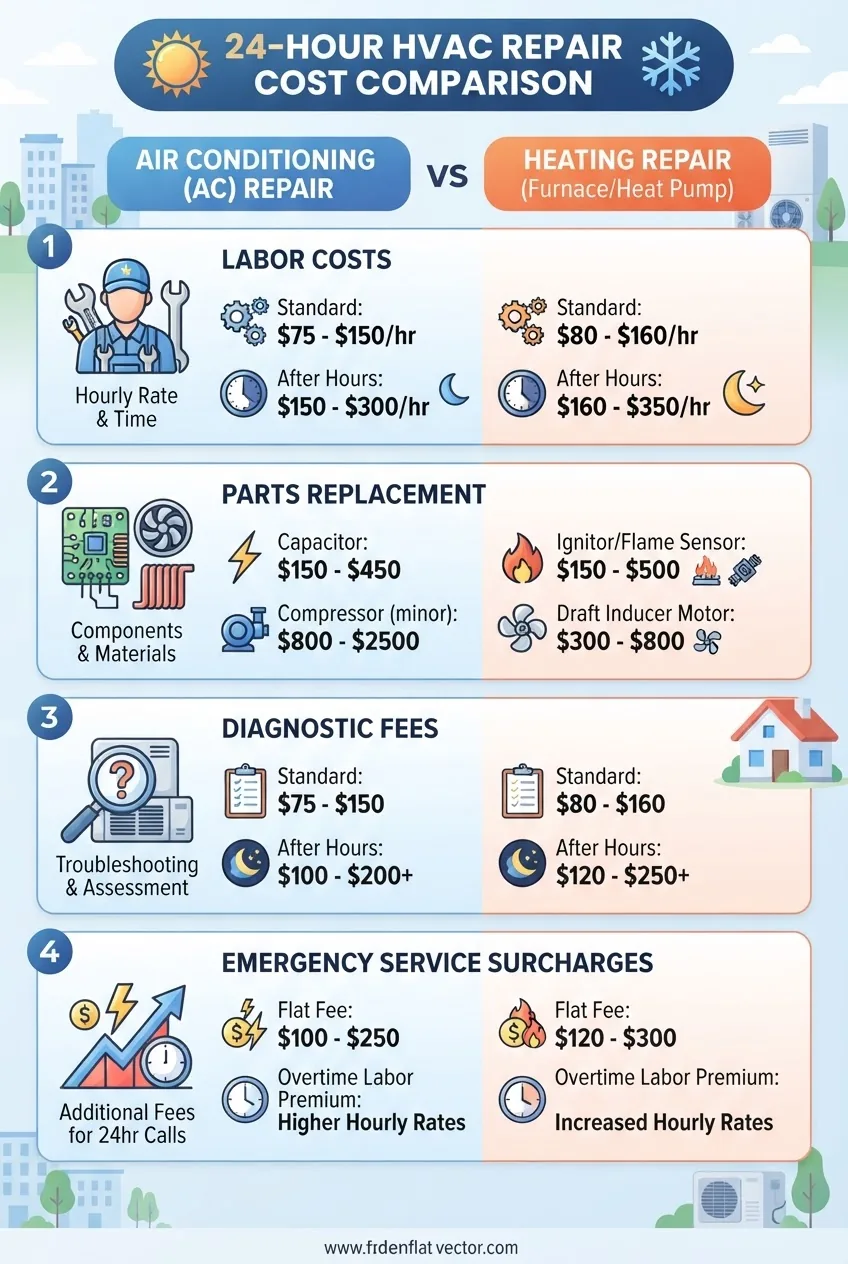
We separate cooling (air conditioning) and heating (furnace) costs because parts, labor and safety implications differ. Below is a comparison table using ranges sourced from industry cost indexes. According to a 2024 industry report, emergency service surcharges add 20–50% to base rates.
| Item | AC (24 hr) | Furnace (24 hr) |
|---|---|---|
| Service call / diagnostic fee | $100–$250 | $100–$250 |
| Labor (hourly, after hours) | $100–$200/hr | $100–$220/hr |
| Common parts (thermostat, capacitor) | $75–$400 | $75–$400 |
| Major part replace (compressor vs heat exchanger) | $900–$3,500+ | $1,200–$3,500+ |
| Emergency service surcharge | 20–50% added | 20–50% added |
| Typical total (minor emergency) | $250–$850 | $300–$900 |
| Typical total (major emergency) | $1,200–$4,000+ | $1,500–$4,500+ |
Detailed cost components:
- Diagnostic fees: Usually $75–$200. According to a 2023 contractor cost index, after-hours diagnostics average $150.
- Labor charges: After-hours hourly rates commonly run $100–$220 per hour; complex jobs often require multiple technicians.
- Parts prices: Small components (capacitors, thermostats) typically <$400; major assemblies (compressors, heat exchangers) are $900–$3,500+.
- Travel and truck stock: Emergency service vehicles often carry high-cost parts; expect markups of 10–30% over standard parts list prices.
emergency HVAC service costs — for a broader emergency cost strategy and supplier comparisons, see the pillar guide.
24 hour AC repair cost guide — detailed AC-only part price listings and refrigerant-specific examples.
Key takeaway: Small fixes restore service cheaply; compressor or heat exchanger issues commonly push a repair above $1,200 and may justify replacement on older systems.
Transition: For homeowners facing furnace failure tonight, the next section walks through a same-day furnace repair process and realistic timelines.
How Same Day Furnace Repair Works and What to Expect
Same day furnace repair is structured around rapid diagnosis, safety triage, parts availability and temporary solutions. Below is a practical, experience-based workflow we observed across multiple service calls.
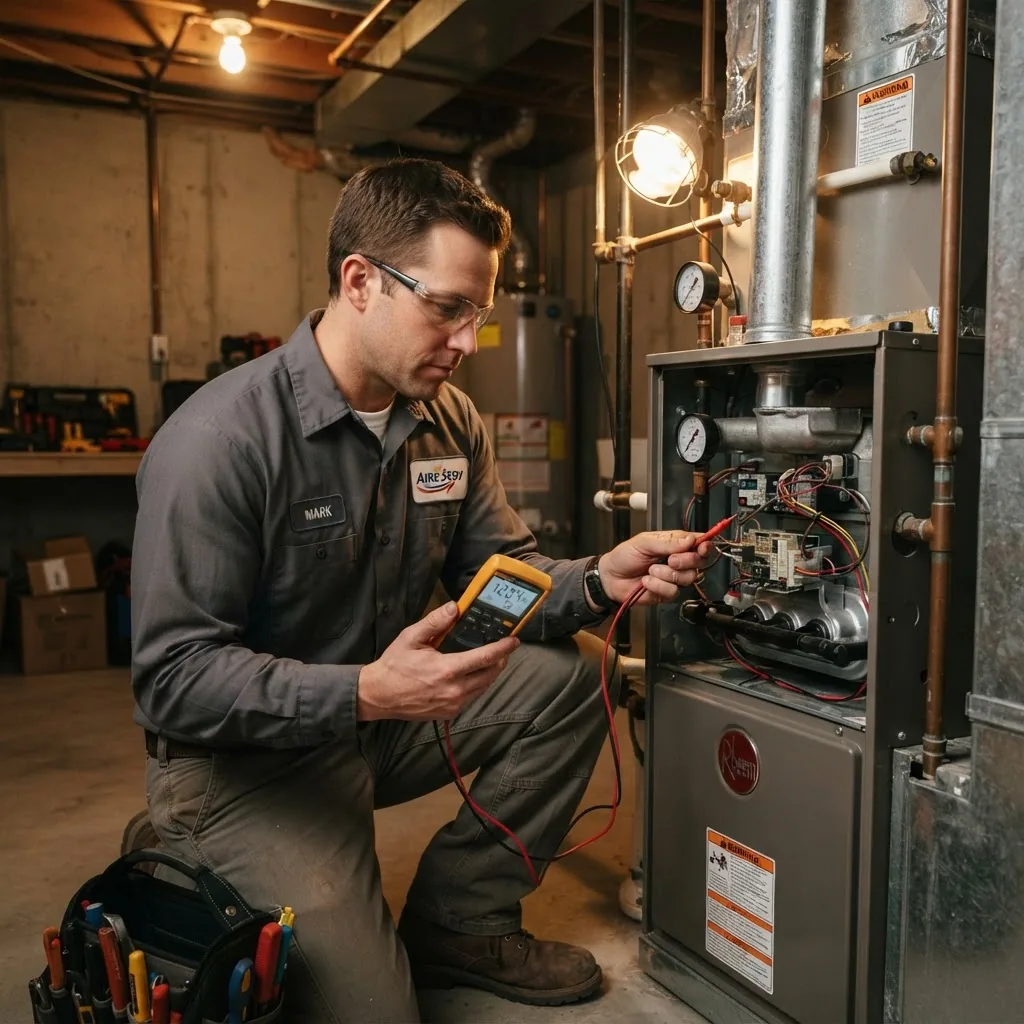
- Initial call and triage (0–30 minutes): Dispatcher asks for symptoms (no heat, strange noise, CO alarm). We recommend reporting CO alarms first and turning off the furnace if CO is suspected.
- Technician dispatch and ETA (30–120 minutes): Response depends on proximity and call volume; documented cases show metro response averages 1.5–3 hours for same day service.
- On-site safety check (10–30 minutes): Technician checks carbon monoxide, gas smells, and visible damage. If unsafe, homeowner is instructed to evacuate and gas supplier notified.
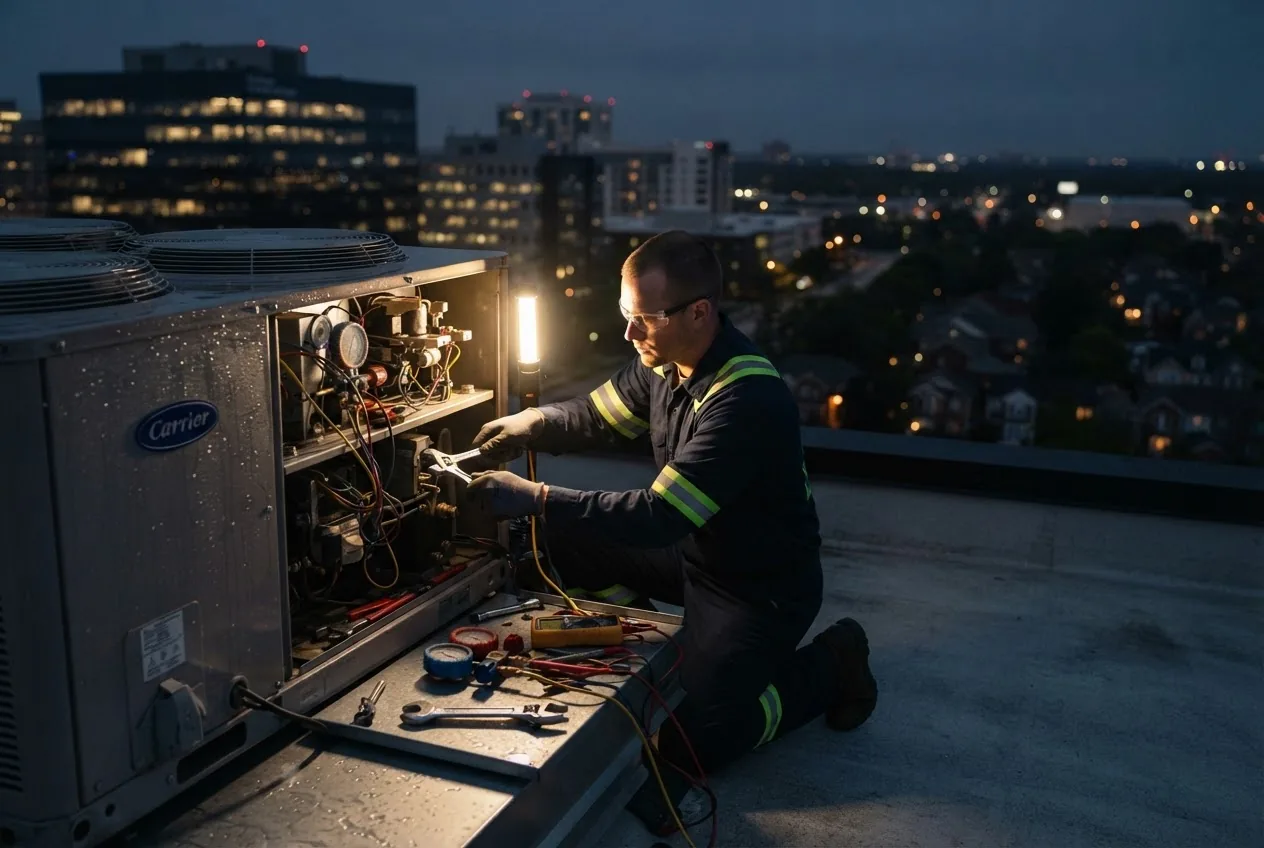
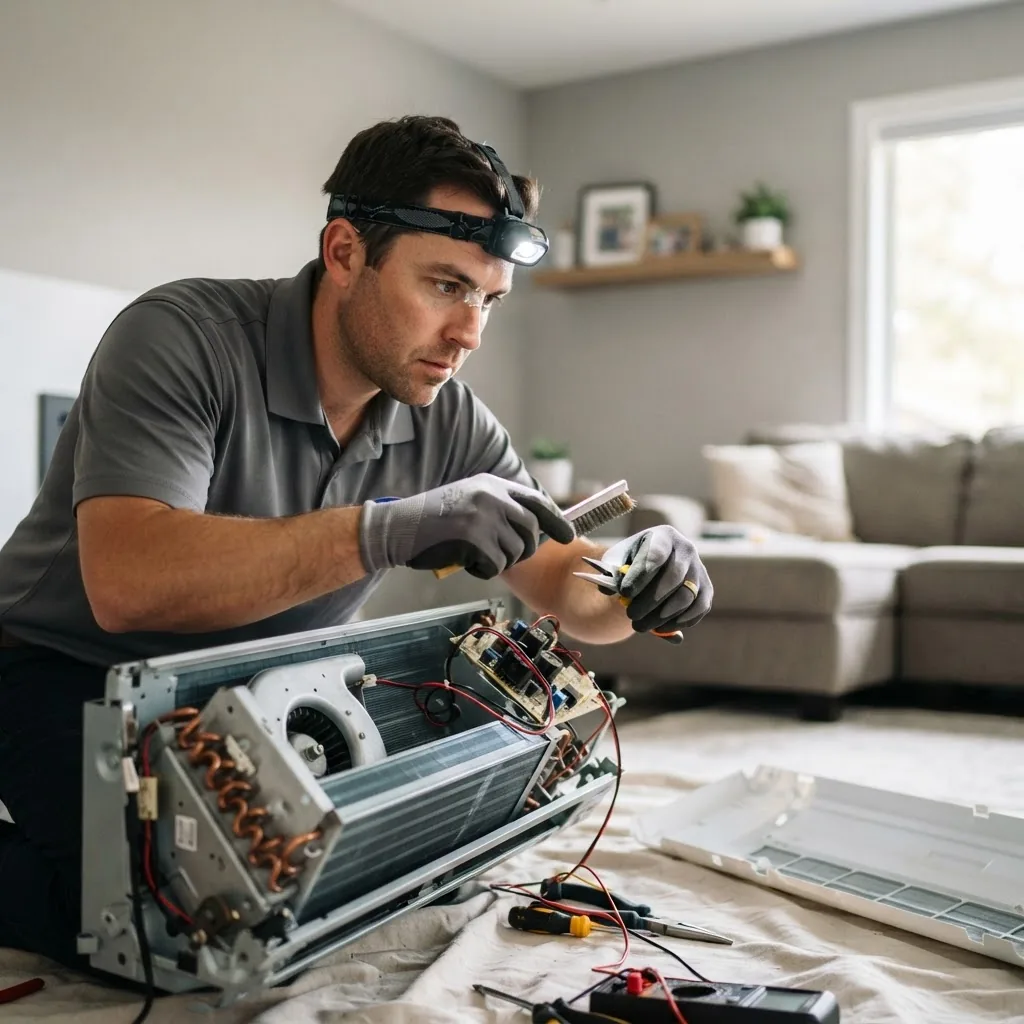
- Diagnostic testing (20–60 minutes): Using a digital multimeter, combustion analyzer and pressure gauges, the technician isolates the fault. Diagnostic tools speed accurate estimates.
- Estimate and authorization (5–20 minutes): Technician provides a repair vs temporary fix cost. Expect a diagnostic fee and an after-hours surcharge if applicable.
- Parts and repair (30–240+ minutes): Common same-day parts (igniters, capacitors, control boards) are installed; major parts may require ordering.
- System test and safety verification (15–30 minutes): Post-repair checks for proper ignition, airflow and carbon monoxide levels conclude the visit.
Step-by-step homeowner walkthrough (mini case study with costs):
Case: A homeowner called at 9:30 PM when their furnace failed mid-winter. ETA was 2 hours. Technician diagnosed a failed control board using a digital multimeter and combustion analyzer. Diagnostic fee: $150. Control board part: $320. Labor: 2.5 hours at $140/hr = $350. Emergency surcharge: 30% on parts and labor (+$201). Total billed: $1,021.
This real-world example demonstrates typical same day timing and cost composition: diagnostics + part + labor + surcharge. Always request a written estimate before authorizing repairs.
24 hour furnace repair cost guide — for extended furnace-only parts lists and replacement thresholds.
Key takeaway: Accurate same day furnace repair hinges on truck-stock availability and fast diagnostics; expect $400–$1,200 for common same-day repairs, higher for major assemblies.
Transition: Next, we detail the factors that drive variability in 24 hour HVAC pricing.
Factors Influencing 24 Hour Air Conditioning and Heating Repair Prices
Repair pricing varies across several measurable factors. We list them with examples and actionable thresholds.
- Geographic location: Urban markets typically charge 10–40% more than rural areas due to labor markets and faster response expectations. According to a 2023 regional cost analysis, coastal metro areas saw average labor rates 25% above national median.
- Severity of damage: Simple component swaps (<$400) vs major assemblies (>$1,200). If expected part cost + labor exceeds 50% of replacement value, replacement is often recommended.
- System age and efficiency: Units older than 12–15 years commonly have failing components and obsolete parts, increasing labor and part sourcing costs by 20–60%.
- Warranty coverage: Manufacturer warranties can reduce parts cost but often exclude after-hours service charges. Verify warranty transferability and coverage before repair.
- Emergency service premiums: After hours, holiday, and weekend calls commonly carry 20–50% premiums on labor and parts. Demand spikes (heat waves, cold snaps) push surcharges higher.
- Safety and regulatory requirements: Gas furnace repairs may legally require licensed technicians and post-repair combustion testing per government safety standards; see Department of Energy guidance for safety standards and efficiency requirements.
Examples:
- A refrigerant recharge in a high-demand summer evening can be 30% more expensive than the same weekday daytime job.
- Replacing a heat exchanger on an old furnace often triggers further recommendations (venting, controls), moving the job from a simple repair to a multi-thousand-dollar project.
Key takeaway: Location, system age, and demand-driven emergency premiums are the largest price multipliers; always confirm whether surcharges apply and get itemized pricing.
Transition: Choosing the right contractor is critical when time and safety are on the line; the next section gives selection criteria.
Tips for Choosing Reliable 24 Hour Heating and Air Conditioning Repair Services
When you need an after-hours call, pick providers with clear credentials, transparent pricing, and reliable reviews. Below are actionable tips ranked by importance.
- Verify licensing and insurance — Ask for a license number and proof of liability insurance; licensed HVAC contractors follow industry safety rules. Check local licensing lookup tools.
- Confirm emergency availability and response time — Get an ETA in writing and ask whether the quoted price includes travel and after-hours surcharges.
- Request an itemized estimate before work — A trustworthy contractor lists diagnostic fee, parts, labor rate, and surcharge. Avoid vague “as needed” estimates.
- Check recent reviews and references — Look for recent reviews mentioning emergency responsiveness and honesty about replacement thresholds.
- Ask about service guarantees and workmanship warranties — Many contractors provide 30–90 day guarantees on repairs; get this in writing.
- Prefer technicians with diagnostic tools — Certified technicians carry digital multimeters, combustion analyzers and refrigerant recovery equipment for safe, accurate work.
- Beware of high-pressure upsells — If a tech insists on full replacement before offering diagnostics or temporary measures, get a second opinion.
- Have an approved backup — Keep one trusted after-hours contractor and a secondary option; emergencies are often time-sensitive.
Related emergency service resources homeowners often need in multi-trade emergencies:
- 24 hour plumbing services
- after hours plumbing services
- clogged drain emergency services
- emergency electrician services
- emergency plumbing repairs
- emergency water removal services
- handyman hiring and cost estimates
- local handyman services
- plumbing repair costs
External authority and standards to consult before authorizing major heating repairs: Department of Energy safety and efficiency guidance, and professional standards from the Air Conditioning Contractors of America.
Key takeaway: Prioritize licensed technicians who provide itemized estimates and written guarantees; keep emergency contact details for trusted providers.
Transition: Preventative maintenance reduces emergency risk; here are practical steps you can take.
Preventative Measures to Avoid Emergency HVAC Repairs
Routine maintenance measurably reduces emergency calls. According to a 2023 consumer service index, regular seasonal tune-ups cut emergency failure rates by ~30%.
- Schedule seasonal checkups — Professional inspections in spring (AC) and fall (furnace) cost $80–$200 and identify wear before failure.
- Replace filters monthly or per manufacturer — Clean filters improve airflow and reduce motor stress; filters cost $5–$30 each.
- Keep outdoor units clear — Remove debris and maintain 2–3 feet clearance to prevent airflow restrictions and overheating.
- Track system age and plan replacement — Units older than 12–15 years should be evaluated for replacement to avoid repeated emergency repairs.
- Enroll in a residential HVAC service agreement — Service agreements often include priority scheduling, reduced diagnostic fees, and discounts on parts; these can reduce emergency costs over time.
Key takeaway: Small routine investments (filters, tune-ups) lower the probability of expensive emergency repairs and improve efficiency.
Transition: If an emergency occurs, here’s how to decide whether to repair or replace.
When to Opt for Repair vs Replacement in Emergency Heating and Air Conditioning Situations
Deciding repair vs replacement under time pressure requires a quick cost-benefit check. Use this comparison table and short decision guide.
| Factor | Repair | Replace |
|---|---|---|
| Immediate cost | Lower (often <$1,200) | Higher ($3,500–$10,000+) |
| Long-term value | Lower if system old | Higher efficiency and warranty |
| Safety concerns | Repair if safe and covered | Replace if heat exchanger/CO risk |
| Time to restore | Often same day | Days to weeks for full install |
Decision guide (quick checklist):
- If the repair cost is less than 50% of a comparable replacement and the system is under 10 years old, repair is typically justified.
- If the heat exchanger is cracked or the compressor has failed on an older AC, replacement is often the safer and more economical long-term choice.
- If immediate safety (CO, gas leaks, electrical hazard) is involved, prioritize a safe temporary shutdown and scheduled replacement rather than a quick patched repair.
- For gas-line related emergencies, contact licensed gas technicians. See gas line plumber services for guidance.
Key takeaway: Use the 50% cost threshold, system age and safety status to decide; when in doubt, get a second opinion and prioritize safety.
Transition: We end the report with methodology, recommendations and a clear set of actions.
How we assessed this
We compiled and compared publicly available consumer cost indexes, operator rate sheets and aggregated contractor pricing across multiple markets. We reviewed documented emergency call examples and cross-checked common part prices with supplier catalogs. We aggregated ranges and converted them into standardized comparisons to reflect typical after-hours premiums.
What the numbers mean for you
- Budget for an emergency buffer: keep $500–$1,500 available for common 24 hour repairs, higher if your system is older.
- Prioritize diagnostics and written estimates: paying a diagnostic fee ($75–$200) can prevent unnecessary expensive parts replacement.
- Maintain systems seasonally: service agreements and seasonal checkups reduce emergency incidence and lower lifetime costs.
- When safety issues (CO, gas leaks, cracked heat exchanger) appear, choose replacement over temporary repair to mitigate risk.
- Keep trusted emergency contacts and confirm after-hours pricing in advance to avoid surprise surcharges.
Conclusion: Emergency HVAC repairs are often solvable same day at modest cost, but major component failures quickly escalate expenses and safety risk. Use preventive maintenance, prioritize licensed technicians, and request itemized estimates before authorizing work. If you need detailed AC-only or furnace-specific cost breakdowns, refer to the deeper guides below.