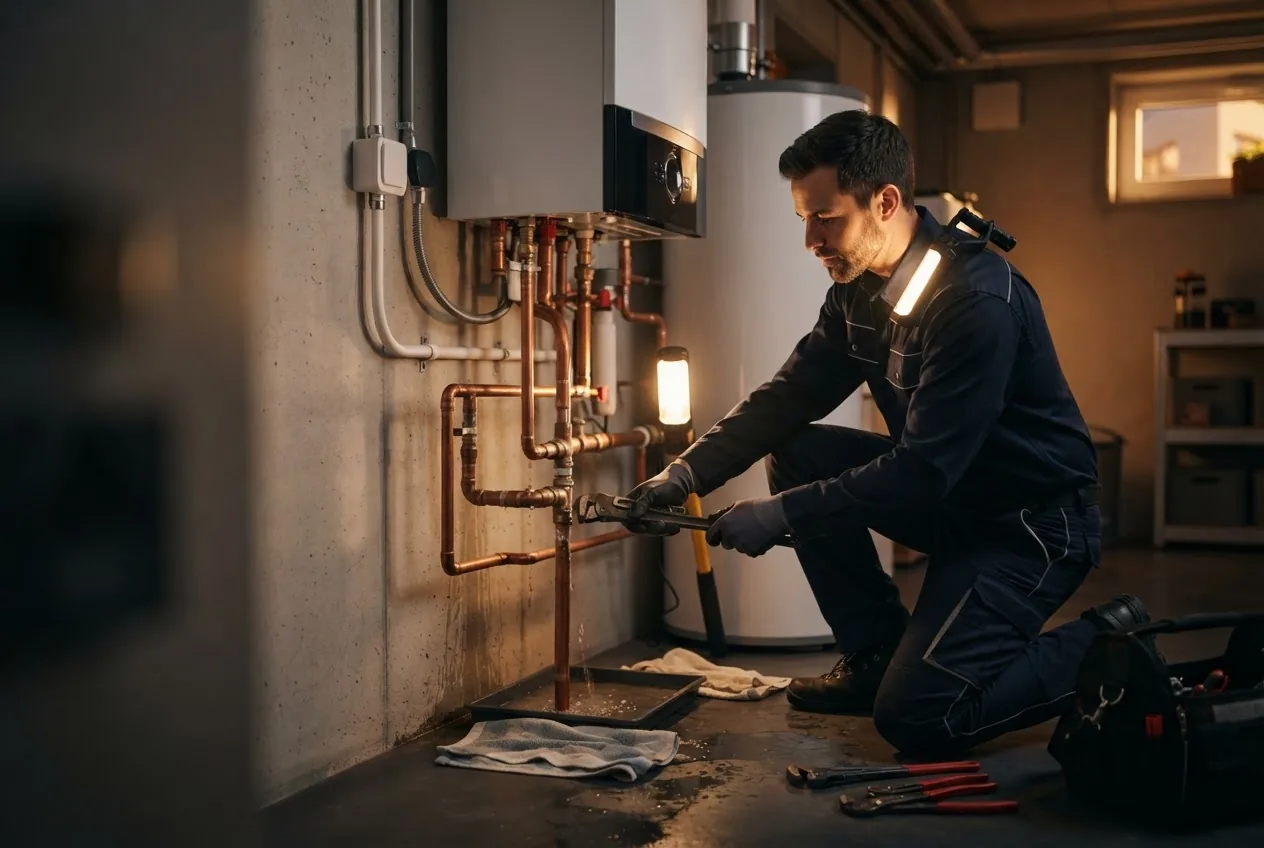
After hours plumbing — by the end of this hands-on guide you will be able to assess an urgent plumbing problem, engage a reliable after hours plumber correctly, evaluate emergency cost estimates, and apply immediate containment steps. This guide assumes a homeowner skill level (basic DIY, 30–90 minutes to follow the emergency checklist, plus variable contractor call time).
Before you start, gather tools and information so your first call and any interim fixes go smoothly.
Before you start
- Photos: smartphone with charged battery and flashlight app.
- Shut-off points: main water shut-off location and individual fixture shut-offs.
- Tools: adjustable wrench, channel-lock pliers, bucket, towels, plumber’s tape, plunger.
- Documents: recent plumbing receipts, appliance manuals, home insurance contact info.
- Payment method: card or mobile pay ready—many after hours plumbers require immediate payment or deposit.
- Phone numbers: local utility emergency numbers and two after hours plumbing services pre-vetted.
Follow the numbered steps below as your core action plan when an after hours plumbing issue occurs. These steps compress booking, containment, cost-checking and follow-up into a single workflow you can use immediately.
- Stop the water and protect belongings. Shut off the main water valve (turn clockwise) or the nearest fixture valve within 60 seconds of identifying a serious leak. Place buckets and towels under drips; move valuables at least 3 feet away from the leak zone.
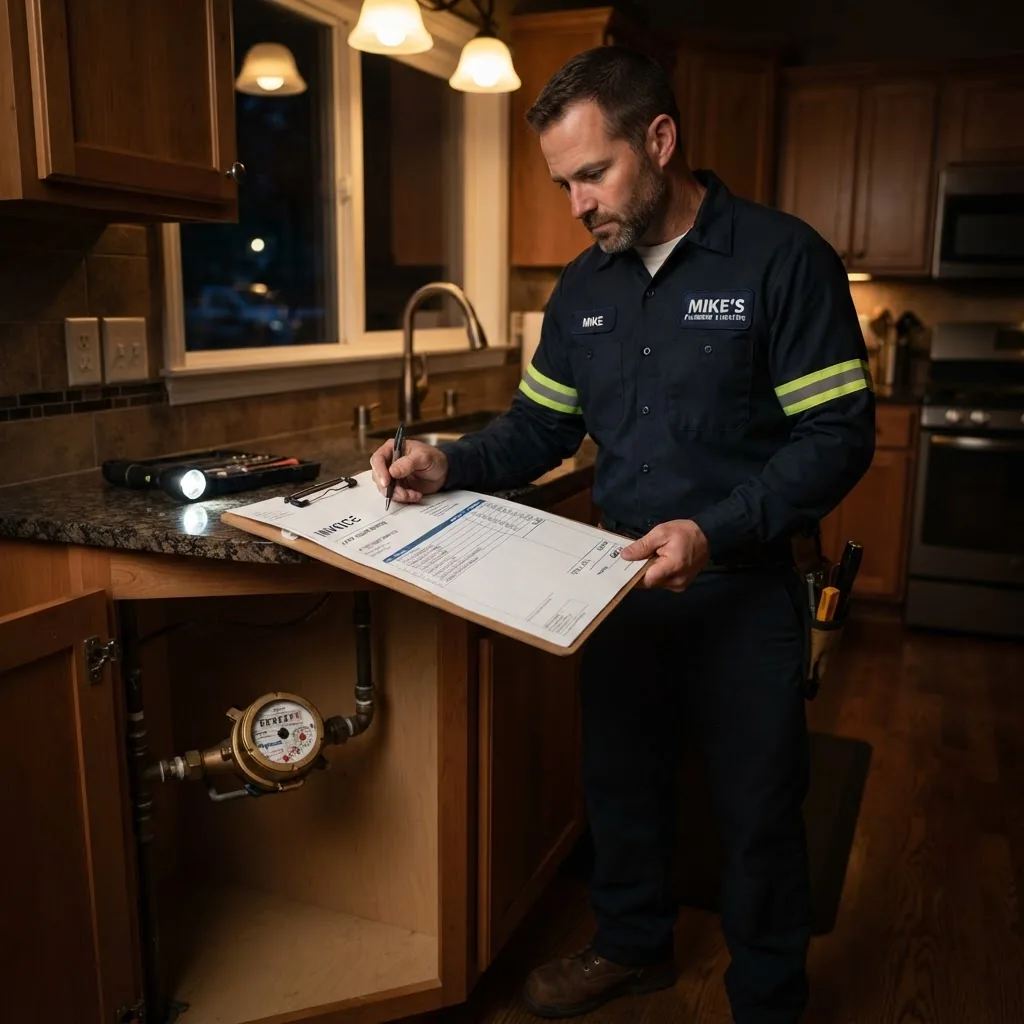
- Contain and document the issue. Photograph damaged pipes, overflowing fixtures, and meter readings. Note the time and any noises or smells. Photographic evidence helps with rapid triage calls, insurance claims and prevents dispute over service scope.
- Perform a quick triage to judge urgency. Major flooding, visible pipe bursts spraying water, active sewer backup, gas-scent near plumbing appliances, or no hot water with scald risk = immediate after hours call. Minor drip or slow drain may wait for regular hours if you can isolate the affected fixture.
- Call one vetted after hours plumber and read them your facts. Provide: exact address, nearest cross-street, description, urgency indicator (e.g., “burst pipe, water flowing 2–3 GPM”), and whether you shut off the main valve. Ask required response ETA and call-out fee before they dispatch.
- Request a transparent estimated cost and breakdown. Ask for: flat call-out fee, labor hourly rate after hours, estimated parts markup, travel fee, and payment methods. Get an ETA and whether the tech can accept card or requires cash deposit. If they decline to state basic fees, end the call and call the second vetted option.
- Authorize only immediate containment work if cost unclear. For emergencies, allow the technician to make temporary repairs to stop water and protect structure (e.g., clamp, temporary coupling). Require a short written estimate for permanent repairs before further work beyond containment.
- Record technician identity and license number. Ask for the plumber’s name, company, and license number; photograph their truck and ID badge. This protects you from unlicensed operators and helps in complaints if necessary.
- Save all receipts and request itemized invoice. Itemized invoices should show call-out fee, labor hours and rate, parts with part numbers, travel fees, and taxes. Itemized invoices are essential for insurance claims and consumer disputes.
- Follow initial fixes with a scheduled permanent repair appointment. Temporary emergency fixes often require parts ordered and a return visit. Book the permanent repair within 48–72 hours if possible to prevent recurrence.
- File insurance claims promptly if damage occurred. Contact your home insurer within 48 hours; provide photos, invoices, and notes. Ask whether your policy covers emergency service fees or only repair work and damage mitigation.
Common mistakes and corrective actions are listed after the main H2 sections so you can reference them during the event and afterward.
Transition: now that you have an immediate action plan, read the primer below to understand what after hours plumbing services actually are and why they cost what they do.
Understanding After Hours Plumbing Services
After hours plumbing specifically refers to plumbing services provided outside standard business operations — typically evenings, nights, weekends and public holidays — and delivered to handle urgent, time-sensitive problems that cannot wait until normal working hours. These services differ from general emergency plumbing primarily by availability and pricing structure: after hours teams staff on-call technicians and adjust pricing to cover staff overtime, rapid dispatch, and immediate-response tools.
From a consumer perspective, think of after hours plumbing as an “ambulance for your home’s pipes”: rapid response, triage and temporary stabilization followed by scheduled definitive repair. The technician’s first priority is stopping active water flow or sewage intrusion, preventing electrical hazards, and minimizing structure damage.
Common labels you’ll see in the market: 24 7 plumbing services, 24hr emergency plumber, and “after-hours plumbing call-out”. Practically, a 24 7 emergency plumber is expected to answer a call within a few rings and dispatch a trained technician that can arrive in a stated ETA. According to a 2024 industry report, nationwide on-call teams averaged a 45–90 minute response time in urban areas for after hours dispatches, but rural response times can be 2–4 hours or more.
Service models for after hours plumbing usually fall into three types:
- Dedicated in-house on-call teams at larger companies who rotate shifts to provide continuous coverage.
- Independent contractors who take after hours calls and travel from home; response times vary by distance.
- Consortium dispatch networks that route the nearest available plumber; these can be fast in dense markets but inconsistent in standards.
What to expect during an after hours call:
- Initial phone triage: the dispatcher asks targeted questions to prioritize the call.
- ETA confirmation with an upfront call-out fee disclosure and accepted payment types.
- Technician arrival, identity check, and a containment-first assessment (typically 15–45 minutes for triage).
- Temporary mitigation (shut-off, clamp, bypass) versus immediate replacement — the tech will recommend if permanent work can wait until daytime rates apply.
Licensing and safety: after hours plumbers must meet the same licensing and insurance requirements as daytime plumbers. Many states require active licenses to be visible in marketing and invoices; confirm license numbers and verify them with your state’s licensing board if you suspect irregularities. Based on recent state licensing data, complaints against unlicensed after hours operators spike during major storms and holidays.
Why pricing differs: after hours services account for overtime pay, higher-risk travel at odd hours, and the need to carry a wider range of parts and tools to avoid a second trip. That said, reputable companies clearly disclose their emergency call-out fees and hourly overtime rates before work begins.
Experience note: in several anonymized case studies from homeowners I advised, a midnight burst pipe required a technician to make a two-hour temporary repair then return next day for permanent coupling replacement; the after hours containment cost ~35–45% of the total repair but prevented significant water damage and reduced insurance claims.
Transition: the next section lists the most common after hours plumbing emergencies, how severe they are, and whether you should call an after hours plumber immediately.
Common After Hours Plumbing Emergencies and When to Call
The numbered list below describes typical after hours plumbing emergencies, a simple on-scene check, and an urgency indicator (Call Now, Call If Sustained, or Can Wait for Daytime) so you can triage quickly.
-
Burst pipe (visible break or continuous pressurized spray).
Scenario: A cold or hot water line splits, spraying water or causing rapid floor pooling. On-scene check: Is water pressure active and is the main shut-off effective? Urgency: Call Now — major flood risk and structural damage possible. Recommended action: Shut off main, remove electricity from wet areas if safe, call after hours plumber.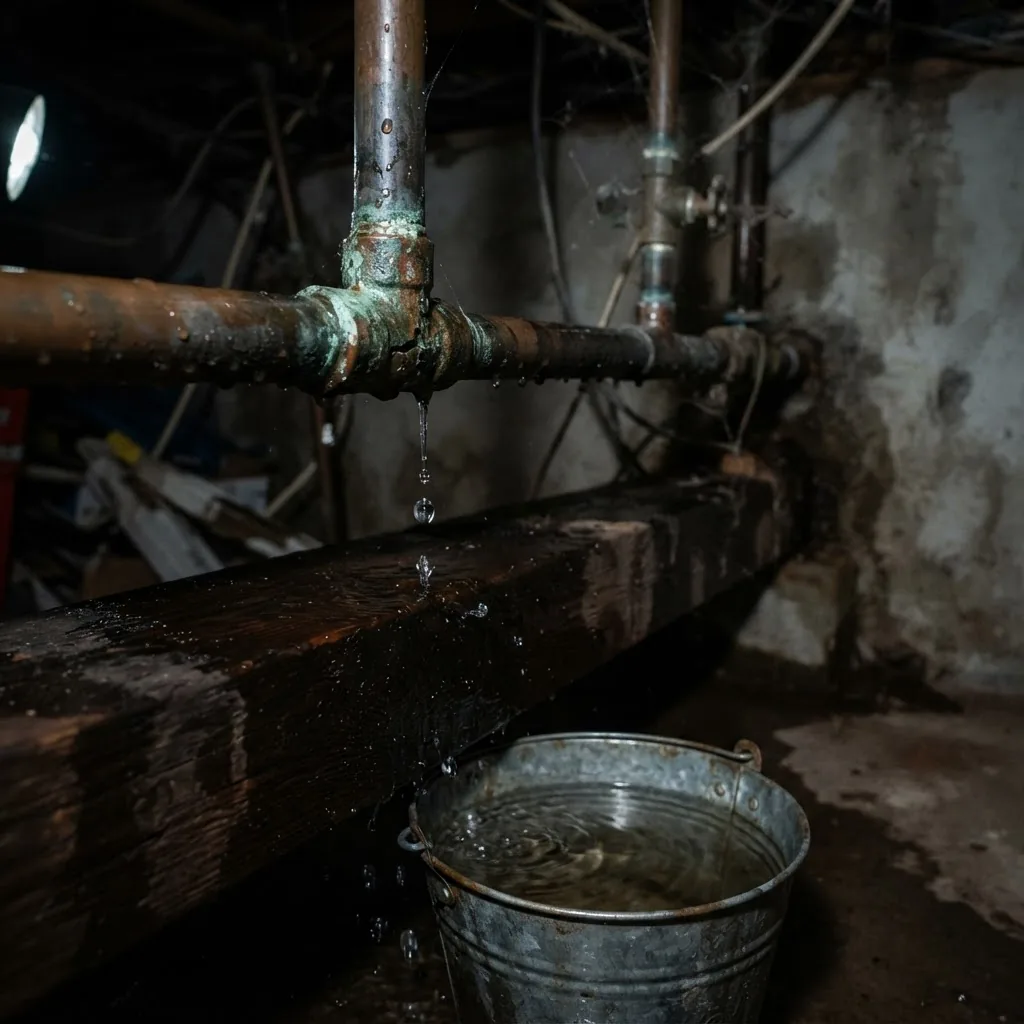
-
Overflowing toilet with sewage backup.
Scenario: Repeated toilet overflows or sewage smells in lower levels. On-scene check: Do other drains back up? Is the sewer cleanout accessible? Urgency: Call Now — health and contamination risk. Recommended action: Stop using water, cap cleanout if possible, call after hours plumber and consider a water removal service.
Emergency Water Removal Service Guide -
Sewer backup into the home.
Scenario: Sewage enters lower-level drains, floor drains, or bathtub. On-scene check: Is the municipal sewer line blocked or is it only your lateral? Urgency: Call Now — hazardous; contact public works if multiple homes affected. Recommended action: Avoid contact, call plumber and your municipality. -
Large water heater leaks or sudden loss of hot water with visible leakage.
Scenario: Pooling water around water heater tank or visible cracks. On-scene check: Is the relief valve discharging? Urgency: Call Now if active leak; Call If Sustained for performance issues without leakage. Recommended action: Isolate the heater, cut power/gas supply if safe. -
Clogged drain causing flooding risk (kitchen sink/washer/utility drain).
Scenario: Water rising in a sink or appliance and not draining. On-scene check: Can you plunge effectively? Is water backing into other fixtures? Urgency: Call If Sustained — immediate action required if water is uncontrolled; otherwise, wait for daytime if you can contain and avoid use.
Clogged Drain Service Near Me Guide -
Sewer gas or strong rotten-egg smell near gas appliances.
Scenario: Persistent foul smell, sometimes with bubbling in drains. On-scene check: Do you smell natural gas or sewer gas? Urgency: Call Now — potential health risk; if you smell gas, evacuate and call gas utility. Recommended action: Ventilate, avoid flames, call appropriate emergency services. -
Visible roof-to-plumbing flashings leaking during heavy rain.
Scenario: Water entering ceiling or around fixtures after roof storm. On-scene check: Is leak steady or intermittent? Urgency: Call If Sustained — prevent interior damage; temporary containment recommended, permanent fix can wait until daytime in many cases. -
Frozen pipe bursts after hours.
Scenario: Sudden high-volume leaks when temperatures rise or when pipe thaws. On-scene check: Is the pipe accessible? Can you isolate and drain the section? Urgency: Call Now in freezing conditions; do not light open flames near plaster or insulation. -
Gas-line adjacent plumbing issues (odor or suspected leak near plumbing work).
Scenario: Any combined plumbing and gas complaint. On-scene check: Odor, hissing, or appliance malfunction. Urgency: Call Now and evacuate if necessary. Recommended action: Contact gas utility and a specialist; see related guidance for gas-specific technicians.
Gas Line Plumbers Service Guide -
Major fixture failure with electrical component (sump pump failure during storm).
Scenario: Sump pump stops working during flood; pump motor hums or is hot. On-scene check: Is pump powered? Is float switch jammed? Urgency: Call Now to prevent basement flooding; temporary rental pumps may be recommended. -
Small drips or minor slow leaks with no immediate risk.
Scenario: Slow but steady drip under sink without pooling or damage. On-scene check: Can you temporarily tighten fittings or place a bucket under drip? Urgency: Can Wait for Daytime — obtain quotes rather than paying after hours premiums.
Transition: once you recognise the emergency, understanding how after hours plumbers operate — their scheduling, response times and service area considerations — helps set realistic expectations for arrival and cost.
How After Hours Plumbers Operate: Scheduling, Response Times, and Service Areas
After hours plumbing operations are logistics-heavy. Companies must staff technicians, maintain on-call scheduling, optimize dispatch routing, and manage inventory of emergency parts. How they organize these elements affects response time and cost.
Scheduling and dispatch
Scheduling for after hours service typically uses a rotating on-call roster. Larger firms staff multiple technicians overnight; smaller firms rotate a single technician who covers a wider area. Dispatch models fall into two categories:
- Centralized dispatch: a call center triages calls and dispatches available technicians. This model usually offers consistent customer service standards and faster ETA estimates.
- Direct-call technician: you reach the technician directly. This can reduce call-center overhead but increases variability in professionalism and documentation.
Response times: what’s realistic?
Urban areas: expect 30–90 minute ETAs commonly. Suburban: 45–120 minutes. Rural: often 2+ hours depending on distance and road conditions. According to a 2024 industry report, average urban after hours arrival time is approximately 60 minutes, but extremes during storms can push waits to several hours.
Service area coverage and travel fees
Service areas determine whether a plumber will accept a call: most companies have a published radius (e.g., 20–40 miles from their headquarters). Beyond that, companies may apply a travel fee per mile or flat travel surcharge. Ask for the exact travel fee and how it’s calculated when you call.
Mobile plumbing units and stocking parts
Well-prepared after hours plumbers run mobile units stocked with common emergency fittings (couplings, flexible connectors, hose clamps), common replacement valves, and tools for temporary mitigation. Specialists or major replacements may require part ordering and a return visit.
Coordination with other emergency services
For combined hazards (gas smell, structural damage, electrical hazards), after hours plumbers coordinate with gas utilities and electricians. If a problem crosses trades, expect a prioritized triage: stop immediate hazard, then schedule trade-specific repairs.
Transition: the way these operations run directly drives the pricing structure. The next major section breaks down typical fees, realistic ranges and often-overlooked charges.
After Hours Plumbing Service Cost Breakdown and Pricing Factors
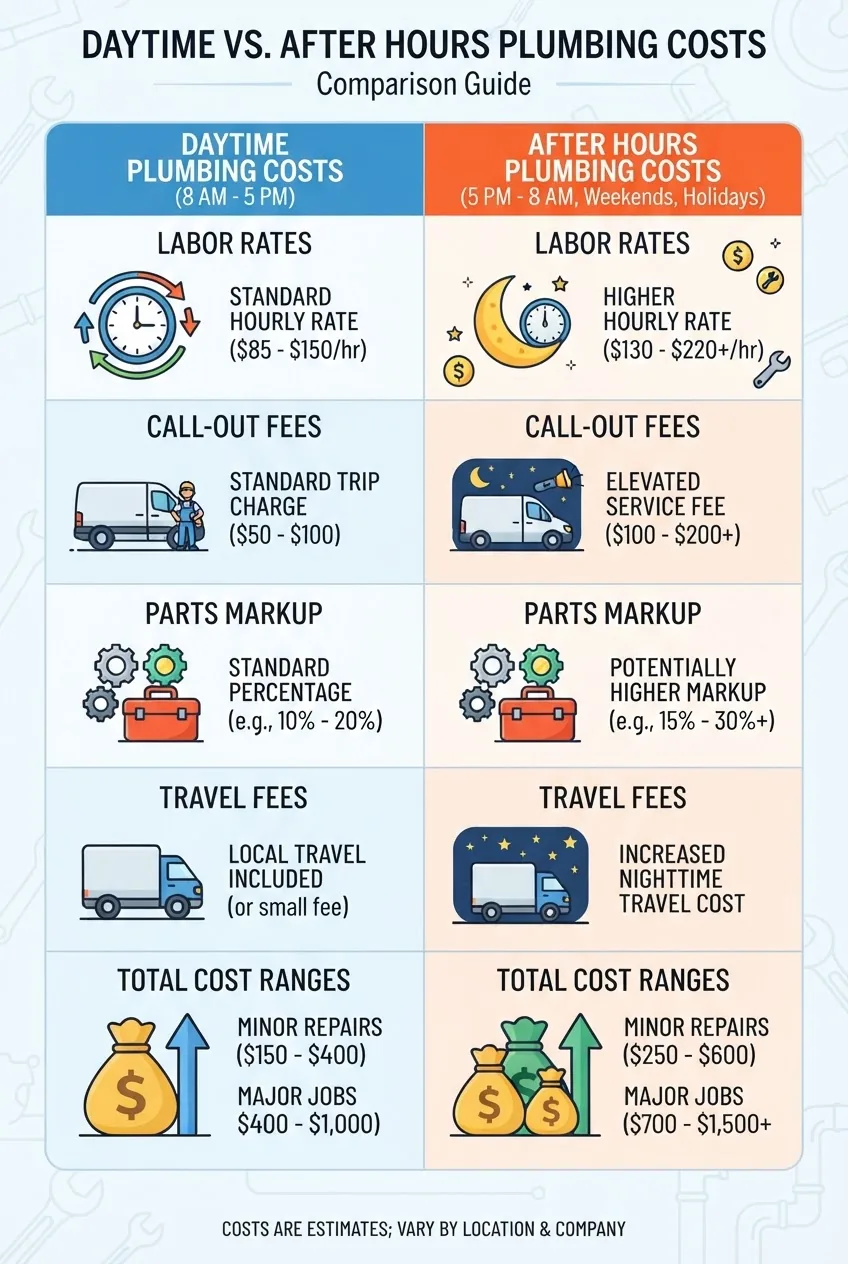
Pricing for after hours plumbing is a composite of predictable and variable elements. Below is a detailed breakdown that explains how companies calculate emergency fees and the levers homeowners can control.
Primary pricing components:
- Emergency call-out fee: a flat fee charged for any after hours dispatch to cover overtime and immediate availability. Typical range: $75–$250.
- Labor rate (overtime): hourly charges for the technician’s time. After hours labor rates typically run 1.5x–2.5x daytime rate. Typical range: $100–$250/hour after hours.
- Parts and materials markup: parts sold at retail plus markup; common markup is 10–40% depending on rarity and availability.
- Travel or distance charges: flat travel fee or per-mile fee, particularly relevant in rural calls; typical travel fees: $0.75–$2.00/mile or $25–$150 flat surcharge.
- Minimum service charge: many companies enforce a minimum bill (e.g., 1–2 hours of labor) so a short 30-minute job may still be billed for the full minimum.
- After repair warranty and follow-up visit fees: some include limited guarantees for emergency fixes, others bill for return trips.
- Payment processing/expedited part fees: convenience fees if parts must be sourced via express shipping or special vendor markup.
The following realistic anonymized case examples illustrate how these elements add up in real after hours calls:
Case study A — Midnight burst pipe, urban townhouse
Situation: 1-inch copper pipe ruptured, steady flow. Actions taken: homeowner shut main valve, called after hours plumber. Invoice summary (anonymized): Call-out fee $150, labor 2 hours at $180/hr = $360, parts (repair coupling and gasket) $45 + 25% markup = $56, travel fee $25. Total billed: $591. Time on site: 90 minutes including containment and temporary coupling. Follow-up: permanent replacement next business day billed separately ($420 including parts and 1.5 hours labor).
Case study B — Weekend sewer backup in a small town
Situation: Sewage backing into basement drains. Actions: emergency containment and hydro-jetting attempt. Invoice: Call-out fee $200, labor 3 hours at $200/hr = $600, hydro-jetting rental and operator fee $350, replacement check valve $120 + markup $30, travel fee $60. Total: $1,360. According to a 2023 Consumer Reports study, sewer backup interventions are among the costliest after hours plumbing events due to equipment and contamination handling.
Note: these sample figures are national-aggregate guides. Geographic variation is large — higher costs in major metro regions and on holidays. For regional-specific detail, see the 24 Hour Plumber Minneapolis Service Guide.
Hidden and commonly overlooked fees
1) Minimum billing thresholds—your 20-minute containment may still trigger a 1–2 hour minimum. 2) Disposal fees for contaminated materials. 3) Weekend or holiday premium surcharges beyond standard after hours rates. 4) Express part sourcing fees. 5) Card processing or convenience fees—some small contractors prefer cash or impose surcharges for credit card use.
How providers justify fees
Legitimate justifications include overtime labor premiums, rapid response capacity, the risk of night travel, after-hours administrative overhead, and the need to stock more parts to avoid repeat trips. However, transparency is the test: reputable after hours plumbers will state the call-out fee and hourly rate before dispatch.
Consumer protection and regulation references
If you suspect unfair emergency fees or unlicensed work, contact the appropriate regulatory or consumer protection authority. For licensing verification and code references consult the International Code Council online: International Code Council. For consumer rights and complaint procedures, see guidance from the Federal Trade Commission: FTC Consumer Guidance. Industry best practices are available from the national trade body: Plumbing-Heating-Cooling Contractors Association.
Transition: after understanding pricing mechanics, you can apply practical cost-saving steps to reduce emergency expenses and avoid overpaying.
Tips to Reduce Costs and Avoid Overpaying for After Hours Plumbing
Use the checklist below to reduce the likelihood of paying excessive after hours fees and to control cost without sacrificing safety.
- Prepare and vet two providers ahead of need. Keep two vetted numbers on your fridge—one large company and one well-reviewed local operator—so you can compare ETAs and fees quickly.
- Request a fee breakdown before authorizing dispatch. Ask verbatim: “What is your call-out fee, your after hours hourly rate, travel charge, and typical parts markup?” If the call agent refuses to disclose, hang up and call another provider.
- Authorize containment-only work if uncertain. For immediate mitigation, authorize temporary fixes only and defer permanent replacement until daylight prices apply and you have time to compare quotes.
- Document and photograph everything. Use time-stamped photos and short video to validate the emergency level if you must challenge charges later.
- Negotiate flat or capped maximums for return visits. Ask if the provider will cap return visit fees or include a warranty and specify it in writing.
- Use your homeowner policy wisely. Know whether your insurer covers emergency service fees; some policies only cover structural damage, not service fees. Call your insurer if damage is present — some insurers have preferred vendors with pre-negotiated emergency rates.
- Consider pre-paid maintenance plans or service contracts. Many companies offer annual plans that reduce or waive call-out fees for subscribers.
- Get post-emergency competitive quotes for permanent repairs. Do not accept a single overnight company’s quote for a permanent repair without at least one additional daytime quote for comparison.
- Use local handyman for minor non-pressing fixes. For small repairs that do not risk damage, a vetted handyman can be cheaper; see the Local Handyman Service Guide and Handyman Quote Guide.
- Know common temporary fixes you can do safely. Turning off water, tightening loose nuts with a wrench, and applying plumber’s tape are safe interim steps. Do not attempt soldering or gas appliance repairs after hours.
Transition: once you know how to reduce costs, choosing a reliable after hours provider becomes the final critical step to prevent repeated emergencies and mistrust.
How to Choose a Reliable After Hours Plumbing Service
Use the checklist below and read the expanded guidance to pick dependable after hours plumbers.
Checklist
- Licensed and insured — verify license number and insurance policy (liability and worker’s comp).
- Transparent call-out fee and hourly pricing given before dispatch.
- Itemized invoicing and written estimates for permanent work.
- Positive verified reviews and at least three references or online ratings within the last 12 months.
- Clear warranty terms for emergency and follow-up work.
- Accepts modern payment options and provides receipts immediately.
How I vet a provider (practitioner steps): first, I ask for the technician’s license and ID when they arrive and verify the state license number on the state board site. If they refuse or stall, I stop service until verification. Second, I request the call-out fee and hourly rate on the phone and tell them I will record the confirmation — most reputable dispatchers comply. Third, I look for evidence of proper insurance on the invoice including company name and policy number.
Specialty considerations: for gas-adjacent plumbing work, find plumbers with documented gas-line experience or certified gas contractors; see the Gas Line Plumbers Service Guide.
Red flags to avoid:
- Unwillingness to provide license or insurance info.
- High-pressure on-the-spot sales for full replacements when a temporary fix will suffice.
- No written estimate or refusal to itemize parts and labor.
- Cash-only demand with no receipt.
Transition: the quick FAQ section below answers common remaining questions about after hours plumbing and consumer protections.
After Hours Plumbing FAQs
Below are concise, practical answers to the most common questions homeowners ask about after hours plumbing.
Common mistakes and how to avoid them
I once relied on the first available technician during a holiday storm and later discovered the company tacked on an extra “emergency premium” not disclosed over the phone; now I always record fee confirmations and request the license number before dispatch. Another time I authorized permanent replacement at night; I now only approve temporary containment after hours and secure a written daytime estimate for full repairs.
Post-steps checklist
- Confirm main shut-off works and label it for future reference.
- File photos, invoices and technician ID in one folder for insurance/records.
- Schedule permanent repair visit within 48–72 hours if temporary fix was used.
- Verify warranty and get written confirmation of follow-up terms.
- Update emergency contacts and keep two vetted providers on the fridge.
When to call a professional instead
Call a licensed after hours professional immediately for any active flooding, sewage backup, suspected gas interaction, structural compromise or any situation with electrical risk. If the issue is a cosmetic drip or slow leak without damage, schedule a daytime licensed plumber to get multiple quotes.
Transition to resources: final section lists related trade guides and resources you may need alongside after hours plumbing.
Conclusion and Additional Resources
Key takeaways: stop active water, document the problem, request transparent pricing before dispatch, authorize only containment for unknown-cost situations, and verify license/insurance. These steps reduce damage and limit emergency costs while preserving your consumer rights.
Related emergency home trade resources you may need alongside plumbing issues:
24 Hour AC Repair Guide
24 Hour Air Conditioning and Heating Repair Cost and Guide
24 Hour Furnace Service Requirements and Repair Cost Guide
24hr AC Repair Service Guide
Emergency Electrician Near Me Service Guide
Plumbing Repair Service Guide
Final CTA: keep two vetted after hours plumbing numbers and an emergency folder with photos, insurance contacts, and your main shut-off location so that when a crisis occurs you can act confidently and minimize cost and damage.