By the end of this hands-on guide you will be able to find, evaluate and engage a reliable emergency plumbing near me service, estimate likely repair costs, and manage an emergency call from first phone contact through completion. Time to complete: 30–90 minutes for search, verification and initial triage; full repair times vary by job. Skill level assumed: homeowner with basic tool familiarity and ability to follow safety steps.
Before you start
- Phone or smartphone with internet access and ability to display messages/photos
- List of household shut-off locations: main water shut-off, appliance valves
- Basic supplies: adjustable wrench, bucket, towels, pipe tape (PTFE), flashlight
- Photos of the affected area to send to plumbers for faster triage
- Any appliance manuals or plumbing diagrams if available
What Is Emergency Plumbing and When Do You Need It?
Emergency plumbing refers to urgent plumbing repairs that cannot safely wait for standard business hours because they risk property damage, health hazards, or loss of essential services. Typical plumbing emergencies include visible water leaks that cannot be contained, a fully burst pipe spraying water, a sewer backup in the home, or a failed water heater producing no hot water in freezing conditions.
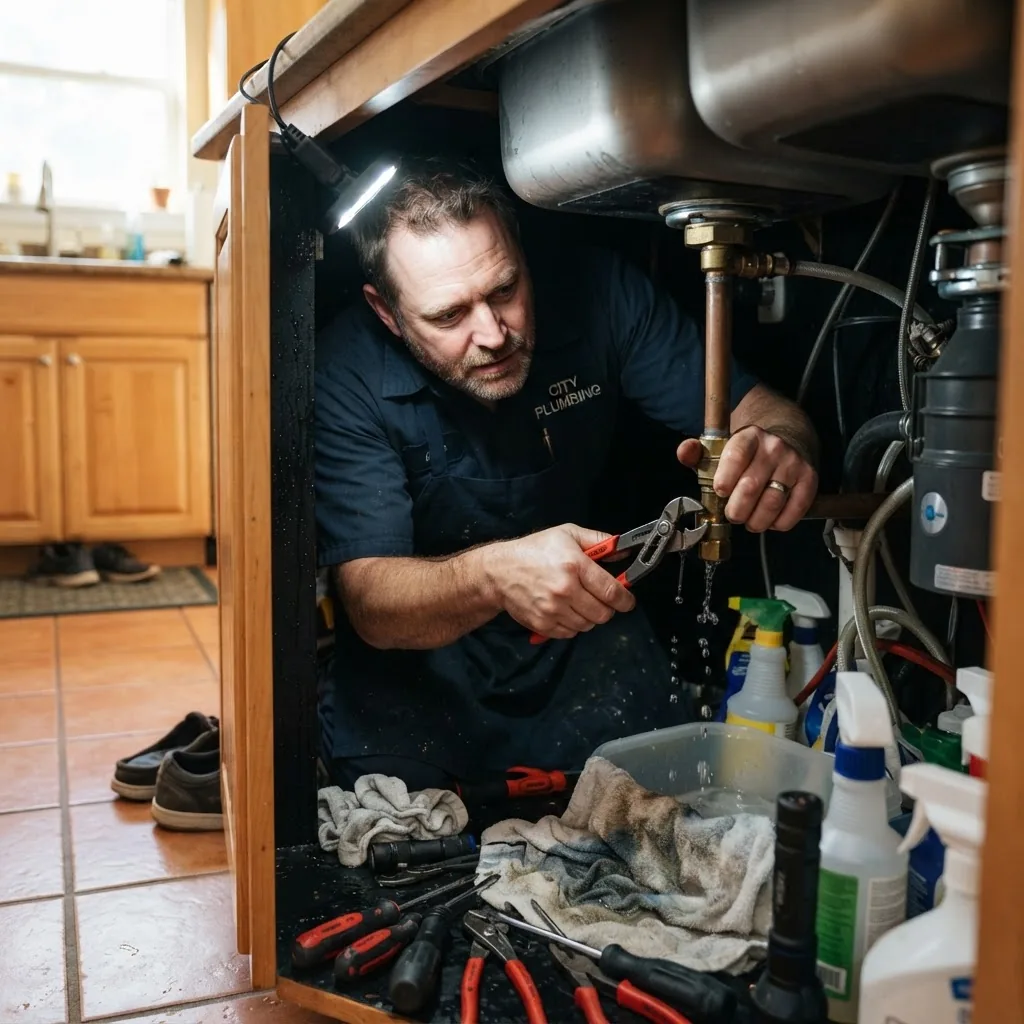
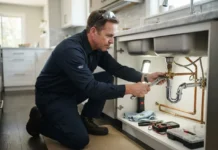
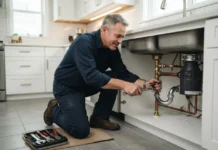
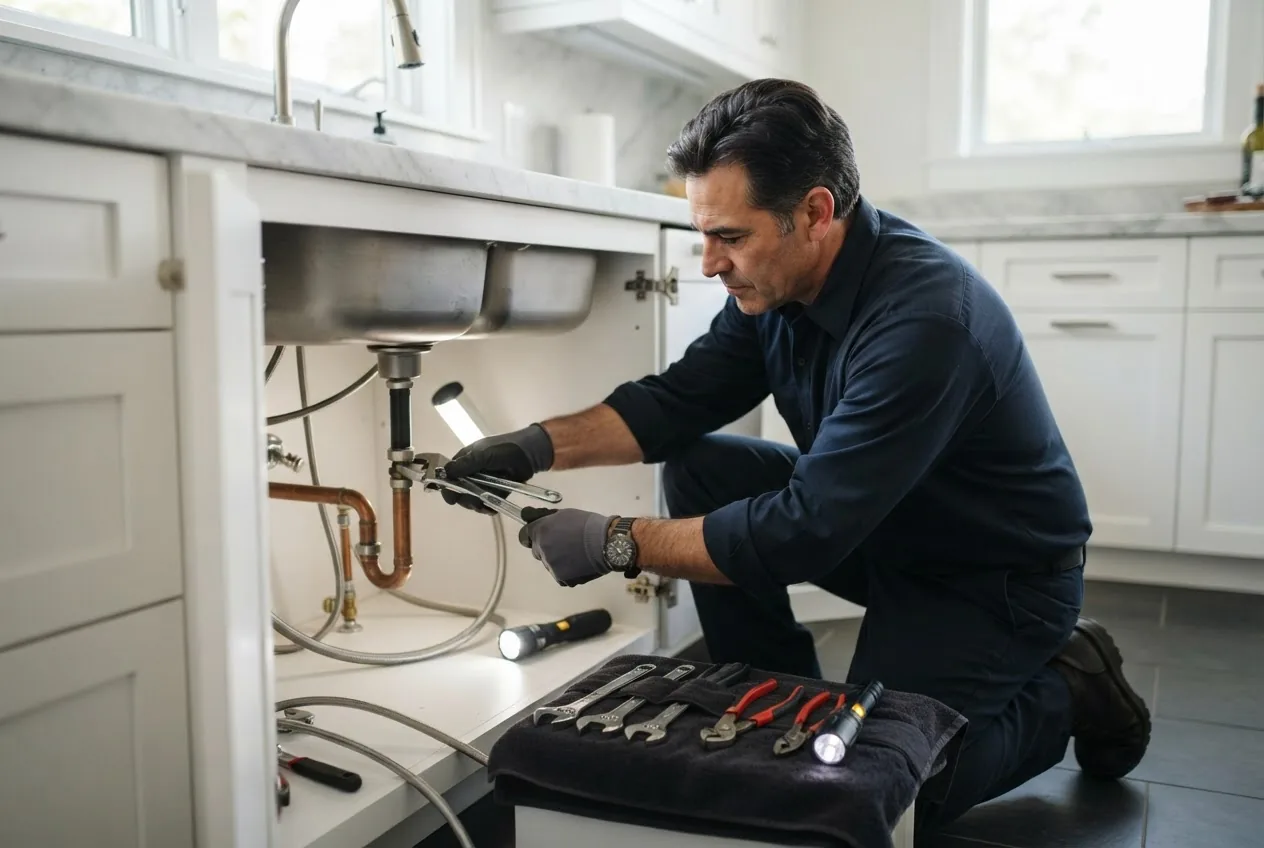
Real-world example (mini case): a homeowner found a split copper pipe under the kitchen sink leaking heavily at 2:10 AM. They shut the under-sink isolation valve, placed buckets and towels to limit spread, photographed the leak, then called a 24 hour plumber. The plumber arrived in 45 minutes, performed a temporary clamp-and-capture to stop active spray, replaced a 12″ copper stub-out the next morning, and tested the system. This illustrates a typical sequence: immediate isolation, temporary mitigation, then scheduled full repair.
When to call right away: visible flowing water inside the home, sewage backup, gas smell near a pipe fitting (call utility and plumber), or no water during sub-freezing weather. For slow drips, discolored water or minor backing up you can often contact a same day plumber instead of an after hours emergency call.
According to a 2024 industry report on emergency trade responses, call volume for emergency plumbing spikes 40–60% during freeze/thaw weather and after major storms — expect longer emergency wait times during these surges.
How to Find Reliable Emergency Plumbing Near Me
Transition: once you understand what counts as an emergency, the next step is locating and vetting local providers who answer fast and do quality work.

- Search by exact phrase — Run searches for “emergency plumbing services near me”, “24 7 plumber”, “24 hour plumber” and include your town name for local results. Prioritize listings with explicit “24 hrs plumbing” or “24 7 emergency plumber” services in the title or description.
- Check licensing and insurance — Ask for license number and insurance details before booking. Verify license with your state plumbing board or local regulator. For government guidance on safety and consumer protection, consult the federal consumer safety site, and cross-check contractor licensure where available.
- Read recent reviews and response-time notes — Look for multiple reviews that mention emergency response times, transparency about after hours fees, and whether the plumber provided same-day repairs or temporary fixes. Use consumer-rating sites such as Better Business Bureau for complaint history.
- Ask the right triage questions on the phone — Describe the problem clearly (burst pipe, clogged drain, water heater leak), ask: “Do you offer 24 hour emergency drain service?”, “What’s your typical plumbing emergency response time?”, “Do you charge a service call fee for after hours?” Expect to provide photos or video for quicker estimates.
- Compare availability and guarantees — Prefer plumbers who offer a written emergency plumbing repair service guarantee or limited warranty on emergency work and parts used. Confirm whether they do temporary stabilization and follow up with a permanent fix.
- Confirm payment and invoicing up front — Ask about accepted payment methods, same day service charges, and whether they email an itemized invoice showing labor, parts, service call fee and any after hours surcharge.
- Use local alternatives wisely — If a licensed plumber is unavailable, a handyman may handle minor issues like tightening fittings or unclogging a slow sink. For guidance on comparing quotes, refer to Handyman Quote Guide for Hiring and Cost Estimates and Local Handyman Service Guide and Home Repair Cost Info.
- Use city-specific examples if helpful — If you want to see a local example of how services and fees can vary, review 24 Hour Plumber Minneapolis Service Guide and Cost Overview.
Practical tip: when contacting multiple providers, send the same photo set and problem description — that standardizes quotes and speeds comparison.
Types of Emergency Plumbing Services Offered
Transition: emergency plumbing is not one-size-fits-all. Different problems require different emergency responses and skill sets.
- Burst pipe repair — Immediate actions: isolate water, remove standing water, temporary clamp or coupling for active spray, followed by pipe replacement or rerouting. For gas-related plumbing work see Gas Line Plumbers Service Guide and Repair Cost Overview.
- Clogged drains and sewer backups — Emergency drain service includes sink and toilet unclogging, sewer line repair, and emergency extraction. Plumbers may use drain snaking or hydro jetting (high-pressure water cleaning) depending on severity.
- Emergency drain service — For blocked main lines causing sewage backup: camera inspection, targeted repairs, and temporary bypass pumping where needed.
- Water heater emergency repair — Loss of hot water, leaking tank, or pressure issues. Emergency plumber will isolate the heater, repair valves or elements, or replace the unit if unsafe.
- Leak detection and repair — Uses acoustic detection, thermal imaging, or tracer dye to locate hidden leaks in walls or under slabs; emergency fix may include shut-offs or temporary patches.
- Sewer line repair — For collapsed or root-intruded lines, emergency responders can provide temporary bypass or full sectional replacement; trenchless pipe lining may be offered as a faster repair option.
- After hours plumbing and temporary stabilization — Covers temporary measures to prevent further damage until full replacement or permanent repair can be scheduled.
- Gas fitting and safety isolation — If a plumbing emergency involves gas, plumbers with appropriate certification will coordinate shut-offs and call utilities when required.
For emergencies involving hazardous materials, sewer backups or structural concerns, licensed specialists and clean-up contractors may be required; see industry clean-up cross-references and emergency water removal guidance at Emergency Water Removal Service Guide and Cleanup Costs.
Understanding Emergency Plumbing Repair Costs
Transition: cost transparency is crucial when you must decide quickly. Below is a practical breakdown you can use to estimate charges on an emergency call.
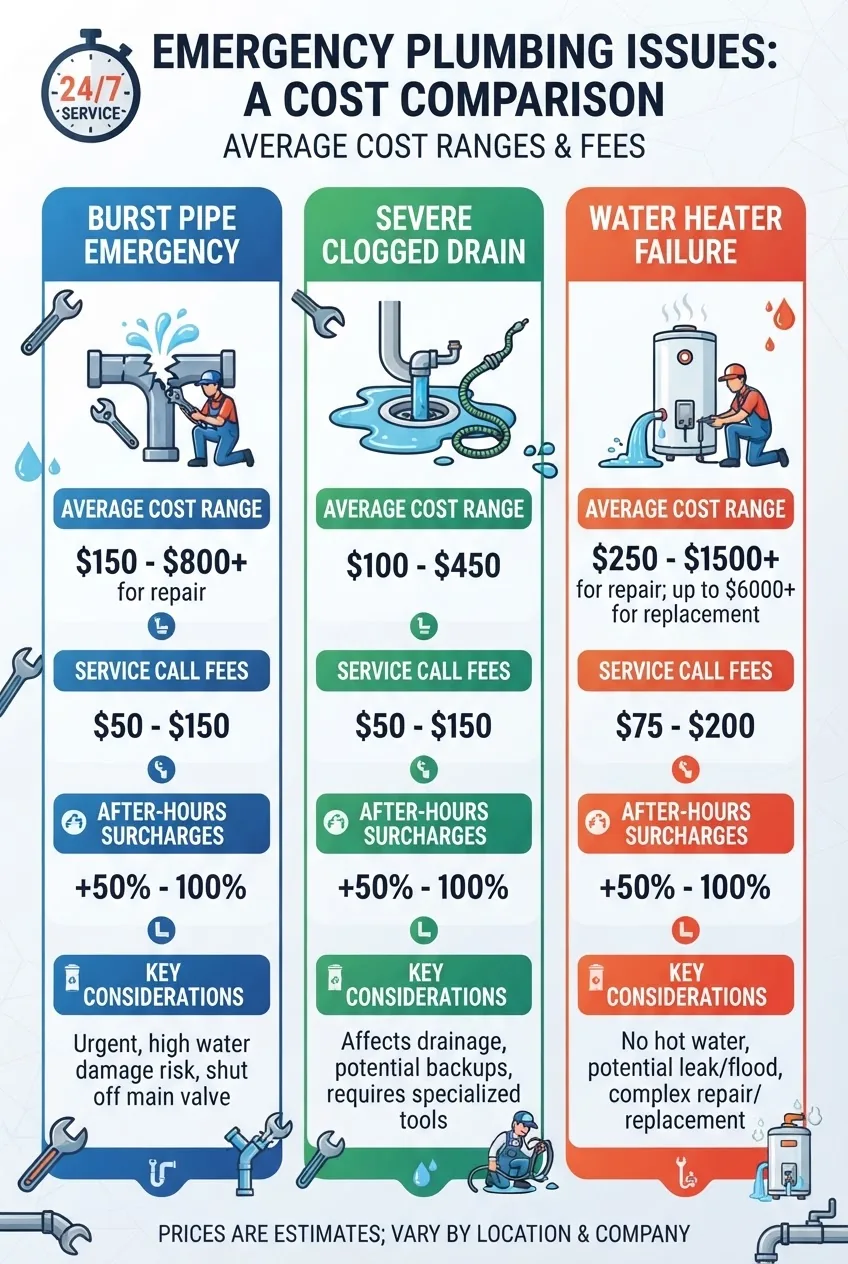
Typical emergency cost components (each item will appear on your invoice):
- Service call fee — Flat fee to respond and triage (commonly $75–$200 regular hours; $100–$350 after hours).
- Hourly labor — Rates vary widely: $75–$200/hour during regular hours; $120–$350/hour for after hours or emergency calls. According to a 2024 industry report, average after-hours hourly rates rose by ~12% compared to regular hours.
- Parts and materials — Pipes, fittings, coupling, replacement valves, or a water heater part. Retail plus markup typically adds $20–$500 depending on the item.
- After hours surcharge — Many emergency plumbing services apply a multiplier or flat surcharge (e.g., +25–100% on labor + service fee) for nights, weekends, and holidays.
- Diagnostic fees — Camera inspections or leak detection equipment may carry additional fees ($150–$500).
- Disposal and clean-up — For water-damage incidents requiring debris removal or coordination with water removal contractors, expect separate invoices from remediation services.
Example cost calculation (burst pipe, after hours)
Scenario: 11:00 PM burst copper pipe under sink causing active leak. Plumber arrives within one hour, performs emergency clamp, then charges for a next-day replacement.
- Service call (after hours): $200
- Emergency hourly labor (1.5 hours at inflated after-hours rate): 1.5 × $180 = $270
- Temporary clamp and materials: $25
- Next-day replacement labor (2 hours at regular rate): 2 × $95 = $190
- Replacement copper pipe, fitting, solder: $60
- Total estimated invoice: $200 + $270 + $25 + $190 + $60 = $745
This example demonstrates how emergency calls combine immediate mitigation (higher hourly rate + service fee) with subsequent lower-cost permanent repairs. According to a 2024 industry report, median total costs for residential burst-pipe emergency calls ranged $400–$1,200 depending on access and required replacement scope.
Cost table: common emergencies
| Issue | Typical emergency cost range | Notes |
|---|---|---|
| Burst pipe (accessible) | $300–$1,200 | Includes service call, temporary stop, and replacement |
| Sewer backup (emergency) | $400–$2,500+ | May require camera, excavation or lining, and remediation |
| Clogged main drain (after hours) | $150–$700 | Drain snaking vs hydro jetting cost differences |
| Water heater emergency repair | $200–$1,800 | Minor parts to full replacement; includes diagnostic |
Trade-offs and decision points: choose a spot fix if you need immediate containment and the pipe, appliance or drain is otherwise in good condition; choose full replacement when corrosion, code compliance or repeated failures indicate a systemic issue. Spot fixes are cheaper short-term but may double costs if replacement is delayed. Explain these trade-offs and get written options from the plumber.
For deeper after-hours pricing insight see After Hours Plumbing Service Guide and Emergency Cost Details and for baseline residential repair rates review Plumbing Repair Service Guide and Residential Costs.
What to Expect During an Emergency Plumbing Service Call
Transition: knowing the sequence of a professional service call reduces anxiety and avoids common missteps.
- Initial triage on the phone — The dispatcher will ask for photos, symptoms, and whether utilities were shut off. Give clear answers and ask for estimated arrival and an itemized estimate.
- On-site inspection and damage assessment — The plumber will check shut-offs, measure leak flow, inspect piping and nearby substrates for water ingress, and may use a moisture meter or camera. Expect an initial verbal plan and a written scope if time allows.
- Temporary stabilization — For active leaks the plumber will stop active water (shut-off, clamp, coupling). For backups they may clear blockages or install a temporary bypass pump. Ask for details on what the temporary fix covers.
- Repair options and quote — You will receive options: emergency spot repair vs scheduled full replacement. The plumber should explain pros, cons, warranty, and code implications.
- Execution of agreed work — For emergency-only tasks expect 30–120 minutes for most fixes; for larger jobs they may secure the area and return with parts the next day.
- Testing and cleanup — Plumbers should pressure-test replacements, check for leaks, and tidy the work area. If water damage occurred, coordinate with remediation specialists as needed.
- Invoice and documentation — Accept itemized invoices showing service call fee, labor hours, parts, and any after-hours surcharge. Keep paperwork for warranty and insurance claims.
Example workflow for a burst pipe repair (detailed): the plumber isolates the main feed, drains pressure from lines, applies a temporary clamp (10–20 minutes), documents the damage with photos, provides a written estimate for replacement (typically same-day or next-day), replaces the damaged section using coded materials (CPVC, PEX, or copper depending on home and code), pressure-tests at 80–120 psi depending on piping, and rechecks valves. If structural drying is required they coordinate with a remediation service.
Emergency Drain Services and How They Differ
Transition: drains and sewers present unique challenges compared to localized plumbing leaks.
Emergency drain service focuses on clearing obstructions that cause backups and standing sewage or slow drains that create health hazards. Key differences from general emergency plumbing:
- Root cause focus — Plumbers use camera inspection to locate root intrusion, collapsed pipe segments, or deep blockages. A drain snake may clear hair and mineral clogs, while hydro jetting uses pressurized water to remove grease and roots.
- Equipment and scale — Emergency drain work may require larger trucks, hydro-jetting units, and bypass pumping—equipment not needed for a simple sink leak.
- Health and remediation — Sewer backups often require coordination with biohazard remediation or water removal services due to contamination risks. For additional cost detail specific to drain services see Clogged Drain Service Near Me Guide and Plumbing Costs.
- Response priority — A main sewer backup is typically higher priority than a single fixture clog because of health risks and home damage potential.
When choosing between snaking and hydro jetting: snaking is fast and lower cost ($125–$350 typical), effective for simple blockages; hydro jetting is more expensive ($350–$1,200) but cleans pipe walls and reduces recurrence from grease or scale. Discuss pipe condition with the plumber—older clay or compromised lines may not tolerate hydro jetting.
For a deeper drain-specific breakdown and average costs, consult Clogged Drain Service Near Me Guide and Plumbing Costs.
Choosing the Right 24 Hour Emergency Plumber Service
Transition: when speed, safety and cost transparency matter, compare candidates on a short checklist.
| Feature | What to look for | Red flags |
|---|---|---|
| Response time | Quoted arrival <60 minutes for local emergencies; clear updates if delayed | Vague “we’ll be there soon” without ETA |
| Licensing and insurance | License number, proof of liability insurance, and worker coverage | No license or refusal to provide insurance proof |
| Price transparency | Itemized estimates, clear after-hours rates and service call fee disclosure | Only gives vague “flat rate” without item breakdown |
| Reputation | Recent reviews for emergency plumbing repair service and same day plumber performance | Mostly old reviews or unresolved complaints |
Cross-trade references: if you’re also evaluating emergency HVAC or furnace services, this can help benchmark emergency availability and pricing; compare with these guides: 24 Hour AC Repair Guide for Emergency HVAC Service Costs, 24 Hour Air Conditioning and Heating Repair Cost and Guide, and 24 Hour Furnace Service Requirements and Repair Cost Guide.
Also consider other 24-hour trade services when coordinating multi-trade emergencies: 24hr AC Repair Service Guide and Emergency Aircon Costs, and for electrical emergencies consult Emergency Electrician Near Me Service Guide and Pricing.
Verification steps before hiring: request license and insurance numbers, ask for an itemized emergency plumbing repair service quote, confirm response time in writing, and request references for recent emergency calls. According to industry association benchmarks, reliable services provide initial arrival within 60 minutes for urgent leaks and within 2–4 hours for less-critical same day requests.
Tips for Preventing Future Plumbing Emergencies
Transition: prevention reduces the chance you’ll need emergency response in the first place.
- Schedule seasonal checks — Perform a plumbing inspection every spring and fall; check valves, visible pipes, and water heater pressure relief annually.
- Insulate vulnerable pipes — Insulate exposed pipes in unheated spaces before temperatures drop below 32°F (0°C). Use foam sleeves or heat tape as appropriate.
- Practice drain discipline — Do not pour grease down drains; install hair traps in showers and screens on kitchen sinks; perform a professional drain cleaning every 12–24 months for high-use systems.
- Test shut-off valves — Turn main and fixture shut-offs twice per year to ensure they operate; replace valves that are stiff or leak.
- Maintain water heater — Flush tank annually to reduce sediment; check anode rods every 3–5 years to extend tank life.
- Monitor water bills and meters — Unexpected increases can indicate a hidden leak. A continuous meter running when fixtures are off suggests a leak that needs attention.
- Keep emergency contacts ready — Save a vetted 24 7 plumber and a same day plumber contact in your phone for quick access.
Common mistakes and how to avoid them
I once observed a homeowner delay shutting off the water because they hoped the leak would stop; this allowed water to saturate drywall and increase remediation costs dramatically. Always shut off the nearest valve or the main immediately. I also saw people pay a non-itemized “flat emergency rate” and later dispute costs — insist on itemized estimates before work begins when possible.
Compact checklist to verify your work
- Leak contained and water source isolated
- Emergency plumber provided written scope and itemized quote
- Temporary measures documented and scheduled follow-up confirmed
- Invoices include service call, hourly labor, parts, and surcharges
- Photographs before and after the repair saved for insurance
- License and insurance numbers recorded
When to call in a professional instead
Call a licensed emergency plumbing professional when you have active leaks, sewage backups, gas-involved fittings, or when temporary fixes exceed your comfort level. If structural damage, electrical hazards, or hazardous materials are present, call specialists and your insurer for coordinated remediation and safety compliance.