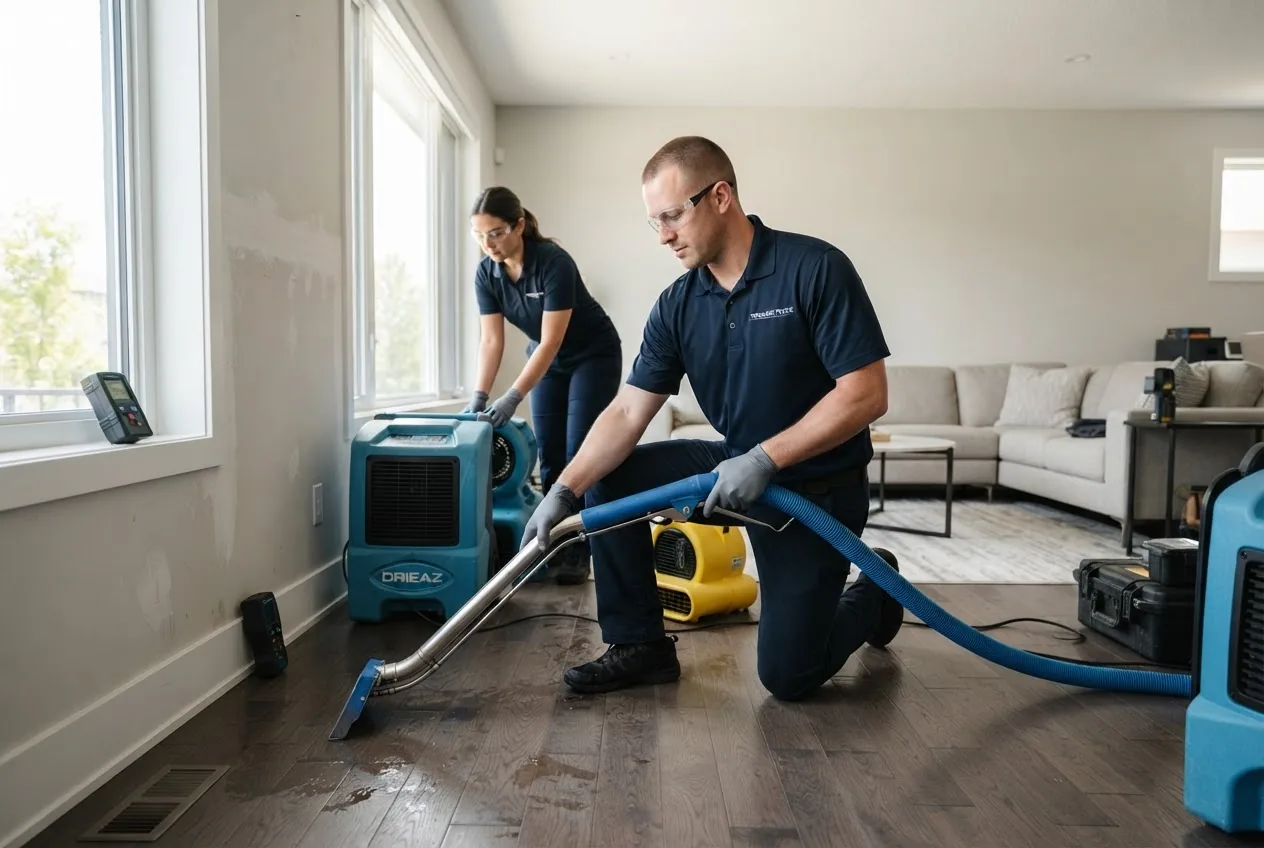
What is a water mitigation company? A water mitigation company is a professional emergency response firm that stops ongoing water intrusion, removes standing water, and stabilizes a property to limit damage until full restoration can proceed. They coordinate with insurers and restoration teams to achieve rapid mitigation and prevent long-term issues.
Introduction to Water Mitigation Companies
Direct answer: Water mitigation companies are the first responders for water damage emergencies, focused on rapid stabilization, controlled water removal, and immediate measures to prevent further deterioration and secondary damage such as mold or structural failure.
Term: water mitigation — the set of emergency actions taken to stop active water intrusion and reduce immediate damage, distinct from full restoration which repairs and returns the property to pre-loss condition.
A water damage emergency requires fast, coordinated action. Mitigation companies assess hazards, secure utilities, perform emergency water extraction, and deploy drying and dehumidification systems to slow or stop progressive damage. The objective is containment and stabilization so restoration contractors can later complete repairs.
Mitigation is often the difference between a localized repair job and a large-scale restoration. Responding quickly reduces recovery time and costs: according to a 2023 industry survey, timely mitigation within 24–48 hours reduced final repair costs by an average of 30% (industry survey, 2023).
Water mitigation operates at the intersection of property protection, health risk reduction, and insurance coordination. While mitigation companies do not usually complete cosmetic or major structural rebuilds themselves, they prepare the site for those trades and provide critical documentation for claims.
For context on where mitigation fits into broader disaster response and costs, see the storm damage restoration service guide and cost overview.
Transition: The next section defines the mitigation company role in more detail and explains how emergency water damage response teams operate day-to-day.
What Is a Water Mitigation Company?
Direct answer: A water mitigation company is an emergency response firm that manages immediate actions following water intrusion—assessing damage, removing water, drying structures, and documenting conditions to prevent further loss and support later restoration.
Term: restoration mitigation — a phase within the recovery lifecycle focused on minimizing damage and stabilizing the property before restoration work begins.
A water mitigation company assembles trained technicians, specialized equipment, and documented procedures to act rapidly after a water loss event. These teams are organized to handle emergencies from small localized leaks to large-scale flood incidents. Their scope centers on time-sensitive tasks that reduce deterioration, protect health, and limit secondary issues like mold growth and structural compromise.
Operationally, mitigation companies operate on an emergency-response model: 24/7 dispatch, triage of the scene, prioritization of safety (shutting off electricity, gas, and isolating contaminated zones), and immediate initiation of drying and extraction. That emergency-first posture distinguishes mitigation from long-term restoration contractors whose work begins once the site is stabilized.
Mitigation firms typically categorize water by source and contamination level to determine appropriate procedures. Quick, clean water from a broken supply line (Category 1) requires different handling than contaminated floodwater (Category 3). Early classification informs personal protective equipment (PPE) requirements, disposal plans, and whether specialized decontamination is necessary.
They also provide critical technical services during the early lifecycle of a loss: moisture detection, controlled demolition of non-salvageable materials, targeted structural drying, temporary repairs to prevent additional intrusion, and detailed documentation for insurance claims. This documentation often includes moisture maps, equipment logs, and photo timelines.
Mitigation companies coordinate closely with restoration contractors and other trades to ensure a smooth hand-off. While some mitigation firms offer end-to-end restoration, many specialize in emergency mitigation and partner with restoration contractors for rebuilds and final finishes.
Finally, mitigation companies also advise homeowners and property managers on immediate, safe actions they can take—turning off utilities, moving valuables, or initiating temporary containment—while emphasizing when professional help is required.
Transition: Below is a detailed look at the core services mitigation companies deliver, step by step.
Core Services Provided by Water Mitigation Companies
Direct answer: Core services include rapid damage assessment, emergency water extraction, drying and dehumidification, moisture detection, containment, controlled demolition where needed, personal property care, mold-prevention measures, and insurance documentation.
-
Initial emergency response and safety triage
A mitigation team secures the site, isolates utilities, limits access, and assesses immediate safety risks such as electrical hazards or structural instability. This safety-first triage protects occupants and technicians and sets the operational baseline for further mitigation steps.
-
Water damage assessment and categorization
Term: water damage assessment — a systematic evaluation of affected areas, water source, contamination level, and likely migration paths for moisture, used to plan mitigation tactics.
Technicians map affected zones using moisture detection tools and visual inspection. They classify water contamination (clean, gray, black) and document structural materials at risk. This assessment drives PPE decisions, disposal protocols, and the drying plan.
water damage inspection services are often engaged or supplied by mitigation teams during this step.
-
Emergency water removal / extraction services
Term: water extraction services — the mechanical removal of standing water using pumps, wet vacuums, and extraction units to quickly reduce moisture load.
Mitigation companies deploy submersible pumps, truck-mounted extractors, and portable wet/dry vacuums to remove visible water from floors, carpets, and cavities. Rapid extraction reduces saturation and shortens the drying timeline. For specialized flood situations, companies coordinate safe disposal and sanitation steps.
water removal expert cleanup services explains common timelines and equipment used at this stage.
-
Drying and dehumidification
Term: dehumidification — the controlled removal of moisture from air to encourage evaporation from building materials and accelerate structural drying.
After extraction, mitigation teams install high-capacity axial fans (air movers) and commercial-grade dehumidifiers to create directed airflow and lower humidity. This combination encourages water to evaporate from wet materials into the air, where dehumidifiers capture it. Technicians adjust equipment placement and run-time based on moisture readings.
Different drying techniques are chosen based on material (wood, concrete, drywall) and severity; choices include direct airflow, cavity drying, and injected drying methods for wall assemblies.
-
Moisture detection and monitoring
Term: moisture detection tools — instruments such as moisture meters, thermohygrometers, infrared cameras, and hygrometers used to locate and quantify retained moisture.
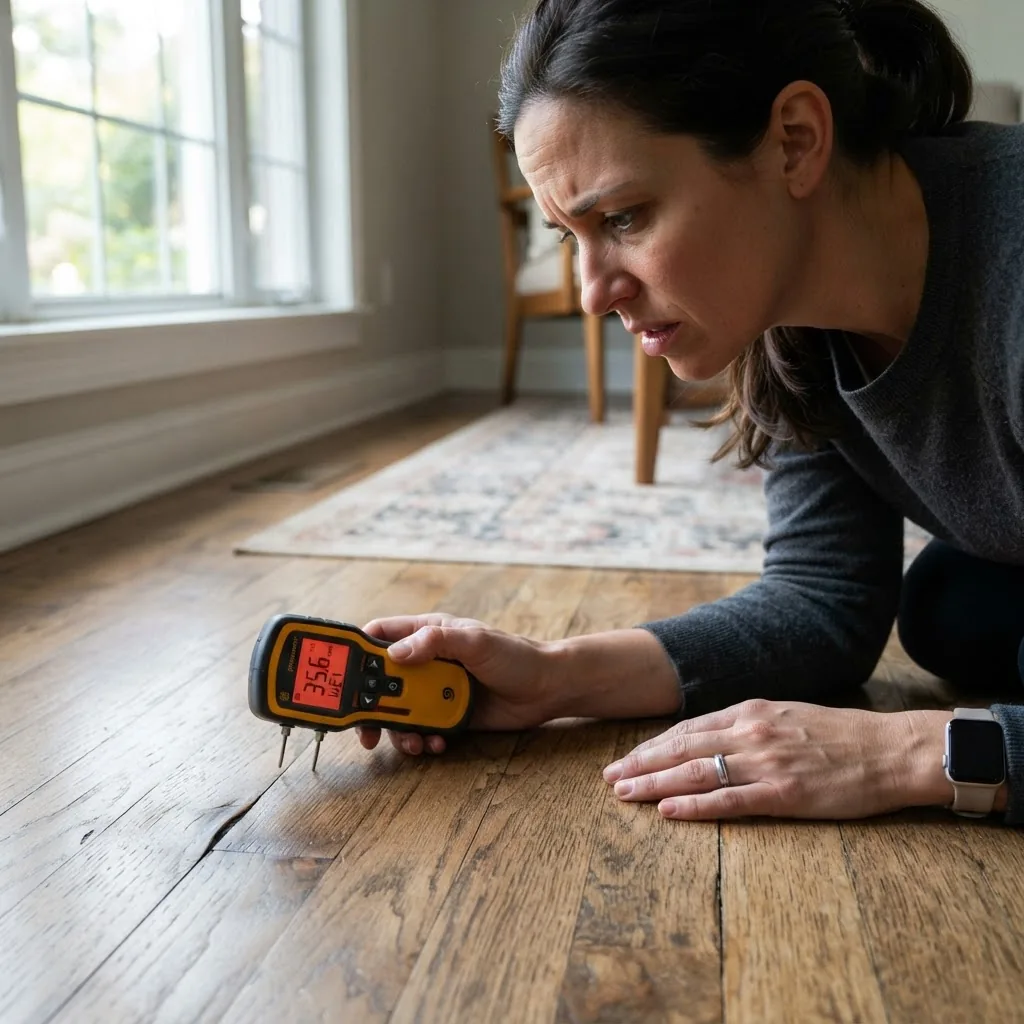
Technicians use pin and non‑contact moisture meters, infrared thermal imaging, and data-logging devices to create moisture maps. These tools guide where to focus drying and when to remove or preserve materials. Accurate monitoring prevents missed pockets of moisture that can lead to later mold growth.
Equipment examples: Protimeter pin meters, FLIR infrared cameras, and data-logging psychrometers are common on job sites.
-
Structural drying and controlled demolition
Term: structural drying — targeted drying of framing, subflooring, and wall cavities to protect load-bearing elements and finishes.
When materials are unsalvageable or block access to moisture, technicians perform controlled demolition of drywall, flooring, and insulation. This allows direct access for drying equipment and prevents hidden moisture pockets. The goal is the minimum necessary removal to achieve drying objectives while preserving as much as possible.
carpentry repair training and certification is relevant for providers that also offer structural repairs following demolition.
-
Personal property handling and content care
Term: personal property restoration — the triage, documentation, pack-out, cleaning, and storage of personal items affected by water loss.
Mitigation teams inventory and photograph items, provide immediate drying or pack-out to minimize secondary loss, and coordinate specialist restoration for electronics, documents, and textiles when needed. For an overview of content-focused services see personal property restoration services.
-
Mold prevention and remediation planning
Term: mold prevention — immediate and planned actions to reduce conditions favorable to microbial growth, including drying, sanitation, and environmental control.
Rapid drying and humidity control are the primary mold-prevention strategies. Mitigation companies apply antimicrobial cleaners when appropriate and advise on when full mold remediation is required. For EPA guidance on mold risk and cleanup strategies, mitigation teams reference authoritative resources.
water damage and mold remediation links mitigation with downstream remediation options.
-
Contamination assessment and sanitation
For floodwater or sewage intrusions, mitigation includes contamination assessment, hazardous-material containment, and sanitation protocols. This step often dictates removal of porous materials and specialized disposal to comply with health codes and insurance requirements.
-
Insurance claims support and documentation
Mitigation companies provide the photo documentation, moisture logs, equipment run-time records, and written scopes that insurers require. Clear documentation speeds claim adjudication and establishes the mitigation timeline and rationale.
-
Temporary repairs and board-up services
To prevent re-entry of water or vandalism, mitigation teams perform temporary repairs such as tarping roofs, boarding windows, and sealing breached pipes until restoration contractors complete permanent repairs.
storm restoration company services overlap here when mitigation responds to storm-driven water intrusion.
-
Consultation and hand-off to restoration contractors
After stabilization, mitigation teams coordinate the hand-off with restoration contractors, providing a clear scope, moisture status, and list of recommended repairs to complete the restoration mitigation lifecycle.
damage restoration service guide and requirements offers a deeper view of the restoration steps that follow mitigation.
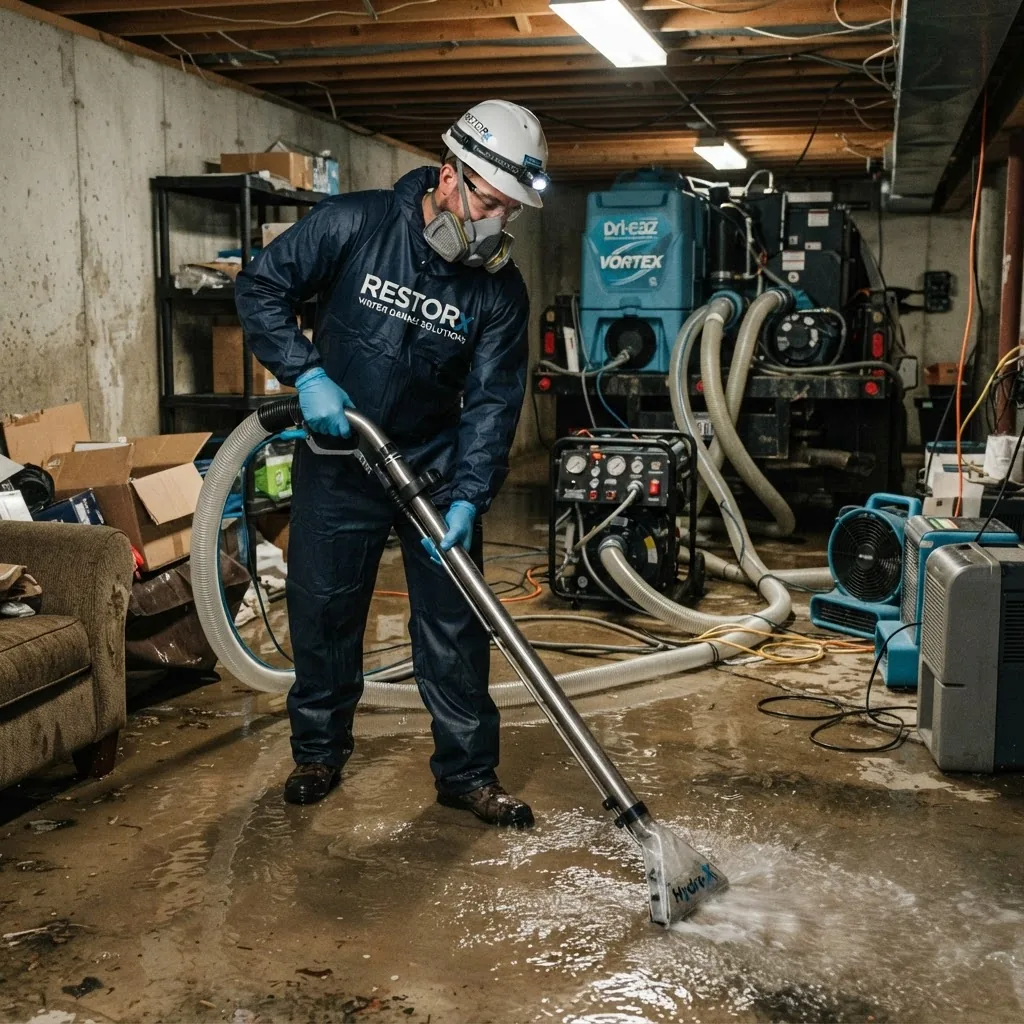
Across these services, mitigation companies rely on professional water mitigation equipment: industrial extractors, axial and centrifugal air movers, low-grain refrigerant (LGR) and desiccant dehumidifiers, infrared cameras, hygrometers, and specialized cleaners. Equipment choice affects drying trade-offs: faster airflow vs. lower humidity for effective structural drying.
Transition: The step-by-step water loss mitigation process explains how these services sequence together on a typical job.
The Water Loss Mitigation Process Explained
Direct answer: The mitigation lifecycle follows a sequence: emergency triage and assessment, contamination classification, water extraction, drying and dehumidification, monitoring and documentation, controlled demolition if needed, mold-prevention measures, temporary repairs, and a formal hand-off to restoration.
Term: emergency water removal — immediate mechanical extraction to reduce standing water volume before drying begins.
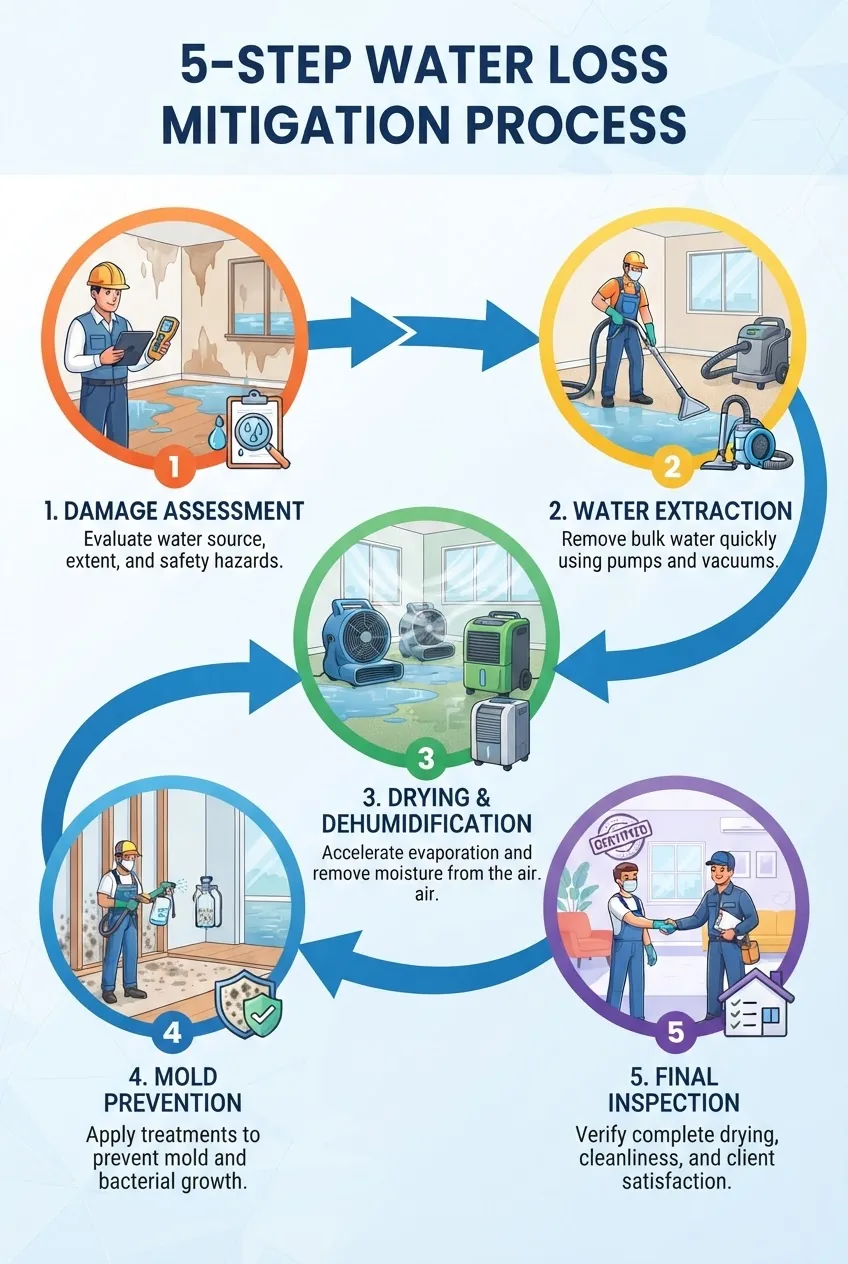
-
Step 1 — Immediate response and scene safety
Answer: First, the mitigation team secures life-safety hazards, shuts utilities if needed, and documents initial conditions. Safety includes identifying contaminated water sources and any structural concerns before personnel enter.
Actionables: shut off electricity, isolate gas, mark unsafe zones, and establish PPE levels. This prevents injury and cross-contamination.
-
Step 2 — Damage assessment and moisture mapping
Answer: Technicians perform a systematic water damage assessment using moisture meters, thermal imaging, and hygrometers to map saturation and plan drying.
Tools & outcomes: Infrared cameras reveal cold/wet spots; pin meters quantify substrate moisture; data loggers track environment trends. Accurate mapping reduces missed moisture that leads to hidden damage.
-
Step 3 — Source control and containment
Answer: The team stops active leaks (shutting valves, temporary pipe clamps), isolates contaminated areas with plastic containment, and establishes negative air if required to control air movement from contaminated to clean zones.
Containment prevents cross-contamination and protects unaffected property. For large floods, staging and walkways keep crews safe and limit tracking of contaminants.
-
Step 4 — Emergency water removal
Answer: Deploy extraction pumps and truck-mounted systems to remove standing water rapidly; reduce moisture load to begin effective drying.
Timing: Quick extraction within 24–48 hours is critical—delays raise mold risk. According to a 2022 industry analysis, extraction within 24 hours reduces visible microbial growth risk by over 40% (industry analysis, 2022).
pipe burst damage restoration is a common scenario requiring rapid water removal.
-
Step 5 — Drying plan and equipment deployment
Answer: A drying plan specifies air movers, dehumidifier types, and run-time based on material types and moisture targets; equipment is then placed to drive drying efficiently.
Trade-offs: High airflow speeds evaporation but raises relative humidity; desiccant dehumidifiers lower absolute humidity more effectively in cold conditions. Technicians balance these variables for material-specific strategies.
-
Step 6 — Monitoring, documentation, and adaptive adjustments
Answer: Regular monitoring with moisture meters and environmental logging ensures drying is progressing; teams adjust equipment placement and capacity until target dryness is reached.
Documentation includes daily logs, photos, and moisture readings that demonstrate mitigation completion for insurers and restoration partners.
-
Step 7 — Controlled demolition and remediation of non-salvageable materials
Answer: When targeted drying cannot restore certain materials, technicians perform controlled removal of wet drywall, insulation, or flooring to access cavities and prevent hidden moisture pockets.
This step is surgical: remove only what’s necessary to achieve drying and maintain structural integrity.
-
Step 8 — Mold-prevention measures and sanitation
Answer: As drying nears completion, antimicrobial treatments and sanitation reduce microbial risk and prepare surfaces for restoration.
When contamination is severe, full mold remediation is recommended; mitigation focuses on prevention and containment rather than singularly performing long-term remediation.
-
Step 9 — Final inspection and hand-off
Answer: The mitigation company certifies the drying targets have been met, compiles the documentation package, and coordinates with the restoration contractor for repairs and finish work.
flood cleanup services cost overview discusses timelines and final cleanup considerations tied to mitigation.
Case example: A typical case study illustrates the lifecycle. A basement flood from a failed sump pump required 3 hours of emergency triage, 6 hours of extraction using truck-mounted pumps, and a 5‑day drying plan with LGR dehumidifiers and directed airflow. The mitigation team documented moisture logs and reduced the project’s restoration phase by 7 days, saving estimated costs—an example of mitigation as first-line defense reducing scope of repairs.
Transition: With the process clarified, compare why hiring professionals typically yields better outcomes than DIY responses.
Benefits of Hiring a Professional Mitigation Company vs DIY Approaches
Direct answer: Professional mitigation provides rapid, documented, and code-compliant intervention using specialized equipment and expertise, which reduces health risks, secondary damage, and insurance disputes compared with most DIY attempts.
Below is a side-by-side comparison of core factors when choosing professional mitigation versus a DIY approach.
| Factor | Professional Mitigation | DIY Response |
|---|---|---|
| Speed and availability | 24/7 rapid dispatch; prioritized response | Dependent on homeowner; slower initiation |
| Equipment capability | Commercial pumps, LGR/desiccant dehumidifiers, industrial air movers | Rented or consumer-grade vacuums and fans—limited capacity |
| Moisture detection | Advanced meters and infrared imaging for hidden moisture | Visual checks only; high risk of missed moisture |
| Mold prevention | Targeted drying and sanitization aligned with standards | Incomplete drying often leads to mold within 48–72 hours |
| Insurance & documentation | Detailed logs and photos tailored for claims | Limited or inconsistent documentation; claim disputes possible |
| Health & safety | PPE, contamination protocols, hazardous waste handling | Potential exposure to sewage or contaminants without protection |
Professional mitigation is particularly advantageous for commercial or large residential losses. For commercial contexts, compare options with commercial storm damage restoration services which shows how mitigation scales on larger properties.
Additional advantage: Professionals understand building science and drying trade-offs. For example, over-ventilation in winter can lower humidity but slow drying in some materials; trained technicians know how to sequence airflow and dehumidification for optimal outcomes.
Transition: Effective mitigation also requires clear coordination with insurers and restoration trades—here’s how companies typically manage that.
How Water Mitigation Companies Coordinate with Insurance and Restoration Teams
Direct answer: Mitigation companies coordinate by providing immediate documentation, issuing scopes of work, communicating timelines, and facilitating hand-offs with restoration contractors and insurers to ensure coverage alignment and efficient project flow.
Mitigation teams are often the first point of contact for insurers after a loss. They create and deliver the initial documentation package that insurers use to evaluate emergency approvals: photos, moisture maps, a preliminary scope, and itemized immediate costs. Clear, timestamped records reduce disputes about pre-existing conditions versus new damage.
Common coordination steps:
- Immediate notification of the insurer and provision of initial damage photos and scope.
- Regular updates (daily or as equipment runs change) to keep claims adjusters informed.
- Shared documentation that supports coverage determinations and supplements the insured’s claim.
- Scheduling hand-offs with restoration contractors to align mitigation completion metrics with restoration start dates.
Mitigation companies sometimes act as a liaison between property owners and restoration contractors, clarifying technical requirements and offering recommended repair plans. When mitigation firms do not perform repairs, they provide a formal completion report to restoration teams. For commercial projects, see additional guidance on commercial water damage repair services which often require more detailed coordination and contractor scheduling.
Documentation best practices include dated photos, moisture logs, equipment run-time records, and signed scopes of work. These items create an auditable trail for insurers and contractors and speed approvals. According to a 2024 industry report, mitigation projects with complete documentation resolved claims 20% faster on average (industry report, 2024).
Mitigation companies may also advise on whether temporary repairs meet policy requirements and whether particular remediation (e.g., mold remediation) requires pre-authorization. They can recommend repair contractors or coordinate with the property owner’s chosen restoration company or the insurer’s approved vendors.
Transition: While mitigation is powerful, it faces challenges and limitations that owners should understand.
Common Challenges and Limitations in Water Mitigation Services
Direct answer: Challenges include delayed response that increases mold risk, hidden water behind finishes, limitations of equipment in severe losses, and cost trade-offs; mitigation cannot fully reverse extensive structural failure from prolonged exposure.
Term: hidden water damage — moisture trapped within wall cavities, flooring assemblies, or under concrete slabs that is not evident during initial visual inspection.
Key cautionary notes:
- Response time matters: Delays allow microbial growth—mold can begin within 24–72 hours. Rapid mitigation reduces this risk; if mitigation is delayed beyond 48 hours, remediation complexity increases and may raise costs substantially.
- Hidden pockets of moisture: Even with professional tools, isolating every wet void is challenging; some materials (e.g., saturated insulation or underlayment) may require removal to ensure long-term dryness.
- Equipment limitations: Commercial equipment is effective, but severe saturation—such as deep groundwater contamination or prolonged submersion—may exceed mitigation scope and require full reconstruction.
- Contamination and health hazards: Sewage, industrial chemicals, or floodwater contaminated with hazardous materials require specialized hazardous-material handling that may delay standard mitigation steps and increase disposal costs.
- Insurance constraints and cost considerations: Coverage limits, policy language, and pre-existing damage can influence what mitigation and restoration are reimbursed. Upfront costs for professional mitigation may be higher than DIY but typically reduce total claim and rebuild costs.
Authoritative safety and building guidance: mitigation companies reference governmental safety and building code agencies for decontamination and worker safety guidance. For worker safety protocols and hazard controls, they consult resources like OSHA guidance. For environmental contamination and mold risk, companies reference EPA resources.
Limitations should be transparent: a mitigation provider should explain when mitigation is likely to succeed and when restoration or reconstruction is necessary. Expect clear communication about residual risks, potential unseen damage, and any recommended follow-up inspections.
Transition: Knowing these challenges helps when selecting a mitigation provider—here’s a practical checklist to choose the right company.
Choosing the Right Water Mitigation Company
Direct answer: Choose a mitigation company with strong emergency availability, proven equipment inventory, documented processes, clear documentation for insurers, verified customer reviews, and transparent guarantees; verify relevant certifications and insurance coverage.
- Emergency availability and response time — Ensure 24/7 dispatch and a stated average response time for your area.
- Equipment and capacity — Verify they own industrial extractors, LGR or desiccant dehumidifiers, air movers, and moisture detection tools; ask about backup capacity for larger events.
- Documentation practices — Confirm they provide daily logs, photos, and moisture maps for insurance claims.
- Insurance and bonding — Request proof of liability insurance and worker coverage before work begins.
- References and reviews — Check recent customer reviews and ask for local references covering similar job sizes.
- Service guarantees and remediation limits — Understand what is guaranteed (drying targets, timelines) and where responsibilities end (repair scope vs. mitigation scope).
- Industry standards and certifications — Look for adherence to recognized standards such as the IICRC S500 water damage restoration guidelines; certification indicates familiarity with best practices.
- Local building knowledge — Providers that understand local code and permitting simplify restoration transitions, especially for structural repairs.
- Communication and transparency — Choose teams that explain choices, trade-offs, and estimated timelines clearly.
- Integrated repair capabilities or trusted partners — If you prefer a single provider for mitigation and repair, verify credentials; alternatively, ask about their recommended partner network for carpentry, roofing, and painting.
When evaluating certifications, check providers against recognized organizations. For example, the Institute of Inspection, Cleaning and Restoration Certification (IICRC) publishes the S500 standard for professional water damage restoration; look for familiarity and application of these standards. IICRC resources help explain expected industry practices.
Practical checks and related training links:
- fire and water damage restoration certification — verify training claims.
- carpentry repair training and certification — relevant if the provider will handle structural repairs.
- roofing fix services — useful when mitigation involves roof breaches.
- handyman paint service training — for final finish work coordination.
- outdoor home repair and maintenance — for exterior repairs post-mitigation.
If structural repairs are part of the scope, consider providers connected to or recommended by contractors with verified credentials. For training options related to finish trades, see water damage repair and restoration training and for carpet-specific services, review carpet water damage repair services.
Transition: Finally, summarize the key takeaways and give practical preparedness advice.
Conclusion and Key Takeaways
Direct answer: A water mitigation company is your first line of defense after water intrusion—stabilizing the site, stopping further damage, and preparing the property for full restoration while documenting the event for insurance and safety.
Key takeaways:
- Act fast: Mitigation within 24–48 hours reduces mold risk and repair scope.
- Professionals bring specialized equipment and measurement tools that DIY efforts typically cannot match.
- Documentation and coordination with insurers are core mitigation deliverables that speed claims and reduce disputes.
- Understand the limits: mitigation stabilizes and prevents further loss but may not repair significant structural damage.
Preparedness tips: know your provider’s emergency number, photograph valuables before damage occurs, and keep policy documents accessible. In an emergency, prioritize life-safety, shut off utilities if safe, and contact a mitigation company for rapid response.
Final advice: When water intrudes, mitigation is the practical, evidence-based first step to limit loss, protect health, and control costs. Contact a qualified mitigation company quickly, request clear documentation, and coordinate with your insurer to ensure a smooth recovery.
Call to action: If you face water intrusion now, call a 24/7 mitigation provider to begin emergency stabilization immediately and document the event carefully for insurance recovery.