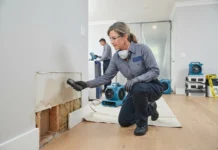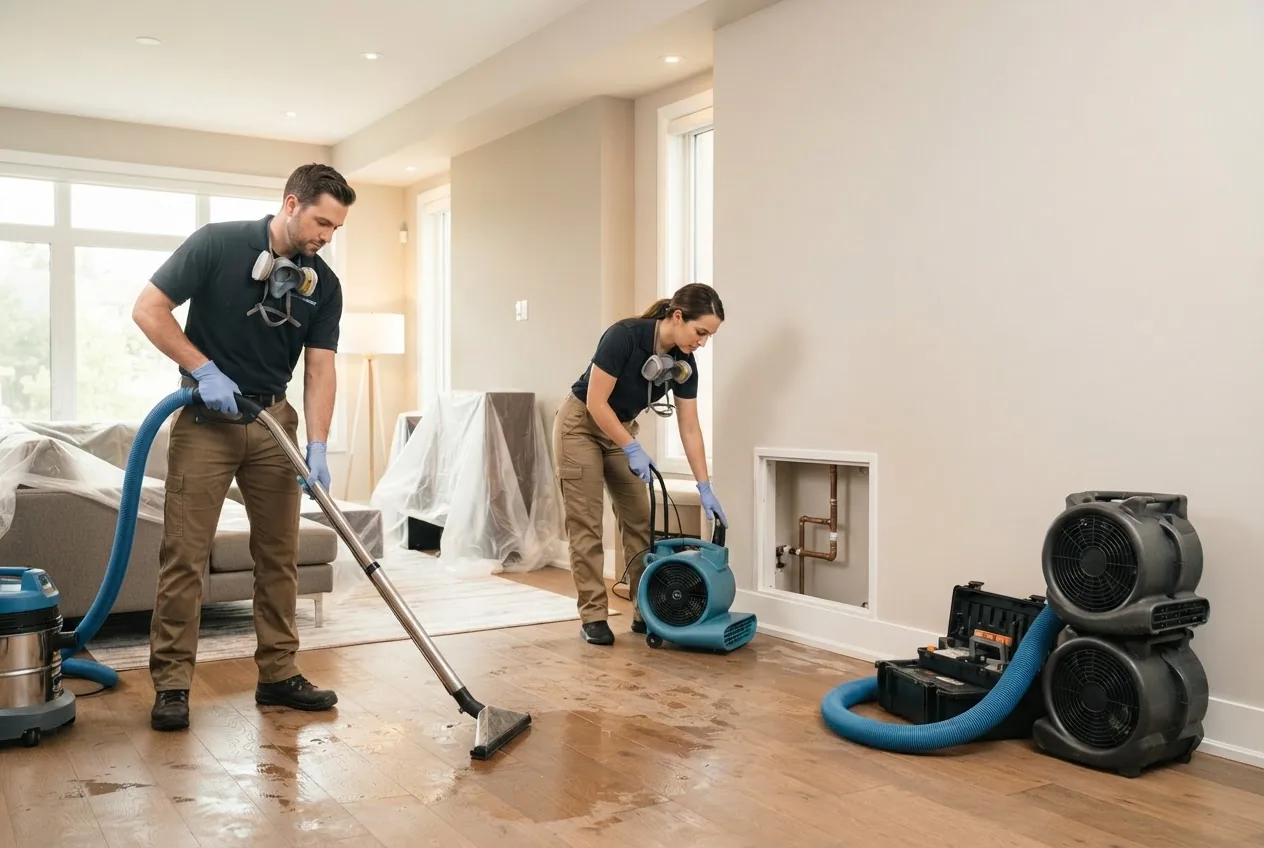
Pipe burst damage restoration is the complete, staged process of stopping water intrusion, extracting water, drying affected structures, remediating contamination and repairing systems and finishes; a proper restoration minimizes structural loss, prevents mold growth, and documents costs for insurance claims in a single coordinated workflow.
What is pipe burst damage and how can it affect my home?
Answer: Pipe burst damage is sudden water release from failed plumbing that soaks building materials, can contaminate surfaces, and threatens structural components and contents; timely identification and response reduce long-term damage and health risks.
Term: Pipe burst damage restoration is the coordinated set of emergency plumbing repairs, water removal, drying, contamination remediation, and repairs to return a property to pre-loss condition.
Pipe bursts produce indoor flooding that differs from storm or sewer flooding because the source is typically pressurized, can be clean or contaminated, and often concentrates damage in ceilings, walls and beneath floors. Immediate hazards include electrical shock where water contacts outlets, structural weakening of load-bearing elements, and microbial growth when moisture persists longer than 24–48 hours.
Example case (hypothetical, illustrative): a second-floor copper supply line ruptures overnight, releasing 200 gallons into a drywall-ceiling cavity. Emergency plumbing isolates the supply, a restoration team extracts free water, technicians set up structural drying equipment in ceiling cavities and crawlspaces, and carpenters later replace wet drywall and insulation. This full lifecycle demonstrates coordinated trades and documentation needs for insurance.
According to a 2023 industry report by a national restoration association, faster response within the first 24 hours can reduce total restoration costs by up to 35% (industry report, 2023).
storm damage restoration service guide and cost overview
Structural risks are concentrated where water accumulates: joists and beams can delaminate; plywood subfloors can swell and lose fastening; plaster and drywall lose compressive strength. Contamination hazards vary: “clean water” from supply lines can turn into contaminated water as it contacts soils, sewage lines or deteriorating materials. Emergency plumbing response centers on stopping water flow and mitigating electrical and gas hazards before cleanup begins.
storm damage restoration service guide and cost overview
What are the step-by-step stages of pipe burst damage restoration?
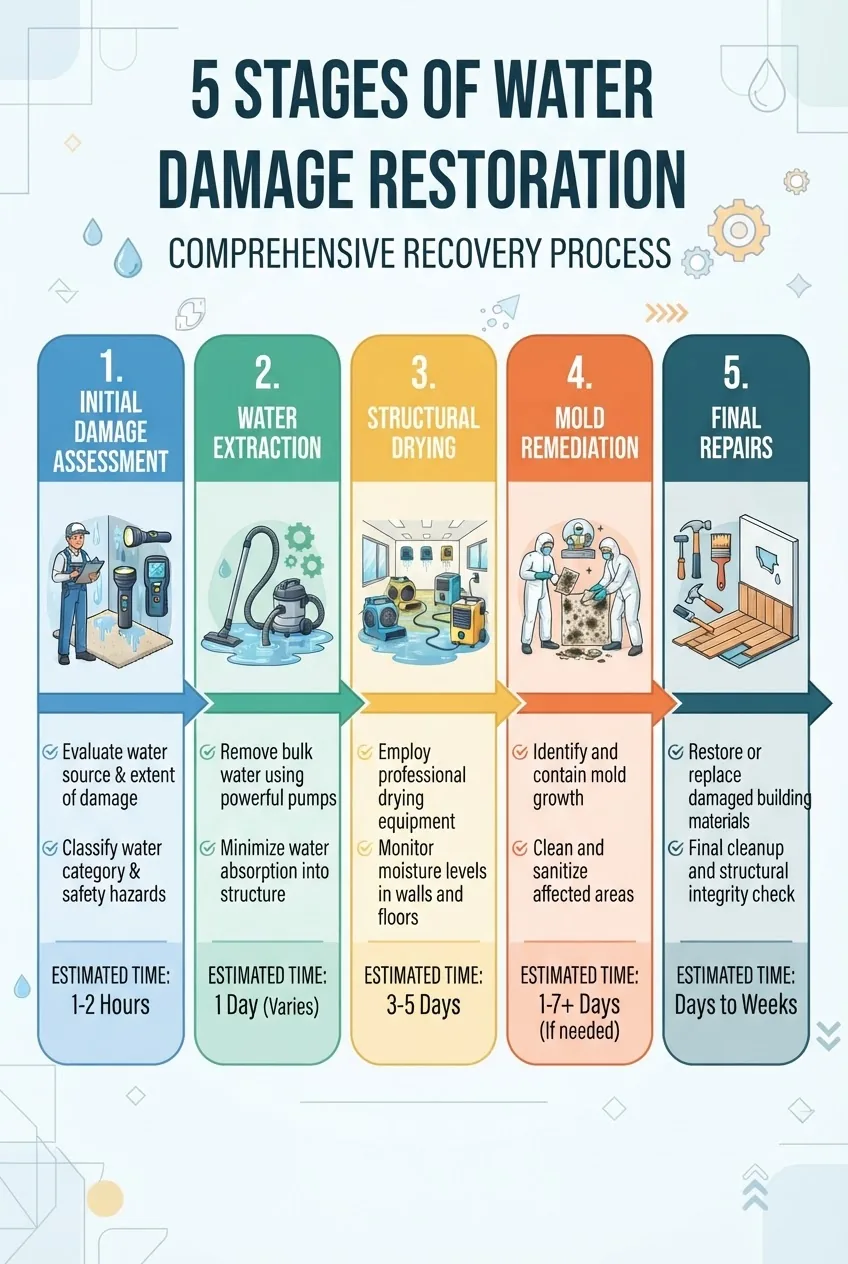
Answer: Pipe burst damage restoration follows a defined sequence: emergency plumbing, rapid water extraction, structural drying and dehumidification, contamination assessment and remediation, repairs and reconstruction, plus documentation for insurance.
-
1. Emergency response and safety assessment
Answer: Immediate actions are to stop water at the source, isolate utilities, and perform a safety sweep; this prevents ongoing flooding and reduces secondary hazards.
Technicians locate the burst, shut off the main or localized valve, and tag electrical circuits or appliances impacted by water. Licensed plumbers perform emergency plumbing repairs or temporary bypasses to prevent recurrence during restoration. Safety checks include identifying contaminated water (e.g., sewage backflow) and assessing structural collapse risk.
Term: Emergency plumbing repairs are temporary or permanent interventions by a licensed plumber to stop water flow and stabilize piping until full repairs.
-
2. Rapid water extraction and containment
Answer: Extraction removes standing water using truck-mounted or portable pumps and extractors to limit saturation and prepare materials for drying.
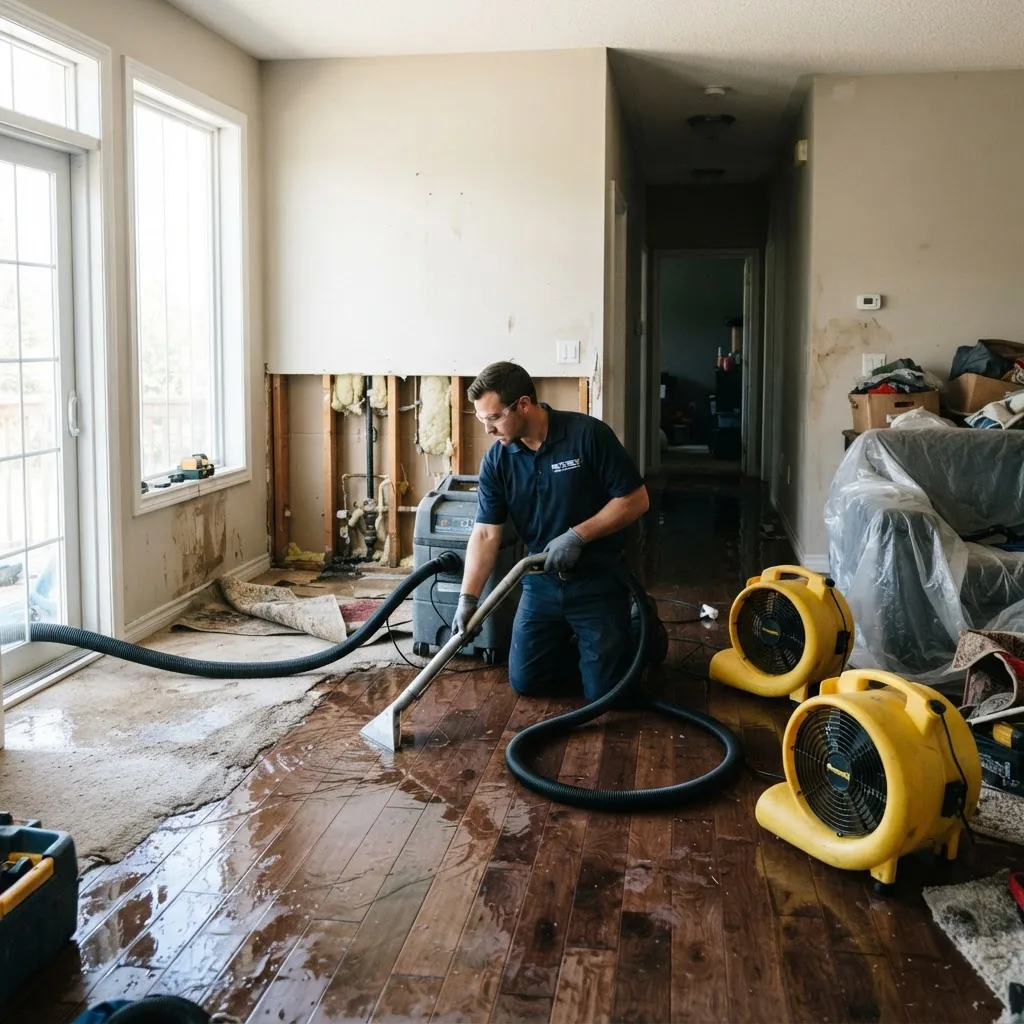
Tools used include submersible pumps, high-capacity wet vacuums, and carpet wands. Technicians prioritize extraction in living spaces, under cabinets and in cavities. Extraction may be followed by containment setup (plastic barriers, negative pressure) for contaminated water to protect unaffected areas and control cross-contamination.
Term: Water extraction techniques are mechanical processes that remove free water quickly to prevent material saturation and microbial growth.
professional basement flood cleanup services
flood cleanup guide and professional service cost overview
repairing water damage guide and home restoration training -
3. Structural drying and dehumidification
Answer: Drying uses axial fans, air movers and commercial dehumidifiers to remove bound moisture from structural elements until moisture readings reach safe baselines.
Term: Dehumidification is the mechanical removal of moisture from the air using refrigerant or desiccant dehumidifiers to lower relative humidity and encourage evaporation.
Structural drying plans are based on moisture mapping using hygrometers and infrared scans. Technicians place air movers strategically to create airflow across wet surfaces and use industrial dehumidifiers (refrigerant or desiccant types) to maintain target dry-bulb/wet-bulb conditions. For cavity drying, injectidry systems or drying mats may be used.
water removal services guide and expert cleanup costs
water damage inspection service guide and training options -
4. Contamination testing and mold prevention
Answer: After drying begins, remediation technicians assess contamination levels and apply containment, antimicrobial treatments and mold remediation where necessary to prevent indoor air hazards.
Term: Remediation is the controlled removal or treatment of contaminated materials and microbial growth to restore safe conditions.
Mold prevention strategies include removing wet porous materials (insulation, carpet pad) when unsalvageable, applying EPA-registered antimicrobials, and maintaining drying until moisture meters show acceptable levels. When mold is present, a burst pipe remediation company follows IICRC S520 or equivalent protocols for mold remediation to control spores and protect occupants.
-
5. Contents cleaning, salvage, and personal property restoration
Answer: Technicians inventory, dry-clean, or pack-out damaged contents; salvageable items are returned after appropriate cleaning while irreparably damaged items are documented for claims.
Personal property restoration companies use wet-fogging, ultrasonic cleaning, and freeze-drying for documents or textiles. Inventory and photo documentation are essential for insurance claims. personal property restoration company guide and services cost
-
6. Repairs, reconstruction and final verification
Answer: Reconstruction replaces structural elements, reinstalls finishes and systems; final verification confirms moisture baselines and completed repairs before sign-off.
Licensed contractors and carpenters restore ceilings, floors and cabinetry. Final drying reports, clearance air tests (if required), and photographic documentation complete the file for insurers. carpet water damage repair course and cost
-
7. Insurance documentation and claim support
Answer: Restorers produce scope-of-work estimates, moisture logs, invoices and photos to support homeowner insurance claims and help determine coverage of emergency response fees, repairs and contents loss.
Keep copies of emergency plumbing receipts and vendor scopes. For claim questions, consult a national insurance consumer resource such as the NAIC for guidance on documentation and consumer rights.
Timing estimates: emergency stop and extraction often occur within the first 24 hours; drying typically requires 3–7 days depending on materials and climate; mold remediation, repairs and reconstruction can add 1–6 weeks depending on scope and permitting.
storm damage clean up service guide and pricing information
What roles and services do restoration professionals provide after a pipe bursts?
Answer: Restoration professionals include emergency plumbers, pipe burst cleanup professionals, remediation technicians, structural drying specialists, carpenters and contents restoration experts; each provides distinct services from stopping leaks to final reconstruction.
Below is a concise breakdown of specialist roles and typical services they offer in pipe burst scenarios.
- Emergency plumber: isolates the leak, performs temporary or permanent pipe repairs, and issues work receipts for insurance.
- Pipe burst cleanup professionals: perform rapid water extraction, containment, and initial drying to reduce secondary damage.
- Burst pipe remediation company: delivers contamination assessment, mold prevention, antimicrobial treatments, and controlled removal of unsalvageable materials.
- Structural drying specialists: design drying plans, deploy air movers and dehumidifiers, and provide moisture mapping and verification.
- Carpenters and finish contractors: rebuild framing, replace subfloors, drywall and finishes — see carpentry repair training and certification.
- Personal property restoration companies: handle pack-out, cleaning, and restoration of textiles, furniture and documents — see personal property restoration company guide and services cost.
- Damage restoration generalists: coordinate multi-trade projects and ensure compliance with local codes — see damage restoration service guide and requirements overview.
- Water mitigation companies: focus on loss mitigation to reduce future repair scope — see water mitigation company guide and service details.
- Painting and finishing contractors: perform final cosmetic repairs — see handyman paint service guide and training course information.
- Storm restoration companies: bring large-loss coordination experience for complex events — see storm restoration companies guide and service offerings.
Licensing and certifications: the industry expects IICRC-certified technicians for many water and mold remediation tasks and licensed plumbers for plumbing repairs. For certification references, visit the IICRC.
What are the detailed cost components of pipe burst damage restoration?
Answer: Costs include emergency plumbing repairs, extraction and drying labor, equipment rental, disposal, materials and reconstruction; insurance coverage and local rates heavily influence final expense.
Below is a comparative cost table illustrating common line items and typical price ranges. Costs vary regionally and by damage severity; use this for planning, not fixed estimates.
| Service | Typical cost range | Notes |
|---|---|---|
| Emergency plumbing repair (shutoff, section replace) | $150–$1,200 | Depends on accessibility, pipe type, and need for rerouting |
| Water extraction (per hour/team) | $100–$400 | Truck-mounted extraction may be higher |
| Structural drying and dehumidification (per day) | $250–$800 | Includes air movers and commercial dehumidifier rental |
| Containment and mold remediation | $500–$6,000+ | Scope depends on contamination level and affected area |
| Contents cleaning/pack-out | $200–$3,000+ | Specialty cleaning (documents, electronics) increases cost |
| Demolition and disposal | $300–$2,000 | Depends on material volumes and hazardous disposal needs |
| Reconstruction (carpentry, drywall, painting) | $1,000–$25,000+ | Full-room rebuilds and structural repairs increase dramatically |
| Emergency response / mobilization fee | $75–$500 | Night/weekend or remote call-out premiums apply |
Explanatory notes:
- Labor vs material: Labor rates include technician time, monitoring and documentation; materials include replacement piping, insulation, drywall and finish materials.
- Equipment rental: Industrial dehumidifiers and air movers are rented at daily rates; some firms bundle them in drying packages.
- Insurance considerations: Coverage depends on policy specifics. For claims guidance consult the NAIC (consumer insurance resource).
- Geography and access: Upper floors or concealed cavities increase labor intensity and therefore cost.
- Contamination classification: Clean water (Category 1) typically costs less to remediate than contaminated (Category 2/3) which requires more containment and disposal.

Training and certification courses affect pricing: technicians with IICRC water restoration (WRT) and S500 structural drying credentials may charge premium rates but provide standardized protocols for documentation and outcome verification.
carpet water damage repair course and cost
commercial water damage repair services guide and pricing
water damage restoration guide and professional service cost
Insurance claim tip: Photograph and timestamp every stage, keep receipts for emergency plumbing and mitigation, and obtain itemized scopes from contractors. For claims rights and complaint processes, consult the NAIC consumer resources.
National Association of Insurance Commissioners (NAIC)
How do I choose the right restoration company after a pipe burst?
Answer: Choose a company with fast response time, clear written estimates, proper licensing and certifications (IICRC/WRT), documented references, and transparent insurance coordination practices.
When evaluating providers, look for these qualifications and service assurances:
- Fast, documented response time and 24/7 emergency availability.
- Written scope of work with line-item pricing and equipment lists.
- Certifications such as IICRC WRT/S500 and licensed plumbing contractors for repairs — fire and water damage restoration certification and costs.
- Clear insurance liaison procedures and ability to provide detailed documentation for claims.
- Positive customer reviews and verifiable references.
- Service guarantees or warranties on labor and drying confirmation reports.
- Evidence of safety programs, respirator use for contaminated jobs, and PPE for technicians.
Checklist for hiring:
- Are you offered an immediate on-site assessment?
- Will the company provide daily drying logs and final moisture readings?
- Is the plumber licensed and insured?
- Does the firm carry general liability and professional liability insurance?
- Can they coordinate pack-out and storage for contents?
- Do they subcontract work and, if so, are subs screened and insured?
commercial storm damage restoration guide and service costs
storm damage repair contractors guide and service costs
For authority on standards, consult the IICRC for expected protocols and the ICC for local building code references when major structural repairs are needed.
IICRC — International Code Council (ICC)
Should I clean up a burst pipe myself or hire professionals?
Answer: DIY is acceptable for very small, clean-water leaks where safety and moisture control are assured; hire professionals when water is substantial, contaminated, in structural cavities, or when mold is suspected.
| Consideration | DIY | Professional |
|---|---|---|
| Safety (electrical/hazardous) | Risky if water contacts outlets or appliances | Technicians manage lockout/tagout and safety |
| Effectiveness of drying | Limited by consumer equipment, higher mold risk | Industrial drying achieves verified moisture baselines |
| Mold prevention | High risk if materials remain damp >48 hours | Remediation protocols reduce mold incidence |
| Insurance documentation | Homeowner must document actions; may be insufficient | Professionals provide full documentation and reports |
Summary recommendations:
- Call a professional if water covers a large area, appears discolored, or entered HVAC/ceiling cavities.
- DIY safe steps: shut off water, move valuables, extract standing water with consumer wet-vac, and begin airflow with household fans if professional help is delayed.
- Limitations: household fans and shop-vacs do not replace controlled dehumidification; improper drying increases mold risk and long-term repair costs.
What preventive steps reduce the chance of pipe bursts in the future?
Answer: Regular inspections, insulating exposed pipes, maintaining appropriate indoor temperatures, pressure regulation and proactive exterior maintenance reduce pipe burst risk.
Practical prevention steps:
- Insulate vulnerable plumbing lines in attics, crawlspaces and exterior walls with foam sleeve or wrap to reduce freeze risk.
- Winterize seasonal properties by draining lines and shutting off the water supply when unoccupied.
- Install pressure regulators and leak-detection shutoff valves that automatically isolate supply on rapid loss detection.
- Schedule annual plumbing inspections to identify corrosion, high pressure, or failing fittings.
- Maintain reasonable indoor temperatures during cold weather (minimum 55°F/13°C) and allow cabinet doors open to circulate heat to piping under sinks.
- Keep gutters and roof drains clear to prevent ice dams and secondary water infiltration that can stress building systems — see roofing fix services guide and house roof repair costs.
- For exterior maintenance and siding considerations that protect pipes adjacent to walls, consult an exterior maintenance course — outdoor home repair course and exterior maintenance guide.
hurricane damage repair services guide and cost overview
Government plumbing codes and best practices inform minimum installation and insulation requirements; consult local code authorities for mandates in your jurisdiction.
International Code Council (ICC)
What are the most common FAQs about pipe burst damage restoration?
Answer: Homeowners commonly ask about what restoration entails, costs, timelines, DIY safety, and how to ensure quality from a burst pipe remediation company; the FAQ below answers these directly.